
As an Amazon Associate, 456 AutoFix earns from qualifying purchases. Product links below go to Amazon, where you can confirm the right part for your vehicle.
A snowy hill you can’t climb is a bad place to discover that the traction aid in your trunk doesn’t fit your tires. The tire chains vs snow socks question comes down to three things: how much grip you need, how much room sits between the tire and the wheel well, and how often you expect to use the device. Steel chains bite hardest into ice and packed snow, while a fabric sock goes on faster and weighs almost nothing.
Neither one replaces good winter tires. Both are short-term helpers for the worst stretch of a trip, such as an unplowed side street, a steep driveway or a slick on-ramp. Below we explain how each type works, what your owner’s manual may forbid, and which of three specific sets suits which driver.
Quick answer
Should you carry tire chains or snow socks this winter?
Carry snow socks if you want a light emergency aid for occasional snow, low wheel-well clearance or alloy wheels you want to protect. Carry steel link chains if you face ice and steep packed snow often and your manual allows them. A Class S cable chain sits between the two.
Our Quick Picks
For the tire chains vs snow socks choice, here is one steel link chain, one textile snow sock and a related third pick, a Class S cable chain that sits between them.

Peerless Quik Grip QG1138
A traditional steel chain for ice and packed snow.

AutoSock HP685
A light emergency aid that slips on in minutes.
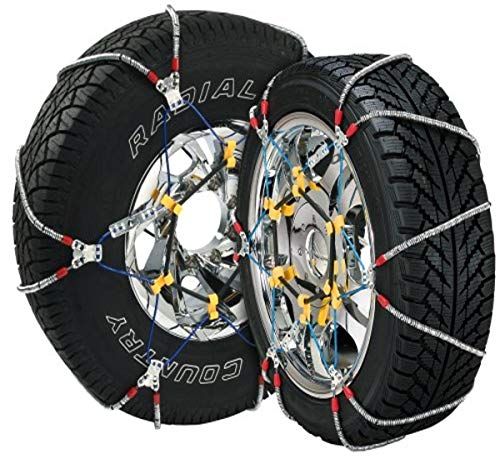
Peerless Super Z6 SZ139
A lighter cable design between chains and socks.
Steel Links, Cable and Woven Fabric: How Each One Grips
A link chain is a set of hardened steel cross chains held against the tread by side chains. On ice, those links press into the surface and give the tire something to push against. The trade-off is weight, noise and a fiddly fit, since most link sets need a separate tensioner to stay snug.
A cable chain swaps the heavy links for steel cables wrapped in small alloy rollers or cross members. It sits closer to the tire, which is why many cable designs meet the tight SAE Class S clearance that a lot of modern cars require. Grip on hard ice is usually a step below a link chain, but the set is lighter and easier to store.
A snow sock is a woven textile cover pulled over the drive tires. AutoSock explains on its official US website that the fabric fits in very little space between tire and wheel housing and won’t scratch alloy rims. Sock makers say the fabric soaks up the thin film of water on top of ice, which helps the tire hold.
| Trait | Steel link chain | Cable chain | Snow sock |
|---|---|---|---|
| Grip on ice and packed snow | Strongest bite | Good, a little less than links | Good on snow and ice, weaker in deep slush |
| Wheel-well clearance needed | Most room (check for Class S rating) | Low, many sets meet Class S | Very low |
| Fitting at the roadside | Slowest, needs a tensioner | Moderate | Fastest, no tools |
| Bare pavement | Remove soon, wears road and chain | Remove soon | Remove soon, fabric wears quickly |
The table describes device types, not exact products, so always read the instructions for the set you buy. Makers state their own speed limits and wear guidance, and those figures win over any general rule of thumb.
Read the Owner’s Manual Before You Buy Either One
Many owner’s manuals limit traction devices, and some forbid conventional chains entirely on certain trims or tire sizes. Large wheels with low-profile tires leave little gap between the tread and the strut, brake lines or inner fender. A chain that slaps against those parts can tear a fender liner, damage a brake hose or dent the wheel well.
When a manual allows chains, it often asks for Class S devices only. That rating comes from an SAE standard for vehicles with restricted clearance, and the package or listing usually says whether a set meets it. The manual will also say which axle gets the devices, which is normally the drive wheels.
All-wheel-drive owners should look for the specific instruction, because some makers want devices on all four tires and others name one axle. Snow socks get the same scrutiny: AutoSock itself tells drivers to follow the manual, since some vehicle makers don’t allow any traction device on the front wheels. If your manual is silent or unclear, ask your dealer or a shop before the first storm.
Size is the second filter. Every chain and sock is sold by tire size, so read the full size from your sidewall, such as 225/65R17, and match it to the fit chart on the listing. Never assume one set fits every version of a model, because trims often run different wheel diameters.
Tire Chains vs Snow Socks: The Three Sets Compared
We picked one example of each device type from established traction makers, so you can compare like for like. Each one is sold in many sizes under different part numbers, so treat the size code shown as an example and confirm your own tire size on Amazon before you order.
Peerless Quik Grip QG1138 Type PL: Class S Steel Link Tire Chain for Passenger Vehicles
- Twist-link carbon steel in a ladder pattern
- Meets Class S clearance, per the maker
- Set of 2 for one drive axle
- Tensioner QG20070-10 required, sold separately
The Quik Grip Type PL is the traditional choice in this comparison: a passenger-vehicle link chain from Security Chain Company, sold under the Peerless name. QG1138 is one size code in a series that runs from QG1114 to QG1142, and the set covers the two tires on one drive axle. Match the size on the listing to the numbers on your sidewall before you order, because each code fits a limited range of tire sizes.
Peerless builds it from carbon steel twist links laid across the tread in a ladder pattern, and the maker lists it as meeting Class S clearance. That rating matters on cars with tight wheel wells, though your owner’s manual still has the final word. The listing notes it is meant for on-road use and that tensioner QG20070-10 is required; Peerless confirms the tensioners are not included, so budget for them in the same order.
This set suits a driver who meets real ice, steep packed snow or long stretches of bad road and wants the firmest bite. It takes longer to fit than a sock and is heavier to carry. It is not for vehicles whose manuals forbid chains, and it should come off as soon as you reach clear pavement.
View Peerless Quik Grip QG1138 on Amazon

AutoSock HP685: Textile Snow Socks for Passenger Cars, SUVs and Pickups, Pack of 2
- Woven textile, no metal parts
- Use up to 30 mph, per the listing
- Includes 2 socks, gloves and instructions
- Choose the model by your tire size
AutoSock says the snow sock was invented in Norway, and the HP685 is one of its passenger-vehicle sizes for cars, SUVs and pickups. The pack holds two socks for one drive axle, plus gloves and printed instructions. AutoSock sells many models by tire size, so check the full size on your sidewall and use the size information on the listing or the maker’s size finder before buying.
Each sock is made of textile webbing that pulls over the tire and centers itself as you drive, with no metal parts to touch the rim. The listing says it helps reduce snow buildup between tire and sock, gives a smooth ride without vibration, and meets or exceeds global snow chain standards. AutoSock also states that its socks are approved in US states with traction laws, and the passenger listing sets a limit of 30 mph.
This pair makes sense as an emergency aid for a driver who needs extra grip a few times a winter, or whose car has too little wheel-well room for chains. It installs without tools and stores in a small bag. The fabric wears out much faster on bare pavement than steel does, so remove it as soon as the road clears.
Peerless Super Z6 SZ139: Class S Cable Tire Chain with Diagonal Pattern, Set of 2
- Steel cable with alloy cross members
- Diagonal pattern, meets Class S clearance
- Tensioners included, per the maker
- Listed for ABS and AWD tire applications
The Super Z6 is a cable chain, the middle ground between heavy link chains and fabric socks. SZ139 is one size in a long series, from SZ115 up into the SZ400 numbers, and the set of two covers one drive axle. The Amazon title lists passenger cars, pickups and SUVs, but every code fits only certain tire sizes, so compare the listing’s fit details with your sidewall before ordering.
Peerless builds it from steel cable with alloy cross members laid in a diagonal pattern. The maker lists it as meeting Class S clearance, includes the tensioners in the nylon storage bag, and names ABS and AWD among its tire applications. The only Amazon bullet calls it the fastest, easiest installation of any traction product, which is the maker’s own claim rather than a measured result.
Choose this set if your manual asks for Class S devices and you want more bite than a sock without the bulk of a link chain. It also suits trips that mix snowy side streets with plowed roads, as long as you take it off on clear pavement. On thick ice or very deep snow, a full link chain usually holds better.
View Peerless Super Z6 SZ139 on Amazon
Snow Socks vs Tire Chains: Matching the Device to Your Driving
Think about the trip you’re actually trying to finish. Most drivers in a city reach for a traction aid a few times a winter, often to get out of an unplowed street or up a drive after a heavy snowfall. Others travel to steep, icy roads where conditions stay bad for hours.
| Your situation | Closer fit | Reason |
|---|---|---|
| Occasional use, emergency kit in the trunk | Snow socks | Light, quick to fit, no tools |
| Low-clearance car or large alloy wheels | Snow socks or a Class S cable chain | Fit in a tight wheel well, if the manual allows |
| Frequent ice, long climbs, heavy loads | Steel link chain | Strongest bite and longer life in deep snow |
| Mixed snow and pavement on one trip | Cable chain | Lighter than links, but still remove on bare road |
For a wider look at chain designs, including truck and SUV sets, see our tire chain buying guide. If socks sound like the better match, our roundup of snow socks for tires compares several fabric designs and sizes.

Durability is where the two differ most. A steel chain can last many winters if you dry it after use and keep it off bare pavement, while a sock is closer to a consumable that wears out sooner when it touches dry asphalt. If you expect to drive long distances on devices, chains usually cost less per mile of use. If you mostly want peace of mind, socks spend most of their life rolled up and lose very little to storage.
Lake-Effect Snow, Salt and Side Streets in Grand Rapids
West Michigan winters bring bursts of lake-effect snow that can bury a side street long before the plows reach it. Main roads are often salted to wet pavement within hours, which means a traction device is usually needed for a short distance and then has to come off. That pattern favors something quick to fit and remove, and it punishes any device left on once you reach bare road.
Salt is the other enemy. Rinse chains with fresh water after a salty drive, let them dry fully and store them in their bag or box, or rust will stiffen the links. Socks can be rinsed and air dried too, and the maker’s instructions explain how to care for the fabric.

Freeze-thaw cycles open potholes under slush, and a wheel that hits one with a chain fitted takes a hard knock. After a rough winter drive, watch for the signs in our guide to pothole damage, such as a pull to one side or a new vibration. Traction aids also belong on a broader plan, and our winter car maintenance checklist covers tires, battery and wipers too.
Fitting, Driving and Taking Them Off Safely
Practice once in your driveway on a dry day, with gloves on, so the first real fitting isn’t in the dark on a shoulder. Lay the device out flat, check which side faces the tire, and follow the steps in the instructions. Pull well off the road and switch on your hazard lights before you start.
With chains, drive a short distance and stop to re-tighten, because they settle on the tire. Keep speed low and stay under the limit printed by the maker; the AutoSock passenger listing, for example, says up to 30 mph. Avoid hard acceleration, wheel spin and sudden braking, which wear any device fast.

Stop right away if you hear slapping or banging from a wheel well, since a loose cross chain can hit the brake hose, ABS sensor wire or strut. Once the devices are off, a new clunk, a wandering feel or uneven tire wear deserves a closer look. Our suspension repair service in Grand Rapids can inspect the struts, links and wheel well, and Hendrick Hoffman, our owner and head mechanic, holds ASE and State of Michigan certification in steering and suspension.
More Buying Guides
Frequently Asked Questions
Are snow socks as good as tire chains?
For occasional snow and ice in town, many drivers find socks do the job with far less effort. Steel link chains still bite harder on thick ice, steep packed snow and long stretches of bad road, and they last longer. Pick by how often and how far you expect to use them.
Are snow socks legal where chains are required?
AutoSock says its socks are approved in US states that have traction laws, but rules differ by state and by road. Check the official transportation department rules for the route you plan to drive before you rely on any device, and follow posted chain control signs.
Can I put chains or socks on an all-wheel-drive car?
Usually yes, but only the way your owner’s manual describes. Some makers require Class S chains, some name one axle, and some forbid traction devices on certain wheel and tire sizes. If the manual doesn’t cover your trim, ask before you buy.
How fast can you drive with snow socks or chains on?
Use the speed printed in the instructions for your exact set. The AutoSock passenger listing gives up to 30 mph, and chain makers state their own limits. Drive gently, re-tighten chains after a short distance and take any device off once the road is clear.
Not sure whether your car has room for chains, or worried a loose one hit something under the fender? Ring 456 AutoFix at 616-279-3832 on a weekday between 8am and 5pm, or set up an inspection through our contact page.
Working through our business hours? Our after-hours drop-off lets you leave the keys when it suits you, and the shop sits at 456 Carrier St NE in the Creston neighborhood.