
A check engine light can mean anything from a loose gas cap to an engine misfire. At 456 AutoFix in Creston, we diagnose check engine lights on foreign and domestic vehicles by testing the system behind the code, so you pay for the repair your car actually needs.
Quick answer
What does a check engine light mean?
A steady check engine light means your car’s computer found a fault and stored a trouble code. Book a diagnosis soon. A flashing light means an active misfire, so ease off and get it checked right away. A proper check engine light diagnostic in Grand Rapids tests the system behind the code before any part is replaced.
The light itself doesn’t tell you much. What matters is the stored data behind it and what a technician finds when they test the parts involved. That testing is the heart of every check engine light diagnostic at our Grand Rapids shop.

What the check engine light is telling you
Every modern car has an on-board diagnostics system, usually called OBD-II. It watches the engine, fuel, ignition and emissions parts while you drive. When a reading falls outside its expected range, the computer stores a diagnostic trouble code and turns on the light.
According to the US EPA’s on-board diagnostics fact sheet, a steady light means the car needs service, not that you must stop immediately. A flashing light is different. It signals a severe misfire that can quickly damage the catalytic converter.
Steady vs flashing check engine light
| What you see | What it usually means | What to do |
|---|---|---|
| Steady light, car drives normally | A stored fault, often emissions or sensor related | Book a diagnosis soon. Don’t ignore it for months |
| Steady light with rough running or a smell | A fault that is already affecting how the engine runs | Drive gently and get it checked within days |
| Flashing light | An active misfire sending unburned fuel into the exhaust | Avoid hard acceleration and heavy loads. Get it checked right away |
| Flashing light with shaking or loss of power | A severe misfire | Pull over safely. Consider having it towed |
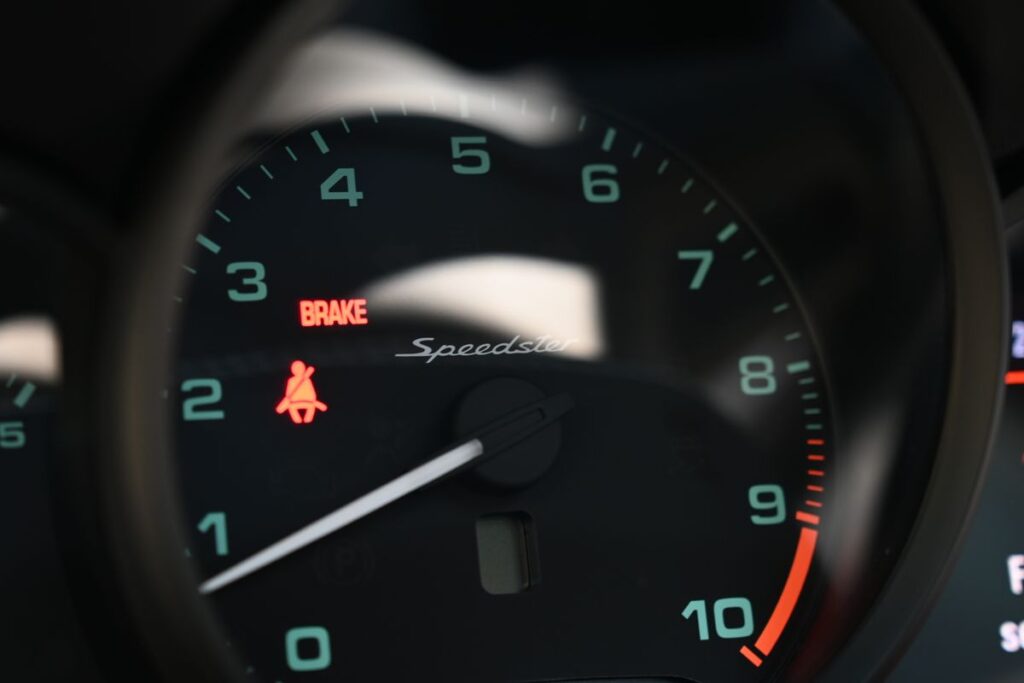
Why a code read is not a diagnosis
Many auto parts stores will plug in a scanner and print your code. That’s a useful first look, but a code points to a system, not a failed part. It tells you what the computer noticed, not why it happened.
Take a misfire code for cylinder 2. The cause could be a spark plug, an ignition coil, a fuel injector, a wiring fault, a vacuum leak or low compression. Replacing the coil because the printout suggested it may not fix anything, and the light comes back a week later.
Lean codes, oxygen sensor codes and catalytic converter efficiency codes work the same way. A sensor often reports a problem caused somewhere else. Guessing gets expensive, so testing comes first.

Check engine light diagnostic in Grand Rapids: how we find the cause
A car diagnostic test at our shop is a step-by-step process. We don’t stop at the code, and we explain what we found before any repair starts.
- Scan all modules. We read stored, pending and history codes, not just the one that lit the light.
- Check freeze-frame data. This snapshot shows engine speed, temperature, load and fuel trim at the moment the fault set.
- Watch live data. We drive or run the engine and watch sensor readings in real time to see what is out of range.
- Test the suspect parts. We check wiring, connectors, vacuum lines, ignition and fuel delivery to confirm the root cause.
- Repair and verify. After the fix, we clear the codes and confirm the system passes its self-tests.
Some faults trace back to wiring or a weak battery rather than an engine part. When that happens, our auto electrical repair service in Grand Rapids takes over the testing.

Common check engine light causes and how urgent they are
These are the faults we see most often behind a lit check engine light. Urgency depends on your car and how it’s running, so treat this as a guide, not a verdict.
| Cause | What you might notice | How urgent |
|---|---|---|
| Loose or worn gas cap | Nothing, or a fuel smell near the filler | Low Tighten it and watch for a few days of driving |
| Oxygen (O2) sensor | Worse fuel economy | Moderate Can lead to catalytic converter damage over time |
| Catalytic converter | Rotten egg smell, sluggish acceleration | Moderate to high Find out what damaged it first |
| Ignition coil or spark plugs | Rough idle, shaking, flashing light | High A misfire can overheat the converter |
| Mass airflow (MAF) sensor | Hesitation, stalling, rough running | Moderate |
| EVAP system leak | Usually nothing, sometimes a fuel smell | Low to moderate |
| Thermostat stuck open | Slow warm-up, weak cabin heat | Moderate Worse in winter |
If testing points to a failed converter or an exhaust leak, our exhaust and catalytic converter repair in Grand Rapids covers it. Neglected oil can also set timing and variable valve timing codes, which is one more reason to stay on schedule with your oil change service in Grand Rapids.
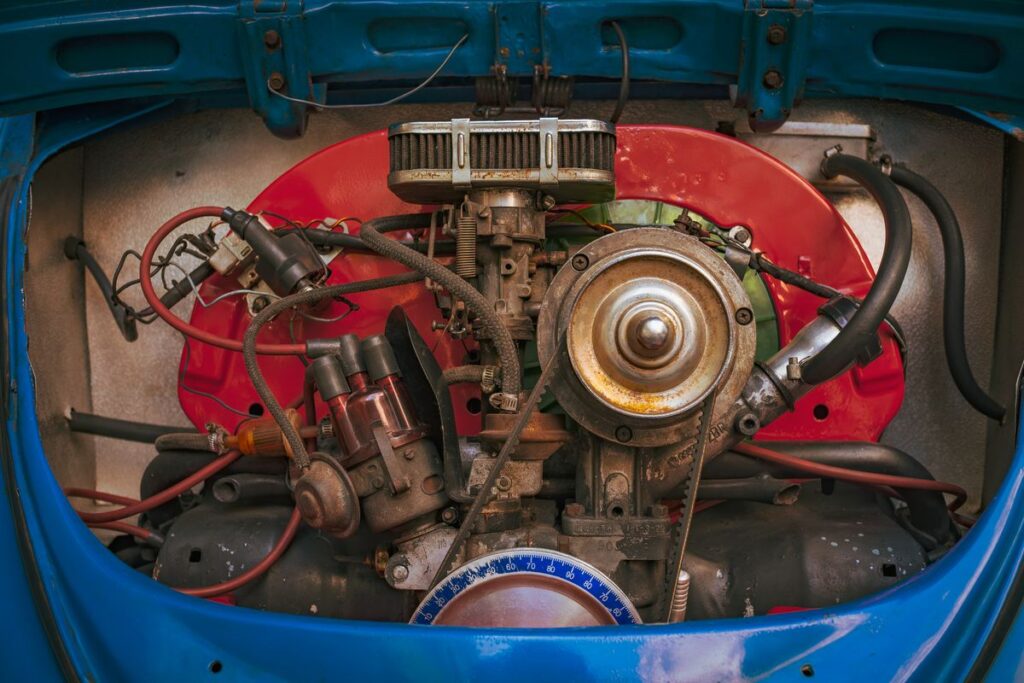
Audi and European check engine lights
European cars report more than the generic codes every scanner reads. Audi and other makes add manufacturer-specific codes, and a basic code reader may show little or nothing for them. Diagnosing them takes scan software that reaches every control module, plus knowing how these engines usually fail.
Our owner and head mechanic, Hendrick Hoffman, is Audi factory trained and has spent eight years focused on Audi and foreign cars. If your Audi’s light is on, see our Audi repair and diagnostics in Grand Rapids. Other imports are covered by our foreign car repair in Grand Rapids.
The Michigan angle: no emissions test to catch it
In states with emissions testing, a lit check engine light can fail an inspection and force a repair. Michigan doesn’t require emissions testing, so nobody checks that light but you. It’s your early warning, and it only helps if you act on it.
West Michigan weather adds its own triggers. Cold starts make weak coils and plugs misfire, thermostats that stick open set codes in January, and road salt eats at sensor wiring and connectors. Our Michigan winter car maintenance checklist covers how to get ahead of these.

Why drivers bring their check engine light to 456 AutoFix
- ASE and State of Michigan certified in engine repair, engine tune-up and electrical, the systems most check engine lights involve.
- Hendrick has worked in automotive service since 2005 and is a Universal Technical Institute graduate. Read more about Hendrick and our certifications.
- Foreign and domestic vehicles, with extra depth on Audi and European cars.
- We explain what we found and why, so you understand the repair before you approve it.
Check engine light repair is one part of what we do. You can see brakes, suspension, maintenance and more on our full list of auto repair services.
Related guides
Frequently Asked Questions
Is it safe to drive with the check engine light on?
If the light is steady and the car runs normally, you can usually drive it to a shop, but book a diagnosis soon. If it’s flashing, the engine is misfiring, so drive gently and get it checked right away.
Can a loose gas cap turn on the check engine light?
Yes. A loose cap lets fuel vapor escape, and the system flags it as an EVAP leak. Tighten it until it clicks and the light may go off after a few days of driving.
Will the check engine light turn off by itself?
Sometimes. If the computer re-tests the system and no longer sees the fault, the light can go out on its own. The code usually stays in memory, and an intermittent fault often comes back.
Why does my check engine light keep coming back?
Usually because the code was cleared or a part was swapped without finding the root cause. Testing the wiring, vacuum lines and sensors behind the code is how you stop the repeat.
Need check engine light diagnosis in Grand Rapids? Call 456 AutoFix at 616-279-3832, Monday to Friday 8am to 5pm, or book through our contact page.
Can’t make it during the day? Use our after-hours drop-off. We’re at 456 Carrier St NE in Creston.