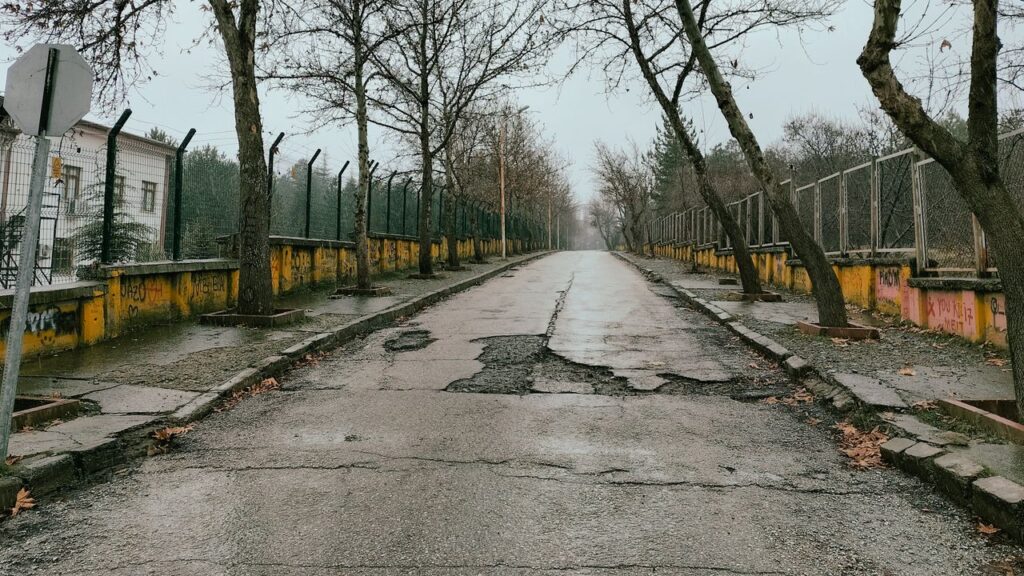
You hear the bang before you see the hole. In late winter, a hard pothole hit is part of driving in Grand Rapids, and most of the time the car is fine. Sometimes it isn’t, and the damage doesn’t always show up right away.
Here are the seven signs that a pothole hurt your car, what each one usually points to, and how soon you should act.
Quick answer
How do I know if a pothole damaged my car?
Watch for the car pulling to one side, an off-center steering wheel, new vibration, a clunk over bumps, a bulging tire or bent rim, uneven tire wear in the following weeks, or a new warning light. Any of these after a hard hit means your tires, wheels, suspension or steering parts should be checked soon.
Pothole Damage Signs: 7 Things to Watch For
A deep hole with a square edge sends a sharp jolt through the tire, wheel, suspension and steering. It can bend metal or tear a rubber bushing. Pay attention for the next few weeks, not just the next few minutes.
1. The Car Pulls to One Side
If your car pulls to one side after a pothole, the impact may have knocked the wheel alignment out of spec. On a straight, level road, you have to hold the wheel to keep the car in its lane. A pull can also mean something is bent, such as a tie rod, control arm or strut, which an alignment alone won’t fix.
2. The Steering Wheel Is Off Center
You’re driving straight, but the steering wheel logo sits tilted. That usually means the toe setting changed, often because a tie rod or its end took the hit.

3. A New Vibration
A shake that wasn’t there before often comes from a bent rim or a tire knocked out of balance. It usually shows up through the steering wheel at highway speed.
4. A New Clunk, Knock or Rattle
A clunk over bumps after a hard hit can mean a damaged strut mount, ball joint, sway bar link or control arm bushing. A hum or growl that rises with speed may point to a wheel bearing, since a sharp impact can damage one. Our guide to wheel bearing noise symptoms explains how to tell that sound apart.

5. A Tire Bulge or Bent Rim
A bubble on the tire sidewall means the cords inside were broken by the impact. The tire may hold air for now, but it can fail suddenly. A dent or crack in the rim edge can cause a slow leak, so check your tire pressure over the next few days.
6. Uneven Tire Wear Weeks Later
Some damage only shows up later. If the alignment shifted, one edge of the front tires can wear faster than the rest. Scalloped or cupped patches can point to a worn strut or shock. Run your hand across the tread every few weeks after pothole season.

7. Warning Lights on the Dash
The tire pressure light can come on from a pinched tire or a cracked rim. An ABS or traction control light can mean a wheel speed sensor or its wiring was damaged near the hub. Don’t just reset a light: check what it’s telling you first.
Sign, Likely Damage and How Urgent
Use this table as a guide, not a diagnosis. One hit can damage more than one part.
| Sign after a pothole | What may be damaged | How urgent |
|---|---|---|
| Sidewall bulge, flat or cracked rim | Tire structure, wheel | High Stop driving on it and fit the spare |
| Steering feels loose or wanders | Tie rod, ball joint, steering rack | High Have it inspected right away |
| Car pulls to one side | Alignment, bent tie rod, control arm or strut | Soon Inspect parts before an alignment |
| New clunk over bumps | Strut mount, ball joint, sway bar link, bushing | Soon Book a suspension check |
| Vibration at highway speed | Bent rim, tire balance, wheel bearing | Soon Check within days |
| ABS or tire pressure light | Wheel speed sensor, slow leak | Moderate Check pressures, then have it scanned |
| Steering wheel slightly off center | Alignment, tie rod | Moderate Check before tires wear unevenly |
| Uneven tire wear weeks later | Alignment, worn strut or shock | Low Plan an inspection |
What to Do Right After You Hit a Pothole
After a hard hit, a quick look now can save you from a blowout on the highway.
- Pull over safely. Use a parking lot or side street, not the shoulder of a busy road, and turn on your hazards.
- Look at the tire and rim. Check the sidewall for a bulge or cut and the rim edge for a dent or crack.
- Listen and feel as you drive off. Notice any pull, shake, clunk or new noise at low speed first.
- Check tire pressure. Use a gauge that day and again over the next few days to catch a slow leak.
- Note where it happened. The street and nearest cross street help if you report the pothole.
If you see a bulge or the tire is going flat, put on the spare or call for help rather than driving on it. A damaged tire or wheel is a job for a tire shop, and we can tell you when that’s the case.

When to Have Your Suspension and Steering Checked
AAA’s pothole research lists tires, wheels, alignment, suspension and shocks as common damage. It advises a prompt inspection if you notice new noises or vibrations after a hit.
Our suspension and steering repair in Grand Rapids covers inspecting and replacing tie rods, ball joints, control arms, struts, shocks and sway bar links. If a hum points to the hub, we also handle wheel bearing replacement in Grand Rapids. Hendrick, our owner and head mechanic, is ASE and State of Michigan certified in steering and suspension.
An important point: an alignment won’t fix a bent or loose part. Replacing steering or suspension parts usually changes the alignment, so you’ll likely need one afterward at an alignment shop. We’ll tell you when that applies to your repair.
Pothole Season in Grand Rapids and How to Report One
Potholes in West Michigan peak from about February through April. Water seeps into cracks in the pavement, freezes and expands, then thaws and leaves a gap that traffic breaks apart. Each warm spell after a cold snap repeats that freeze-thaw cycle, and road salt adds to it.
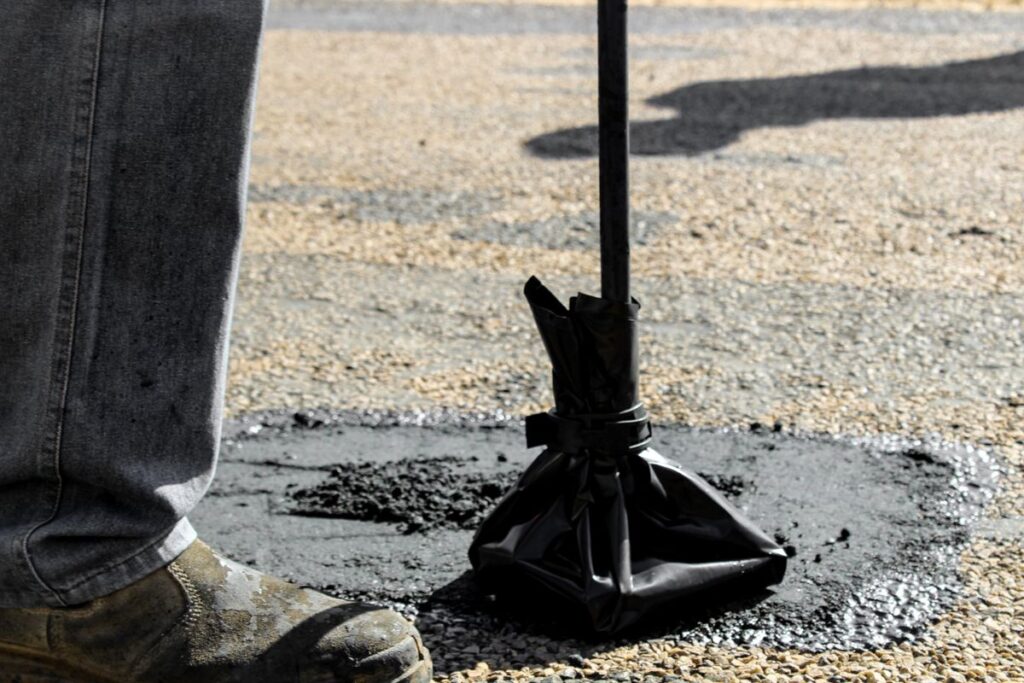
The City of Grand Rapids takes pothole reports through GR311. Use the grcity311 app or the city website, or call 311 (616-456-3000). Give the nearest address or intersection so crews can find it.
Not every road belongs to the city. The Kent County Road Commission maintains 28th Street and East Beltline, and state highways such as I-96 and US-131 go to MDOT. For more on getting your car ready for the cold months, read our Michigan winter car maintenance checklist.
Frequently Asked Questions
Why does my car pull to one side after hitting a pothole?
The impact can shift the wheel alignment or bend a steering or suspension part such as a tie rod, control arm or strut. Have the parts inspected first, because an alignment alone won’t correct a bent part.
How long after hitting a pothole can damage show up?
A bulge, flat or pull usually shows up right away. A slow leak can take hours or days, and uneven tire wear from a shifted alignment can take weeks to notice.
Is it safe to drive with a bulge in my tire?
No. A sidewall bulge means the tire’s internal structure is damaged and it can fail suddenly. Put on the spare and have the tire replaced at a tire shop.
Can a pothole damage a wheel bearing?
Yes, a hard impact can damage a wheel bearing. The usual sign is a hum or growl that gets louder with speed, sometimes with a loose feel in the wheel.
Need suspension or steering repair after a pothole in Grand Rapids? Call 456 AutoFix at 616-279-3832, Monday to Friday 8am to 5pm, or book through our contact page.
Can’t make it during the day? Use our after-hours drop-off. We’re at 456 Carrier St NE in Creston.