
A clunking noise over bumps usually means a suspension or steering part has worn loose. The bump is simply the moment that slack closes with a knock.
Some causes are an annoyance. Others affect steering and need a look right away.
Quick answer
What causes a clunking noise when you go over bumps?
The usual causes are worn sway bar links or bushings, tired struts, shocks or strut mounts, worn ball joints, cracked control arm bushings, loose tie rod ends, or a loose exhaust hanger or heat shield. Ball joints and tie rods affect steering, so a clunk with loose or wandering steering needs an inspection right away.

6 Likely Causes of a Clunking Noise Over Bumps
Your suspension is a set of arms, joints and rubber bushings that let each wheel move while staying pointed where you steer. When any joint wears, it gains free play, and a bump makes it clunk.
1. Sway Bar Links and Bushings
The sway bar (also called a stabilizer bar) limits body lean in corners. Short end links connect it to the suspension, and rubber bushings hold it to the frame. Worn links are a very common source of a light, hollow clunk or rattle over uneven pavement, often louder at low speed.
It is often worst when one wheel hits a bump and the other doesn’t. A worn link is rarely dangerous on its own.
2. Struts, Shocks and Strut Mounts
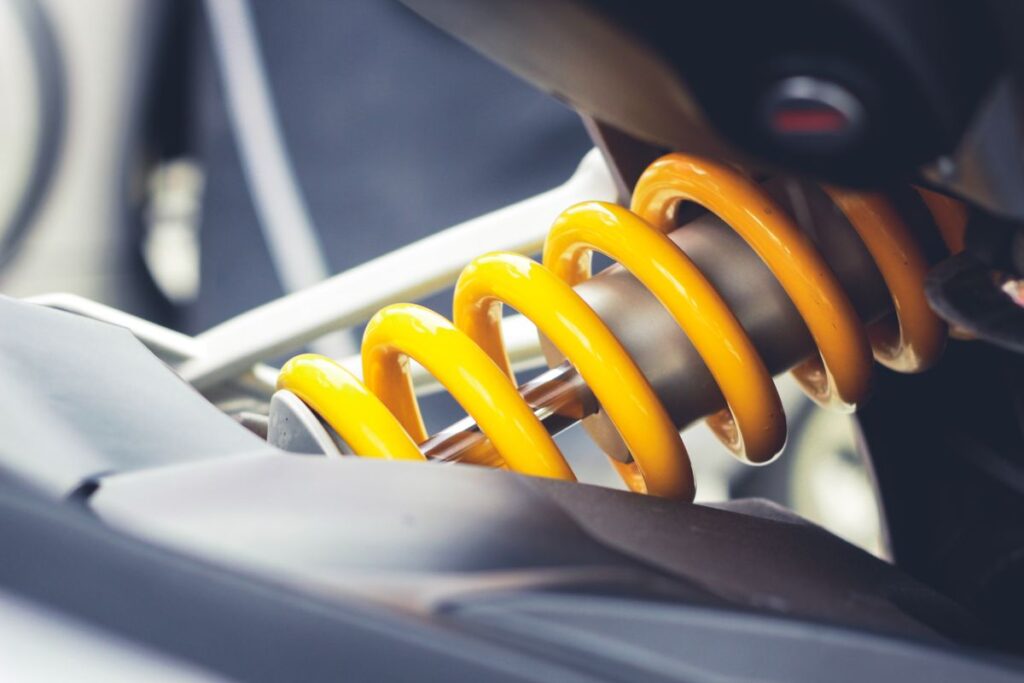
Struts and shocks control spring movement. Worn ones make the car float, bounce after dips and thump over sharp bumps. A worn strut mount, the rubber and bearing assembly at the top of the strut, often gives a clunk you hear near the top of the fender.
3. Ball Joints
Ball joints are the pivots that connect the control arms to the steering knuckle. Moog describes worn ones in its guide to symptoms of bad ball joints as a faint, intermittent clunk from one corner over bumps, dips or corners that gets louder over time.
Other clues include sloppy steering, drifting over bumps and extra wear on one edge of a front tire. This is the cause to take most seriously, because a badly worn joint can separate and let the wheel fold out of position.
4. Control Arm Bushings
Control arms pivot on rubber bushings that soak up road shock. Over time the rubber cracks, separates or goes soft, and the arm starts to shift in its mount. You may hear a dull clunk over bumps or when you brake hard, and the steering can feel vague.
Worn bushings also let the alignment shift, which wears tires unevenly and adds load on the ball joints.
5. Tie Rod Ends
Tie rods connect the steering rack to each front wheel. When the ends wear, you may notice a knock or clunk from the front, especially when turning at low speed or turning over a bump. Moog’s page on symptoms of bad tie rods also lists steering wheel play, vibration and uneven tire wear.
Because tie rods are part of the steering, treat a clunk with any looseness in the wheel as urgent.
6. A Loose Exhaust Hanger or Heat Shield
Not every clunk is suspension. The exhaust hangs on rubber hangers, with thin metal heat shields around the pipes. When a hanger breaks or a shield rusts loose, the pipe can bang the body over bumps or the shield can buzz.

This sound usually comes from under the middle of the car. If you also hear a louder exhaust note, read our guide to exhaust leak symptoms and what they mean.
How to Describe the Noise to Your Mechanic
A clear description saves guesswork. Before your appointment, note these points:
- Front or rear, left or right: a passenger can help you pinpoint the corner.
- Type of bump: sharp hits like potholes and expansion joints, or slow rolling dips.
- Speed: only at parking lot speeds, or at any speed.
- Turning: whether it happens when turning over a bump, or when turning the wheel while parked.
- Other changes: loose steering, pulling, a floaty ride or uneven tire wear.
A steady hum or growl that rises with speed is a different problem. Our post on wheel bearing noise symptoms covers that sound.
Clunk Causes Compared by Clue and Urgency
Use this table to match what you hear. Only a hands-on inspection with the car raised can confirm which part has play.
| Likely cause | Typical clue | How urgent |
|---|---|---|
| Worn ball joints | Clunk from one front corner, sloppy steering, drifting, edge tire wear | High Book an inspection right away |
| Worn tie rod ends | Knock when turning at low speed, play in the steering wheel | High Book an inspection right away |
| Struts, shocks or strut mounts | Thump over sharp bumps, bouncing, clunk near the top of the fender | Soon Get it checked within days |
| Control arm bushings | Dull clunk over bumps or when braking, vague steering | Soon Get it checked within days |
| Sway bar links or bushings | Light rattle or clunk at low speed, worse over uneven bumps | Moderate Plan a repair in the next few weeks |
| Loose exhaust hanger or heat shield | Bang or tinny rattle from under the middle of the car | Low Fix at your next service visit |
Is It Safe to Keep Driving?
It depends on the part behind the clunking noise over bumps. A sway bar link or heat shield is usually safe to drive on carefully until your appointment. A worn ball joint or tie rod is not something to put off.

Stop driving and have the car checked if the clunk comes with any of these:
- Steering that feels loose, wanders or has play at the center
- The car pulling hard to one side or a wheel that looks tilted
- A sudden, much louder bang after hitting something
Avoid replacing parts by guesswork. Owners often fit new sway bar links first, then find the clunk remains because a strut mount or bushing was the real cause.
Why Grand Rapids Roads Speed Up Suspension Wear
West Michigan winters are hard on front ends. Freeze-thaw cycles open potholes every spring, and each hard hit loads the ball joints, bushings and struts. Road salt adds corrosion, rusting link studs and exhaust hangers and drying out rubber bushings.

If the clunk started right after a hard hit, our guide to pothole damage signs to check after a hard hit walks through what else to look for. A suspension check is also worth adding to your winter car maintenance checklist each fall.
Getting a Suspension Inspection
A proper diagnosis means raising the car and checking each joint, bushing, mount and hanger for play. Our suspension repair in Grand Rapids covers struts, shocks, ball joints, bushings, links and tie rods on foreign and domestic vehicles. Hendrick Hoffman, our owner and head mechanic, is ASE and State of Michigan certified in steering and suspension.
Shopping for a used car? A clunk on the test drive is worth checking before you buy. See our used car buying checklist for Grand Rapids buyers.
Frequently Asked Questions
Is it a sway bar link or a strut?
A sway bar link usually gives a lighter rattle at low speed. A worn strut or strut mount tends to thump on sharp hits, and the car may feel bouncy.
Do bad ball joints clunk over bumps?
Yes. Worn ball joints often make an intermittent clunk from one front corner over bumps and dips that gets louder over time. Because a badly worn joint can separate, have it inspected right away.
Why does my car clunk over bumps only at low speed?
Driveways and speed bumps move each wheel a long way, which takes up slack in worn links, bushings and joints. At highway speed the noise can hide.
What does a clunk from the rear over bumps mean?
Rear clunks often come from worn shocks, sway bar links, bushings or a loose exhaust hanger. Check the trunk and spare tire well for loose items first.
Need suspension repair in Grand Rapids? Call 456 AutoFix at 616-279-3832, Monday to Friday 8am to 5pm, or book through our contact page.
Can’t make it during the day? Use our after-hours drop-off. We’re at 456 Carrier St NE in Creston.