
As an Amazon Associate, 456 AutoFix earns from qualifying purchases. Product links below go to Amazon, where you can confirm the right part for your vehicle.
The Bosch CP4 high-pressure pump uses the diesel flowing through it as its only lubricant, so fuel quality matters more to this pump than to older designs. Owners hunting for the best diesel additive for CP4 pump protection are really shopping for lubricity: a way to put back some of the film strength that refining took out of modern pump fuel.
This guide explains what lubricity means, how to read an additive label, and then reviews six bottles that list it as a main job. One thing up front: no additive can promise to stop a CP4 failure, and none of the makers below claims it can.
Quick answer
Which additive should a CP4 diesel owner use?
Pick a product whose label makes lubricity the main job and dose it at every fill-up. Opti-Lube XL Xtreme Lubricant is the concentrated, focused choice, Hot Shot’s Secret LX4 adds lubricity in a small dose, and Howes Diesel Defender pairs lubricity with injector cleaning and water removal. Keep changing filters and draining water too.
Our Quick Picks
Three lubricity picks for the most common plans: a focused lubricity product, a small-dose booster and a heavy-duty all-rounder. Three more are reviewed below.

Opti-Lube XL Xtreme Lubricant
Concentrated formula built around fuel lubricity first.

Hot Shot's Secret LX4
Lubricity-only booster that can run alongside another treatment.

Howes Diesel Defender
Lubricity, injector cleaning and water removal in one bottle.
Why the CP4 Pump Depends on Fuel Lubricity
According to the EPA’s diesel fuel standards page, highway diesel once carried as much as 5,000 ppm of sulfur, and from 2006 the limit was phased down to 15 ppm. That fuel is ultra-low sulfur diesel (ULSD). The deep refining that strips sulfur also strips natural compounds that helped fuel coat metal parts, so refiners add lubricity improvers to meet the pump spec.
Inside a CP4, a roller rides on a cam to drive the pistons that build rail pressure. When the fuel film between those parts gets thin, the roller can skid and wear, and the metal it sheds travels downstream to the rail and injectors. That is why a CP4 failure often means replacing much of the fuel system.
Water, air from running the tank dry and dirty fuel also play a part, so an additive is one layer of care, not a cure.
What to Look for on the Label
Lubricity is measured on a bench rig called the High Frequency Reciprocating Rig, or HFRR, which rubs a steel ball against a disc in the fuel and measures the wear scar. A smaller scar means better lubricity. The technical guide at DieselNet notes that HFRR is the most common bench test for diesel lubricity, and also that bench tests only reproduce some of the wear seen in real pumps.
- A stated lubricity purpose: wording such as “lubricity improver”, not a vague “conditions fuel”.
- Test references: some makers quote HFRR results or name the ASTM D975 limit. Treat those as the maker’s claims.
- Water handling: a demulsifier helps water drop out at the fuel filter and water separator, where it can be drained.
- A dose you will keep up: lubricity only helps while it is in the tank.
- Emissions safety: late model trucks have a DPF and SCR system, so check the label says it is safe with them.
Cetane boost and cleaning are useful extras. For deposits, see our fuel system cleaner for diesel trucks picks; gasoline engines are covered in our separate fuel system cleaner guide.
Best Diesel Additive for CP4 Pump: Six Bottles Reviewed
Each product below lists lubricity among its main jobs on Amazon. Follow the treat rate on the bottle.
1. Opti-Lube XL Xtreme Lubricant: 4 oz Diesel Lubricity Additive, 12-Pack
- Formulated to supplement the lubricity of ULSD
- Helps keep injectors and fuel system parts clean
- Suitable for year-round use with modern emissions systems
- Concentrated, so a small amount treats a large volume
Opti-Lube sells several diesel formulas, and XL Xtreme Lubricant is the one the brand positions for maximum fuel pump and injector protection. The listing describes it as designed for ultra-low sulfur diesel to supplement fuel lubricity and support normal operation of the pump and injectors. For a CP4 owner, that narrow focus is the whole point: the product is not trying to be a cetane booster or an anti-gel first.
The formula is concentrated, so a small amount treats a large volume of fuel according to the maker. This pack holds twelve 4 oz bottles, which makes it easy to keep one in the door pocket and dose a single tank without measuring out of a big jug. Opti-Lube also says it helps maintain injector and fuel system cleanliness as part of routine use, and that it suits use all year with modern diesel engines and emission systems when used as directed.
The listing is light on test figures, so you are trusting the brand’s positioning rather than a quoted wear scar number. Small bottles also cost more per treated gallon than bulk sizes. Owners who treat every tank on a high-mileage truck may want to compare prices on larger containers before settling in.
View Opti-Lube XL Xtreme Lubricant on Amazon
2. Hot Shot’s Secret LX4 Lubricity Extreme: 32 oz Fuel Lubricity Additive
- Listed to raise fuel lubricity by up to 56%
- Formulated without harmful solvents or alcohol
- Works in gasoline, ethanol blends or diesel
- Can be used with fuel stabilizers and other treatments
LX4 is the lubricity component from the Hot Shot’s Secret range sold on its own. The maker says it increases fuel lubricity by up to 56%, adding back some of what ultra-low sulfur diesel lacks to help keep fuel pumps and injectors from unnecessary wear. The 32 oz bottle treats 320 gallons according to the listing, so a bottle lasts many fill-ups on a light-duty pickup.
Two details stand out for CP4 owners. First, the listing says LX4 contains no harmful solvents or alcohol, ingredients some owners prefer to keep away from high-pressure fuel parts. Second, the maker states it can be used with fuel stabilizers and other fuel system treatments, so it can sit alongside a cleaner you already use rather than replacing it. It also lubricates the upper cylinder in gasoline engines, which makes one bottle handy in a mixed household.
Because it is a single-purpose product, LX4 will not raise cetane or deal with gelling in winter. Owners who want one bottle for everything may find an all-in-one treatment simpler. For anyone who wants a lubricity booster they can add without changing the rest of their routine, it is a sensible fit.
View Hot Shot's Secret LX4 on Amazon

3. Howes Diesel Defender: 32 oz Injector Cleaner and Fuel Lubricator, 2-Pack
- Listed with up to 2.5x more lubricity than other Howes products
- HFRR results quoted against US and European limits
- IDX4 detergent cleans injectors in three treatments
- Petroleum-based formula that demulsifies water
Diesel Defender is the Howes product with the most lubricity in its range, up to 2.5 times more according to the listing. Howes quotes independent HFRR wear scar testing in which treated fuel beat both the US limit of 520 microns and the stricter European limit of 460 microns. Those are the maker’s figures, but it is useful to see a product tie its claim to a named test.
It is also a cleaner. The IDX4 detergent is designed to clean the whole fuel system within three treatments when used as directed, and to slow new deposits after that. Howes describes the formula as petroleum-based and says it demulsifies water so it can be removed, rather than using alcohols to carry water through the system. That combination of lubricity, cleaning and water handling suits heavy-duty pickups that tow and see long hours.
This two-pack of 32 oz bottles is a good amount for regular use. Howes also guarantees a fuel economy gain on the listing, which is a maker claim to judge on your own truck rather than count on. Owners who want only lubricity may prefer a simpler product without the cleaning package.
View Howes Diesel Defender on Amazon
4. Biobor JF Diesel Fuel Additive: 32 oz Biocide with Added Lubricity
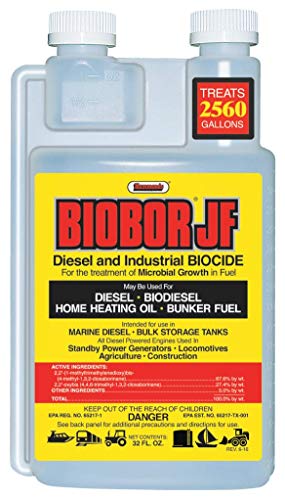
- Kills and prevents bacteria and fungi in fuel and tanks
- Listed as restoring lubricity per ASTM D6079 HFRR testing
- Dual phase chemistry works in both water and fuel
- Helps extend fuel filter life by limiting sludge
Biobor JF is best known as a fuel biocide, so it comes at pump protection from a different angle than the other bottles here. Microbes can grow where water meets diesel in a tank, and the sludge they leave behind clogs filters and feeds corrosion. The listing says JF kills and prevents bacteria and fungi, and its dual phase chemistry works in both the water and fuel layers for fuller coverage.
Lubricity is the part that earns it a place in a CP4 article. The maker states that JF lubricates injectors and fuel pumps and quotes ASTM D6079 HFRR testing, the industry wear scar method, as proof that it restores lubricity levels beyond the standard. It also lists OEM approval and says proactive use helps extend fuel filter life by preventing biomass build-up.
This is not an everyday cleaner or cetane booster, and the listing does not claim injector cleaning. It makes the most sense for a truck that sits for long spells, a farm tank or a generator that shares fuel with the pickup. Follow the shock and maintenance dose rates on the label, because a biocide is not something to guess at.

5. Doc’s Diesel 24/7 Cetane Boost + All-in-One: 16 oz, Treats 400 Gallons

- Restores lubricity that ULSD lacks
- Boosts cetane by up to 7 points
- Reduces injector deposits with daily use
- Helps disperse water to guard against corrosion
Doc’s Diesel also sells filters and parts for diesel trucks, and its 24/7 treatment is built for use at every fill-up. The listing says it restores the lubricity that ultra-low sulfur diesel lacks to protect fuel pumps and injectors from premature wear, which is the main reason a CP4 owner would reach for it. The 16 oz bottle treats 400 gallons at the standard rate.
Beyond lubricity, the maker lists a cetane boost of up to 7 points for quicker starts and smoother throttle response, plus injector cleaning and moisture control. Dosing is simple: 1 oz per 25 gallons for a standard treatment, or 2 oz per 25 gallons for a stronger dose. The listing names it as safe for Power Stroke, Cummins, Duramax and other common diesel engines.
Note that this formula helps disperse water rather than separate it, which is a different approach from the demulsifying products above. Neither is wrong, but owners who rely on a water separator and drain it often may prefer a demulsifier. It is a newer product with less history than some long-running brands, so read the label closely before your first tank.
View Doc's Diesel 24/7 on Amazon
6. Opti-Lube Boost! Max Cetane Diesel Additive: 1 Quart, Treats 640 Gallons

- Raises cetane by 7 to 9 points
- Increases the lubricity of ultra-low sulfur diesel
- Cleans injectors and helps prevent new build-up
- Demulsifier helps separate water from fuel
Boost! is the Opti-Lube formula built for the highest cetane gain in the range, with lubricity added rather than leading. The listing claims a rise of 7 to 9 cetane points, which can mean quicker starts and smoother running, and it says the product increases the lubricity of ultra-low sulfur diesel as well. The 1 quart bottle treats 640 gallons, so it covers a long run of fill-ups on a full-size pickup.
The maker also lists injector cleaning with protection against new deposits, rust and corrosion prevention, and compatibility with all vehicle emissions systems, which matters on trucks with a DPF and SCR. It acts as a demulsifier to help water drop out for the filter and separator to catch, and Opti-Lube says it more than doubles the storage life of standard diesel. A fuel economy gain is claimed too, which is worth judging on your own truck.
Because cetane is its headline job, Boost! delivers less lubricity per dose than a lubricity-first product such as XL from the same brand. It has no anti-gel either. Pick it if you want stronger cetane and some added pump protection from one bottle, and follow the label dose.
View Opti-Lube Boost! on Amazon
Six Additives Side by Side
Details come from each Amazon listing.
| Additive | Main job | Extras listed | Suits |
|---|---|---|---|
| Opti-Lube XL Xtreme Lubricant | Lubricity | Fuel system cleanliness, year-round use | Owners who want one focused product |
| Hot Shot’s Secret LX4 | Lubricity | Alcohol and solvent free, gas or diesel | Small dose alongside another treatment |
| Howes Diesel Defender | Lubricity and cleaning | Injector detergent, water removal | Heavy-duty and towing trucks |
| Biobor JF | Biocide and lubricity | Microbe control, tank corrosion protection | Trucks and equipment that store fuel for long spells |
| Doc’s Diesel 24/7 | All-in-one | Cetane boost, moisture control | Daily drivers who want one bottle |
| Opti-Lube Boost! | Cetane and lubricity | Injector cleaning, demulsifier | Owners who want stronger cetane with added lubricity |
There is no lab-proven winner, and the best diesel additive for CP4 pump use is the one with a clear lubricity claim that you will actually pour in every tank.

Habits That Protect a CP4 Through a Michigan Year
Humid summers and cold nights in West Michigan put condensation in fuel tanks, and water is hard on a pump that relies on fuel for lubrication. Drain the water separator when the dash light or your manual says to, and change the fuel filters on schedule. A truck that sits for weeks benefits from a full tank and, if it will sit longer, a product from our fuel stabilizer picks that is labeled for diesel.
Avoid running the tank close to empty, since air and sediment at the bottom of the tank are bad news for any high-pressure pump. In winter, switch to an anti-gel product before the first deep freeze, and keep the lubricity plan going.

Signs Your Fuel System Needs a Professional Look
Stop pouring and start diagnosing if you see a check engine light with fuel rail pressure codes, hard starts, stalling, a sudden loss of power or a metallic glint in a drained filter. An additive will not reverse wear that is already underway.
Our check engine light diagnostics in Grand Rapids can read the codes and live data and tell you what you are dealing with. Routine care helps as well, and an oil change at our Creston shop is a good time to ask about filters and other maintenance items that are due.

For a broader look at diesel treatments, see our overview of the diesel additive options for daily use.
More Buying Guides
Frequently Asked Questions
Can a diesel additive prevent a CP4 pump failure?
No product can promise that. A lubricity additive adds a margin of protection against wear from thin fuel, but water, air, dirty fuel and debris also cause failures. Treat an additive as one part of a plan that includes filter changes and draining water.
How often should I add a lubricity additive?
Most of these products are meant for every fill-up, because the additive only works while it is in the fuel. Follow the treat rate on the bottle, since doses vary widely between makers.
What does the HFRR wear scar number mean?
HFRR is a bench test that rubs a steel ball on a disc in the fuel and measures the scar it leaves in microns. A smaller scar means better lubricity. The US diesel spec allows a larger scar than the European spec, which is why some makers quote both.
Can I mix two diesel additives in the same tank?
Some makers say their product can be used with other treatments, as Hot Shot’s Secret does for LX4. Unless both labels allow it, pick one product and use it consistently rather than stacking several.
Seeing rail pressure codes or a truck that suddenly struggles to start? Ring 456 AutoFix on 616-279-3832 between 8am and 5pm on weekdays, or request a diagnostic visit through our contact page.
Need the truck for work all day? Our after-hours drop-off at 456 Carrier St NE, Grand Rapids, lets you hand over the keys once the job site closes.