As an Amazon Associate, 456 AutoFix earns from qualifying purchases. Product links below go to Amazon, where you can confirm the right part for your vehicle.
Your first time claying a car feels a little odd: you rub a lump of putty across clean paint and listen for it to go quiet. The best clay bar for beginners is gentle, easy to keep slippery and forgiving when your technique is still rough.
This page sticks to that first-timer angle. You will find how clay grades differ, six gentle bars and starter sets, a simple first-session plan and the mistakes that leave haze behind. For complete multi-bar kits, our clay bar kit roundup goes deeper.
Quick answer
Which clay bar should a first-timer start with?
Start with a fine or soft grade bar that comes with its own lubricant, such as the Meguiar’s Quik Clay Starter Kit or the Chemical Guys OG Clay Bar and Luber set. If you would rather use plain water as the lubricant, the Bilt Hamber Auto-Clay Soft bar is designed for exactly that.
Our Quick Picks
Three easy starting points: a complete starter kit, a clay and lube pair, and a soft bar that uses plain water. All six options are reviewed below.

Meguiar's Quik Clay Starter Kit
Clay and a matched lubricant in one box, made for a first attempt.
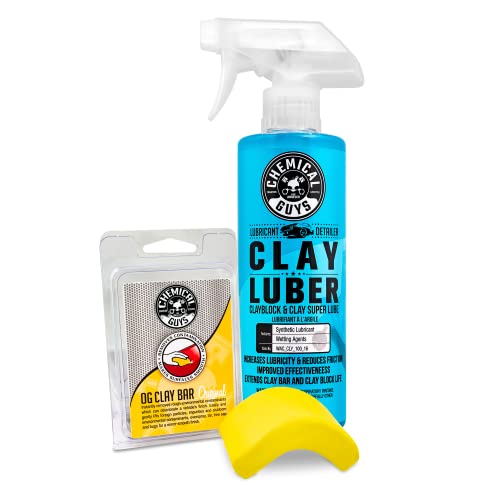
Chemical Guys OG Clay Bar & Luber
A two-piece set that pairs the clay with its own synthetic lubricant.

Bilt Hamber Auto-Clay Soft
A soft bar designed to glide on a mist of plain tap water.
Fine, Medium or Heavy: Picking a Gentle Grade
When you shop for the best clay bar for beginners, grade comes first, because it tells you how hard the bar grabs. Fine or soft bars lift light overspray, rail dust and sap mist with little risk to the clear coat. Medium and heavy bars remove stubborn contamination faster, but they are more likely to leave light marring that needs a polish afterward.
Grade names are not standard between brands, so one maker’s “medium” can feel close to another’s “fine”. Bilt Hamber’s Auto-Clay guide gives a useful rule: the firmer Regular bar is for heavily contaminated paint or a car that has never been clayed, while Soft suits paint in good condition and cold weather. It also points out that every clay bar firms up in the cold and softens in the heat.
- Paint that feels slightly rough: a fine or soft bar is enough, and it is the safer place to learn.
- Paint that feels like sandpaper: start with an iron remover, then use a fine bar before stepping up a grade.
- Dark paint: stay with fine grade and plan on a wax or sealant straight after.
Starter Kit or Bare Bar? Choosing the Best Clay Bar Kit for Beginners
A bare bar costs less per gram, but it leaves you to find a compatible lubricant. A starter kit removes that guesswork, because the maker has already paired the clay with a spray that keeps it gliding. For most people, the best clay bar for beginners is one that arrives with its lubricant already matched.
Best Clay Bar for Beginners: Six Gentle Options Reviewed
Each pick below is a fine, soft or light-duty clay, and the first two include lubricant in the box. Check the Amazon listing for the current contents before you order.
1. Meguiar’s Quik Clay Starter Kit: Clay Bar with Quik Detailer Lubricant
- Non-abrasive detailing clay bar
- Quik Detailer spray as the lubricant
- Lifts overspray, tar, sap and fallout
- Leaves a smooth base for wax
The Meguiar’s Quik Clay Starter Kit is built around the idea that a first-timer should not have to work out which spray goes with which clay. The box holds a detailing clay bar and a bottle of Meguiar’s Quik Detailer, which acts as the lubricant while you work. Meguiar’s describes the clay as non-abrasive, and the listing says it removes overspray, tar, tree sap and industrial fallout from the paint surface.
In use, you wash and dry the car, mist a small area with Quik Detailer and glide a flattened piece of clay across it until the drag disappears. Because the spray is also a quick detailer, any leftover film wipes off with a clean microfiber towel, so there is no separate rinse step. A smooth surface also helps the wax you apply afterward bond and last longer, which Meguiar’s lists as one of the main benefits.
The kit suits a sedan, a small SUV or a first trial on one panel. Listings for this kit have described different bar and bottle sizes, so check the current contents on Amazon. A heavily contaminated truck may need a second bar or a stronger grade, and the kit includes no towel, so keep a few clean microfiber cloths ready before you start.
View Meguiar's Quik Clay Starter Kit on Amazon
2. Chemical Guys OG Clay Bar and Luber: Light to Medium Clay with Synthetic Lube
- Light to medium duty clay bar (CLY_113)
- Synthetic Luber clay lubricant included
- Rated for clear coat and single stage paint
- Also works on glass, chrome and polished metal
The Chemical Guys OG Clay Bar and Luber kit is a simple two-piece set: one clay bar and a bottle of Luber, the brand’s synthetic clay lubricant. Chemical Guys rates the bar as light to medium duty, which puts it a step firmer than a true fine grade while still being gentle enough for regular use. The listing says it removes overspray, brake dust, industrial fallout, tree sap and road grime.
For a beginner, the useful part is that the lubricant is designed for the clay. You spray Luber onto a clean panel, glide the bar lightly until it moves freely, then wipe the area with a microfiber towel. Chemical Guys lists the kit as suitable for clear coat and single stage paint, and also for glass, polished metal and chrome, so the same bar can treat a gritty windshield as well as the hood.
This kit makes most sense when the paint has an average level of grime and you want something a little quicker than a soft bar. On dark paint, keep pressure very light and follow with a polish if you see faint haze. It does not include towels, and anyone who wants a fully fine grade for frequent claying may prefer a softer bar.
View Chemical Guys OG Clay Bar & Luber on Amazon

3. Bilt Hamber Auto-Clay Soft: 200g Clay Bar That Uses Water as Lubricant
- 200 g soft grade clay bar
- Plain water as the lubricant
- Very low abrasive effect
- Made for frequent and winter use
Bilt Hamber Auto-Clay Soft is a 200 gram bar from a British maker that takes a different approach to lubrication. Instead of a special spray, Bilt Hamber says plain water is all the bar needs, applied with a plant mister so the panel stays thoroughly wet. That removes one product from the shopping list and makes the bar easy to use straight after a rinse.
The Soft grade is the gentlest of the three Bilt Hamber bars. The maker recommends it for paint in good condition, for owners who like to clay often and for cold weather, since all clay firms up as the temperature drops. The listing describes its abrasive effect as virtually nonexistent, and Bilt Hamber says a bar is good for about four or five cleans on an average-sized car.
There are a few rules to respect. The bar must never be used dry, so keep misting as you go, and Bilt Hamber says to throw it away if it is dropped. On a car that has never been clayed or is badly contaminated, the maker points to its firmer Regular bar, so the Soft grade suits upkeep more than a first deep clean.
View Bilt Hamber Auto-Clay Soft on Amazon
4. Adam’s Polishes Fine Grade Clay Bar: Two 100g Ultra Fine Bars in a Jar
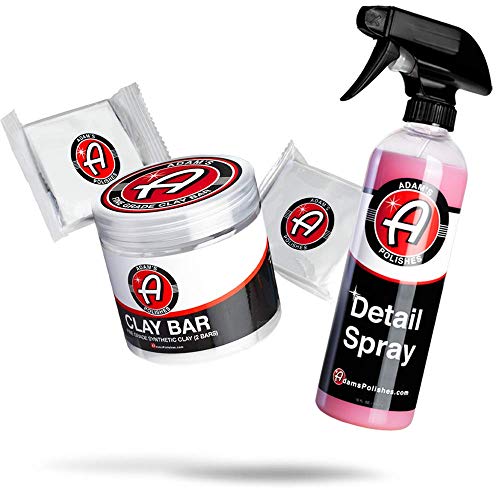
- Two 100 g fine grade bars
- Stored in a reusable jar
- Works on paint, glass, trim and wheels
- Pairs with Adam's Detail Spray as lube
The Adam’s Polishes Fine Grade Clay Bar comes as two 100 gram bars stored in a lidded jar. Adam’s describes the material as soft and ultra fine, made to pick up the smaller particles that leave paint feeling rough after a wash. Having two bars means one can stay sealed as a spare, or you can cut each into smaller pieces so a dropped piece costs less.
The jar matters more than it sounds. Clay that dries out or collects dust becomes harder to use safely, and a sealed container keeps it clean between sessions. Adam’s lists the bar for painted surfaces, glass, polished metal and clear plastics, and the listing names brake dust, hard water spots and tree sap among the deposits it can remove.
No lubricant comes in the jar. Adam’s recommends its own Detail Spray, though any quick detailer made for claying will keep the bar gliding. Because it is a fine grade, it suits light contamination and a quick prep before wax, sealant or polishing. For paint that feels like sandpaper, an iron remover first, or a firmer grade, will save a lot of rubbing.
View Adam's Polishes Fine Grade Clay Bar on Amazon
5. Clay Magic Blue Bar: 200g Fine Grade Clay for Paint, Glass and Chrome

- 200 g fine grade blue clay
- Rated for up to 20 details
- Glass, chrome, fiberglass and enamel
- Lifts sap mist, bug residue and overspray
Clay Magic Blue is one of the older names in detailing clay, sold by Auto Magic as a 200 gram fine grade bar. The blue bar is the gentle option in the range, with a red medium bar for heavier work. The listing says it removes tree sap mist, bug residue and paint overspray, and the maker rates one bar for up to 20 details.
That size makes it practical for a household with more than one car, or for someone who plans to clay twice a year and wants one bar to last. Clay Magic lists a broad range of surfaces, including glass, chrome, fiberglass, plastic, acrylic and enamel, so it can treat windows and bright trim as well as painted panels. Cut the bar into three or four pieces and keep the unused ones wrapped.
The bar is sold on its own, so you will need a lubricant, such as a quick detailer or a clay lube spray, and a few microfiber towels. As with any fine bar, it suits paint with light to moderate contamination. It is a sensible second purchase once you have learned the technique with a kit.
View Clay Magic Blue Bar on Amazon
6. Griot’s Garage Paint Cleaning Clay 11153: 8oz Clay Bar for Up to 7 Vehicles

- 8 oz paint cleaning clay bar
- Cleans up to 7 vehicles
- Will not strip wax, per the maker
- Safe for all paint finishes
Griot’s Garage Paint Cleaning Clay is a large 8 ounce bar, sold under part number 11153. Griot’s says one bar cleans up to seven vehicles, which makes it one of the most generous options here for anyone who looks after several cars. It removes bonded impurities such as tree sap, brake dust and road grime, leaving the paint smooth and ready for polish or wax.
The method is the one every beginner should learn. You flatten a section of the bar into a patty, glide it over paint that has been wetted with a lubricant, then knead and refold it to expose fresh clay as it picks up grime. Griot’s describes the clay as safe for all paint finishes and says it will not strip wax, which is handy if you only want to treat a few rough panels.
No lubricant is included, so pair it with a quick detailer that lists claying as a use. The bar is big, so slice off a piece rather than working with the whole block, and store the rest sealed. If you only own one small car, a smaller bar or a starter kit will be easier to use up before it dries out.
View Griot's Garage Paint Cleaning Clay on Amazon
Planning Your First Claying Session
Set aside an hour or two for a mid-size car the first time, and pick a shaded spot or a garage. Clay should only touch paint that has just been washed and dried, and it works better when the panels are cool to the touch.
| Stage | What to do | Common first-timer slip |
|---|---|---|
| Prep | Wash, rinse and dry the whole car out of the sun | Claying a dusty car, which drags grit across the paint |
| Shape | Flatten a small piece of clay into a patty that fits your palm | Using the whole bar, so a drop ruins all of it |
| Glide | Mist a small area and move the clay in straight, light passes | Pressing hard or letting the surface dry out |
| Refresh | Fold the patty when the face turns dark | Working on with a dirty face |
| Protect | Wipe off residue and apply wax or sealant the same day | Leaving bare paint unprotected for weeks |
Listen as you work. On a gritty panel the clay drags and makes a faint scratchy sound, and when the contamination is gone it slides quietly.
If the clay hits the ground, throw that piece away. Rinsing does not get embedded grit out of a traditional bar, and that grit would scratch the next panel you touch.
Salt Spray, Sap and Rail Dust: Claying in West Michigan
Michigan cars collect more bonded grime than most. Winter adds salt film and brake dust that bakes onto the lower panels, summer brings sap mist under shade trees, and cars that sit near rail lines pick up tiny metal flakes that can rust in place.
A good rhythm is to clay in late fall, then wax before the first salt hits the roads, and again in spring once the salt is washed off. Our winter car maintenance checklist lists the other jobs worth doing before the cold sets in.
Clay only cleans painted and glass surfaces you can reach. It does nothing for the frame, brake lines and floor pans that sit in salty slush all winter, so treat the underside separately with one of the products in our guide to undercoating for road salt.
When Rough Paint Hints at a Bigger Problem
Clay fixes contamination that sits on top of the paint, not damage underneath it. Bubbling, flaking clear coat or rust spots that return after claying point to corrosion or a past repair, and a bar can make those areas worse.
If you are claying a used car you just bought and find silt in the door seams or a musty smell inside, read how to tell if a car has flood damage. Shopping for another one? Our pre-purchase inspection in Grand Rapids puts a trained set of eyes on it before you sign.
More Buying Guides
Frequently Asked Questions
What is the best clay bar kit for beginners?
A kit that pairs a fine or light-duty bar with a matching lubricant is the easiest start. The Meguiar’s Quik Clay Starter Kit and the Chemical Guys OG Clay Bar and Luber set both do this, so you do not need to source a spray separately.
Can a beginner damage paint with a clay bar?
Yes, mostly through light marring. It happens when the surface dries out, when you press too hard or when you keep using a dropped or dirty piece. Plenty of lubricant, light pressure and frequent folding prevent most of it.
How often should I clay bar my car?
For most daily drivers, once or twice a year is typical, often in spring and fall. Feel the paint after a wash: if it is smooth, it does not need clay yet.
Do I need to wax after using a clay bar?
Yes. Claying removes most of the old wax along with the contamination, so apply a wax, sealant or spray coating the same day to protect the bare clear coat.
Bought a used car and want a mechanic to look past the shine? Phone 456 AutoFix on 616-279-3832 between 8am and 5pm, Monday to Friday, or send us a booking request online.
Daytime visits hard to fit in? Our after-hours drop-off lets you leave the car at 456 Carrier St NE, Grand Rapids, outside our open hours.