
As an Amazon Associate, 456 AutoFix earns from qualifying purchases. Product links below go to Amazon, where you can confirm the right part for your vehicle.
Grease-caked bearings, a gummed-up carburetor, a box of rusty brackets from a winter project: sooner or later every home mechanic wants a better way to clean parts than a coffee can and an old toothbrush. That is where the parts washer vs ultrasonic cleaner question comes up. Both machines get metal clean, but they do it in very different ways and suit very different jobs.
This guide explains how each one works, which tasks favor which machine, and the safety rules that come with each fluid. Then it looks at one benchtop parts washer, one heated ultrasonic tank and a cleaning concentrate made for ultrasonic use. Product details come from each maker’s Amazon listing, so follow the manual and label for whatever you buy.
Quick answer
Should a home mechanic buy a parts washer or an ultrasonic cleaner?
Buy a parts washer if you mostly clean large, greasy parts like bearings, brackets and housings, because you can scrub them under a steady stream of fluid. Choose an ultrasonic cleaner for small, intricate parts such as carburetor bodies and jets, where tiny passages need reaching. Many garages end up using both.
Our Quick Picks
For the parts washer vs ultrasonic cleaner decision, here is one benchtop parts washer and one heated ultrasonic tank, plus a related third pick: a concentrated solution made for ultrasonic machines.

Jack Boss 3.5 Gallon Parts Washer
A compact steel washer for scrubbing greasy parts under flowing fluid.

CREWORKS 15L Ultrasonic Cleaner
A heated stainless tank that cleans small parts and passages hands-free.
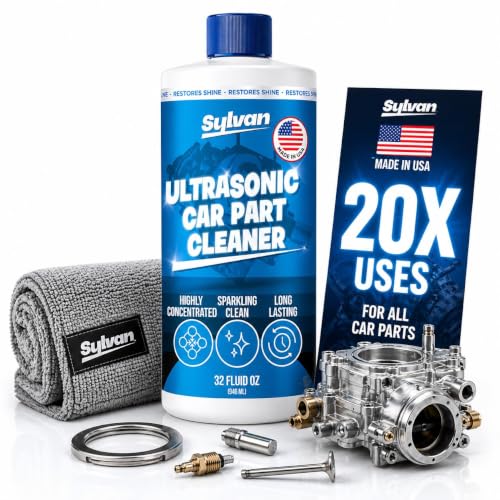
Sylvan Hills Ultrasonic Parts Cleaner Solution
A water-based concentrate made for ultrasonic and immersion cleaning.
How Each Machine Gets Parts Clean
A parts washer is basically a sink over a fluid reservoir. A small electric pump lifts cleaning fluid up through a flexible nozzle so it pours over the part while you work at it with a brush. The fluid drains back down through a screen and gets reused, and a lid closes over the basin when you are done.
The work is manual. The fluid softens grease and carries grit away, but your brush does most of the actual removal. That makes a washer quick and flexible for big, odd-shaped parts, though it struggles to reach inside narrow drillings or blind holes.
An ultrasonic cleaner takes a hands-off approach. Transducers under a stainless tank send high-frequency sound through a water-based solution, which forms millions of tiny bubbles that collapse against every wetted surface. Equipment maker Crest Ultrasonics explains in its comparison of ultrasonic cleaning with other cleaning methods that these implosions reach crevices and blind holes that brushing and spraying miss.
The catch is size and soil load. An ultrasonic tank only cleans what fits fully under the liquid, and a part packed with thick grease will foul the solution quickly. Heavily caked parts usually need a scrape or a pass through a washer first.
Parts Washer or Ultrasonic Cleaner: Match the Machine to the Job
You pull greasy parts off a car most weekends. Suspension hardware, brake brackets, axle nuts and old bearings carry thick, gritty grease. A parts washer handles these fastest, because you can scrub, rinse and move on without waiting for a timer.
You rebuild carburetors or small engines. Jets, emulsion tubes and fuel passages are too fine for a brush to reach properly. A heated ultrasonic tank with a suitable solution is the better tool here, provided you take the carburetor apart and remove rubber and plastic pieces first.
You restore hardware and small detailed parts. Nuts, bolts, shift linkage pieces and throttle bodies with cooked-on carbon all respond well to cavitation. Load them in the basket, set the time, and do something else while the machine works.
You do a bit of everything. The common workflow is both: knock off the heavy grease in the washer, then give small, intricate parts a finishing cycle in the ultrasonic. If you are still setting up your bench, a solid mechanic tool set for home repairs and a dependable floor jack that offers good value come before either cleaning machine.
Parts Washer vs Ultrasonic Cleaner: Three Picks Up Close
Here is one compact parts washer, one heated ultrasonic tank and a related third pick, a concentrated solution for the ultrasonic. Each is shown with what its listing says it does well and where it falls short.
Jack Boss Benchtop Parts Washer: 3.5 Gallon Steel Cabinet with 110V Electric Pump
- 3.5 gallon fluid reservoir
- 110V pump recirculates about 1/2 gallon per minute
- Fusible link lid closes in case of fire
- 18 x 13.5 x 9 inch work basin
This compact unit stands in for the parts washer side of the comparison. Jack Boss builds it as a steel benchtop cabinet with a 3.5 gallon reservoir and a 110V electric pump that, according to the listing, recirculates fluid at about half a gallon per minute. The work basin measures 18 inches wide, 13.5 inches deep and 9 inches high, which leaves room for wheel bearings, gears, brackets and a disassembled carburetor.
The hinged lid uses a fusible link, so it drops shut if heat melts the link, and it also keeps dust and debris out of the fluid between jobs. Because the cabinet is light, you can lift it onto a bench for a project and store it on a shelf afterward. The listing includes a one-year limited manufacturer warranty.
One rule matters more than any feature: the maker states the washer is not for flammable or combustible solvents such as mineral spirits, so plan on a water-based degreaser. The small reservoir suits a home garage that cleans parts now and then, not a busy bench running all day. Larger assemblies like cylinder heads or transmission cases will not fit, and fine fuel passages still need an ultrasonic pass or careful work with picks and compressed air.
View Jack Boss 3.5 Gallon Parts Washer on Amazon

CREWORKS 15L Ultrasonic Cleaner: 360W Cavitation and 300W Heater with Timer
- 15 liter (about 4 gallon) stainless tank
- 360W ultrasonic power at 40kHz
- 300W heater, 70 to 175 F range
- Timer from 1 to 30 minutes
On the ultrasonic side, the CREWORKS 15L machine pairs 360 watts of ultrasonic power at 40kHz with a heater rated up to 300 watts. The listing describes a 15 liter, roughly 4 gallon basin, large enough for a typical carburetor body, throttle body or a basket full of nuts, bolts and small brackets that would be tedious to scrub one at a time.
Controls are simple knobs. You set the temperature between 70 and 175 degrees Fahrenheit and the timer between 1 and 30 minutes, then let cavitation work through grime and carbon. The tank and inner basket use 304 stainless steel, the outer shell is stainless as well, and the listing adds non-skid rubber feet, inset carry handles and a built-in fuse for power surges.
This machine suits owners who rebuild carburetors, restore small engine parts or clean intricate hardware where a brush cannot reach. It is not a degreaser for thick, packed grease; scrape or pre-wash those parts so the solution stays useful longer. Fill it only with water and a cleaner meant for ultrasonic use, never gasoline or aerosol carb cleaner. Pull rubber seals and plastic pieces before a cycle, then rinse and dry metal parts promptly.
View CREWORKS 15L Ultrasonic Cleaner on Amazon
Sylvan Hills Ultrasonic Carburetor and Parts Cleaner: 32 oz Concentrate Makes 50 Gallons
- Mixes 1:250 with water
- 32 oz makes up to 50 gallons
- For aluminum, brass, copper and steel
- Formulated and bottled in the USA
An ultrasonic tank is only as good as the liquid inside it, which is why this concentrate earns a spot as the related third pick. Sylvan Hills sells it in a 32 ounce bottle that, according to the listing, mixes with water at a 1:250 ratio and makes up to 50 gallons of working solution, so a single bottle covers many tank fills.
The maker aims it at carburetors, fuel injectors, jets, valves, bolts and other small metal components, and says it suits ultrasonic and immersion machines alike. It is listed as safe for most automotive metals, including aluminum, brass, copper and steel, and as having no harsh fumes. A microfiber cloth comes in the box for drying parts after the rinse.
Because it is water-based, this is the safer type of fluid for a heated ultrasonic tank, unlike the flammable solvents some people are tempted to try. Measure the dilution rather than guessing, change the mix when it looks visibly dirty, as the maker advises, and rinse parts in clean water afterward. It is not meant for a pump-style parts washer, and soaking heavily caked parts will use it up quickly, so knock the worst grease off first.
View Sylvan Hills Ultrasonic Parts Cleaner Solution on Amazon

The Two Machines Side by Side
This table compares the two approaches based on the makers’ listings and general shop practice. Cleaning results depend heavily on the fluid, the temperature and how dirty the parts are, so treat it as a starting point.
| Point | Parts washer | Ultrasonic cleaner |
|---|---|---|
| How it cleans | Pumped fluid plus your brush | Cavitation bubbles in a heated solution |
| Strong at | Large, heavily greased parts | Small parts with fine passages |
| Weak at | Blind holes and tiny drillings | Big parts and thick grease |
| Your effort | Hands-on scrubbing | Load, set timer, rinse |
| Fluid | Whatever the washer’s manual allows | Water-based solution only |
| Typical home use | Bearings, brackets, suspension hardware | Carburetors, jets, throttle bodies, hardware |
Neither machine replaces good habits. Wear chemical-resistant gloves, keep a stiff nylon brush and a brass brush on hand, and blow parts dry with compressed air before they can flash rust. Our guide to mechanic gloves for greasy work covers hand protection that holds up to solvents.

Clean parts also show wear you could not see before. A bearing race with pitting, a grease fitting that will not take grease or a cracked bracket all become obvious once the grime is gone. Keep a grease gun for chassis fittings nearby so freshly cleaned joints get new lubricant before they go back on.
Fluids, Fire Risk and Disposal
The fluid matters as much as the machine. Some parts washers are built for petroleum solvents such as mineral spirits, while many compact benchtop units are rated for water-based degreasers only. The Jack Boss listing, for example, states it is not for flammable or combustible solvents, so read the manual before you fill any tank.
Never pour gasoline, aerosol carb cleaner or any flammable solvent into an ultrasonic cleaner. The tank heats the liquid and cavitation releases vapor, which can build up around the unit. Use a water-based solution made for ultrasonic machines, and keep the lid nearby but the room ventilated.

Used fluid carries oil, metal fines and old fuel residue, so it does not belong down a drain or on the ground. Let sludge settle, then store and dispose of spent fluid as the product label directs, usually through a household hazardous waste collection. For help picking a washer fluid, see our parts washer solvent buying guide, and for spot cleaning on the car, our brake cleaner spray picks fill the gap.
Winter Projects and When the Car Needs a Pro
Many West Michigan garages get their busiest DIY use from November to March, when projects move indoors. Cold slows cleaning, because grease stiffens and water-based solutions work more slowly in a chilly room. A heated ultrasonic tank helps here, and a parts washer works better if you keep the garage above freezing and let the fluid warm up first.
Road salt adds its own mess. Brackets and hardware from the underside of a Grand Rapids car often come off with a crust of salt and rust on top of the grease, and both machines handle this better after a quick wire brushing. If you are comparing full-size cabinets for a busy bench, our parts washer for a home shop guide reviews larger tanks.

Some jobs are better left with a technician, cleaning machine or not. If the car is due for its manufacturer’s service items or you would rather someone else handle brakes, suspension or timing work, book factory scheduled maintenance in Grand Rapids with our shop. Hendrick Hoffman, our owner and head mechanic, has worked in automotive service since 2005 and holds ASE and State of Michigan certifications in brakes and in steering and suspension.
More Buying Guides
Frequently Asked Questions
Is an ultrasonic cleaner better than a parts washer?
Not overall, just for different work. An ultrasonic cleaner reaches fine passages and blind holes in small parts without scrubbing. A parts washer is quicker for large, greasy parts and anything too big for an ultrasonic tank.
Can I put carb cleaner or gasoline in an ultrasonic cleaner?
No. Ultrasonic tanks heat and agitate the liquid, so flammable fluids create a real fire risk. Use a water-based solution sold for ultrasonic machines and mix it at the ratio on its label.
Do I need to take a carburetor apart before ultrasonic cleaning?
Yes. Remove the float, needle, gaskets, O-rings and any plastic parts, since cavitation and heat can damage them. Clean the metal body and jets, rinse with clean water and blow every passage dry before reassembly.
What size ultrasonic cleaner do I need for car parts?
Measure the largest part you plan to clean and make sure it fits fully under the liquid inside the basket. Small tanks suit jets and hardware, while a carburetor body or throttle body usually calls for a larger tank in the 10 to 15 liter range.
A clean bench makes DIY work easier, but a car that needs real repairs still needs the right hands. Give 456 AutoFix a call at 616-279-3832 from 8am to 5pm, Monday through Friday, or send us a message to schedule service.
If your workday overlaps our hours, our after-hours drop-off lets you leave the car at 456 Carrier St NE and pick it up once the work is done.