
As an Amazon Associate, 456 AutoFix earns from qualifying purchases. Product links below go to Amazon, where you can confirm the right part for your vehicle.
A shopping cart ding on a door or a crease from a parking lot bump does not need a body shop if you have patience and a sanding block. The best body filler for that kind of job is a lightweight two-part polyester paste that spreads smoothly, cures fast and sands without clogging your paper.
This guide explains how filler works, what separates one can from another, and where it sits next to glaze, epoxy and primer. Then we review five fillers, from a small Bondo can to kits sized for a whole panel.
Quick answer
Which is the best body filler for a DIY dent repair?
For a first small dent, Bondo Original in the 1.57 lb can is easy to find and easy to mix. For smoother sanding and better grip on galvanized steel or aluminum, step up to Evercoat Rage Gold. Mix only what you can spread in a few minutes, keep layers thin, and finish with glaze before primer.
Our Quick Picks
Three places to start: a small Bondo can for a first dent, Evercoat Rage Gold for a smoother finish on modern metals, and a 3 liter Roberlo kit for a larger project. All five fillers are reviewed below.

Bondo 00262 Original Body Filler
The familiar orange-lid can, sized for a few small repairs.

Evercoat Rage Gold Body Filler
A premium gallon filler that grips galvanized and aluminum panels.
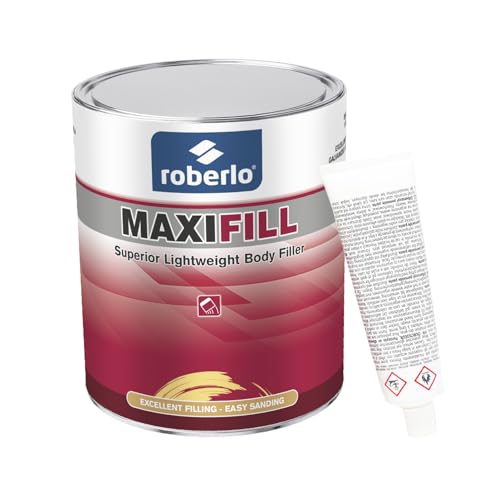
Roberlo Maxifill Lightweight Filler
A big kit with a formula built to cut sanding time.
How Two-Part Filler Turns Into a Smooth Panel
Body filler is a polyester resin paste that stays soft in the can until you knead in a cream hardener. The hardener starts a chemical cure, so the paste turns rubbery within minutes and then hard enough to shape with a file or coarse paper.
Too much hardener leaves pinholes and can bleed through paint, while too little leaves a gummy patch that never sands clean. Fold the two parts together on a mixing board rather than stirring, which whips in air bubbles. Build the low spot in thin passes instead of one thick mound.
Even the best body filler is a shaping material, not a structural one. It belongs on clean bare metal or sound fiberglass, after the dent has been pulled or tapped close to its original shape.
Choosing a Body Filler Brand, Formula and Kit
- Lightweight formula: microspheres or similar additives make the paste easier to spread and sand. Most fillers on the shelf today use a lightweight formula, which is far kinder to hand sanding.
- Adhesion to modern metals: many newer panels are galvanized steel or aluminum. Look for a listing that names them if your car is less than twenty years old.
- Sanding feel: fillers that resist clogging save paper and time, which matters most on a large area worked by hand.
- Can size: a pint-size can covers a few dings. A gallon only makes sense for a panel or a full project, because opened filler slowly thickens.
- Tools for a body filler kit: plastic spreaders, a nonporous mixing board, a sanding block, 80 and 180 grit paper and a finishing glaze. Our auto body sandpaper guide covers the grit sequence in detail.
Best Body Filler Picks in Detail
Every product on this best body filler shortlist is a two-part polyester filler with its own hardener. They differ in can size, sanding feel and stated adhesion to galvanized steel and aluminum.
1. Bondo Original Body Filler 00262: 1.57 lb Lightweight Filler with Cream Hardener
- Two-part lightweight compound
- Cures in about 20 minutes
- Formulated to be non-shrinking
- Bonds to steel, aluminum and fiberglass
Bondo Original, part number 00262, is the filler most people picture when they hear the word Bondo. This version pairs a 1.57 lb can of lightweight two-part compound with a 0.75 oz tube of cream hardener, which is a sensible amount for a handful of door dings or one modest crease. The listing describes it for dents, dings, holes and scratches on vehicles, and it also names wood, steel, aluminum, fiberglass and concrete as suitable surfaces.
According to the listing, the paste cures in about 20 minutes, is formulated not to shrink and sands easily. It can also be shaped days later, which helps if a weekday evening runs out before you finish blocking the repair. That forgiving schedule suits a beginner who wants to rough the shape one night and refine it the next weekend.
The listing also mentions large rusted areas, but treat that with care: filler only holds when the rust has been ground out to bright metal and any hole has been patched or reinforced first. For a full panel, a gallon makes more sense than several small cans. Mix on a clean board, wear gloves and work with good ventilation.
View Bondo 00262 Original Body Filler on Amazon
2. Evercoat Rage Gold Body Filler: 128 fl oz Stain-Resistant Filler for Galvanized Steel and Aluminum
- Stain resistant under basecoat and clearcoat
- Hattonite additive for easier sanding
- Sands with 80 grit paper
- Adhesion to galvanized steel and aluminum
Evercoat Rage Gold is a gallon-size polyester filler aimed at people who want a smoother sanding experience and a cleaner base for paint. The listing calls it stain resistant and safe to use under basecoat and clearcoat paints, which matters because a poorly mixed filler can sometimes show through a fresh color coat as a faint discolored patch.
Evercoat adds Hattonite, which the listing says reduces heat and friction while you sand, and it rates the filler for sanding with 80 grit paper. The formula is also described as having strong adhesion to galvanized steel and aluminum, two surfaces found on many newer bodies where older fillers can struggle. The maker also lists it for cosmetic fiberglass and composite repairs, so it can handle a scuffed fiberglass panel as well.
At 128 fl oz, Rage Gold is a lot of filler for one ding, and an opened can slowly thickens over time. It makes the most sense when you have several panels to straighten or a project car in the garage for the season. Like any polyester filler, mix it with the hardener in the ratio on the label and spread it in thin layers.
View Evercoat Rage Gold Body Filler on Amazon

3. Evercoat Body Shop 105001 Pro-Grade Body Filler: 26 fl oz Lightweight Filler with Visual Mixing Guide

- Visual Mixing Guide included
- Strong hold on vertical surfaces
- Bonds to galvanized steel and aluminum
- Lightweight, fast sanding formula
The Evercoat Body Shop 105001 Pro-Grade filler sits between a small hobby can and a full gallon. Its 26 fl oz size covers a door, a fender or several small dents without leaving most of a tub to thicken on the shelf. The kit comes with cream hardener and a Visual Mixing Guide, which helps a newer user judge the right amount of hardener by color instead of guessing.
The listing describes a lightweight formula that sands up to 50 percent faster, along with a strong hold on vertical surfaces so the paste does not sag down a door skin before it sets. It names aluminum, galvanized steel, steel, fiberglass, concrete, wood and masonry as surfaces it bonds to, which covers most of the panels a home repairer will meet.
That vertical hold is useful on door bottoms and quarter panels, where a runny filler tends to slide toward the floor and leave you sanding away more than you spread. For a repair larger than one panel, a gallon is better value, and for small rust holes a fiberglass reinforced filler is the stronger choice. Follow the label for mixing ratio and ventilation.
View Evercoat Body Shop 105001 Pro-Grade Filler on Amazon
4. J-B Weld Body Filler: 1 Quart Two-Part Filler for Cracks and Rust-Outs

- Two-component filler system
- Dries in 30 minutes
- Sandable, paintable and waterproof
- For metal, wood, fiberglass and SMC
J-B Weld is better known for its epoxy putties, but this quart is a two-component body filler system in its own right. The listing describes it as giving waterproof, durable repairs to cracks and rust-outs on automotive bodies, and also on metal and wooden surfaces around the home, which makes it a handy can for someone who fixes more than cars.
It is listed for metal, wood, fiberglass and SMC, the sheet molding compound used on some truck caps, older fiberglass bodies and certain panels. That range is useful when the damage crosses from a steel panel onto a composite piece. The listing says it dries in 30 minutes and is sandable, paintable and waterproof once cured.
The quart size is a middle ground, big enough for a few repairs or one larger panel without the commitment of a gallon that may thicken before you finish it. Rust-outs still need prep: cut back to solid metal, and bridge any real hole with a patch or reinforcement before you shape the surface with filler. As with other polyester fillers, use gloves, eye protection and plenty of fresh air.
View J-B Weld Body Filler Quart on Amazon

5. Roberlo Maxifill Lightweight Body Filler: 3 Liter Kit with Hardener and Microsphere Formula
- 3 liters of filler plus hardener
- Microspheres for faster sanding
- Rust inhibitors in the formula
- For steel, galvanized, aluminum and fiberglass
Roberlo makes refinish products for collision repair, and Maxifill is its lightweight filler for small to medium dents and scratches. This kit pairs 3 liters of filler with hardener, so it is aimed at a large repair, several panels or a project car rather than a single ding. The listing names aluminum, steel, zinc, galvanized steel and fiberglass as suitable surfaces.
The formula uses microspheres, which the listing says reduce sanding time by 40 percent, and it includes rust inhibitors meant to help guard against future corrosion. Roberlo also says the filler sands smooth enough that you can go straight to primer without a finish putty, though many people still skim a glaze over any pinholes they find.
Rust inhibitors do not replace prep, so grind away all rust before you spread it, and keep the filler off any area where the metal has lost strength. The large size means you should mix only small batches at a time, scoop from the container with a clean tool, and keep it sealed tightly between sessions so the paste stays workable. Wear gloves and eye protection, and use a respirator when you sand.
View Roberlo Maxifill Lightweight Filler on Amazon
Body Filler vs Putty, Glaze, Epoxy and Primer
People often use these names as if they meant the same thing, and the word Bondo gets used for all of them. In practice, Bondo is a brand, and its Original filler is a standard polyester body filler. Each product below does a different job in one repair.
| Product | What it does | Layer thickness | Where it goes |
|---|---|---|---|
| Body filler | Rebuilds the shape of a shallow dent | Thin passes, built up as needed | On clean bare metal or fiberglass, first |
| Finishing glaze | Fills sand scratches and pinholes in the filler | Very thin skim coat | Over shaped filler, before primer |
| Spot putty | Touches up tiny flaws in primer | Thinnest of all | Over primer, then sanded flat |
| Epoxy (resin or primer) | Seals bare metal or bonds and reinforces | Varies by product | Under or over filler, as the label directs |
| Primer | Seals the repair and gives paint a base | Several light coats | Over the finished filler and glaze |
The question of body filler vs primer comes down to order: filler shapes, primer seals. Never spread filler as a substitute for primer, and check your primer label for whether it can go directly over filler or needs a sealer first. With epoxy, some painters lay epoxy primer on bare metal and spread filler on top, while others fill first. Follow whichever order your filler and primer makers list.

Filler Work Through a West Michigan Year
Our winters are hard on bodywork. Salt brine finds any chip, and a dent that cracked the paint in December can show orange bloom by March. Filler spread over that rust will lift later, so grind to clean, bright metal first and treat the surrounding area. For surface rust caught early, our guide to filler for rust holes explains when a reinforced product is the better choice.
Cold garages slow the cure. Most fillers list a minimum working temperature on the can, and a January garage often sits below it. Warm the panel and the filler to room temperature before you mix, or wait for a mild spring day. Underneath the car, a coat from our undercoating for road salt picks slows the rust that sends so many rockers and wheel arches to filler in the first place.

Not every blemish needs the best body filler, or any filler at all. A stone chip on the hood is usually a job for touch-up paint made for rock chips, and a light scuff that has not broken the clear coat often polishes out with a car scratch remover. Save filler for real dents, creases and areas you have ground down to metal.
Polyester fillers give off strong styrene fumes while you mix and spread them, and sanding them makes fine dust. The CDC’s styrene fact sheet says breathing it mostly affects the nervous system, with tiredness, slowed reactions and balance problems at high levels. Work with the garage door open, wear nitrile gloves and safety glasses, and use the respirator the label calls for when you sand.
When the Damage Is More Than Cosmetic
Filler is made for cosmetic panels: doors, fenders, quarter skins and hoods. It should not patch a rocker, frame rail, subframe or any spot where the metal has rusted through and lost strength. If a rust hole sits near suspension mounts or the brake lines that run along the underbody, have it looked at before you cover it. Our suspension repair in Grand Rapids covers mounts, springs and arms around those areas.
Thick filler also hides problems on used cars. A panel that sounds dull when tapped, or a magnet that will not stick in one spot, can point to heavy repair work underneath. Before you buy a car that has spent years on salted roads, book a pre-purchase inspection in Grand Rapids so the underbody and suspension get a close look on a lift.
More Buying Guides
Frequently Asked Questions
Is Bondo the same as body filler?
Bondo is a brand name that many people use for any body filler. Bondo Original is a two-part polyester filler, much like Evercoat, Roberlo and J-B Weld fillers. The brand also sells glazing putty and fiberglass products, so read the label to see which one you are buying.
What is the difference between body filler and glaze?
Filler rebuilds the shape of a dent in thin passes. Glaze is a finer, thinner finishing product that you skim over the shaped filler to fill sand scratches and pinholes. Filler goes on first, glaze second, then primer.
Is epoxy better than body filler?
They do different jobs. Epoxy primer seals bare metal and epoxy resins can bond or reinforce, while polyester filler is easier to spread and sand into shape. Many repairs use both, so follow the order your filler and primer labels give.
Can you put body filler over rust?
No. Filler spread over rust traps moisture and usually bubbles or lifts within a season or two, faster on cars driven in salt. Grind the area to bright metal first. If the metal has rusted through, the panel needs a patch or a reinforced filler.
Bodywork done and now the car pulls, clunks over bumps or the brakes feel soft after a winter of salt? Our phone line for that kind of after-bodywork check is 616-279-3832, answered 8am to 5pm Monday through Friday. You can also reach us through the contact page, and we will look at the parts hiding behind that freshly smoothed panel.
Our Creston garage at 456 Carrier St NE takes foreign and domestic vehicles alike. Weekday visits not possible? Our after-hours drop-off lets you leave the keys outside shop hours, along with a short note about the noise or rust spot that worries you.