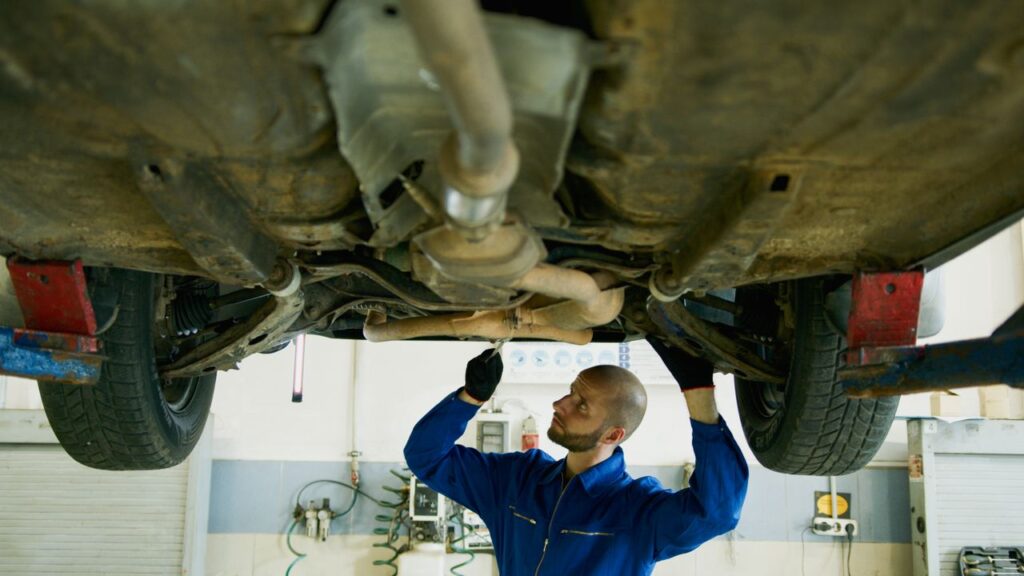
Every Michigan winter, the roads around Grand Rapids get coated in salt and brine. That keeps you from sliding into a ditch, but the same salt clings to the steel underneath your car for months. Brake lines are some of the thinnest metal down there, and they carry the pressure that stops you.
This guide explains why road salt causes brake line rust, how long it tends to take, the warning signs ranked by urgency, and what you can do about it.
Quick answer
Does Michigan road salt rust brake lines?
Yes. Salt and brine hold moisture against steel brake lines, and over several winters the metal scales, thins and can start to leak. Watch for a soft or sinking pedal, fluid spots near a wheel and the brake warning light. If a line is leaking, stop driving and have the car towed or inspected.

Why Michigan Road Salt Eats Brake Lines
Rust needs bare steel, water and oxygen, and salty water speeds the reaction up. Underneath your car, slush splashes up, dries into a crust, then gets wet again at the next thaw.
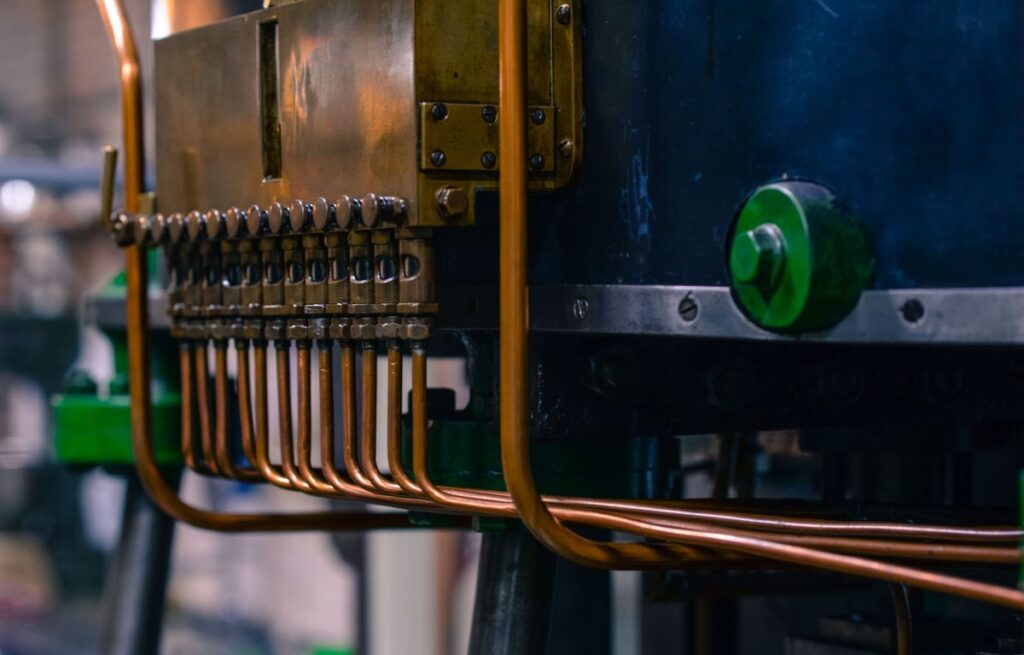
Liquid brine makes it worse because it clings in a thin film that stays damp. Brake lines are coated steel tubing that runs along the frame, through clips and crevices that never fully dry. Once a stone chip breaks the coating, rust spreads under it.
How Long Does It Take?
There is no fixed timeline. Years of salt exposure matter more than miles, so a low-mileage car that sat through ten Michigan winters can have worse lines than a high-mileage car from a dry state. Problems commonly start around seven to ten years, sooner with outdoor parking and skipped washes.
Fuel Lines, Calipers and Rotors Take a Hit Too
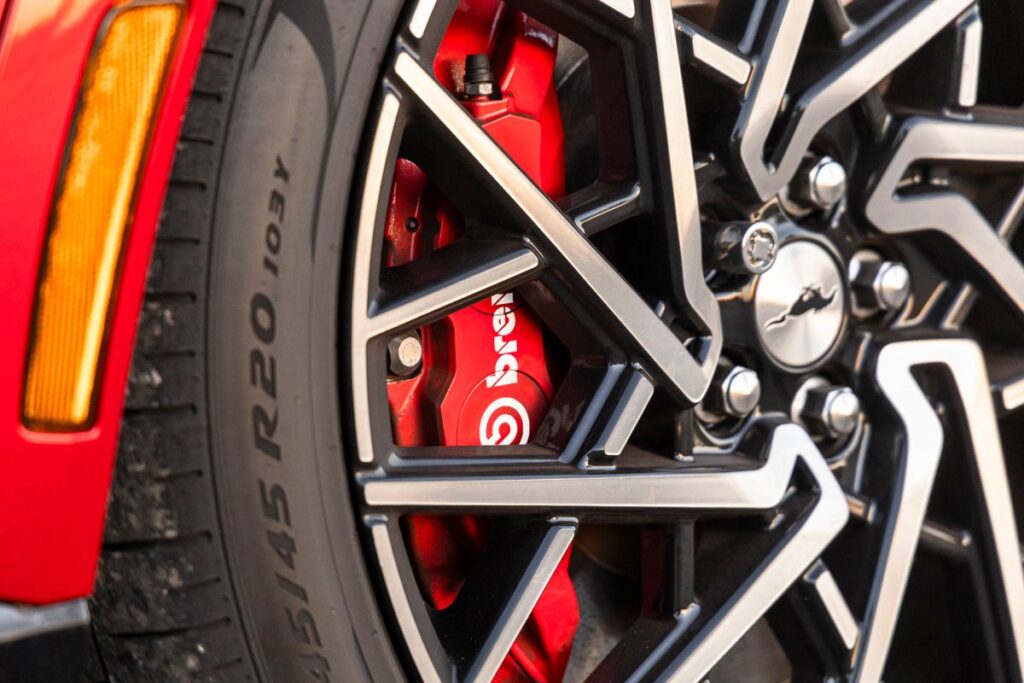
Steel fuel lines run beside the brake lines and corrode the same way, which can lead to a fuel smell or leak. Caliper slide pins and pistons can rust and stick, causing a dragging brake or a pull to one side.
A light orange film on rotors after a wet night is normal and wipes off in a few stops. Heavy scale on the edges or inner face can cause vibration and noise. Salt is also hard on exhaust pipes, so a rusted exhaust or muffler repair in Grand Rapids often comes up on the same lift.

Warning Signs of Brake Line Rust
A Soft or Sinking Brake Pedal
A pedal that feels spongy or slowly sinks while you hold it at a light means the system is losing pressure. A pinhole leak in a rusted line is a common cause.
Fluid Spots Near a Wheel
Brake fluid is clear to amber and feels slick. Wet spots on the inside of a tire, behind a wheel or along the frame rail point to a leak.
The Brake Warning Light
On many cars, the red brake light comes on when the fluid level in the reservoir drops. If it lights up and the parking brake is fully released, treat it as a possible leak.
Visible Scale or Swelling
Light surface rust is common. Lines that flake when touched, look swollen or have rust packed around the clips are losing metal and getting close to the end.

Road Salt Brake Line Rust in Michigan: Signs and Urgency
| Sign | What it usually means | How urgent |
|---|---|---|
| Wet line, drip or fluid near a wheel | A line or hose is leaking brake fluid | High Stop driving and have it towed or inspected |
| Pedal sinks to the floor or feels very soft | Pressure loss, often a leak | High Do not drive |
| Red brake warning light, parking brake off | Low fluid from a leak or worn pads | Soon Check fluid now, get it inspected right away |
| Flaking, swollen or scaly lines | Metal loss, a leak may be close | Soon Book an inspection this week |
| Car pulls or a wheel runs hot | Rusted, sticking caliper | Medium Have the brakes checked soon |
| Thin orange film on lines or rotors | Normal surface rust | Low Watch it at your next service |
What You Can Safely Check Yourself
You don’t need a lift to spot the early signs. Never crawl under a car held up only by a jack.
- Check the brake fluid reservoir under the hood. A level that keeps dropping points to a leak or worn pads.
- Look at the ground where you park overnight, especially behind each wheel.
- With a flashlight, look behind each wheel where the rubber hose meets the steel line.
- Hold steady pedal pressure at a stop and feel whether it creeps down.
If anything looks wet, flaky or swollen, let a mechanic put the car on a lift and trace the full length of the lines.
Never Drive on a Leaking Brake Line
A rusted line can go from seeping to bursting during one hard stop, exactly when you need full pressure. A split hydraulic system usually leaves some braking, but expect a long pedal and much longer stops.
Topping up the fluid is not a fix. If you see a leak or the pedal goes soft, park the car and have it moved.
How Rusted Brake Lines Are Repaired
A mechanic replaces the damaged section or full line, bends new tubing along the factory route, forms proper flares to match the fittings, then bleeds the system and road tests the car. Compression-fitting patches and plain hardware-store copper are not safe brake repairs.
When one line rusts through, the others have seen the same winters. Replacing neighboring lines at the same time is common, and seized fittings can turn one line into a larger job.
| Line material | Rust resistance | Things to know |
|---|---|---|
| Coated steel (factory style) | Good until the coating is chipped | Matches the original part. Coating can be damaged during flaring |
| Copper-nickel alloy | Generally very good in salt | Easier to bend and flare. Must be a brake-rated alloy, not plain copper |
| Stainless steel | Very good | Stiff and hard to flare, less common for repairs |
Which material fits depends on the car and the section being replaced. Our brake repair service in Grand Rapids covers lines, hoses, calipers and rotors on foreign and domestic vehicles. Hendrick, our owner and head mechanic, is ASE and State of Michigan certified in brakes.
Preventing Brake Line Rust Through a Michigan Winter
You can’t avoid salt in West Michigan, but you can limit how long it sits on your car.
- Rinse the underbody regularly in salt season, ideally on days above freezing.
- Give the underside a thorough wash in spring.
- Have the lines inspected before winter and in spring, for example during an oil change in Grand Rapids.
NHTSA’s investigation into brake pipe corrosion on older pickups and SUVs found failures concentrated in salt states, and when it closed in 2015 the agency urged owners to wash the underside of their vehicles during and after winter.

For the rest of your cold-weather prep, see our Michigan winter car maintenance checklist. Shopping for a car that spent years on salted roads? A pre-purchase inspection in Grand Rapids includes a look at the lines underneath.
Frequently Asked Questions
Is it safe to drive with rusty brake lines?
Light surface rust is common and usually fine for now. Lines that are flaking or swollen should be inspected soon. If a line is wet or the pedal is soft, don’t drive the car.
How long do brake lines last in Michigan?
There is no set lifespan. Years of salt exposure matter more than mileage, and problems commonly show up around seven to ten years.
Do undercarriage washes really help?
Yes. Rinsing removes the salt and brine film before it sits on the steel for weeks. NHTSA has urged drivers in salt states to wash the underside of their vehicles during and after winter.
Are copper-nickel brake lines better than steel?
Brake-rated copper-nickel lines generally resist salt corrosion better than steel and are easier to form. Coated steel matches the original part, and the right choice depends on the car.
Need brake line repair in Grand Rapids? Call 456 AutoFix at 616-279-3832, Monday to Friday 8am to 5pm, or book through our contact page.
Can’t make it during the day? Use our after-hours drop-off. We’re at 456 Carrier St NE in Creston.