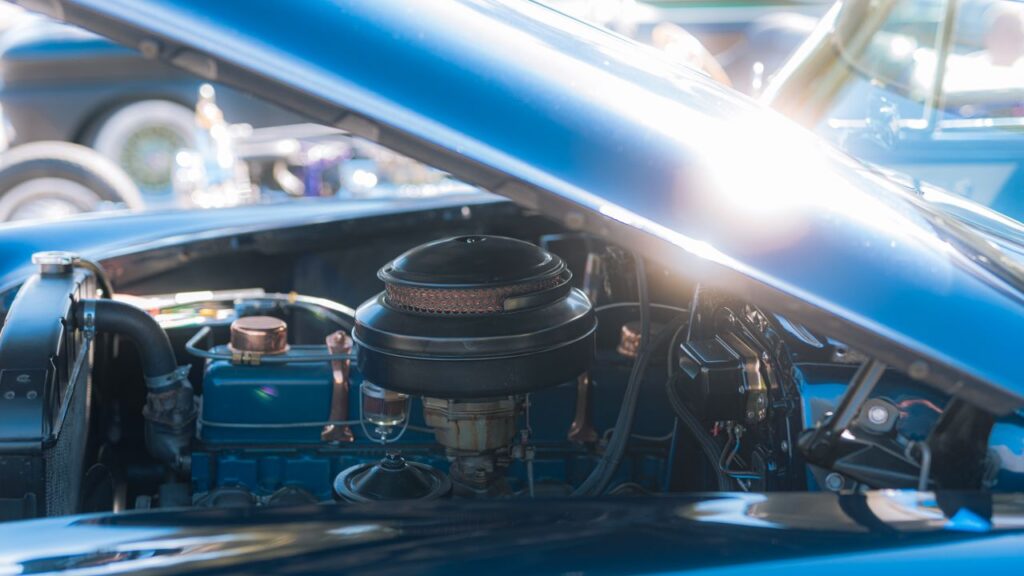
Your car is coming up on a big mileage number, or it is getting older with fairly few miles on it. Either way, you need to know when to replace timing belt parts on your engine, and whether the job can wait a little longer.
The timing belt keeps your engine’s crankshaft and camshafts turning in step. It often fails with little warning, so the schedule matters more than symptoms.
Quick answer
When should you replace a timing belt?
Replace it at the mileage or age your owner’s manual lists, whichever comes first. Many engines fall somewhere around 60,000 to 100,000 miles, and many makers also set a time limit in years. Replace it sooner if you see oil or coolant on the belt, hear ticking from the timing cover, or have no records.

Typical Timing Belt Replacement Intervals
Every engine has its own interval, set by the vehicle maker. You will find it in the owner’s manual or the maintenance schedule booklet, usually written as a mileage and a number of years. The rule is simple: whichever comes first.
As a general range, many timing belts are scheduled somewhere between about 60,000 and 100,000 miles. Those are typical figures only. Your manual is the number that counts, and some engines list a shorter interval for severe service such as towing, lots of idling or short trips.
Why Age Matters Even With Low Miles
A timing belt is made of rubber reinforced with fiber cords. Rubber hardens and develops cracks over time, even when the car sits in the garage. A low-mileage car that is ten years old can have a belt that is past its time limit while it is nowhere near the mileage limit.
West Michigan weather adds to this. Hard cold starts and big swings between winter and humid summer temperatures are tough on rubber parts. A car that is mostly parked through the winter still ages, even if the odometer barely moves.
Belt or Chain? Check First
Not every engine has a belt. Many use a metal timing chain that is designed to last much longer and has no fixed replacement schedule. If you are not sure which one your car has, our guide to timing belt vs timing chain differences explains how to tell. Chain engines have their own warning signs, covered in our article on Audi timing chain tensioner symptoms.
Warning Signs It’s Time to Replace the Timing Belt
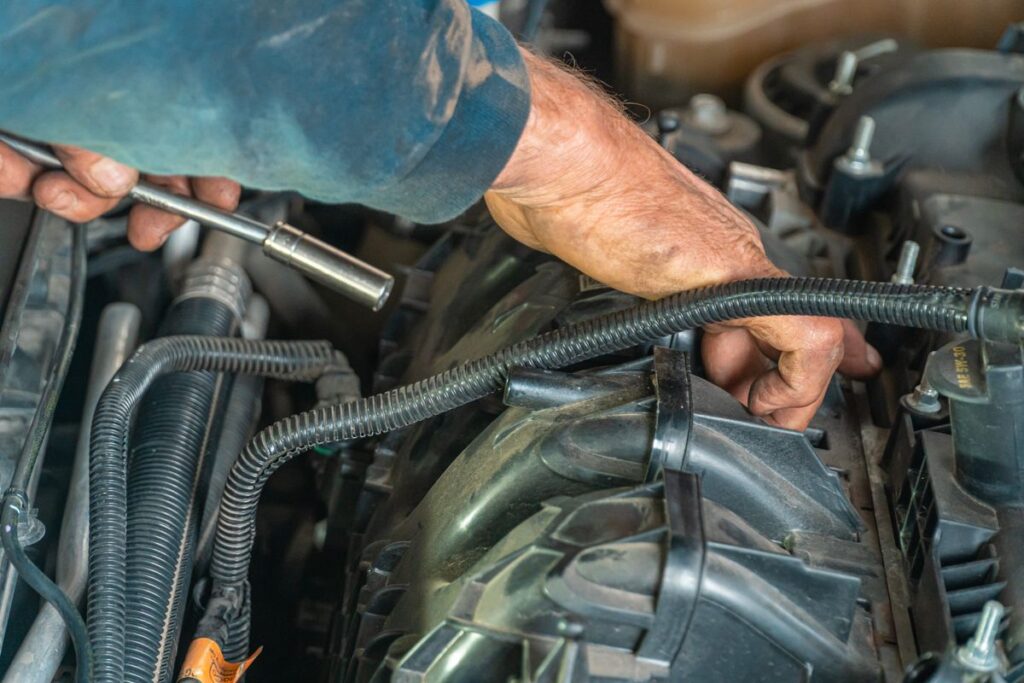
Some problems do show up before a failure. Use this table to judge how fast to act.
| Sign | What it can mean | How urgent |
|---|---|---|
| Engine cranks but will not start, often after a sudden stall | The belt may have broken or jumped teeth | High Stop cranking it and have the timing checked before any restart |
| Ticking, slapping or whirring from the timing cover area | Loose belt, worn tensioner or a failing idler pulley | High Stop driving it if you can and book an inspection right away |
| Rough running, misfires or a check engine light with timing codes | The belt may have stretched or skipped a tooth | Soon Get it diagnosed before it gets worse |
| Oil or coolant leaking near the front of the engine | A leaking seal or water pump can soak and weaken the belt | Soon Fix the leak and inspect the belt together |
| Past the mileage or age limit, or no records | The belt is at the end of its rated life, or its age is unknown | Moderate Plan the replacement in the near future |
| Within the interval, records on file, no symptoms | Normal service life | Low Replace on schedule |
A check engine light has many possible causes, so our check engine light diagnostic in Grand Rapids starts with a scan.

What Happens If a Timing Belt Snaps
When the belt breaks, the camshafts stop turning and the engine shuts off. You lose power at once. What happens inside the engine depends on its design.
- Interference engine: the valves and pistons share the same space at different moments. Without the belt keeping them in time, pistons can strike open valves. That can bend valves and damage pistons or the cylinder head, which turns a planned service into a major engine repair.
- Non-interference engine: the pistons cannot reach the valves, so the engine usually survives. You are still stranded, and you still need a new belt and a careful check.
Many modern engines are interference designs. If you do not know which kind you have, assume interference and treat the interval as a firm deadline.

What Gets Replaced With the Timing Belt
Most of the work in a timing belt job is getting to the belt. Because the same parts come off anyway, the related components that wear at a similar rate are usually replaced at the same time. Belt maker Gates notes in its Timing 101 guide to timing components that skipping the tensioner and idler bearing often leads to early belt failure.
| Part | What it does | Why replace it with the belt |
|---|---|---|
| Tensioner | Keeps the belt at the right tightness | A weak tensioner lets the belt slap, slip or jump teeth |
| Idler pulleys | Guide the belt around its path | A worn bearing can seize or overheat the new belt |
| Water pump (if belt driven) | Circulates coolant through the engine | A leaking pump soaks the belt, and replacing it later repeats most of the labor |
| Cam and crank seals | Keep oil inside the engine | Oil on a new belt shortens its life |
The exact parts list depends on the engine. Our timing belt replacement in Grand Rapids page explains how we approach the work.
Buying a Used Car? Check the Timing Belt Records
A belt engine near or past its interval is one of the biggest hidden costs in a used car. Ask the seller for a receipt that shows the date and mileage of the last belt service.
If there is no proof, treat the belt as original and budget for replacement soon after you buy. Add this question to your used car buying checklist for Michigan drivers. A pre-purchase inspection in Grand Rapids can also check for leaks and noises around the timing cover before you commit.

When to Replace Timing Belt Parts: A Simple Decision Guide
Put the pieces together with these steps:
- Confirm your engine has a timing belt, not a chain.
- Look up the mileage and age interval in your owner’s manual.
- Find your records. If the belt has never been changed, count from the car’s build date.
- Replace at whichever limit you reach first, or now if you have no records and are close to either one.
- Do not wait for symptoms. Any ticking, leak near the belt or sudden rough running moves the job up.
A belt service fits neatly into other planned work. If your car is due for a major mileage service, ask about it during your factory scheduled maintenance in Grand Rapids.

Frequently Asked Questions
How many years does a timing belt last?
It depends on the engine. Many makers list a time limit in years alongside the mileage, and you replace at whichever comes first. Check your owner’s manual for your exact figure.
Do I need to replace my timing belt if my car has low miles?
Yes, once it reaches the age limit in your manual. Rubber hardens and cracks with time, so a low-mileage belt can still be worn out.
Can you drive with a bad timing belt?
It is not worth the risk. If the belt fails on an interference engine, the pistons can hit the valves and cause major damage. If you hear ticking from the timing cover or the engine runs rough, have it checked before driving further.
Should the water pump be replaced with the timing belt?
Often, yes, if the timing belt drives the water pump. A leaking pump can soak the new belt, and replacing it later means repeating most of the same labor.
Need timing belt replacement in Grand Rapids? Call 456 AutoFix at 616-279-3832, Monday to Friday 8am to 5pm, or book through our contact page.
Can’t make it during the day? Use our after-hours drop-off. We’re at 456 Carrier St NE in Creston.