
As an Amazon Associate, 456 AutoFix earns from qualifying purchases. Product links below go to Amazon, where you can confirm the right part for your vehicle.
Ask ten Audi and Volkswagen owners about ngk vs bosch spark plugs and you will hear ten firm opinions, yet both companies have supplied plugs straight to the factory. That makes brand loyalty a weaker guide than the part number your engine was built around. The useful question is which plug matches your head, your coils and the way you drive.
To keep the comparison fair, we pinned it to one engine: the turbocharged 2.0-liter four-cylinder that VW and Audi used across the GTI, Jetta, CC, Tiguan, A4, A5 and Q5. All three plug sets below are listed for that engine family, and every spec comes from the Amazon US listing or the maker. For a wider range of engines, our guide to choosing spark plugs covers trucks, imports and older V8s.
Quick answer
Should a VW or Audi 2.0T run NGK or Bosch plugs?
Either brand works when the part number matches. NGK lists its PFR7S8EG Laser Platinum as a direct replacement for Bosch FR6KPP332S, so the two are interchangeable on the earlier 2.0T. Pick NGK for its 90,000-mile life claim, Bosch for a pre-gapped plug that skips anti-seize, or NGK Ruthenium HX for extra service life.
Our Quick Picks
One NGK and one Bosch platinum set built to the same 2.0T spec, plus an NGK ruthenium set for longer intervals, each reviewed in full below.
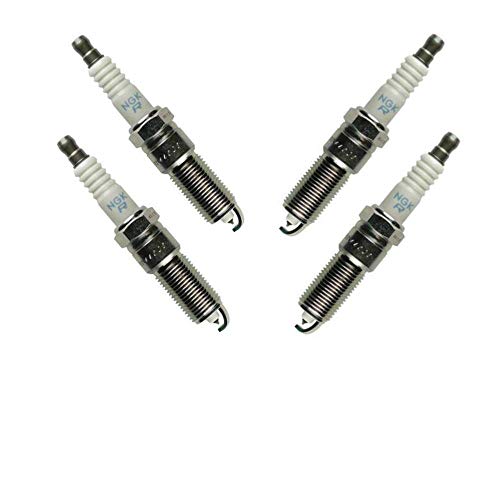
NGK Laser Platinum PFR7S8EG
NGK's direct replacement for the factory 2.0T plug and the Bosch FR6KPP332S.

Bosch FR6KPP332S Set
The Bosch plug NGK cross-references, sold as a ready set of four.

NGK Ruthenium HX
NGK's premium tip metal for drivers who want more miles between changes.
Two Factory Suppliers, Two Ways to Make a Platinum Plug
NGK is a Japanese plug maker and Bosch is a German parts group, and both build plugs to carmaker drawings as well as for the parts counter. When VW sources a plug for a 2.0T, it sets the thread reach, heat range, gap and electrode metal, then buys from whichever approved supplier fits the plan. Owners on Audi forums often report finding NGK in one car and Bosch in a near-identical one.
The two brands take slightly different routes to long life. NGK’s Laser Platinum puts platinum on both the center electrode and the ground electrode, which matters on coil-on-plug engines where the spark polarity wastes metal from both tips. Bosch describes its Double Platinum design as a platinum firing pin paired with a platinum inlay on the ground electrode, quoted at three times the life of a standard copper plug.
Ruthenium is the newer metal in the mix. NGK lists its Ruthenium HX plugs with a ruthenium center electrode for high ignitability and a typical life of 80,000 to 100,000 miles. On a direct-injection turbo engine, where cylinder pressure is high and the spark has to cut through a dense charge, a durable tip helps the plug hold its gap between changes.
How NGK vs Bosch Spark Plugs Line Up on the 2.0T
The table sticks to what each listing states. Where a listing leaves a figure out, the cell says so rather than filling it with a guess.
| Point | NGK PFR7S8EG | Bosch FR6KPP332S | NGK Ruthenium HX |
|---|---|---|---|
| Electrode metal | Platinum on both electrodes | Platinum pin and platinum ground inlay | Ruthenium center electrode |
| Typical life claim | Up to 90,000 miles | 3x a copper plug (Bosch) | 80,000 to 100,000 miles |
| Listed vehicle | Audi Q5 2.0L, 2011 to 2017 | Audi and VW, OE 101905631B | VW GTI 2.0L, 2006 to 2014 |
| Cross reference | Replaces 06H 905 601 A and Bosch FR6KPP332S | Bosch 0242240627 | Not stated |
| Out of the box | Gap not stated, check before fitting | Pre-gapped, no anti-seize needed | Gap not stated, check before fitting |
The cross reference row is the one that settles most arguments. NGK names the Bosch part as the plug it replaces, so on the engines both are listed for, you are choosing a supplier rather than a different design. The real gap between them is the electrode metal and how much checking each set needs before it goes in.
NGK vs Bosch Plug Sets for the 2.0T, Reviewed
Each set below holds four plugs, enough for one change on a four-cylinder. Listings tie each set to a specific year range and engine, so run your car through the Amazon fit checker with the year, model and engine code before you order.
NGK Laser Platinum PFR7S8EG: 4-Pack Dual Platinum Plugs for Audi 2.0L
- Platinum on both center and ground electrodes
- Laser-welded platinum center electrode
- Listed for Audi Q5 2011-2017 2.0L/1984cc
- Four plugs, one full set for an L4
This four-pack holds NGK’s PFR7S8EG Laser Platinum plug, the part NGK lists as a replacement for VW and Audi number 06H 905 601 A and for the Bosch FR5KPP332S and FR6KPP332S. The listing ties this particular pack to the Audi Q5 Premium from 2011 to 2017 with the 2.0-liter, 1984cc engine from the Volkswagen four-cylinder family, so it is the NGK side of this comparison.
Both electrodes carry platinum, and the center electrode is laser welded in place. That dual platinum layout suits a coil-on-plug engine, where each tip takes its share of wear as the spark jumps the gap. NGK describes the plug as approved by original equipment makers, and its sister listing quotes a typical life of up to 90,000 miles. The shell uses trivalent plating to resist corrosion and seizing in an aluminum head.
The listing does not state a gap, so measure each plug with a wire gauge and compare it with the figure in your service manual before fitting. A 2.0T Q5 owner should still run the year and engine code through the Amazon fit checker, since Audi changed plugs between engine generations. This set is aimed at stock engines; a tuned car may need the colder plug its tuner specifies.
View NGK Laser Platinum PFR7S8EG on Amazon

Bosch FR6KPP332S: 4-Piece Double Platinum Plug Set, OE 101905631B
- Genuine Bosch 0242240627 / FR6KPP332S
- Listed against Audi and VW OE 101905631B
- Platinum firing pin and platinum ground inlay
- Four plugs, pre-gapped double platinum design
This listing bundles four genuine Bosch FR6KPP332S plugs, Bosch part number 0242240627, and matches them to Audi and Volkswagen OE number 101905631B. It is the Bosch plug that NGK names as the part its PFR7S8EG replaces, which makes it the natural opponent in a straight brand comparison on the earlier VW and Audi 2.0T.
Bosch builds the FR6KPP332S as a Double Platinum plug, with a fine-wire platinum firing pin laser welded through 360 degrees and a platinum inlay on the ground electrode. Bosch rates the design at three times the service life of a standard copper plug. The threads are nickel plated against corrosion, and Bosch says they need no anti-seize, which keeps the install simple and avoids over-torquing a greased thread.
Bosch also states that its Double Platinum plugs arrive pre-gapped, so you should not need to adjust them before they go in. Even so, a quick check with a gauge after shipping does no harm. The listing does not tie the set to named model years, so a GTI, Jetta or A4 owner should confirm the year, model and engine code in the Amazon fit checker before ordering.
View Bosch FR6KPP332S Set on Amazon
NGK Ruthenium HX: 4-Pack Ruthenium Plugs for VW GTI 2.0L 2006-14
- Ruthenium center electrode for high ignitability
- 80,000 to 100,000 mile typical life
- Listed for VW GTI 2.0L L4, 2006 to 2014
- Genuine NGK parts in original packaging
The third set brings in NGK’s Ruthenium HX line, a premium option beside the two platinum plugs above. This four-pack is listed for the Volkswagen GTI with the 2.0-liter four-cylinder from 2006 through 2014, which covers the turbocharged engine in the cars most owners mean when they talk about the 2.0T. The seller states that the plugs are genuine NGK parts shipped in original packaging.
Its center electrode is made from ruthenium, a hard metal NGK chose for high ignitability and resistance to wear. The listing quotes a typical life of 80,000 to 100,000 miles. On a direct-injection turbo engine, that longer life means fewer coil removals over the years, which spares aging coil boots and plastic clips some of the stress that comes with every plug change.
The listing does not state a gap, so check each plug against your service manual before installing it. Because this pack is matched to a specific GTI year range, any other 2.0T owner needs to confirm the year, model and engine code through the Amazon fit checker before buying. It is aimed at stock engines and high-mileage drivers, not at tuned cars running more boost.
View NGK Ruthenium HX on Amazon

Matching the Plug to How You Drive
For a stock 2.0T used for commuting, the honest answer to the ngk vs bosch spark plugs debate is that the two platinum sets will behave alike. Both are built to the factory heat range, both are listed against the same OE number family, and either should idle smoothly and start cleanly. Let availability and the fit checker decide, and keep the receipt with your service records.
Drivers who put on big miles have a case for the ruthenium set. A longer life claim means fewer coil pulls over the years, and every removal of a coil on an aging engine risks a cracked boot or a broken clip. If your car sees long highway runs to Lansing or the lakeshore every week, stretching the interval has a practical payoff.

Tuned cars are a separate conversation. Many tuners call for a plug one step colder than stock and a tighter gap once boost goes up, and that choice belongs to whoever wrote the tune. Our Mk7 GTI spark plug guide covers stock and tuned setups on the newer engine, and our Audi 2.0T spark plug guide walks through the plug changes from Gen1 to Gen3.
Cold Starts, Coil Packs and the Change Interval
A worn plug shows itself first on a cold morning. As the gap opens up, the coil needs more voltage to fire it, and a frosty January start in Grand Rapids is when a tired coil or plug finally gives up. A rough first minute that smooths out once the engine warms is a classic early sign.
Change intervals on the 2.0T are shorter than many owners expect, because turbo engines are hard on plugs. Your owner’s manual or the maintenance booklet gives the mileage for your model year, and our article on how often to change spark plugs explains why intervals vary so much between engines. Stick to the shorter figure if the car is tuned or does a lot of short winter trips.

Do the job on a cold engine, since aluminum heads do not like plugs pulled while hot. Blow out each well before the plug comes out so grit does not drop into the cylinder, and tighten to the torque in the service manual rather than by feel. If a coil boot looks cracked or oily, replace that coil at the same time instead of pulling everything apart twice.
When a Misfire Means More Than Worn Plugs
Whichever side of ngk vs bosch spark plugs you land on, fresh plugs fix a worn-out set, not every misfire. If a code returns after the change, the cause is often a coil, an injector, a vacuum leak or low compression on one cylinder. The U.S. government’s fuel economy maintenance advice says to have the car inspected when the check engine light comes on, since a hidden fault can cut mileage and raise emissions.

Our team handles check engine light diagnostics in Grand Rapids and Audi repair, so we can read misfire counts by cylinder before parts get swapped. A 2.0T that rattles for a few seconds after a cold start may also have a timing chain or tensioner issue, which falls under our timing belt and chain replacement service.
Older belt-driven VW and Audi engines, such as the 1.8T, often get plugs done alongside the timing belt to save labor. If that is your car, our guide to timing belt kit brands explains what a complete kit should include.
More Buying Guides
Frequently Asked Questions
Is NGK better than Bosch for spark plugs?
Neither brand is better across the board. Both supply carmakers directly, and on the VW and Audi 2.0T, NGK lists its PFR7S8EG as a replacement for the Bosch FR6KPP332S. Buy the part number your engine calls for, from whichever brand you can source.
Can I switch from Bosch to NGK plugs?
Yes, as long as the NGK part is a listed cross reference for your Bosch plug and your engine. Replace all four at once rather than mixing brands in one engine, so every cylinder fires with the same heat range and gap.
Do I need to gap new plugs on a 2.0T?
Bosch says its Double Platinum plugs come pre-gapped. The NGK listings here do not state a gap, so check each plug with a wire gauge against your service manual figure. Never bend the ground strap on a fine-wire plug against its tip.
Are platinum plugs fine in a turbo engine?
Yes. Platinum plugs were fitted at the factory on many 2.0T engines. Ruthenium and iridium tips last longer, but a correctly matched platinum plug changed on schedule runs a stock turbo engine without trouble.
New plugs in and the misfire light still flashing? Ring 456 AutoFix on 616-279-3832, Monday to Friday between 8am and 5pm, or request an ignition diagnosis on our contact page.
Tied up at work until closing time? Our after-hours drop-off at 456 Carrier St NE, Grand Rapids, lets you leave the car on your own schedule.