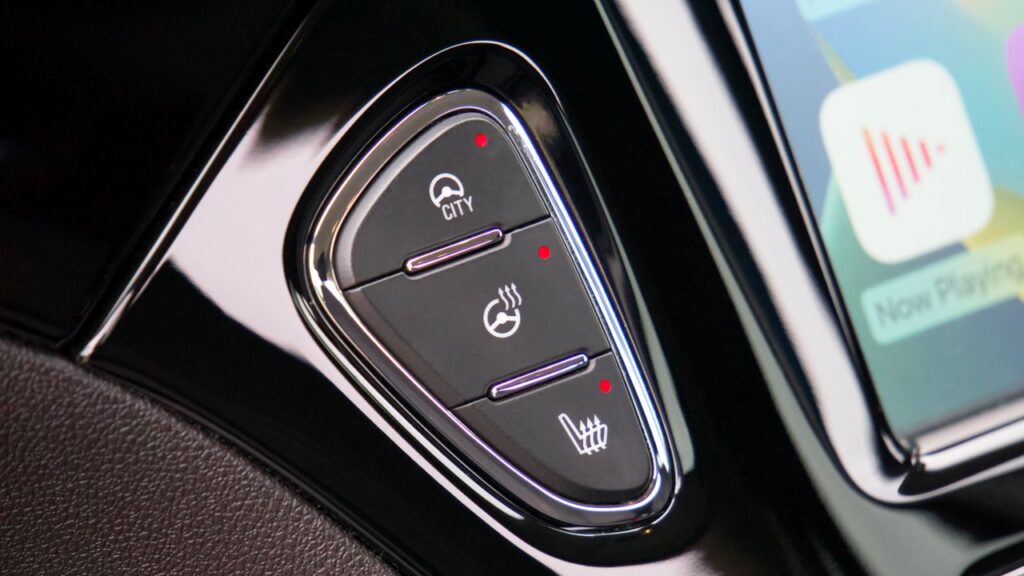
When your heated seats are not working on a cold Grand Rapids morning, the fix is often simpler than a new heating pad. A low battery, a blown fuse or a connector kicked loose under the seat can all leave you sitting on cold leather.
The trick is to notice exactly what the seat is doing. Both seats dead, one seat dead, cutting out or heating only the backrest each point to a different part.
Quick answer
Why are my heated seats not working?
If both seats are dead, suspect low battery voltage, a fuse, a relay or the control module. If only one seat is dead, the usual causes are its switch, the connector under the seat, a broken heating element or a temperature sensor. A seat that gets too hot should be switched off and checked.

Start With the Battery: Low Voltage Can Switch Seat Heaters Off
Seat heaters draw a lot of current, so many cars treat them as optional. When battery voltage or charge drops, the body computer sheds these loads first to protect starting power. The switch light may blink, or a battery saver message may appear on the dash.
Many newer cars use a load shed system that protects the battery. Heated seats, heated mirrors and the rear defroster are often the first loads cycled off when voltage sags, and the exact threshold varies by make.
A cold battery holds less charge, so this shows up on winter mornings. If the heaters return after a longer drive, have the battery and charging system tested. Related warning signs are covered in our guide to bad alternator symptoms and how they show up.
Both Heated Seats Not Working: Look Upstream
When neither seat heats and the battery is healthy, look at the parts both seats share.
- Fuse: your owner’s manual shows which fuse feeds the seat heaters. Replace it with the same rating. If the new one blows right away, there is a short.
- Relay: many cars switch the heaters through a relay. A failed one kills both sides at once.
- Control module: on newer cars a body or seat module runs the heaters and stores fault codes that a scan tool can read.

It is the same logic we use for glass in our post on a rear defroster that is not working. If both the defroster and the seats quit together, a shared fuse, relay or low voltage becomes the prime suspect.
Only One Seat Is Dead: Switch, Connector or Element
If the passenger seat warms up and yours does not, the problem is between that seat’s switch and its heating pad.
The Switch
Switch contacts wear with use. Signs include a light that does not come on, a button that has to be pushed several times, or heat that comes and goes when you touch it.
The Connector Under the Seat
Power reaches the seat through a plug on the floor under the seat. Rear passengers kick it and seat adjustments can tug it loose. In a Michigan winter, snowmelt and salty slush from boots soak the carpet and corrode the pins.

Be careful looking there. Airbag and seat belt connectors share the space, and unplugging the wrong one can set an airbag warning light.
A Broken Heating Element
The element is a mat of thin wires glued under the seat cover. Kneeling on the seat and daily sliding in and out can crack a wire. Once the circuit is open, current stops flowing and that seat goes cold.
A manufacturer service bulletin filed with NHTSA about a seat heater that shuts itself off shows how a technician checks the circuit for continuity to find an open, broken heater element. Some seats wire several elements in series, so one break can disable the whole seat. Replacing an element usually means removing the seat cover.
Seat Cuts Out or Works on Only One Setting
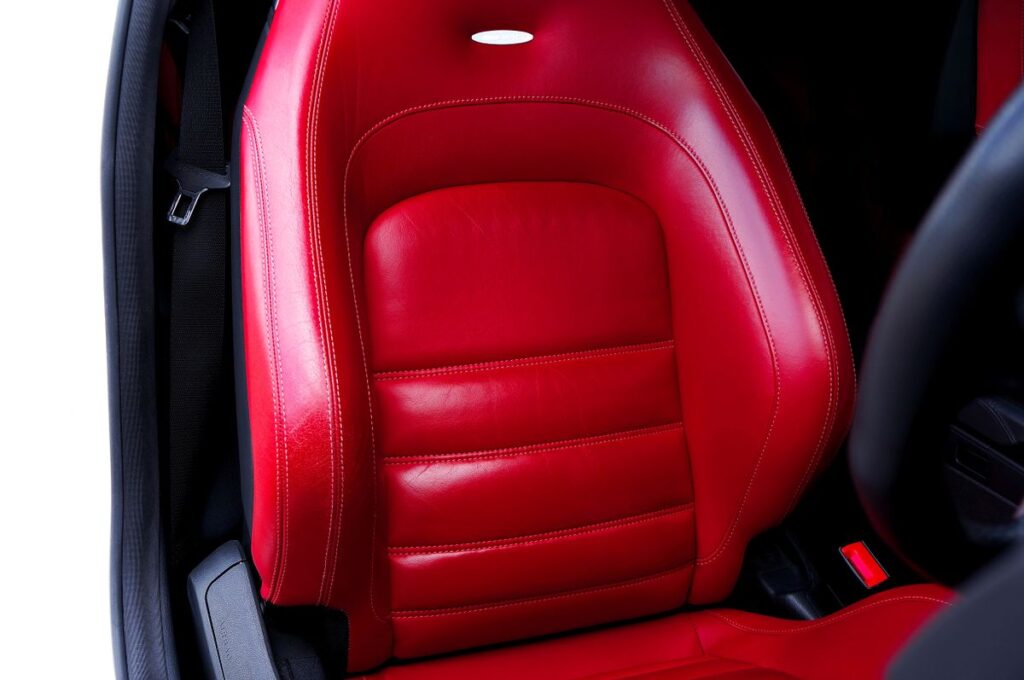
Every heated seat has a temperature sensor or thermostat in the pad that tells the system when to stop heating. If that sensor fails or reads wrong, the seat may shut off after a minute, work only on high, or never get past lukewarm.
A seat that drops out over bumps or when you shift your weight usually has a loose connection instead. The wire moves, the circuit opens for a moment, and the heat stops.
Only the Back or Only the Bottom Heats
Most seats have one pad in the cushion and one in the backrest, joined by a short wire. If one half warms and the other stays cold, the power feed is fine and the fault sits in the cold half.
The usual cause is a broken wire in that pad or in the link between the two pads, which flexes every time you sit down. Warm spots next to cold patches point to a partial break, which deserves attention for safety.

Safety: When a Heated Seat Gets Too Hot
A seat heater that will not shut off, feels hot in one spot, or smells like something is burning should be switched off and left off. A damaged element can overheat where a wire is broken, and a stuck temperature sensor can keep heating past a safe level.
This matters most for small children and anyone with reduced feeling in their legs. If the button does not turn it off, pull the fuse and have the seat checked before using it again.
Heated Seats Not Working: Symptoms Compared
Match what you notice to the likely cause. A test with a meter or scan tool confirms it.
| What you notice | Likely cause | How urgent |
|---|---|---|
| Seat gets too hot, hot spot or burning smell | Damaged element or stuck temperature sensor | High Switch it off and get it checked now |
| Both seats dead, switch light blinks, slow cranking | Low battery voltage or charging problem | Soon Test the battery within days |
| New fuse blows again right away | Short circuit in wiring or element | Soon Get it checked within days |
| Both seats dead, battery is fine | Fuse, relay or control module | Moderate Plan a repair in the next few weeks |
| One seat dead or cuts out over bumps | Switch or loose, corroded connector | Moderate Plan a repair in the next few weeks |
| Only the back or only the bottom heats | Broken element or connecting wire | Low Fix at your next service visit |
Getting Heated Seats Fixed in Grand Rapids
The element sits under the seat cover, so it is the last part you want to replace by mistake. Checking voltage, fuse, relay, switch and connector first finds the real fault.
Our car electrical repair in Grand Rapids covers body electronics on foreign and domestic vehicles, from seat heaters to a power window that is not working. Hendrick Hoffman, our owner and head mechanic, is ASE and State of Michigan certified in electrical.
Frequently Asked Questions
Why did my heated seat suddenly stop working?
The most common causes are a blown fuse, a connector under the seat that has been kicked loose or corroded, a worn switch, or a broken wire in the heating element. If both seats quit at once, low battery voltage is also worth checking.
Why is my heated seat light blinking?
On many cars a blinking seat heater light means the system has switched the heater off, often because battery voltage is low. Have the battery and charging system tested first.
Can a heated seat element be repaired?
Sometimes a broken connection can be repaired, but often the element mat is replaced. The job usually means removing the seat cover, so it pays to rule out the fuse, switch and connector first.
Is it safe to use a heated seat that gets very hot?
No. A seat that overheats, has a hot spot or smells like burning should be switched off and left off. A damaged element or stuck temperature sensor can cause burns, so have it checked before using it again.
Need car electrical repair in Grand Rapids? Call 456 AutoFix at 616-279-3832, Monday to Friday 8am to 5pm, or book through our contact page.
Can’t make it during the day? Use our after-hours drop-off. We’re at 456 Carrier St NE in Creston.