
The Audi brake pad warning light is a yellow circle with dashed arcs on each side, and it means a pad has worn down to its electronic wear sensor. A small wire built into the pad has physically worn through.
Here is how the sensor works, how long you can reasonably keep driving, and why the light often stays on even after new pads go in.
Quick answer
What does the Audi brake pad warning light mean?
It means at least one brake pad has worn far enough to break or ground the wire loop in its wear sensor. Typically only a few millimeters of pad material remain. Plan to have the brakes checked soon, and expect to replace the sensor along with the pads, because a worn sensor will keep the light on.

How Audi Brake Pad Wear Sensors Work
Most Audis from roughly the last two decades use an electronic wear sensor instead of the metal squeal tab found on many other cars. The sensor is a small plastic tip with a wire loop inside. It clips into the pad, or on some models is molded into it.
The tip sits at the pad’s minimum wear depth. As the friction material wears, the rotor eventually reaches the tip and grinds through the wire. The circuit opens (or on some designs, grounds against the rotor), and the instrument cluster turns on the light.
Front, Rear or Both?
Audi does not put a sensor on every pad. Many models use one sensor per axle, usually on one inner pad, and some only have a front sensor. Which wheel carries it varies by model and year.

How Long Can You Drive With the Light On?
There is no honest mileage number, because it depends on your driving and how much material the sensor was set to leave. Treat it as “book a brake check within days”, not “wait for the next oil change”.
Waiting has a real cost. Once the pad is gone, the steel backing plate grinds into the rotor, turning a pad job into a pad and rotor job. If you also hear grinding, feel pulsing or the car pulls to one side, check our guide to the signs you need new brakes and what each one means.
Since the sensor watches only one pad, the others can be thinner than it suggests. Inner pads, hidden behind the caliper, often wear faster than the outer pad you see through the wheel spokes.

Why the Audi Brake Pad Warning Light Won’t Reset
New pads are on, but the yellow light is still glowing. These are the usual reasons.
1. The Old Sensor Was Reused
The sensor is single use. Once the rotor has cut the wire, it is open for good, and the light stays on no matter how thick the new pads are. There is usually no button that clears it, because the sensor itself is the switch.
Even a sensor that never touched the rotor has spent years in brake heat, so it is good practice to replace it with every pad set. Some aftermarket pad sets do not include one, so check the box.
2. A Damaged Wire or Corroded Connector
The sensor lead runs through the wheel well to a small connector. A pinched, rubbed-through or snapped wire reads as worn pads, and so does a corroded connector. Then the light can come on even when the pads still have plenty of life.

3. Rear Pads on an Electronic Parking Brake
Many Audis have an electronic parking brake with a small motor on each rear caliper. On those cars the rear pistons generally cannot be pushed back by hand. The calipers have to be opened in a service mode with a scan tool that supports Audi parking brake service, then closed and tested once the new pads are in.
Skipping or rushing those steps can leave the brake and pad warnings on, or damage the caliper motors. The Ross-Tech wiki’s Audi A6 electronic parking brake service procedure shows how many steps are involved and warns against cycling the brake with the calipers apart.
4. A Stored Code or Service Reminder
On some models, a fault code stays stored after the repair, or the service display tracks pad wear and needs resetting with a scan tool. If the light does not clear after a few drives, the codes should be read rather than guessed at.
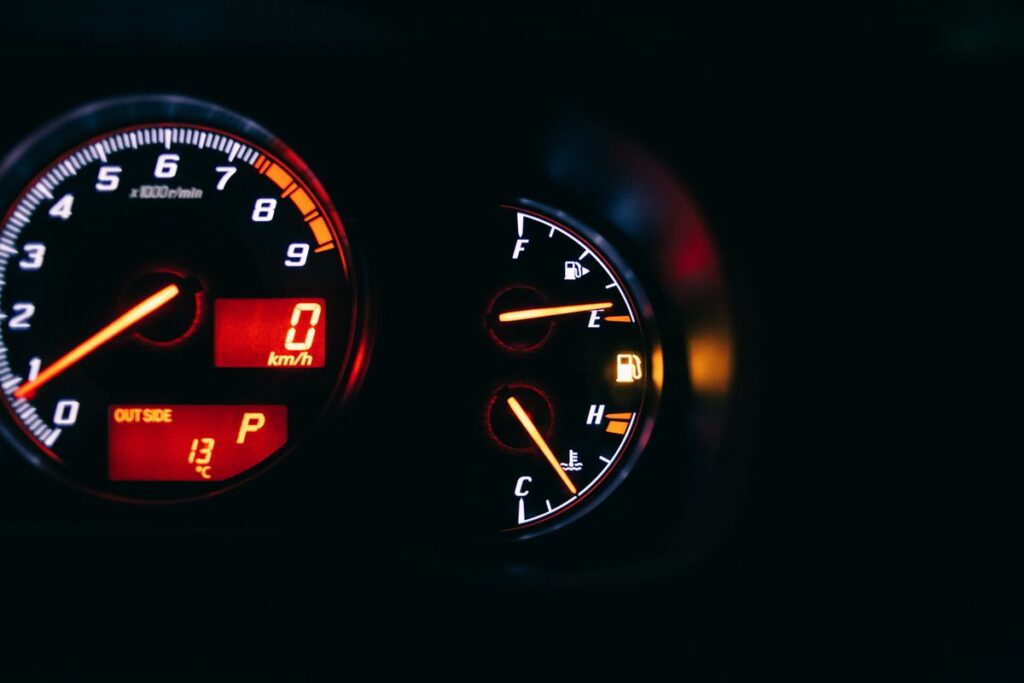
Pad Light, BRAKE Light or ABS Light?
Audi dashboards can show three different brake warnings, and they do not carry the same weight. Check your owner’s manual for your exact symbols.
| Warning or cause | What it usually means | How urgent |
|---|---|---|
| Red BRAKE light while driving | Low brake fluid or a brake system fault (also lit when the parking brake is set) | High Stop safely and have it checked before driving on |
| Brake and pad lights on after a rear pad job | Electronic parking brake service steps not completed | High Have the rear brakes checked right away |
| Yellow pad light, pads worn | Sensor wire worn through, a few millimeters of pad left | Soon Book a brake check within days |
| Yellow ABS light | Fault in the anti-lock system; normal braking usually remains | Soon Get the codes read promptly |
| Yellow pad light, pads look fine | Broken sensor wire or corroded connector | Moderate Have pads measured and wiring checked |
| Pad light still on after new pads | Old sensor reused or a stored code | Low Fit a new sensor and clear codes |
For more on the anti-lock warning, read our guide to an ABS light that stays on and what causes it.
Salt, Connectors and Uneven Pad Wear in West Michigan
Road salt works on Audi brakes in two ways. It corrodes the little sensor connectors tucked in the wheel wells, which can trigger the light early. It also seizes caliper slide pins, so one pad, often the inner one, wears much faster than its partner.

Rinsing the wheel wells through the winter helps, and so does having pads measured at every service visit. Audi’s maintenance intervals include a brake inspection, which our guide to Audi minor vs standard service and what each includes walks through.
Getting Audi Brake Pads and Sensors Replaced
A proper repair means measuring every pad and rotor, fitting new wear sensors, checking the wiring, servicing the slide pins and using service mode for rear calipers on electronic parking brake cars.
Our Audi repair and maintenance in Grand Rapids is led by Hendrick Hoffman, our owner and head mechanic, who is Audi factory trained. He is also ASE and State of Michigan certified in brakes, and our brake repair in Grand Rapids covers foreign and domestic vehicles.
Frequently Asked Questions
How long can I drive with the Audi brake pad light on?
There is no safe mileage figure, because it depends on how much pad the sensor leaves and how you drive. Typically only a few millimeters remain, so book a brake check within days to avoid grinding into the rotors.
Why is my brake pad light still on after new pads?
The most common reason is that the old wear sensor was reused. Once its wire is cut it stays open, so the light stays on. A damaged wire, a corroded connector, unfinished parking brake service steps or a stored code can also keep it lit.
Can I reuse the old brake pad wear sensor?
Not if the light came on, because the wire inside has been worn through. Even an untouched sensor has aged in brake heat, so replacing it with every pad set is good practice.
Do I need a computer to change rear brake pads on an Audi?
On many Audis with an electronic parking brake, yes. The rear calipers must be opened in service mode with a scan tool that supports Audi parking brake service, then closed and tested after the new pads are fitted.
Need Audi brake pads or a wear sensor replaced in Grand Rapids? Call 456 AutoFix at 616-279-3832, Monday to Friday 8am to 5pm, or book through our contact page.
Can’t make it during the day? Use our after-hours drop-off. We’re at 456 Carrier St NE in Creston.