
Audi control arm failure symptoms usually start small: a dull clunk over an expansion joint, a creak when you park, or a car that needs more steering corrections on the highway than it used to. Because many Audis have more front arms than a typical car, there are more bushings and ball joints that can wear.
Here is what each symptom points to, how urgent it is, and whether you need to replace every arm at once.
Quick answer
What are the signs of a failing Audi control arm?
The common signs are a clunk or knock from the front over bumps, a creak or groan when turning slowly at full lock, vague or wandering steering on the highway, a pull when braking, and wear on the inner edges of the front tires. Worn bushings and ball joints cause most of it, and a lifted inspection confirms which arm.

Why Audis Have So Many Control Arms
Many Audi models with a lengthwise-mounted engine, such as most generations of the A4, A5, A6, Q5 and Q7, use a multi-link front suspension. Instead of one lower arm per side, there are typically two upper arms and two lower arms per side, each with its own rubber bushings, and most with a ball joint at the wheel end.
That layout gives precise steering, but it means up to eight front arms to wear instead of two, and owners commonly report the short upper arms as the first to develop play. Smaller Audis like the A3 and Q3 often use a simpler strut front end, so check what your model and year actually have.
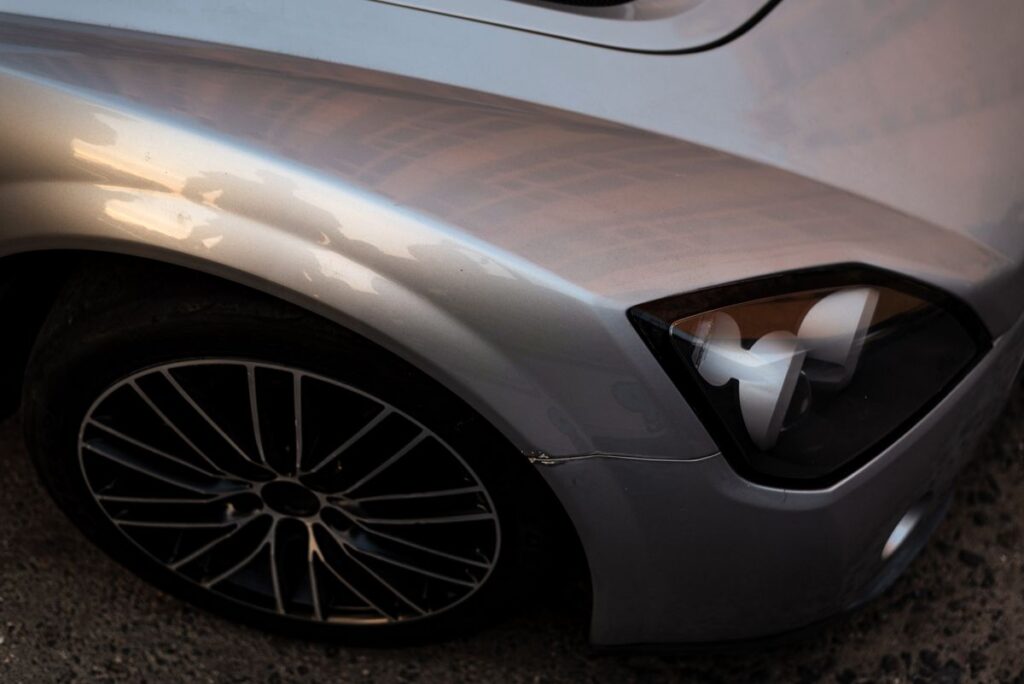
Audi Control Arm Failure Symptoms to Watch For
Control arm bushings take much of the force during braking, accelerating and cornering. Suspension parts maker Mevotech’s guide to checking for worn or loose chassis parts notes that a clunk when you pull away from a stop can point to worn control arm bushings. On an Audi, watch for these.
A Clunk or Knock Over Bumps
This is the most common complaint. A worn ball joint or split bushing lets the arm shift, and you hear a dull knock from one front corner over expansion joints and broken pavement. Sway bar links and strut mounts can clunk too: our guide to a clunking noise over bumps on any car covers the general causes.
A Creak or Groan When Parking
A creak at walking speed with the wheel turned far left or right often comes from a dry or worn upper arm ball joint or bushing. It tends to be worst on cold mornings. A squeak that only shows up in winter can also be ordinary rubber, which we explain in why a car squeaks when going over bumps.

Vague or Wandering Steering
Worn upper arms let the wheel’s angles change as the car moves. The steering feels loose around center, and you find yourself making small corrections to stay in your lane, especially on grooved highway pavement or in crosswinds.
A Pull or Shimmy When Braking
Braking loads the lower arms hardest. A torn lower bushing lets the wheel move backward under braking, so the car can tug to one side or the steering wheel can shimmy. Warped rotors cause a similar shake, so check the brakes too.
Wear on the Inner Tire Edges
When bushings sag, the top of the tire can lean in and the toe setting drifts. The inside shoulder of the tread then wears faster, which is easy to miss from the curb, so run a hand along the inner edge.
Control Arm, Strut or Tie Rod?
These three get confused because they share symptoms. A worn strut mostly changes the ride: floating, bouncing and nose dive under braking, which we cover in how to tell if struts are bad. Control arms change where the wheel sits, so they show up as clunks, wander and tire wear.
Tie rods connect the steering rack to the wheel, so they mainly cause play in the steering wheel and uneven toe wear. Our guide to bad tie rod symptoms and steering play explains how to tell them apart.
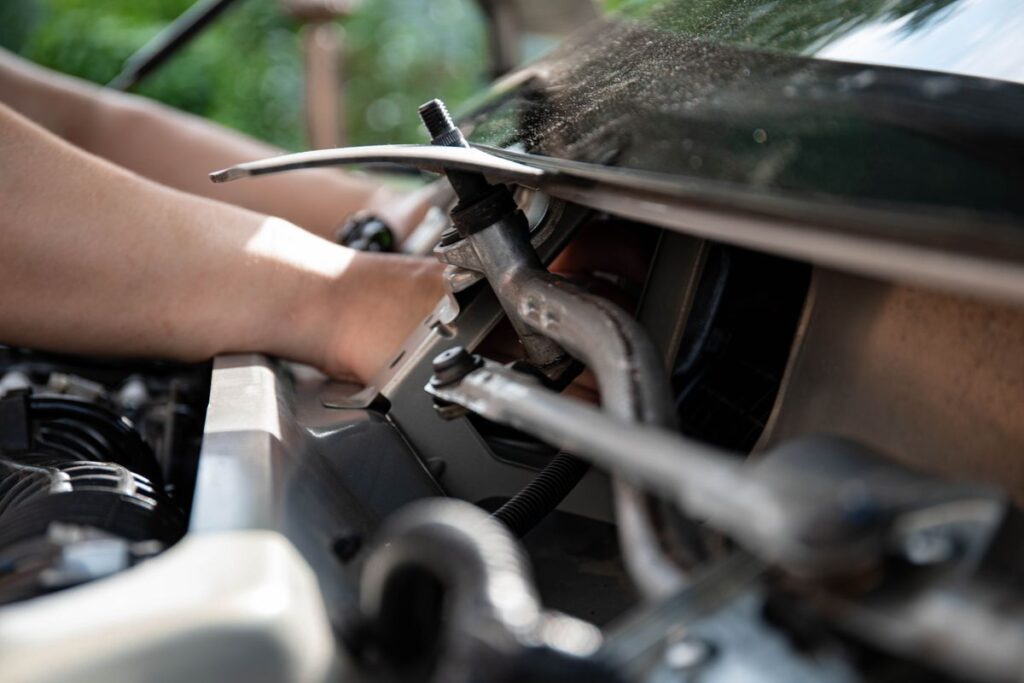
How a Mechanic Checks Audi Control Arms
A good inspection combines a test drive with a close look at the raised car. Typical steps include:
- A road test over bumps, at full lock and on the highway
- Prying each arm against its mount to spot bushing movement
- Checking each ball joint for play, unloaded and loaded
- Looking for split, bulging or oil-soaked rubber, since some Audi lower arms use fluid-filled bushings
- Reading the front tire wear, especially the inner edges
- Checking struts, sway bar links and tie rods so the right part gets replaced

Audi Control Arm Symptoms Compared by Urgency
Use this table to decide how soon to book an inspection.
| Symptom | Which arm or bushing it often points to | How urgent |
|---|---|---|
| Loud knock, steering suddenly loose or the car darts | A ball joint with heavy play, which could separate | High Stop driving and have it inspected |
| Pull or shimmy when braking | Worn or torn lower arm bushing | Soon Get it checked within days |
| Clunk over bumps from one corner | Upper arm ball joint or bushing | Soon Get it checked within days |
| Wandering steering on the highway | Worn upper arms changing the wheel angles | Moderate Plan a repair in the next few weeks |
| Inner-edge tire wear | Sagging bushings changing camber and toe | Moderate Inspect before buying new tires |
| Light creak at full lock on cold mornings | Dry upper ball joint or stiff rubber | Low Mention it at your next service |
Should You Replace All the Arms at Once?
Not always. Arms are often replaced in left and right pairs so the car handles evenly, and the two upper arms on each side are often done as a set because they wear at a similar rate. If only one lower bushing is torn on a car with healthy arms elsewhere, replacing that part alone can make sense.
An alignment is needed after control arm replacement, because new arms and bushings change the wheel angles. The bolts should also be tightened with the car at normal ride height, or the new bushings can twist and wear early.
Why West Michigan Roads Wear Them Faster
Freeze-thaw potholes hit the arms and ball joints hard, and road salt dries out rubber and corrodes the arm bolts. If your Audi started clunking after a hard hit, run through our pothole damage signs to check after a hard hit too.
Hendrick Hoffman, our owner and head mechanic, is Audi factory trained with 8 years’ focus on Audi and foreign cars, and is ASE and State of Michigan certified in steering and suspension. Our Audi repair and maintenance service and our suspension and steering repair cover the full front end.
Frequently Asked Questions
Why does my Audi clunk over bumps?
The most common cause is a worn ball joint or split bushing on one of the front control arms, usually an upper arm. Sway bar links and strut mounts can make a similar sound, so a lifted inspection is the way to find the exact part.
How long do Audi control arms last?
There is no single number. Life depends on the model, road conditions and driving, and potholes and road salt shorten it. Have the front arms inspected regularly once the car has high mileage or whenever a new noise appears.
Is it safe to drive with a bad control arm?
A mild creak is not an emergency, but a loud knock, sudden loose steering or a car that darts over bumps can mean a ball joint is close to separating. In that case, stop driving and have it inspected before going further.
Do I need an alignment after replacing control arms?
Yes. New arms and bushings change the wheel angles, so an alignment is needed afterward to keep the car tracking straight and protect your tires.
Need Audi suspension repair in Grand Rapids? Call 456 AutoFix at 616-279-3832, Monday to Friday 8am to 5pm, or book through our contact page.
Can’t make it during the day? Use our after-hours drop-off. We’re at 456 Carrier St NE in Creston.