As an Amazon Associate, 456 AutoFix earns from qualifying purchases. Product links below go to Amazon, where you can confirm the right part for your vehicle.
Primer is the layer nobody sees, yet it decides whether new paint lies flat, matches the panel around it and stays stuck through a few winters. The best automotive primer for your repair depends on what sits underneath it: old paint, filler, plastic or a patch of steel you just sanded bright.
Below we sort primers by type, set out the order of coats and review six products. If the damage is only in the clear coat, our car scratch remover guide may save you the whole paint job.
Quick answer
Which primer should a DIY car repair start with?
For small scuffs under an aerosol color, a one-part filler primer such as Rust-Oleum 249279 is enough. For a panel that gets base and clear, a catalyzed 2K urethane aerosol like Eastwood’s builds a tougher, sandable film. Plastic trim needs a bonding primer, and bare steel needs an etching or epoxy coat first.
Our Quick Picks
Three starting points by job: a one-part filler can for small scuffs, a catalyzed 2K aerosol for a tougher surfacer, and a gallon kit for anyone who sprays with a gun. All six primers are reviewed below.
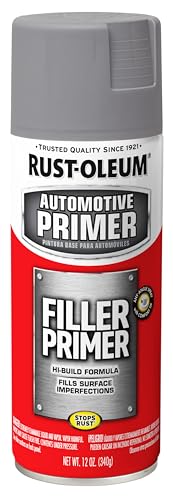
Rust-Oleum 249279 Filler Primer
Fills light sand scratches and small flaws under a rattle-can color.

Eastwood 2K Urethane Gray Primer
Catalyzed high-build surfacer without a compressor or gun.

Restoration Shop 2K High Build Primer Kit
High-solids surfacer for panel work and full resprays.
Automotive Primer Types and the Job Each One Does
“Primer” covers several products, and most repairs use two or three in sequence:
- Self-etching primer: a thin acid coat that grips bare steel and aluminum.
- Epoxy primer: a sealed, corrosion-resistant base for bare metal. Our guide to primer for bare metal covers both of these.
- Filler primer (primer surfacer): a thicker, sandable layer that levels sand scratches. One-part (1K) versions air dry; two-part (2K) urethane versions cure with an activator.
- Primer sealer: the last coat before color, giving the topcoat one even surface.
- Bonding or adhesion primer: made for plastic bumpers, trim, galvanized steel and aluminum, where ordinary primer can peel.
The best automotive primer brand for one layer is rarely the best for every layer, so match the type to the surface before you compare names.
Automotive Primer vs Sealer vs Filler: Getting the Coats in Order
A panel repair runs from the metal outward. Skip a step and the color shows it later through sinking, rings or peeling edges.
- Clean and sand: degrease, then feather the damage. Our roundup of sandpaper for auto body work lists the usual grits.
- Bare metal coat: etching or epoxy primer on any exposed steel.
- Filler and primer surfacer: filler primer over any body filler, blocked smooth once cured.
- Sealer: a light coat so the color sees one uniform surface.
- Automotive primer and paint: color, then clear, within each label’s recoat window.
For a single stone chip you can often skip most of this and use a touch-up kit; see our touch up paint for rock chips picks. After the color cures, a light polish blends the edge, and our dual action polisher roundup explains the machines.
Best Automotive Primer Picks, Reviewed One by One
The six products below cover filler, sealer, bonding and 2K surfacer jobs. Specs come from each Amazon listing, and drying times assume the temperatures on the label.
1. Rust-Oleum 249279 Filler Primer: Gray Sandable Aerosol with Stops Rust Formula
- Gray filler primer, 11 oz aerosol
- For metal, wood and fiberglass
- Covers up to 12 sq ft per can
- Dry to touch and recoat in 10 minutes
Rust-Oleum’s 249279 is a one-part aerosol filler primer in gray, made to fill the light sand scratches and small surface flaws left after you feather a chip or scuff a panel. The listing names metal, wood and fiberglass as suitable surfaces, and the oil-based Stops Rust formula lays down a rust-resistant base under your color coat.
Rust-Oleum lists coverage of up to 12 square feet per can and says the film dries to the touch and can be recoated in 10 minutes. That short window lets you build two or three light coats in one session, then block sand once the primer has cured as the label directs. The flat finish accepts any topcoat, according to the listing, so it pairs with most rattle-can colors and factory-match touch-up paint.
This is a sensible choice for a fender scrape, a mirror cap or a cluster of stone chips on a hood. It is less suited to a whole panel that will get a catalyzed base and clear, where a 2K primer holds up better under strong solvents. Shake the can well, spray in a ventilated space and wear a respirator, gloves and eye protection as the label says.
View Rust-Oleum 249279 Filler Primer on Amazon
2. U-POL Multi-Use Filler Primer: High-Build Gray Spray with Anti-Clog Nozzle

- High-build gray filler primer
- Listed for panels, bumper covers, wheels, chassis
- Anti-rust protection
- Anti-clog spray nozzle
U-POL’s Multi-Use Filler Primer is a gray, high-build aerosol meant to level small imperfections before color. The listing names a wide range of parts it suits: fenders, underhood areas, chassis, wheels, bumper covers, mirror covers, body panels and moldings. That breadth makes it handy when one weekend project covers both a steel fender and a plastic mirror shell.
U-POL says the primer offers strong adhesion and anti-rust protection, and the nozzle is designed to resist clogging for a steady spray across a long session. The listing is also plain about prep: clean and degrease the area to remove dirt, oil, grease and wax, abrade with the right grit for each surface, and mask surrounding areas against overspray. That order matters more than the can itself, because primer only grips what it touches.
It works well as a general garage can for mixed small repairs and for parts you plan to topcoat with an aerosol color. If you are priming bare steel, start with an etching or epoxy primer and use this as the filling layer above it. Spray with plenty of ventilation and wear the respirator, gloves and goggles the label calls for.
View U-POL Multi-Use Filler Primer on Amazon
3. Eastwood 2K Urethane Primer: Catalyzed High-Build Gray Aerosol, 2 Pack
- Two-component urethane primer with built-in activator
- For painted or epoxy-primed surfaces
- 48-hour pot life once activated
- Wide fan nozzle, 10-16 sq ft per can
Eastwood’s 2K Urethane Gray Primer puts a two-component, high-build primer in an aerosol. Each can holds the urethane primer and a separate activator that you release before spraying, and this listing is a 2 pack of 11.8 oz cans. Eastwood says it goes over painted or epoxy-primed surfaces, so it is the layer you sand smooth, not the first coat on bare steel.
The listing gives coverage of 10 to 16 square feet per can, a 48-hour pot life once activated and a 3-year shelf life before activation. The wide fan nozzle is designed to spray more like a gun than a standard rattle can, which helps on a door edge or a quarter panel blend. A catalyzed film also stands up to the solvents in many base coats better than a one-part filler primer.
Choose it when you want a tougher primer surfacer but do not own a compressor and gun. Once activated, the can has to be used within its pot life, so prep everything before you press the button. Eastwood’s listing says to wear eye, skin and respiratory protection and to spray only in a well-ventilated area, and 2K products contain isocyanates, covered further down.
View Eastwood 2K Urethane Gray Primer on Amazon
4. Rust-Oleum 249321 Primer Sealer: Gray Base Coat That Stops Topcoat Sink-In

- Gray primer sealer, 12 oz aerosol
- Keeps paint from sinking into primer
- Dry to touch in 10 minutes
- Any-angle spray, 10-12 sq ft per can
Rust-Oleum’s 249321 Primer Sealer is a gray aerosol that goes on as the last layer before color. Its job differs from a filler primer: the listing says it keeps paint from sinking into the primer beneath, which helps the topcoat dry to an even sheen instead of showing dull patches over sanded spots or filler.
The listing names metal, wood and fiberglass as suitable surfaces and includes the Stops Rust formula against corrosion. It dries to the touch in 10 minutes and covers about 10 to 12 square feet per can. Any-angle spray technology lets the can work upside down, which helps when you seal the lower edge of a door or the inside lip of a wheel arch.
Use it when a repair has several materials showing, such as old paint, filler primer and a ring of bare metal, so the color goes down over one uniform surface. It is not a filler, so it will not hide sand scratches, and it is not a bare-metal primer either. Spray in a ventilated area and wear a respirator, gloves and eye protection as the label directs.
View Rust-Oleum 249321 Primer Sealer on Amazon
5. Rust-Oleum Universal Bonding Primer: Flat White Spray for Plastics and Aluminum

- Flat white bonding primer aerosol
- Listed for bumpers, trim, plastics, aluminum
- Also galvanized steel and fiberglass
- Dry to touch in 30 minutes
Rust-Oleum’s Automotive Universal Bonding Primer is a flat white aerosol for the parts ordinary primers struggle to grip. The listing names bumpers, trim, plastics, fiberglass, galvanized steel and aluminum, and says it bonds a topcoat to even difficult automotive surfaces. The white base also helps when the color going on top is a light shade.
The listing gives a dry-to-touch time of 30 minutes, longer than the filler primers here, and coverage of 10 to 12 square feet per can. Rust-Oleum describes it as a professional-grade formula that seals and protects while leaving a smooth, flat surface ready for color. Prep still decides the result: clean plastic with a wax and grease remover, scuff it with a gray pad and keep bare fingers off the area before you spray.
This one suits a repainted bumper cover, mirror housings, black plastic trim or an aluminum part on a trailer. It is a bonding layer rather than a high-build surfacer, so deep scratches still need a filler primer above it. Bumper covers flex, so follow both this listing and your topcoat label closely. Ventilate well, and wear a respirator, gloves and goggles.
View Rust-Oleum Universal Bonding Primer on Amazon
6. Restoration Shop DTM4200 2K Primer Kit: 1.25 Gallon Gray Urethane Surfacer, 4:1
- 1 gal gray urethane primer + 1 qt hardener
- 4:1 mix makes 1.25 gal sprayable primer
- Direct to metal, filler and most plastics
- Sands wet or dry, tintable
Restoration Shop’s 2K High Build Primer kit is a gun-sprayed urethane primer surfacer for larger jobs. It contains 1 gallon of gray DTM4200 primer and 1 quart of hardener that mix at 4 to 1 to make 1.25 gallons of sprayable 2K primer. That volume suits several panels or a full respray, where aerosol cans would run out fast.
The listing describes a high-solids formula that fills medium to deep sand scratches, sands wet or dry without loading the paper and dries fast with no shrinkage. It is labeled direct to metal, with adhesion over properly prepared bare metal, previously painted surfaces, body filler and most properly prepared automotive plastics. You can also tint it with primer tints or base coat toner, which helps a weak-hiding color cover in fewer coats.
You need a compressor, a primer gun with a larger tip, mixing cups and a booth or a well-ventilated garage. Mixed 2K urethane contains isocyanates, so a suitable respirator, gloves, eye protection and coveralls are part of the job, not extras. If you have never sprayed with a gun, practice on a scrap panel first, or pick one of the aerosols above for a smaller repair.
View Restoration Shop 2K High Build Primer Kit on Amazon
Spray Can or Primer Gun? Matching the Format to the Job
People searching for a good automotive primer gun usually face a bigger job than a few cans can cover. A gun lays a more even film but needs a compressor, clean dry air and a place to spray:
| Format | Good for | Durability under base and clear | What you need |
|---|---|---|---|
| 1K aerosol filler or sealer | Scuffs, chips, small parts | Fair; can soften under strong solvents | Masking, sandpaper, respirator |
| 1K bonding aerosol | Plastic trim, bumpers, aluminum | Good as an adhesion layer only | Grease remover, scuff pad |
| 2K aerosol surfacer | One or two panels | Good; catalyzed film | Plan around the pot life, proper respirator |
| 2K kit through a gun | Several panels or a respray | Good; most material per job | Compressor, primer gun, booth or ventilated garage |
If you are leaning toward a gun, our HVLP paint gun guide covers tip sizes, including the larger tips that high-build primers need. Whatever the format, buy only as much as you can mask and spray in one session.
Two-component primers deserve extra care. OSHA notes that isocyanates are used in polyurethane paints and can cause occupational asthma along with eye, nose, throat and skin irritation. A dust mask is not enough, so use the respirator type the label names, wear gloves and eye protection, and keep people and pets out while you spray.
Priming in a West Michigan Garage: Cold, Damp and Salt
Even the best automotive primer misbehaves in an unheated Grand Rapids garage from November to March. Cold primer sprays heavy and dries slowly, and humid summer air can trap moisture under the film. Warm the cans indoors, check the label’s temperature range and let each coat flash fully.
Road salt is the other local problem. Bubbles along rockers and wheel arches usually mean rust has spread under the paint, so sand back to clean metal before priming. Once the paint cures, protect the underside too; our guide to undercoating for road salt compares the main products.
When Rust Is a Repair Job, Not a Paint Job
Picking the best automotive primer will not fix rust on the parts that stop and steer the car. If sanding uncovers flaking metal near brake lines, suspension mounts or the subframe, stop and have it inspected. Our article on brake line rust explains the warning signs.
Corroded lines, seized calipers and rusted hardware are jobs for our brake repair in Grand Rapids, and worn or rotted suspension parts go to our suspension repair team. Paint and body work are not on our services list, but we can check the steel around those systems.
More Buying Guides
Frequently Asked Questions
What are the main automotive primer types?
The main types are self-etching and epoxy primers for bare metal, filler primers that level sand scratches, sealers that go on just before color and bonding primers for plastic and aluminum. Many repairs use two or three of them in that order.
Automotive primer vs sealer: do I need both?
Not always. Filler primer builds and levels the surface, while sealer only evens it out so the color dries to one sheen. A sealer helps most when old paint, filler and primer all show on the same panel.
Is 2K primer better than 1K primer?
For panels that get a base and clear, usually yes. A 2K primer cures with an activator into a harder film that resists topcoat solvents. It also contains isocyanates, so it needs a proper respirator, and an activated can has a limited pot life.
Can I paint over automotive primer without sanding?
Some primers allow it within a recoat window printed on the label. Filler primers are meant to be sanded smooth before color, though. Check both the primer and the paint labels, because recoat times differ between products.
Sanded down to a rocker or wheel arch and found more rust than primer can hide? Call 456 AutoFix at 616-279-3832 between 8am and 5pm on weekdays, or describe what the sanding uncovered on our contact page.
Bring the car to 456 Carrier St NE in Grand Rapids before the primer goes on, while the bare metal still shows how far the corrosion reaches toward the brake lines and suspension mounts. If you can only come after hours, use the after-hours drop-off and leave a note on the seat naming each panel you sanded.