As an Amazon Associate, 456 AutoFix earns from qualifying purchases. Product links below go to Amazon, where you can confirm the right part for your vehicle.
Plugging into a regular household outlet works for a short commute, but most fully electric cars need more than an overnight trickle. The best EV charger for home use is a 240-volt Level 2 unit sized to your electrical panel, fitted with the connector your car uses and rated for the spot where you park.
This guide explains the choices that matter, plug-in or hardwired, 40 or 48 amps, J1772 or NACS, then reviews six wall units. For a wider look at the category, see our best Level 2 EV charger buying guide.
Quick answer
What should you look for in a home EV charger?
Pick a safety-certified Level 2 unit that matches your car’s port and your circuit. The Emporia Pro balances a 48A J1772 charger against a busy panel. The Schumacher SEV1600P1450 is a 40A plug-in for a NEMA 14-50 outlet. Garages with a Tesla and another EV suit the two-cable Grizzl-E Duo Connect.
Our Quick Picks
Three home chargers that cover the usual setups: a hardwired unit for a panel with little spare capacity, a plug-in for an existing 14-50 outlet, and a two-cable unit for a two-EV garage.

Emporia Pro PowerSmart J1772 Charger
Balances charging against the rest of the house.

Schumacher SEV1600P1450 40A Wall Charger
Smart plug-in charger with a long cable and swappable dock.

Grizzl-E Duo Connect Two-Cable Charger
One plug-in unit with a cable for each car.
Level 2 EV Charger for Home: Plug-In or Hardwired?
A Level 2 charger runs on 240 volts, the same kind of circuit an electric dryer or range uses. ENERGY STAR’s EV charger buying guidance puts Level 1 at roughly 2 to 5 miles of range per hour and Level 2 at about 10 to 20, with 50-amp circuits charging faster still. It also notes that certified chargers use 40% less energy in standby, which is where a home unit spends most of its life.
- Plug-in (NEMA 14-50): the charger plugs into a 240-volt receptacle, usually capped at 40 amps. Easy to take with you when you move, but the outlet must be a quality receptacle.
- Hardwired: the charger is wired straight to its own breaker. This is how most units reach 48 amps, and it removes the receptacle as a heat point.
EV charging is a continuous load, so the circuit is sized above the charger’s output. The Grizzl-E Duo listing, for example, pairs its 40-amp setting with a 50-amp breaker. Your electrician sizes the breaker, wire and receptacle to local code after a panel load calculation.
Best Home EV Charger J1772 or NACS: Matching the Plug
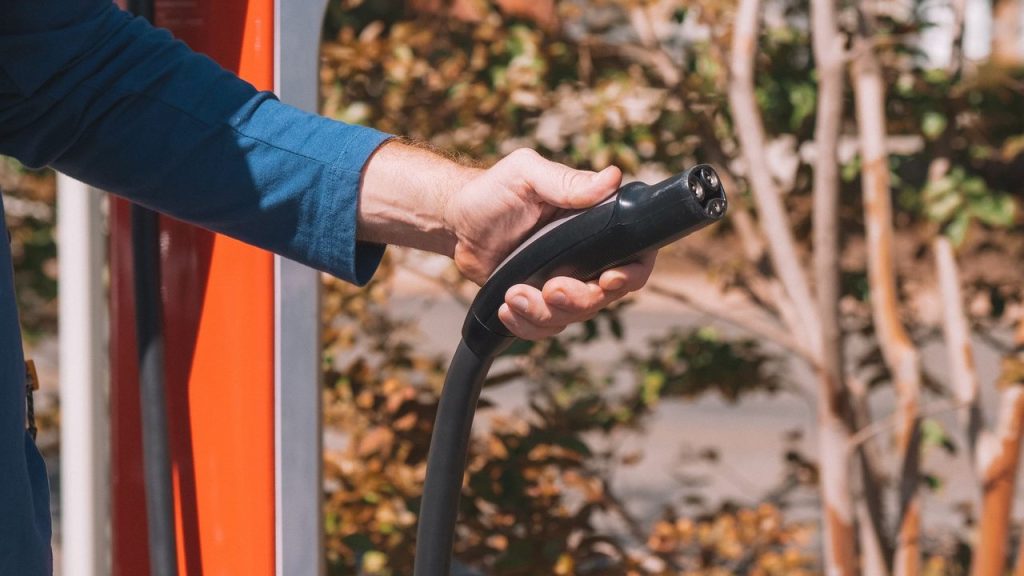
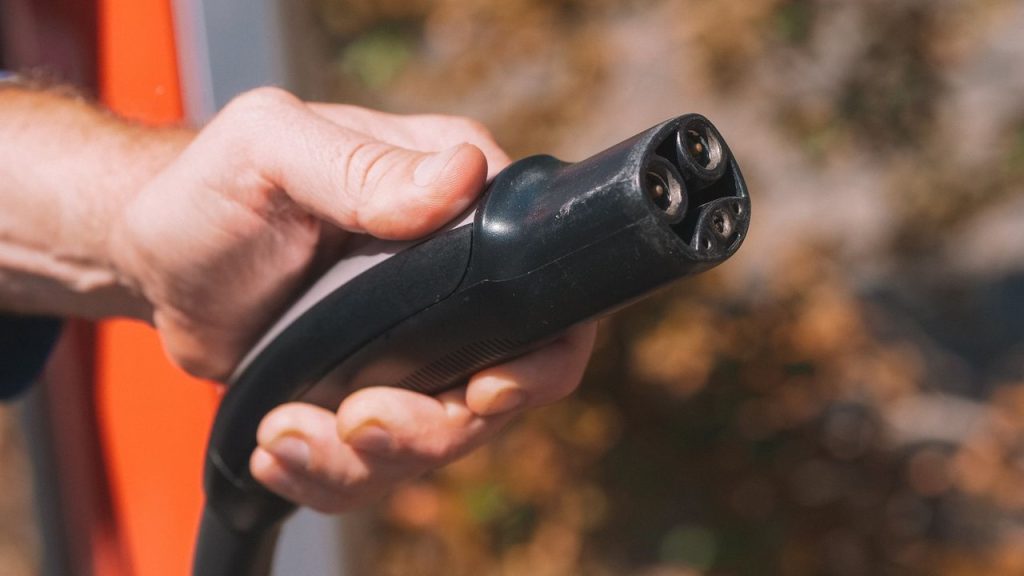
Most non-Tesla EVs and plug-in hybrids sold in North America have used the J1772 port. Tesla models, and a growing list of newer EVs from other makers, use NACS, now standardized as SAE J3400. Adapters exist, but a native plug is simpler day to day.
If two different EVs share one garage, a dual-plug unit or a power-sharing pair saves running a second big circuit.
Best EV Charger for Home Picks, One by One
The six chargers below cover hardwired and plug-in installs, J1772 and NACS connectors, and smart and basic designs. Ratings, cable lengths and certifications are as each Amazon listing states.
1. Emporia Pro Level 2 EV Charger: 48A J1772 with PowerSmart Load Balancing
- Listed at 48 amps, 240 volts
- PowerSmart load balancing with included Emporia Vue
- NEMA 14-50 plug or hardwired install
- J1772 connector on a 25 ft cable
Emporia’s Pro charger is aimed at a common home problem: a panel without much spare capacity. Its PowerSmart feature works with your existing panel and automatically balances the charger’s draw against the rest of the house, so the car charges as fast as the service allows. The listing rates it at 48 amps on 240 volts, with a J1772 connector on a 25 foot cable.
The kit includes an Emporia Vue energy monitor, which gives real-time readings of whole-home energy use rather than just the charger’s. Through the Emporia app you can schedule sessions, avoid peak rates and track usage. The listing allows either a NEMA 14-50 plug or a hardwired connection, describes the unit as weather resistant and points to Wi-Fi and Bluetooth setup help for you or your electrician.
This charger suits an older home, or one with an electric range, heat pump and dryer already on the panel, where an electrician might otherwise suggest a service upgrade. Load balancing still has to be set up and wired correctly, so the Vue sensors and the circuit belong with a licensed electrician. Tesla and other NACS owners should choose Emporia’s NACS version instead, and drivers with a large service may not need the extra hardware.
View Emporia Pro PowerSmart J1772 Charger on Amazon
2. Schumacher SEV1600P1450: 40A NEMA 14-50 Wall Charger with Wi-Fi and Bluetooth
- Configurable 16 to 40 amps on the plug
- Up to 50 amps when hardwired, per listing
- Wi-Fi and Bluetooth enabled
- 25 ft J1772 cable, dock on either side
The Schumacher SEV1600P1450 is a 240-volt Level 2 wall charger that plugs into a NEMA 14-50 outlet. Its current can be configured from 16 to 40 amps during installation to match your home’s circuit, and the listing says it reaches up to 50 amps when hardwired. It uses a universal SAE J1772 connector, so most non-Tesla EVs and plug-in hybrids can use it directly.
Practical touches stand out. The interchangeable dock lets you store the charging gun on either side of the unit, a cable cradle handles cord management, and the 25 foot cable is long enough to reach across garage bays or out to a driveway. Wi-Fi and Bluetooth are built in, and the listing describes a weather-resistant enclosure built to cope with tough winter weather, for indoor or outdoor mounting.
This is a sensible choice if your garage already has a 14-50 receptacle and you want app features without a hardwired install. The receptacle should be a heavy-duty type on a correctly sized circuit, which a licensed electrician can confirm. Tesla drivers would need an adapter, and anyone who wants the 50-amp setting has to hardwire it and size the circuit for that load.
View Schumacher SEV1600P1450 40A Wall Charger on Amazon
3. Grizzl-E Duo Connect: 40A Two-Cable Smart Charger with J1772 and NACS
- Two 25 ft cables, J1772 and NACS per listing title
- 40A / 9.6 kW, adjustable down to 16A
- NEMA 4X metal case, built-in GFCI
- Wi-Fi scheduling; charges with or without a connection
The Grizzl-E Duo Connect is a plug-in Level 2 charger with two 25 foot cables, built from the same metal-case design as the Grizzl-E Classic. This version’s listing title names J1772 and NACS connectors, which makes it a fit for a garage shared by a Tesla and another make. It plugs into a NEMA 14-50 outlet and is rated at 40 amps and 9.6 kW.
Current is adjustable from 40 down to 16 amps, and the listing maps each setting to a breaker: 40 amps on a 50-amp breaker, 32 on a 40, 24 on a 30 and 16 on a 20. The enclosure is NEMA 4X rated, UL tested and ENERGY STAR certified, with a built-in GFCI and power outage recovery. Wi-Fi software adds schedules, live monitoring and energy statistics, though charging still works offline.
This unit saves a second circuit in many two-EV homes. The listing does not spell out how the 40 amps divide when both cars charge together, so read the manual if both need a full charge overnight. Premium OCPP features carry a one-time activation fee, though basic smart charging does not need them. Single-EV households will get more for their money from a one-cable charger.
View Grizzl-E Duo Connect Two-Cable Charger on Amazon
4. Autel Level 2 EV Charger: 50A / 12 kW Hardwired J1772 with Wi-Fi and Bluetooth
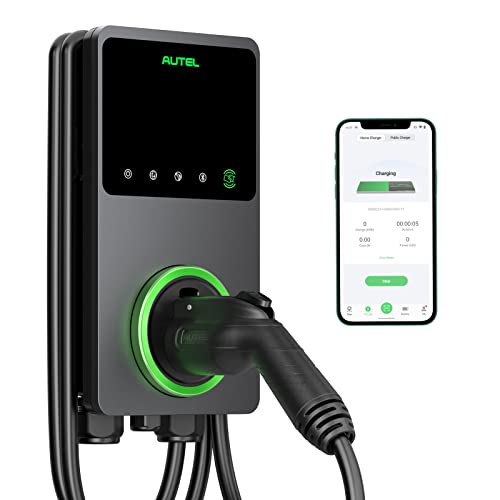
- Up to 50 amps and 12 kW
- Adjustable from 6 to 50 amps
- 25 ft J1772 cable with built-in holster
- NEMA 4X enclosure, CSA certified
Autel’s 50-amp charger is a hardwired Level 2 unit that delivers up to 50 amps and 12 kW, the highest output among these picks. Current can be set anywhere from 6 to 50 amps, so it can run on a smaller circuit now and be turned up later if the circuit is upgraded. It uses a J1772 connector on a flexible 25 foot cable, suiting J1772 EVs and plug-in hybrids.
The Autel Charge app lets you start or stop a session remotely, set schedules, monitor charging and manage energy use, with both Wi-Fi and Bluetooth built in. A holster built into the unit keeps the plug tidy, and the NEMA 4X enclosure with CSA certification covers indoor or outdoor mounting in rain, dust and harsh weather.
This charger makes sense for a driver whose car accepts high Level 2 rates and whose panel can support a large dedicated circuit, which your electrician confirms with a load calculation. Because it is hardwired, it stays with the house and is not suited to renters. Most cars cap their onboard charging well below 50 amps, so check your vehicle’s rating before paying for a bigger circuit, and Tesla owners would need an adapter.
View Autel 50A Hardwired J1772 Home Charger on Amazon
5. Lectron Nexus: 40A NACS (J3400) Plug-In Home Charger with Holster

- Native NACS (SAE J3400) connector
- Up to 40 amps, 9.6 kW, NEMA 14-50 plug
- IP66 rated with 23 ft cable and holster
- UL 2594 and related safety standards
Lectron’s Nexus is a wall-mounted Level 2 charger with a native NACS plug, standardized as SAE J3400. It suits Tesla Model S, 3, X and Y, the Cybertruck and newer EVs from other makers that ship with a NACS port. It delivers up to 40 amps at 240 volts, or 9.6 kW, and the listing quotes up to 38 miles of range per hour.
It plugs into a NEMA 14-50 receptacle, so there is no hardwiring if you already have a suitable outlet. That outlet still has to be on a correctly sized circuit installed by a licensed electrician, and a heavy-duty receptacle is worth asking for. The unit is rated IP66 for rain, snow and dust, comes with a 23 foot cable and a holster, and lists UL 2594, UL 2231, UL 2251 and UL 817 safety standards along with ENERGY STAR.
The Nexus makes sense for a NACS driver who wants a plug-in charger that can move house with them. It is limited to 40 amps by the plug design, so a car able to take 48 amps will charge a little slower than on a hardwired unit. J1772 cars would need an adapter.
View Lectron Nexus NACS Home Charger on Amazon
6. IYILO Level 2 EV Charger: 40A NEMA 14-50 or 48A Hardwired with Power Sharing

- 40A plug-in or 48A hardwired
- Dual temperature sensors in the plug
- Power sharing for two chargers on one breaker
- J1772, 25 ft cable, NEMA 4, built-in GFCI
The IYILO Level 2 charger ships with a NEMA 14-50 plug for 40 amps and 9.6 kW, and it also supports a hardwired install. According to the listing, hardwiring and setting an internal switch raises output to 48 amps and 11.5 kW. It uses a J1772 connector on a 25 foot cable and suits most non-Tesla EVs and plug-in hybrids in North America; Teslas need a NACS adapter, which is not included.
Two temperature sensors in the charging plug watch for overheating during long sessions, and a built-in GFCI and NEMA 4 rating cover garage or outdoor mounting. Power sharing lets two of these chargers run safely on one breaker, and dynamic load balancing is available with an energy meter sold in a bundle. The app sets time-of-use rates, tracks energy and cost and supports scheduling and RFID cards over 2.4 GHz Wi-Fi.
This is a good middle path if you want to start on an existing 14-50 outlet now and keep the option of moving to 48 amps later. The hardwired setting and any change to the internal switch should be handled by a licensed electrician, along with the circuit. The listing names ETL, ENERGY STAR and UL 2594 test reporting, so compare those certifications with the others here before you buy.
View IYILO Plug-In or Hardwired Level 2 Charger on Amazon
Which Home Charger Fits Your Garage?
Start with how your panel and parking spot are set up, then match the connector to the car.
| Your situation | Install | Listed output | Pick |
|---|---|---|---|
| Panel with little spare capacity | Plug-in or hardwired | 48A with load balancing | Emporia Pro |
| Existing NEMA 14-50 outlet, wants an app | Plug-in | 16-40A | Schumacher SEV1600P1450 |
| Tesla plus a J1772 car in one garage | Plug-in | 40A, two cables | Grizzl-E Duo Connect |
| Large panel, wants the highest J1772 setting | Hardwired | 6-50A, 12 kW | Autel 50A |
| Tesla or native NACS EV, 14-50 outlet | Plug-in | 40A | Lectron Nexus |
| Unsure yet whether to plug in or hardwire | Either | 40A plug, 48A hardwired | IYILO |
Whichever unit you choose, look for a UL, ETL or CSA safety listing. ENERGY STAR warns that not every EV charger sold through big retailers is safety certified,, and a charger pulls heavy current for hours at a time.

Driveways, Cold Garages and West Michigan Winters
A Grand Rapids driveway sees lake-effect snow, slush and road salt dripping off the car for months. If the charger mounts outside, pick one the listing rates for outdoor use, such as NEMA 4 or IP66 and up, and mount it clear of the snowblower. Our outdoor EV charger guide goes deeper on enclosures.
Cold makes cheap cables stiff and hard to coil. Look for a flexible cable and an enclosure rated for winter use, as Schumacher’s listing describes. A holster or hook keeps the connector out of puddles that freeze overnight. Measure from the charge port to the wall before you buy.

Every EV and plug-in hybrid still carries a 12-volt battery that runs the computers and locks, and a weak one can stop the car from waking up to charge. If yours keeps going flat in winter, our guide to the best car battery for hybrids explains what to replace it with. A car power inverter is handy for tools and laptops, but it is far too small to recharge an EV.
Installation Safety and When to Call Us
A hardwired charger or a new 240-volt receptacle is a job for a licensed electrician, with a permit and inspection where your local code asks for one. Have an inherited 14-50 outlet checked too.

The vehicle side is our department. If the car refuses to start a session, shows a charging fault, or the 12-volt system keeps dying, book our car electrical repair in Grand Rapids so we can trace the electrical fault on the car itself.
More Buying Guides
Frequently Asked Questions
What is the best EV charger for home NACS cars?
For a Tesla or another EV with a native NACS port, a charger with a J3400 plug avoids daily adapter use. The Lectron Nexus plugs into a NEMA 14-50 outlet at up to 40 amps, while the Grizzl-E Duo Connect adds a J1772 cable for a second car.
What is the most powerful home EV charger?
Among the picks here, the Autel 50A lists the highest output, 50 amps and 12 kW on a hardwired circuit. Most cars cap what they accept well below that, so check your car’s onboard charger rating before paying for a bigger circuit.
What is the cheapest EV charger for home use?
The lowest-cost option is the Level 1 cord that came with many EVs, plugged into a standard outlet. It adds only a few miles per hour, so many owners step up to a basic plug-in Level 2 unit without Wi-Fi.
Can I install a Level 2 EV charger for home myself?
Mounting the unit is simple, but the 240-volt circuit, breaker and any receptacle should be installed by a licensed electrician to local code.
Is your EV throwing a charging error, or does it refuse to wake up after a cold night in the driveway? Call our shop at 616-279-3832 any weekday from 8am to 5pm, or tell us about the problem on our contact page.
Bring the car to 456 Carrier St NE, Grand Rapids, whenever it suits you; the after-hours drop-off means you can leave it on your way home and note which warning the dash showed.