
As an Amazon Associate, 456 AutoFix earns from qualifying purchases. Product links below go to Amazon, where you can confirm the right part for your vehicle.
A 1968 small block and a 2024 crossover both take motor oil, but they ask very different things of it. The best motor oil for classic cars puts extra anti-wear chemistry where an old flat-tappet camshaft needs it, in the viscosity the original manual lists. Grabbing whatever is on sale at the parts store can wear a cam lobe flat in a few thousand miles.
Below we cover why zinc matters, how to choose a grade and type, and then review five high-zinc oils built for old engines. If your other car is a modern daily driver, our comparison of full synthetic oils for newer engines is the better place to start.
Quick answer
What oil should go in a classic car engine?
Most pre-1980s engines with flat-tappet camshafts and no catalytic converter do well on a high-zinc oil in the grade the manual lists, usually 10W-30 or 10W-40. Valvoline VR1, Driven HR-2 and Lucas Hot Rod & Classic suit that job. Cars with a catalytic converter should stay on a licensed API oil.
Our Quick Picks
Three quick picks for three kinds of classic: an easy-to-find racing oil, a conventional oil with storage additives for winter lay-up and a thicker-film oil for a tired engine. All five oils are reviewed below.

Valvoline VR1 Racing 10W-30
Long-running racing oil with added zinc for flat-tappet cams.
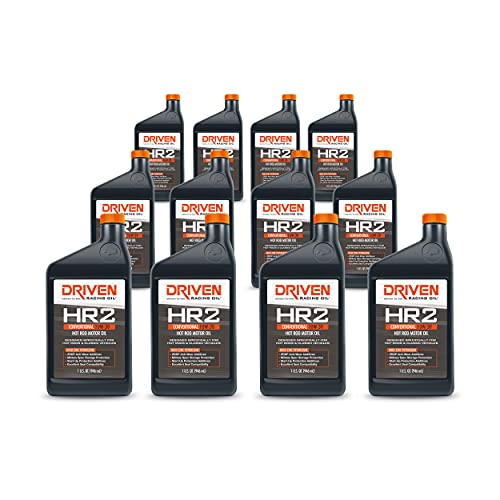
Driven HR-2 10W-30
Hot rod oil with additives that guard parked engines.

Lucas Hot Rod & Classic 10W-30
Zinc and moly rich oil aimed at worn, original engines.
Why Old Camshafts Care About Zinc
Most American engines built before the late 1980s used flat-tappet lifters that slide across the cam lobes instead of rolling over them. That sliding contact creates extreme pressure in a tiny area. Zinc dialkyldithiophosphate, usually shortened to ZDDP, reacts with hot metal and lays down a sacrificial film that takes the wear instead of the lobe.
Modern passenger car oils carry less of it on purpose. The phosphorus in ZDDP slowly poisons catalytic converters, so the licensed API categories cap it, and today’s roller-cam engines do not need the extra. Driven Racing Oil’s article on whether classic car engines need zinc-rich oils explains the trade-off from the oil maker’s side.
Not every engineer agrees that current API SP oil is unsafe in a mild stock engine. Where opinions line up is on high-lift cams, stiff valve springs and the first miles on a fresh cam, which all raise the load on the lobes. In those cases the best motor oil for classic cars is a high-zinc one, and a rebuilt engine also needs a proper break-in oil for its first run.
Choosing Grade, Base Oil and Bottle
Start with what the engine maker printed in the owner’s manual or shop manual. Many 1960s and 1970s manuals list several grades by outside temperature, and 10W-30 covers most Michigan driving seasons. Older engines with loose clearances sometimes call for 10W-40 or 20W-50, and the manual decides that, not the label on the shelf.
- Conventional: what most classics were designed around, easy on old seals and usually the lower-cost choice.
- Synthetic blend or full synthetic: flows faster on a cold start and resists heat, which helps a car that sees summer cruises and traffic.
- Catalytic converter check: several hot rod oils say on the maker’s page that they are not meant for cars with a converter.
- API licence: most high-zinc racing and hot rod oils carry none, so read the label if your car still runs on factory specs.
Not sure about synthetic in an engine that has run on mineral oil for fifty years? Our guide to synthetic vs conventional oil and which your car needs covers the seal and leak questions. A quality filter matters too, and our roundup of spin-on oil filter brands shows what separates a good one.
Best Motor Oil for Classic Cars: Five High-Zinc Bottles Reviewed
All five oils below are sold as hot rod, racing or classic car oils with added zinc, and the details come from the Amazon listing or the maker’s own page. Check the grade your manual calls for and the catalytic converter note before you order, and confirm the bottle size on the listing.
1. Valvoline VR1 Racing SAE 10W-30: High-Zinc Conventional Oil for Flat-Tappet Engines, 6 x 1 Quart
- Conventional 10W-30 racing oil
- Added zinc for cams, pistons and bearings
- Phosphorus formula for flat-tappet engines
- Case of six one-quart bottles
Valvoline VR1 Racing is a familiar name on parts store shelves, and this listing is the conventional 10W-30 sold as a case of six quarts. The Amazon listing describes a phosphorus formula engineered for modern and classic high-performance engines, and it names flat-tappet and performance cam motors directly. That wording is the main reason it shows up so often in classic car garages.
The listing says VR1 carries more zinc than standard passenger car oil for added film strength on pistons, cams and bearings. It also mentions special friction modifiers, anti-foam agents for high engine speeds and suitability for engines running full or partial alcohol fuels. Valvoline makes and formulates the oil in the United States, according to the listing.
For a stock or mildly built small block that comes out for car shows and summer drives, a six-quart case covers a typical oil change with some left for top-ups. Because it is a racing oil with extra phosphorus, it is not the right choice for a newer car with a catalytic converter that still runs on a licensed API oil. Buyers who want synthetic can look at the separate VR1 synthetic listing, and the grade should still match the manual.
View Valvoline VR1 Racing 10W-30 on Amazon
2. Lucas Oil 10679 Hot Rod & Classic Car SAE 10W-30: High-Zinc Paraffinic Motor Oil, 5 Quart
- Paraffinic base oils with zinc, moly and phosphorus
- Thicker additive film for worn engines
- Helps lift oil pressure and slow oil burning
- Single five-quart jug
Lucas Hot Rod & Classic Car 10W-30 comes in a single five-quart jug, which suits many small block and inline six engines in one pour. The listing says it is built on paraffinic base oils and fortified with high levels of zinc, molybdenum and phosphorus. Lucas describes the result as a tougher, thicker additive film for protection under heavy load.
The maker also says the oil improves film strength between the cylinder wall and piston rings, and that it helps raise oil pressure in worn engines while slowing oil burning. According to the listing, it stands up to high operating temperatures, works in cold weather for easier starts and helps prevent rust and corrosion. It is compatible with methanol and racing fuels, and with both synthetic and non-synthetic oils if you need to top up.
Lucas states on its product page that this oil is for muscle, showroom, classic and trophy cars without catalytic converters, and that it is not recommended for passenger car use. That makes it a good match for an original, higher-mileage engine that has lost a little oil pressure over the years. It is the wrong bottle for a later car with a converter, and it cannot fix worn bearings or rings.
View Lucas Hot Rod & Classic 10W-30 on Amazon

3. Driven Racing Oil HR-2 10W-30: Conventional Hot Rod Oil with ZDDP and Storage Protection, 12 Quart Case
- ZDDP package for camshaft and lifters
- Storage protection against rust and corrosion
- Flat tappet, overhead and roller cam engines
- Twelve-quart case
Driven Racing Oil, sold under the Joe Gibbs Driven name on some listings, offers HR-2 as a conventional 10W-30 made for hot rod, classic and older muscle engines. This listing is a twelve-quart case, enough for two or three changes on most V8s. The listing highlights a ZDDP package that provides anti-wear activity for the camshaft and lifters, so you do not need to add a zinc supplement.
What sets HR-2 apart is its storage protection. Driven says the additives guard the engine against rust and corrosion while the car is parked, and that the formula is designed to help prevent dry starts on classic engines. The 10W multi-grade formula is described as giving start-up protection for flat tappet, overhead and roller cam engines.
That combination suits a car that spends a West Michigan winter in the garage and then starts in spring after months of sitting. Driven’s own product page is clear that HR oils are for classic and racing use only, do not meet current API or OEM specifications, and are not intended for cars with catalytic converters. If your manual lists a heavier grade, the same HR line comes in other viscosities.
View Driven HR-2 10W-30 on Amazon
4. PennGrade 1 Synthetic Blend SAE 10W-30: High-Zinc High Performance Oil for Classic and Muscle Engines, 1 Quart

- Synthetic blend 10W-30
- High-zinc formula for classic and muscle engines
- Shock load and high temperature protection
- Single one-quart bottle
PennGrade 1 is the current name of the oil many enthusiasts still call Brad Penn, and the green bottle has a long following among muscle car and drag racing owners. This listing is the synthetic blend 10W-30 sold as a single quart, so order the number of bottles your engine holds. The PennGrade 1 Synthetic Blend 10W-30 product page says it is designed for classic, muscle and high-performance engines with high-zinc performance.
The Amazon listing describes PennGrade base stocks paired with additives for heavily stressed street and racing engines. It points to shock load and high temperature protection for bearings, camshafts, rings and pistons, along with anti-foam properties, shear stability and strong film strength. The maker also mentions reduced internal friction for horsepower while keeping that protective film.
This blend makes sense for a classic that gets driven hard, whether that means long summer highway trips, a built engine with a hotter cam or the odd test-and-tune night. The single-quart format is handy for top-ups, though a full change takes several bottles. Like the other oils here, it is built for high-zinc protection, so confirm it suits your car before using it alongside a catalytic converter.
View PennGrade 1 10W-30 on Amazon

5. Schaeffer Supreme 7000 Synthetic Plus Racing Oil 10W-30: Extra Zinc with Micron Moly, 1 Gallon

- Synthetic Plus racing oil, 10W-30
- Extra zinc for flat tappet cam engines
- Micron Moly friction modifier
- One-gallon bottle
Schaeffer Manufacturing is a St. Louis lubricant maker, and Supreme 7000 Synthetic Plus is its racing engine oil line. This listing is the 10W-30 in a one-gallon bottle, which covers four quarts, so a typical V8 needs a little more. Schaeffer describes the Supreme 7000 line as a para-synthetic, multi-grade oil for gasoline racing engines.
The listing says the oil carries extra zinc to protect flat tappet cam engines and other components from wear. It also uses Schaeffer’s own Micron Moly friction modifier to cut metal-to-metal wear, and the maker points to a high viscosity index with strong film strength at high operating temperatures. The listing adds that it helps keep engines clean of harmful debris and buildup.
That focus on heat makes it a sensible match for a modified classic with a higher-lift cam, a tighter-fitting rebuild or a car that spends summer afternoons idling at shows. It is a racing oil first, so it is not the bottle for a later car with a catalytic converter and factory API requirements. Schaeffer is sold mainly through dealers, so the Amazon listing is a convenient way to find it.
View Schaeffer Supreme 7000 10W-30 on Amazon
Matching the Bottle to Your Engine
Use this table to narrow the field, then check it against your manual and how the car gets used.
| Oil | Base and grade | Maker or listing note | Good fit |
|---|---|---|---|
| Valvoline VR1 Racing | Conventional 10W-30 | Formula aimed at classic and flat-tappet engines | Weekend drivers and cruise nights |
| Lucas Hot Rod & Classic | Conventional 10W-30 | For cars without catalytic converters | Tired engines with low oil pressure |
| Driven HR-2 | Conventional 10W-30 | Storage protection additives, no added ZDDP needed | Cars parked all winter |
| PennGrade 1 | Synthetic blend 10W-30 | Maker names classic and muscle engines | Driven muscle cars |
| Schaeffer Supreme 7000 | Synthetic blend 10W-30 | Extra zinc and Micron Moly | Built engines that run hot |
For a stock engine that comes out on summer weekends, the best motor oil for classic cars is usually one of the conventional 10W-30 bottles. The blends earn their place in harder-driven or modified engines, where the extra heat resistance is worth paying for.

Putting an Old Car Away for a Grand Rapids Winter
Plenty of collector cars around West Michigan sit from the first salted roads in November until spring. Used oil holds acids and moisture from combustion, and those keep working on bearings and cam lobes the whole time the car is parked. Change to fresh oil and a new filter right before storage, because even the best motor oil for classic cars turns acidic once it has been used. Then drive until the engine reaches full temperature.
Short starts in a cold garage do more harm than good, because the engine never gets hot enough to boil off condensation. Either drive it properly or leave it alone. For the cold-start side of things, our guide to the best motor oil for cold weather starts explains what the W number means.

Oil ages in the bottle and in the pan, so change it once a year even if the car covered only a few hundred miles. Our article on how long you can go without an oil change shows what overdue oil does inside an engine. While the car is laid up, the cooling system needs attention as well, and our pick of the best coolant for classic cars covers old radiators.
Warning Signs That Need a Mechanic
The right oil cannot fix a worn engine. A lifter that ticks after warm-up, blue smoke on startup or a gauge that drops at idle all point to wear that a bottle will not cure. If the warning light comes on while you drive, follow the steps in our guide to an oil pressure light that comes on and shut the engine off.
Burning a quart every few hundred miles means rings, valve guides or seals, whatever the age of the car. Our write-up on Audi 2.0T oil consumption and what counts as normal is about a modern engine, but its method for measuring consumption works on any car.

Prefer to hand the job over? Our oil change service in Creston can fill your classic with the high-zinc oil and grade you choose and look over the drain plug, filter and leaks while it is on the lift.
More Buying Guides
Frequently Asked Questions
Do all classic cars need high-zinc oil?
Not all of them. Engines with flat-tappet camshafts benefit most, especially with performance cams or stiff valve springs. A later classic with a roller cam and a catalytic converter is usually better off on a licensed API oil in the grade its manual lists.
Can I put synthetic oil in an old engine?
Yes, if the engine is in good shape and the oil has the zinc it needs. Synthetic does not cause leaks, but it can find a worn seal faster than thick mineral oil. Blends such as PennGrade 1 and Schaeffer Supreme 7000 are a middle ground.
Is high-zinc oil safe with a catalytic converter?
Over time, the phosphorus in zinc additives can damage a converter. Lucas and Driven both say on their maker pages that their hot rod oils are not meant for cars with one. If your car has a converter, stick with a licensed API oil.
How often should I change the oil in a classic I rarely drive?
Change it at least once a year, and do it before winter storage instead of after. Moisture and combustion acids build up even on low miles. A car that sees regular summer use may need a second change partway through the season.
Got a classic that ticks, smokes or leaks oil on the garage floor? Call 456 AutoFix at 616-279-3832, Monday to Friday from 8am to 5pm, or book a time on our contact page.
Weekday hours tough to fit around work? Our after-hours drop-off at 456 Carrier St NE in Grand Rapids makes it easy to leave the car with us.