
As an Amazon Associate, 456 AutoFix earns from qualifying purchases. Product links below go to Amazon, where you can confirm the right part for your vehicle.
A tire pressure light that stays on after every cold snap usually means one thing on an older truck: a sensor battery has given up. Choosing the best TPMS sensors for Ford F150 trucks is less about brand and more about matching the part number, the radio frequency and the relearn method your truck expects.
Below we explain how to read the sensor you already have, then review six sensor sets that cover the main F-150 generations. For how TPMS sensors work across all vehicles, see our general TPMS sensor buying guide.
Quick answer
Which TPMS sensors fit a Ford F-150?
Match the part number on your old sensor. Most 2009-2014 trucks list 9L3Z-1A189-A sensors and many 2015-2020 trucks list F2GZ-1A189-A, both 315 MHz. Later trucks may use 433 MHz parts, which a dual-frequency set covers. Every new sensor still needs a relearn with an activation tool or scan tool.
Our Quick Picks
Three sets that cover the main F-150 generations: a 315 MHz four-pack for 2015-2020 trucks, a dual-frequency set for 2018-2025 trucks and a 9L3Z set for 2009-2014 trucks. All six are reviewed below.
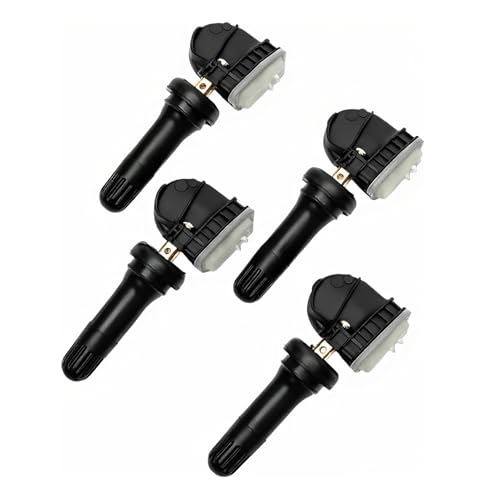
NEWHOW F2GZ-1A189-A 4-Pack
A full set that names the F2GZ part number and Motorcraft TPMS35 cross.

Augfiro Dual-Frequency Ford Set
Dual-frequency sensors for trucks where the frequency varies.

Marsflex 9L3Z-1A189-A 4-Pack
A full set for the 12th-generation truck's 9L3Z sensors.
Start With the Sensor Already in Your Wheel
Model year gets you close, but it does not settle the question on its own. Ford used more than one sensor on some F-150 years, and replacement listings show both 315 MHz and 433 MHz Ford part numbers for later trucks. A sensor on the wrong frequency will never talk to the receiver, no matter how well it is installed.
The reliable check is the label on the sensor itself. When a tire is off the rim, the sensor body behind the valve stem shows a Ford part number and usually the frequency. Write both down, or photograph them, before the tire goes back on.
If the tires are mounted, your parts receipt or a tire shop’s TPMS tool can read the sensor ID and type from outside the wheel. Then compare that number with the replacement numbers on the Amazon listing, and confirm year, model and trim there before you order.
Pre-Programmed, Programmable or OE Replacement?
Sensor listings use three labels, and they mean different amounts of work after the tire goes on:
- OE replacement: built to the original Ford specification for a set of part numbers, ready to install without programming.
- Pre-programmed aftermarket: loaded at the factory with the Ford protocol, so no coding is needed, but the truck still has to learn each new sensor ID.
- Programmable: a blank sensor that a matching tool sets up for your vehicle, or clones from the old sensor’s ID.
Note the common thread: every listing reviewed here says a relearn or activation step follows installation. On most F-150s that means a TPMS activation tool held at each valve stem in the order your owner’s manual gives, or a scan tool with TPMS functions. Our guide to the TPMS relearn tools worth owning compares the handheld options, and some of the scanners in our roundup of OBD2 scanners for DIY mechanics also include TPMS service.
Best TPMS Sensors for Ford F150: Six Sets Reviewed
The list runs from an OE-style single sensor to full four-wheel sets for each F-150 generation, ending with a dual-frequency set listed across three generations. Features and fitment come from each Amazon listing.
1. Schrader 20452: 315 MHz OE Replacement Snap-In TPMS Sensor

- Lists Ford F-150 among compatible vehicles
- 315 MHz, rubber snap-in valve
- Replaces F2GT-1A180-AB and F2GT-1A189-A
- No programming needed before install
Schrader makes this 20452 sensor as a direct replacement for a specific group of Ford sensors, and the F-150 is on its compatibility list along with the Edge, Mustang, Explorer and Maverick. It replaces the F2GT-1A180-AB and F2GT-1A189-A part numbers. That makes the label check easy: if those numbers are on your old sensor, this is the matching part.
The sensor arrives ready to install and does not need programming first. It uses a rubber snap-in valve, and Schrader names service kit 20018 for a new rubber stem or kit 34000 if you prefer an aluminum stem. The listing also gives the torque figures, 11.5 inch-pounds for the mounting screw and 3.5 inch-pounds for the valve core, which is useful for a tire shop or careful home installer.
This is a single sensor, so it fits the common case where one corner fails early or gets damaged during a tire change. Owners replacing all four at once may find a four-pack simpler to buy. Like any replacement sensor, it still has to be learned by the truck after installation, so plan for an activation tool or a shop visit. It is also a sensible spare to keep on the shelf if the other three are still reading.
2. NEWHOW F2GZ-1A189-A: 315 MHz Pre-Programmed TPMS Sensors, 4-Pack
- Listed for 2015-2024 Ford F-150 with 315 MHz TPMS
- Crosses to F2GZ-1A189-A and Motorcraft TPMS35
- IP67 sealed, snap-in valve stems
- Not for 433 MHz F2GZ-1A189-B/F/G systems
NEWHOW builds this four-pack around the F2GZ-1A189-A sensor that many 2015 and later F-150s use, and it also lists the Motorcraft TPMS35 number and several Ford cross references. The listing is unusually direct about fit: your old sensor should read 315 MHz and F2GZ-1A189-A, and the set is not for 433 MHz systems that carry the B, F or G suffix.
Each sensor comes pre-programmed with a snap-in valve stem, so there is no coding before the tire goes back on. The listing describes IP67 waterproof construction, an epoxy-sealed circuit board and a corrosion-resistant stem, with an operating range from minus 40 to 257 degrees Fahrenheit. Those details matter on a truck that sees salt slush half the year. The listing quotes readings from 0 to 130 psi, which comfortably covers the pressures an F-150 runs, including the higher figures some trucks use when towing or hauling.
The seller also says plainly that pre-programmed does not mean automatic pairing on every model. After mounting, expect to complete a relearn with a Ford TPMS trigger tool or a scan tool that supports it. This set suits owners replacing all four aging sensors at once on a 315 MHz truck. Match the old label first and you avoid the most common return reason.
View NEWHOW F2GZ-1A189-A 4-Pack on Amazon

3. A-Premium 315MHz: Pre-Programmed TPMS Sensors with Aluminum Valves, 4-Pack

- Listed for 2015-2020 Ford F-150 and 2015 F-150 HD
- Crosses to F2GZ-1A189-A, F2GT-1A180-AB, HC3Z-1A189-A
- Aluminum valve stems, CR2050 battery
- Relearn required after install
A-Premium lists this set for the 2015-2020 F-150 and the 2015 F-150 HD, along with a long run of other Ford and Lincoln models. Its reference numbers include F2GZ-1A189-A, F2GZ-1A189-D, F2GT-1A180-AB and HC3Z-1A189-A, so it covers more than one label you might find on a truck from those years. Read your old sensor before ordering to be sure your label is one of them.
The main difference from most four-packs is the valve. These sensors use an upgraded aluminum stem, which the listing says is compatible with the OE rubber valves, and each sensor runs on a CR2050 battery. A-Premium states the sensors are FCC and IC certified and tested in-house to SAE J2657, with an operating range of minus 40 to 120 degrees Celsius.
Aluminum stems hold their shape well, but in a salt state they reward some care: torque them properly and replace the seals when tires are serviced. The listing is clear that a relearn is still needed and points owners to the vehicle manual for pairing steps. This set fits owners who want metal stems on a 315 MHz truck. The seller backs the sensors with a two-year guarantee, according to the listing.
View A-Premium 315MHz 4-Pack on Amazon
4. Augfiro Ford TPMS Sensors: 315/433 MHz Dual-Frequency, Pre-Programmed, 4-Pack
- Listed for 2018-2025 Ford F-150
- 315 MHz and 433 MHz in one sensor
- Crosses to JX7Z1A189A, ML3Z1A189B and others
- IP67 sealed, Panasonic CR2050B battery
For newer trucks, the frequency question gets harder, and this Augfiro set answers it by putting both 315 MHz and 433 MHz into each sensor. The listing names the 2018-2025 F-150 along with Super Duty, Bronco, Explorer and Transit models, and it crosses to a long list of Ford numbers including JX7Z1A189A, ML3Z1A189B and HC3Z1A189A.
Each sensor comes pre-programmed with the Ford protocol, so no cloning or coding is needed before mounting. Augfiro lists an IP67 sealed housing, a Panasonic CR2050B battery and a working range of minus 40 to 257 degrees Fahrenheit. The seller describes the four-pack as a good fit for a second set of winter or off-road wheels as well as a full replacement. The seller also mentions plus or minus one percent pressure accuracy for each sensor.
As with the others, the truck has to learn the new IDs afterward, and the listing says the method depends on your owner’s manual. Before buying, compare your old sensor number with the cross-reference list on the listing. A dual-frequency sensor widens the fit, but it does not remove the need to confirm year and trim. A tire shop can read the old sensor for you if the tires are still mounted.
View Augfiro Dual-Frequency Ford Set on Amazon

5. Marsflex 9L3Z-1A189-A: 315 MHz Pre-Programmed TPMS Sensors, 4-Pack
- Listed for 2009-2014 Ford F-150
- Crosses to 9L3Z-1A189-A and DE8T-1A180-AA
- CR2050HR battery, minus 40 to 125 C range
- Activate with a scan tool after install
Trucks from the 2009-2014 run are the most likely to still carry their original sensors, and those batteries are well past the five to eight years the listings quote. Marsflex built this four-pack around the 9L3Z-1A189-A and DE8T-1A180-AA numbers and lists the 2009-2014 F-150, plus many Super Duty, Expedition and car applications.
The sensors are pre-programmed to the OEM specification at 315 MHz, so no extra programming is needed before mounting. Each one carries a CR2050HR battery, and the listing gives an operating range of minus 40 to 125 degrees Celsius. Marsflex asks buyers to verify fitment before ordering, which is good advice given how many Ford part numbers exist. The set includes four sensors for a full replacement.
After installation, the listing says to activate the sensors with a scan tool so the truck learns the new IDs. On an older truck, it is worth replacing the valve stem seals at the same time, since the originals have been through years of salt. This set is the plain choice for a 12th-generation truck that needs all four sensors replaced.
View Marsflex 9L3Z-1A189-A 4-Pack on Amazon
6. Hucigen Ford F-Series TPMS Sensors: 315/433 MHz Dual-Frequency, Pre-Programmed, 4-Pack

- Listed for 2009-2023 Ford F-150
- 315 MHz and 433 MHz in one sensor
- Crosses to 9L3Z1A189A, F2GZ1A189A, F2GZ1A189B and more
- IP67 sealed, Panasonic CR2050 battery
Hucigen aims this four-pack at the whole Ford F-Series rather than one generation. The listing names the 2009-2023 F-150 alongside the F-250 through F-550, and it crosses to 9L3Z1A189A, F2GZ1A189A, F2GZ1A189B, FR3Z1A189A and several other Ford numbers. That spread is possible because each sensor carries both 315 MHz and 433 MHz.
The sensors come pre-programmed for compatible vehicles, so there is no cloning or coding before mounting. Hucigen lists a Panasonic CR2050 battery with a quoted five to eight years of service, an IP67 waterproof and dustproof body and a working range of minus 40 to 257 degrees Fahrenheit. Each unit is tested for signal and vibration before shipping, according to the seller.
The listing is honest that pre-programmed does not mean relearn-free. Depending on the year, you may need a TPMS relearn tool, an OBD scanner, a professional scan tool or a tire shop to pair the new IDs. This set suits owners who cannot get a clear read on their old sensor, though matching the part number is still the safer habit. It also suits a household with two F-series trucks from different years.
View Hucigen Dual-Frequency F-Series Set on Amazon
F-150 Sensor Part Numbers at a Glance
This table pulls the replacement numbers from the listings above into one place. Treat it as a short list for comparison, then let the label on your own sensor make the final call.
| F-150 years (as listed) | Ford numbers named | Frequency | Sets reviewed here |
|---|---|---|---|
| 2009-2014 | 9L3Z-1A189-A, DE8T-1A180-AA | 315 MHz | Marsflex, Hucigen |
| 2015-2020 | F2GZ-1A189-A, F2GT-1A180-AB, HC3Z-1A189-A | 315 MHz | Schrader 20452, NEWHOW, A-Premium |
| 2018-2025 | JX7Z-1A189-A, ML3Z-1A189-B and others | 315 or 433 MHz | Augfiro, Hucigen |

The year ranges overlap on purpose. A 2018-2020 truck could carry either a 315 MHz F2GZ sensor or a newer part, which is why the dual-frequency sets exist. For most owners, the best TPMS sensors for Ford F150 trucks are simply the ones that match the old label, so an extra minute with a flashlight saves a return.
Cold Mornings, Salt and Potholes: Sensor Life in West Michigan
Tire pressure drops as the air gets colder, so the first frosty morning of fall often lights the TPMS warning even when nothing is broken. Check the tires with a gauge and fill them to the pressure on the driver’s door jamb sticker, not the maximum printed on the sidewall. The fuel economy maintenance tips from FuelEconomy.gov also note that underinflated tires cost mileage and wear out sooner.
Road salt is hard on valve stems and the screws that hold the sensor to them. Swapping to winter wheels each season is a good time to fit new valve cores and seals, and several listings name the service kits for that job. Aluminum stems look clean, but they need the right torque and some care where salt sits.

Freeze-thaw potholes are the other local problem. A hard hit can crack a sensor, bend a rim lip so the tire leaks slowly, or knock the alignment out. If a tire keeps losing air after a pothole strike, read our list of pothole damage signs before you blame the sensor.
When the Warning Light Points Past the Sensor
A solid TPMS light usually means low pressure in at least one tire. A light that flashes for about a minute at startup and then stays on usually points to a system fault, such as a sensor that has stopped transmitting. Most F-150 owners can sort those two cases with a gauge and a scan tool.

What a gauge cannot find is the damage that causes the slow leak or the pull. A bent wheel, a worn tie rod or a tired ball joint can show up as uneven tire wear and repeated low-pressure warnings on one corner. If you notice a pull, clunks over bumps or wear on one tire edge, our suspension repair in Grand Rapids starts with a full inspection of the parts that hold the wheel in place.
More Buying Guides
Frequently Asked Questions
Does a Ford F-150 use 315 MHz or 433 MHz TPMS sensors?
Most replacement listings for 2009-2020 trucks are 315 MHz, while listings for later trucks include 433 MHz Ford part numbers too. Read the frequency and part number on your old sensor, or choose a dual-frequency set that lists your year.
Do pre-programmed F-150 TPMS sensors need a relearn?
Yes. Pre-programmed means the sensor already speaks the Ford protocol, not that the truck knows its ID. Plan on a relearn with a TPMS activation tool or a scan tool with TPMS functions, following your owner’s manual.
How long do F-150 tire pressure sensors last?
The sensor battery is sealed inside, and several listings put its life at around five to eight years. When the battery dies, the whole sensor is replaced, which is why many owners change all four at once.
Can I put TPMS sensors in a set of winter wheels?
Yes, and it keeps the warning light off all winter. Buy a second set that matches your truck’s part number and frequency, then run the relearn each time you swap wheels.
Pulling to one side or eating tires after a rough winter? Call 456 AutoFix at 616-279-3832 any weekday from 8am to 5pm, or request a suspension check through our contact page.
If you can’t get here during the day, the after-hours drop-off has you covered. Park the truck at our shop, 456 Carrier St NE in Grand Rapids, and we will reach out once it has been looked over.