
You parked the car last night and it was fine. This morning you turn the key and get a slow crank, a rapid clicking or nothing at all. If your car battery dies overnight again and again, something is either draining it while you sleep or the battery can no longer hold a charge.
Here are the usual causes, how to tell them apart, and what you can safely check yourself.
Quick answer
Why does my car battery die overnight?
A car battery that dies overnight usually has one of two problems: a parasitic draw, where a module, light or accessory keeps pulling power after shutdown, or an aging battery that can’t hold a charge. A leaking alternator diode, short trips and cold nights can also cause it. Test the battery first, then measure the draw.

Drain or Weak Battery? The First Question to Answer
Every modern car pulls a little power while parked for the clock, alarm and computer memory. That normal draw is tiny, and a healthy battery handles it for weeks.
Trouble starts when something pulls far more than it should, or the battery has lost so much capacity that even normal draw is too much. The fixes are different, so replacing the battery first is often money wasted. A new battery dies too if the drain remains.
7 Common Reasons a Car Battery Dies Overnight
1. A Module That Won’t Go to Sleep
Modern cars have many electronic modules for the engine, body, radio and locks. After you lock up, they should drop into sleep mode. If one stays awake because of a software glitch, a faulty input or a stuck relay, it can flatten a battery by morning.
2. Glovebox, Trunk or Dome Lights Staying On
A worn switch can leave a bulb glowing where you can’t see it: inside the glovebox, the trunk or under the hood. A dome light set to “on” instead of “door” does the same.
3. Aftermarket Accessories
Remote starters, alarms, aftermarket stereos and hardwired dash cams are frequent culprits. Poor wiring can tie them to a circuit that never switches off. If the problem started soon after an install, that’s a strong clue.

4. A Failing Alternator Diode
The alternator charges the battery while you drive, and diodes inside it keep current flowing one way. When a diode leaks, current flows back out of the battery while the car is parked. A charging system test with the engine running can reveal it.
5. An Old Battery That Won’t Hold a Charge
As batteries age they hold less charge and recover more slowly. A tired battery may start the car in the afternoon but not after a cold night. Slow morning cranking is the classic warning.
6. Short Trips
Starting the engine takes a burst of power, and the alternator needs driving time to replace it. Five-minute errands with the heater and seat heaters running slowly run the battery down.
7. Cold Weather
Cold slows the chemistry inside a battery, so it delivers less power just when a cold engine needs more. Cold rarely creates a drain, but it exposes a weak battery or a small drain that summer was hiding.
Symptoms, Likely Causes and How Urgent They Are
| Symptom | Likely cause | How urgent |
|---|---|---|
| Dead every morning, even with a newer battery | Parasitic draw from a module, light or accessory | High Have the draw measured before you’re stranded |
| Starts after a drive, dead the next day, battery light flickers | Leaking alternator diode or charging fault | High Get the charging system tested soon |
| Slow crank only on the coldest mornings | Aging battery losing capacity | Soon Test the battery before the next cold snap |
| Problem started after an accessory install | Aftermarket wiring keeping a circuit live | Medium Have the wiring checked |
| Weak starts after a week of short trips | Battery never fully recharged | Low Take a longer drive and retest |

Safe Checks You Can Do Yourself
These checks need no tools and are safe for any owner:
- Check the battery’s age. Look for a date sticker on the case. If it’s several years old, it’s a prime suspect.
- Look for lights after you lock up. At dusk, check for a glow from the glovebox, trunk edge, dome light or hood.
- Think about recent changes. New accessories or a recent repair are useful details for your mechanic.
- Look at the terminals. White or green crust can weaken charging. Don’t touch it bare-handed, since it’s corrosive.
Then have the battery and charging system tested. If both pass, the problem is almost certainly a drain.
What a Proper Parasitic Draw Test Involves
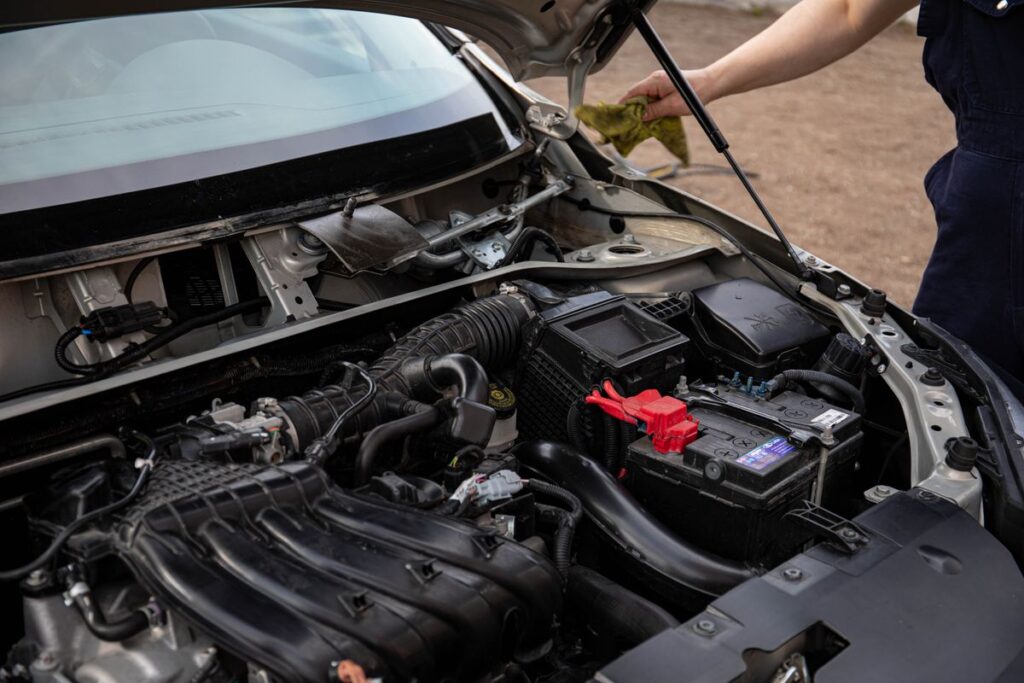
Online videos make this look like a five-minute job with a cheap meter. On a modern car, a wrong step can blow the meter’s fuse, reset modules or send you after the wrong part. Here’s what a technician actually does:
- Confirm the battery is charged and healthy. A weak battery gives misleading results.
- Set the car up as if parked. Doors latched and keys away, so the car behaves normally.
- Wait for the modules to sleep. This can take a while, and opening a door restarts the clock.
- Measure the current draw and compare it with what’s normal for that vehicle.
- Isolate the circuit. The tech narrows a high draw down to the module, switch or accessory responsible, using wiring diagrams and scan tool data.
Some drains only appear after hours of sitting. European cars with many networked modules can take longer to trace, which is where experience with foreign car repair in Grand Rapids helps.
Michigan Cold Makes Small Problems Show Up
A battery that limps through fall often quits on the first frigid West Michigan morning. AAA’s guidance on cold weather and dead car batteries notes that most batteries typically last three to five years, and that a few degrees can decide whether a battery cranks the engine.
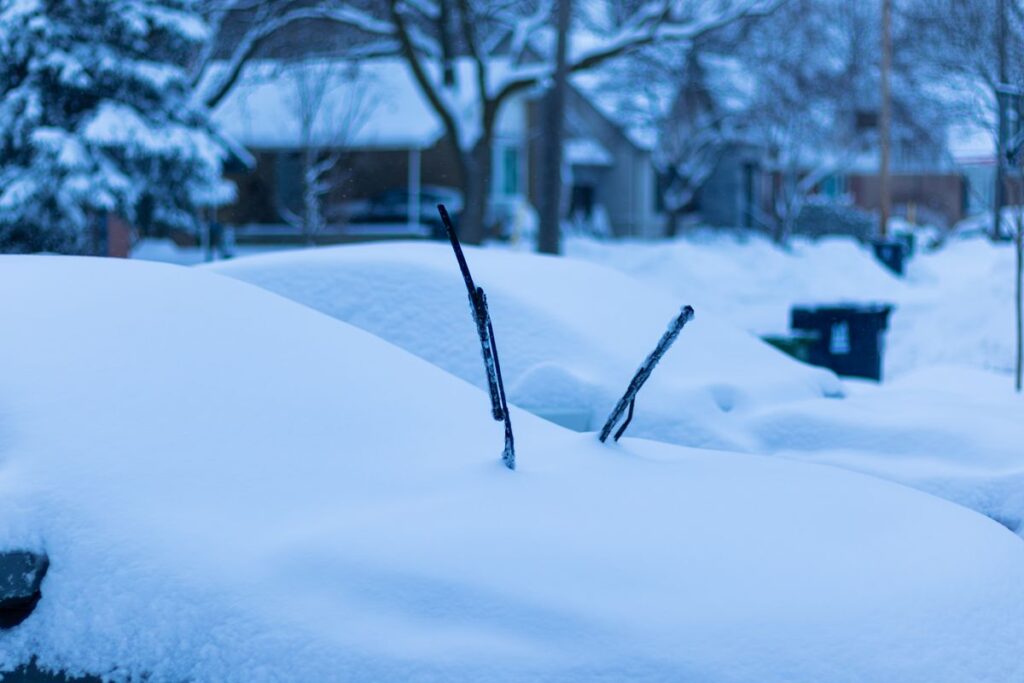
Parking in a garage when you can and switching off lights and seat heaters before shutdown both help. Our Michigan winter car maintenance checklist covers the rest of the cold-weather prep.
When to Bring It In
Bring the car in if the battery dies more than once, a newer battery keeps going flat, or a battery warning light comes on. Repeated deep discharges shorten battery life. Our auto electrical repair and battery drain diagnosis covers the battery, charging system and parasitic draw testing on foreign and domestic vehicles.
Hendrick Hoffman, our owner and head mechanic, is ASE and State of Michigan certified in electrical repair. You can read more about his training and certifications.
Frequently Asked Questions
Can a bad alternator drain a battery when the car is off?
Yes. A leaking alternator diode can let current flow out of the battery while the car is parked, even though it seems to charge normally while driving.
Why does my battery test good but still die overnight?
A healthy battery can still be drained by a module that won’t sleep, a light or an accessory. A parasitic draw test is the next step.
Can cold weather kill a car battery overnight?
Cold cuts the power a battery can deliver, so a weak or partly drained battery may not crank after a frigid night. A healthy battery with no drain usually survives.
Can a dash cam drain a car battery overnight?
It can, especially if it’s hardwired with a parking mode or to a circuit that stays live.
Need battery drain diagnosis in Grand Rapids? Call 456 AutoFix at 616-279-3832, Monday to Friday 8am to 5pm, or book through our contact page.
Can’t make it during the day? Use our after-hours drop-off. We’re at 456 Carrier St NE in Creston.