
You start the car on a freezing Grand Rapids morning and the vents keep blowing cold. A heater that won’t heat is telling you something about your engine’s cooling system, and some causes need attention soon.
Here are the six most common reasons, what you can safely check yourself, and when to let a mechanic take over.
Quick answer
Why is my car heater blowing cold air?
A car heater blowing cold air is usually caused by low coolant, air trapped in the cooling system, or a thermostat stuck open. Less often it’s a clogged heater core, a failed blend door actuator, or a water pump or control fault. Check the coolant level with the engine cold, and stop driving if the temperature gauge climbs.

How Your Car Heater Gets Its Heat
Your heater borrows heat from the engine. Hot coolant flows from the engine through a small radiator behind the dash called the heater core. The blower pushes cabin air across that core, and a blend door mixes hot and cold air to match your temperature setting.
First question: is air coming out at all? No airflow points to the blower motor, a fuse or a resistor. Airflow that stays cold points to the heat source or the blend door.
6 Common Causes of a Car Heater Blowing Cold Air
1. Low Coolant or a Coolant Leak
This is the most common cause. The heater core sits high in the system, so it’s often the first part to go dry. A classic sign is heat while driving that fades at idle. A low level means a leak somewhere: a hose, the radiator, the water pump or the heater core.

2. Air Trapped in the Cooling System
An air pocket can sit in the heater core and block coolant flow. It often shows up after a top-up, hose replacement or flush that wasn’t bled properly, sometimes with gurgling behind the dash. Many modern engines, including a lot of European cars, need a specific bleeding procedure.
3. Thermostat Stuck Open
The thermostat stays closed until the engine warms up, then opens to let coolant reach the radiator. If it sticks open, the engine never reaches full operating temperature, especially in cold weather. The gauge reads low or rises slowly, and the heat stays lukewarm. Many cars also log a check engine code, often P0128.

4. Clogged or Leaking Heater Core
Old coolant leaves rust and sediment that can partly block the heater core’s small passages, giving weak heat. A leaking core is a different problem: a sweet coolant smell inside the car, a greasy film that fogs the inside of the windshield, or a damp floor on the passenger side.
5. Blend Door or Blend Door Actuator
If the engine is warm and coolant is full but the air stays cold, the blend door may be stuck on the cold side. Most cars move it with a small electric motor called an actuator. A failing actuator often makes a rhythmic clicking behind the dash, and in dual-zone systems one side can blow warm while the other blows cold.

6. Water Pump, Cooling Fan or Climate Control Faults
A worn water pump may not move enough coolant to keep the heater core hot, especially at idle. A cooling fan that runs all the time can keep the engine too cool in winter. With automatic climate control, a bad sensor, control module or wiring fault can send cold air when you asked for heat.
Symptom Checker: Likely Cause and How Urgent
| Symptom | Likely cause | How urgent | Safe check |
|---|---|---|---|
| Heat while driving, cold at idle | Low coolant, air pocket, weak water pump | Soon Low coolant can lead to overheating | Reservoir level with engine cold |
| Gauge stays low, heat lukewarm | Thermostat stuck open | Moderate Fix before deep winter | Watch the gauge on a 15 minute drive |
| Gauge climbing toward hot | Leak, failed pump, fan or thermostat stuck closed | Stop driving now | Pull over, shut off, let it cool |
| Sweet smell, foggy greasy windshield | Leaking heater core | High Visibility and leak | Feel the passenger floor for dampness |
| Clicking behind dash, one side cold | Blend door actuator | Low to moderate | Cycle the temperature from cold to hot |
| No air from vents at all | Blower motor, fuse or resistor | Moderate Defrost won’t work | Try every fan speed |
What You Can Safely Check Yourself
These checks need no tools. Do them only with the engine fully cold, ideally after sitting overnight.
- Coolant level. Look at the see-through reservoir and compare the level to the MIN and MAX marks. If it’s low, top up with the coolant type in your owner’s manual.
- Visible leaks. Look for drips or crusty residue around hoses and spots under the car.
- Temperature gauge. Lower than usual after a drive suggests the thermostat.
- Blower and controls. Run every fan speed and sweep the temperature dial. Listen for clicking behind the dash.
- Inside the cabin. Notice any sweet smell, fogging that won’t clear, or damp carpet.
Never open a hot radiator cap or coolant reservoir cap. The system is under pressure, and coolant above boiling point can spray out and cause serious burns. If you top up and the level drops again within days, you have a leak that topping up won’t fix.

When It’s Urgent and When to See a Mechanic
Pull over and shut the engine off if the temperature gauge heads toward hot, you see steam, or a warning light comes on. Driving an overheating engine can warp the cylinder head or blow the head gasket. A strong coolant smell inside, or a windshield that fogs and won’t clear, also needs prompt attention.
Beyond a coolant top-up, most of these faults need proper testing: pressure testing for leaks, bleeding air correctly, checking thermostat operation, and reading climate control codes. Our car heating and AC repair in Grand Rapids covers that diagnosis and the repair. Hendrick, our owner and head mechanic, is ASE and State of Michigan certified in heating and air conditioning.
We work on foreign and domestic vehicles. If you drive an Audi, where bleeding the cooling system and diagnosing climate control modules can be model-specific, see our Audi repair service in Grand Rapids. You can also browse our full list of auto repair services.
Michigan Winters: Why a Working Defroster Matters
In West Michigan, a weak heater isn’t just a comfort problem. Your defroster uses the same heat, so frost, snow melt and breath fog on the glass can leave you driving half blind on a dark January morning. Short trips and cold starts make it worse.
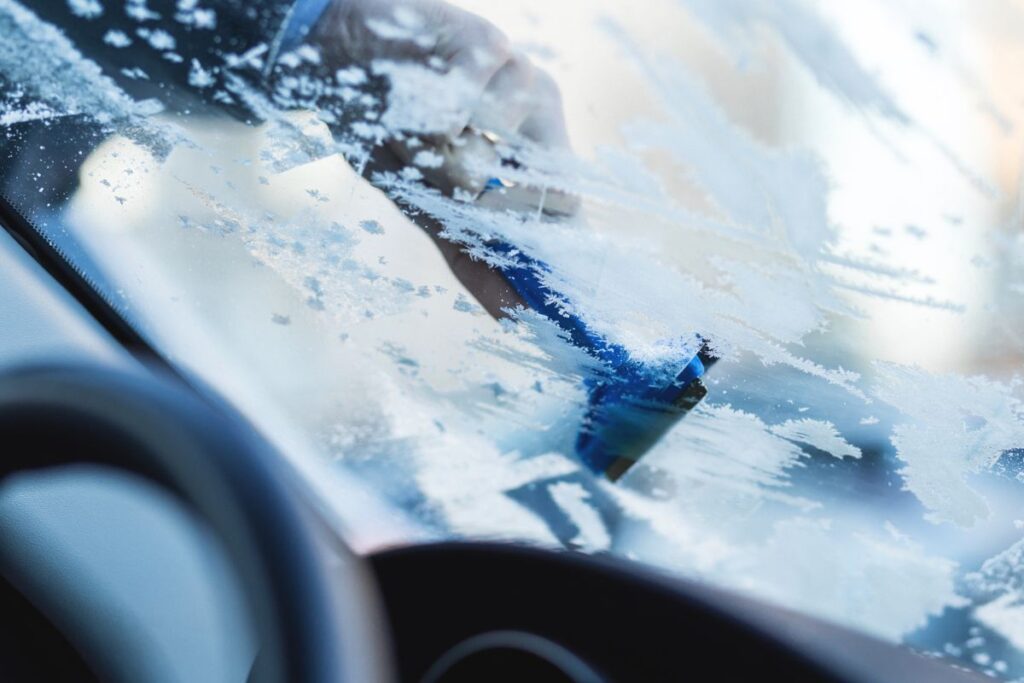
The Car Care Council’s fall car care checklist recommends making sure heaters and defrosters work before winter, and flushing the cooling system with fresh antifreeze roughly every two years. Freeze-thaw cycles are also hard on aging hoses.
Frequently Asked Questions
Why is my heater blowing cold air when the coolant is full?
If the coolant is full, the most likely causes are a thermostat stuck open, air trapped in the heater core, a clogged heater core or a blend door stuck on the cold side. Watch your temperature gauge: if it reads lower than normal, suspect the thermostat first.
Why does my heater work while driving but not at idle?
At idle the water pump turns slower, so any weakness shows up. Low coolant, an air pocket, a partly clogged heater core or a worn water pump are the usual reasons.
Is it safe to drive with the heater blowing cold air?
Only if the temperature gauge stays normal and you can keep the windshield clear. If the gauge climbs, you smell coolant, or the glass fogs and won’t clear, stop driving and have it checked.
What does clicking behind the dash mean?
A repeating click behind the dashboard or glovebox usually means a blend door actuator with worn or stripped gears. It often comes with one side of the cabin blowing cold air.
Need car heater repair in Grand Rapids? Call 456 AutoFix at 616-279-3832, Monday to Friday 8am to 5pm, or book through our contact page.
Can’t make it during the day? Use our after-hours drop-off. We’re at 456 Carrier St NE in Creston.