
As an Amazon Associate, 456 AutoFix earns from qualifying purchases. Product links below go to Amazon, where you can confirm the right part for your vehicle.
Sooner or later the bikes, the camping bins or the extra luggage stop fitting inside the car. That is when the roof rack vs hitch rack question comes up, and the answer depends less on the rack than on your vehicle, your trips and how high you can comfortably lift a load. One style rides on crossbars above your head, the other slides into a receiver behind the bumper.
Both work well when they match the job, and both cause headaches when they don’t. A roof setup can meet a garage door at full height, while a hitch carrier can scrape on a steep driveway or hide your plate. Below we compare how each one carries weight, what to check on your vehicle first, and three carriers that cover the common setups.
Quick answer
Should you carry bikes and gear on the roof or on a hitch?
Choose a hitch rack if your vehicle already has a 2-inch receiver, you carry heavy bikes or bulky cargo, and you want easy loading with less fuel penalty. Choose a roof rack if there is no hitch, you need the rear hatch free, or you haul long items like skis and kayaks.
Our Quick Picks
One carrier from each side of the comparison, crossbars for the roof and a platform rack for the hitch, plus a related third pick: a folding hitch basket for bulky gear.
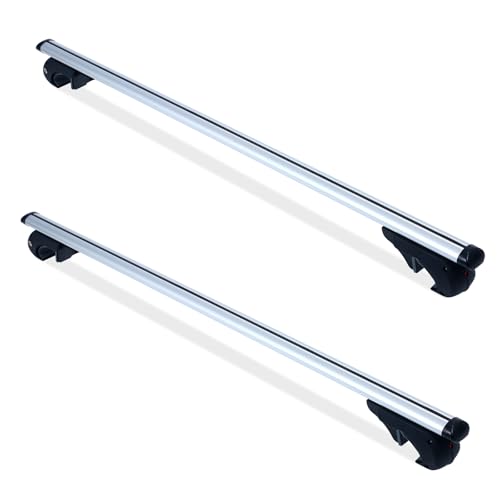
MAXXHAUL 52-Inch Roof Cross Bars
Clamp-on crossbars that turn raised side rails into a roof rack.

MaxxHaul 2-Bike Platform Hitch Rack
A steel platform tray that holds two bikes by the wheels.

CURT 18153 Folding Hitch Basket
A folding steel basket for coolers, bins and camp gear.
How Each Rack Carries the Load
A roof system starts with two crossbars that clamp to the factory side rails, a fixed point or a track on the roof. Bike mounts, ski holders, baskets or a cargo box then attach to those bars. Everything sits up in the airflow, so the weight you carry is limited by both the bars and the roof load figure your vehicle maker publishes.
A hitch system slides a shank into a receiver tube bolted to the frame behind the rear bumper. Platform bike racks, hanging bike racks and cargo baskets all use the same receiver. The load hangs out past the bumper, so it adds leverage on the hitch and the rear suspension, and the limit is set by the hitch class and the tongue weight rating your vehicle maker lists.
| Trait | Roof rack | Hitch rack |
|---|---|---|
| What you need first | Side rails, fixed points or a fit kit | A receiver hitch, usually 2-inch |
| Loading height | Overhead, harder with heavy bikes | Waist level, easier for most people |
| Rear hatch access | Stays clear | Blocked unless the rack tilts |
| Fuel economy effect | Larger, especially at highway speed | Smaller |
| Long items (skis, kayaks) | Good fit | Poor fit |
Fuel use is where the two differ most on a long drive. The Department of Energy’s fuel economy driving tips say a large, blunt roof-top cargo box can cut fuel economy by roughly 6% to 17% on the highway and 10% to 25% at Interstate speeds. Rear-mount boxes or trays cost much less, about 1% to 5% on the highway. Bikes on the roof are not identical to a box, but the same rule holds: anything above the roofline adds drag.
What to Check on Your Vehicle Before You Buy Either
For a roof setup, look at what is already up there. Raised side rails with a gap underneath accept universal clamp-on crossbars, while flush rails, fixed points and bare roofs need a vehicle-specific fit kit. Then find the roof load limit in your owner’s manual, and remember that the bars, mounts and gear all count toward it.
For a hitch setup, read the label on the receiver to confirm the class and size, then check the tongue weight figure on your hitch placard and in the owner’s manual. A loaded carrier counts as tongue weight, so the lowest rating among the carrier, the hitch and the vehicle is the one that applies. Never assume a rack or hitch fits every trim of a model; confirm year, trim and bumper type on the listing before ordering.
If the plan is camping gear rather than bikes, our SUV cargo carrier guide covers roof bags, boxes and baskets side by side. Owners leaning toward the roof can also browse our rooftop cargo carrier picks, while the receiver side is covered in our hitch cargo carrier reviews.
Roof Rack vs Hitch Rack: Three Carriers Up Close
We chose one universal crossbar set for raised rails, one two-bike platform rack for a 2-inch receiver, and a third pick on the hitch side: a folding cargo basket for gear that won’t fit on a bike tray. Each listing names its own limits, so read those alongside your owner’s manual before you load anything.
MAXXHAUL 50220 Roof Rack Cross Bars: 52-Inch Aluminum, 150 lb, Locking Raised-Rail Clamps
- Fits raised rails 35 to 55 mm with a 13 mm gap
- 150 lb evenly distributed load across both bars
- Locking, rubber-coated clamps with keys
- Lightweight, corrosion-resistant aluminum
This is the roof side of the comparison: a pair of 52-inch aluminum crossbars that clamp onto factory raised side rails. MAXXHAUL lists them for rails 35 to 55 mm in diameter that sit above the roof with at least a 13 mm gap underneath for the clamp. They do not fit flush rails, fixed points or a bare roof, so measure your rails before ordering.
The clamps adjust to the rail, carry a rubber coating to protect the finish, and include an integrated lock with keys. The listing rates the pair for 150 pounds of evenly distributed cargo, enough for bike mounts, a cargo basket, a ski holder or a kayak carrier. The kit comes with both bars, the clamps, a hex driver and instructions, and it installs without drilling.
These bars suit an owner who has raised rails, no hitch, and loads that are long rather than heavy. Use the lower figure between the 150-pound rating and the roof load limit in your owner’s manual, and count the bars and mounts toward it. Heavy e-bikes and big coolers are better placed on a hitch carrier, and the bars should come off between trips to save fuel.
View MAXXHAUL 52-Inch Roof Cross Bars on Amazon

MaxxHaul 50027 Platform Bike Rack: 2-Bike Hitch Tray for 2-Inch Class III and IV Receivers
- Steel build rated 40 lb per bike
- Only for 2-inch Class III and IV receivers
- Tire cradles for 20 to 26 inch wheels, tires to 2-1/4 inch
- Removable upright post with locking knob
On the hitch side, this MaxxHaul tray carries two bikes on a steel platform that slides into a 2-inch receiver. The listing limits it to Class III and IV hitches and says it is not for Class I or II receivers, RVs, campers or trailers. Each position is rated for 40 pounds, so check your bike weights before loading.
Adjustable tire cradles hold the wheels, and foam-padded hooks secure the frames without hanging the bike by its top tube. MaxxHaul lists fit for wheels from 20 to 26 inches, tires up to 2-1/4 inches wide and wheelbases up to 63 inches. A locking knob firms up the upright post to reduce sway, and the post comes off for compact storage when the rack is not in use.
This rack fits riders with standard mountain, hybrid or kids’ bikes who would rather lift a bike to waist height than over the roof. Its tire width and wheel size limits rule out fat tires, many 29-inch bikes and most e-bikes, so compare your bikes to those figures first. Confirm the tongue weight rating on your hitch placard, since the rack and bikes count against it.
View MaxxHaul 2-Bike Platform Hitch Rack on Amazon
CURT 18153 Folding Hitch Cargo Carrier: 60 x 24 Inch Steel Basket, 500 lb, 2-Inch Receivers
- 60 x 24 inch basket with 6 inch tall sides
- Heavy-duty tubular steel with mesh base
- Folding shank tilts the carrier up when empty
- Angled shank lifts it for ground clearance
Our related third pick covers the cargo side of the hitch carrier question. CURT’s 18153 is a 60 by 24 inch steel basket for 2-inch receivers, with 6-inch sides that help keep coolers, bins and duffels in place. The tubular frame and mesh base are finished in a black powder coat, and reflectors are built in.
Two design details matter in daily use. The shank folds, so you can tilt the empty basket up against the vehicle instead of leaving it sticking out in a parking lot or a tight garage. The shank is also angled to raise the basket, which helps ground clearance on driveway aprons and uneven campsite roads. Folded, it also shortens how far the carrier sticks out when you park in a tight spot.
CURT lists the basket at 500 pounds, but that is the carrier’s rating, not your vehicle’s. The usable limit is the lowest figure among the basket, your hitch and the tongue weight in your owner’s manual and on the hitch placard, and the basket itself counts. Strap loads down with a cargo net or bag, keep the plate and lights visible, and choose a roof setup if your load is long and light.
View CURT 18153 Folding Hitch Basket on Amazon

Which Rack Suits Which Trip
Most households settle the roof rack vs hitch rack decision by the gear they move most often. Someone who rides every weekend with two heavy trail bikes will be happier with a hitch platform, while a family that skis in winter and paddles in summer gets more use from crossbars. The table below sorts common loads by the mount that usually handles them with less fuss.
| Load or situation | Usually better on | Reason |
|---|---|---|
| Heavy or electric bikes | Hitch platform (check its per-bike rating) | No overhead lift, tray holds the wheels |
| Skis, snowboards, kayaks | Roof crossbars | Long items need the length of the roof |
| Coolers, bins, firewood | Hitch basket | Low loading height and a wide floor |
| Car with no receiver | Roof crossbars | No hitch install needed |
| Daily driving with gear left on | Hitch, removed when parked | Smaller drag penalty, easy to pull off |
Whichever side of roof rack vs hitch rack you land on, think about the trip after the load is on. A hitch rack makes the vehicle longer, so parking and backing up take extra care, and some racks block the backup camera or the plate. A roof load raises the overall height, which matters at drive-throughs, parking ramps and your own garage door.

Security is different on each side as well. Roof crossbars like the MAXXHAUL set above lock to the rails, and many bike mounts add their own locks. On the hitch side, a locking pin keeps the whole carrier from being pulled out of the receiver, and our trailer hitch lock guide explains the options. A cable lock through the frames is still worth carrying for stops on the road.
Salt, Snow and Garage Doors in Grand Rapids
West Michigan weather is hard on anything bolted to the outside of a car. A hitch carrier rides right in the spray of slush and road salt all winter, so pins, clamps and the receiver tube itself can seize if the rack stays on from November to March. Pull the carrier when you are not using it, rinse the receiver and coat the pin with a little grease before it goes back in.
Roof bars collect ice and snow that can freeze locks and clamps shut, and a ski load adds weight up top just when roads are slick. Brush the bars off before driving so sheets of ice don’t slide onto the windshield or the car behind you. Our winter car maintenance checklist is a good time to inspect rack hardware along with wipers, tires and fluids.

A cold-weather ski trip also asks more of the car itself. A weak battery that turns over fine in the city can quit at a trailhead lot at dawn, and our guide on a car not starting in cold weather walks through the usual causes. Pack a winter car emergency kit inside the cabin rather than in an outside carrier, where you would have to dig it out of the snow.
When the Shop Should Take a Look
A loaded hitch carrier puts steady leverage on the rear springs, shocks and wheel bearings. If the rear end sags noticeably, the steering feels light, or you hear a hum that grows with speed after a season of hauling, have it checked by our suspension repair team in Grand Rapids. A roaring or grinding noise from one corner can point to a worn bearing, which our wheel bearing replacement service handles.

Lighting matters too, especially with a basket that can cover the taillights or plate. If you add a lighted carrier or a wiring connector and the signals or brake lights act up, our car electrical repair service can trace the fault. Hendrick Hoffman, who owns the shop and leads our technicians, holds ASE and State of Michigan certification in steering and suspension, brakes and electrical work.
More Buying Guides
Frequently Asked Questions
Is a roof rack or hitch rack better for bikes?
For heavy bikes, e-bikes or riders who don’t want to lift overhead, a hitch platform is usually easier and costs less fuel. A roof rack suits cars without a receiver and riders who need the rear hatch free. Check the per-bike weight limit on either rack before buying.
Do I need a trailer hitch to use a hitch rack?
Yes. A hitch rack slides into a receiver tube, so the vehicle needs a hitch of the size and class the rack lists, often a 2-inch Class III. Check the tongue weight on your hitch placard and owner’s manual, since a loaded carrier counts against it.
Does a roof rack hurt gas mileage more than a hitch rack?
Usually, yes. Cargo above the roofline adds more wind drag, and Department of Energy figures show a roof-top box costs far more fuel at highway speed than a rear-mount box or tray. Removing either carrier when you are not using it saves fuel.
How much weight can I put on my roof rack?
Use the lower of two numbers: the crossbar rating and the roof load limit in your owner’s manual. The weight of the bars, mounts and any box counts toward that limit, not just the gear inside.
Want a second opinion on how your rear suspension will handle a loaded carrier? Ring 456 AutoFix at 616-279-3832 between 8am and 5pm on weekdays, or tell us about your vehicle on the contact page.
Heading out on a trip before the shop opens? Leave the vehicle with our after-hours drop-off at 456 Carrier St NE in Creston, and note the rack you plan to run so we can check the parts it leans on.