As an Amazon Associate, 456 AutoFix earns from qualifying purchases. Product links below go to Amazon, where you can confirm the right part for your vehicle.
A chirp from under the hood of an Outback on a cold morning usually points at the accessory belt. The best serpentine belt for Subaru engines is simply the one built for your exact engine, because a 2.5L Forester, a 3.6R Outback and a newer 2.4L turbo each take a different length and layout.
This guide sorts that out by engine, then reviews six listings that name the Subaru models and years they fit. If you want the brand side of the question first, our serpentine belt brand comparison covers Gates, Dayco, Continental and the rest.
Quick answer
Which serpentine belt should I buy for my Subaru?
Buy the belt listed for your exact engine and years. A Genuine Subaru belt such as 23780AA140 for a 2015-2019 Outback 2.5L is the safe default, while Gates, Dayco and AISIN sell direct-fit belts for the Forester 2.5L, the Outback 3.6R and the older EJ-series 2.5L. Check the tensioner too.
Our Quick Picks
Three belts for three of the most common Subaru engines: the 2015-2019 Outback 2.5L, the newer 2.4L turbo models and the 2014-2018 Forester. The Crosstrek, 3.6R and older EJ-series picks follow below.
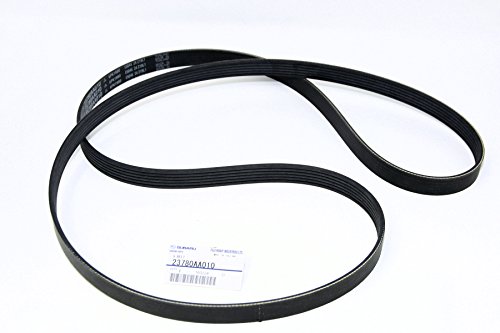
Subaru 23780AA140 Belt
Factory belt for the fifth-generation Outback and Legacy four.

Subaru 23780AA10A Belt
Factory belt for the turbocharged 2.4L in newer Subarus.

Gates Micro-V Belt for Forester 2.5L
Aftermarket belt from a major belt maker for the fourth-generation Forester.
Why One Subaru Belt Doesn’t Fit Them All
Subaru has used several boxer engine families over the last fifteen years, and each routes its accessory drive differently. The newer FB-series engines (2.0L and 2.5L) run a single ribbed belt with an automatic tensioner that keeps it tight. Older EJ-series engines, especially the turbo versions in the WRX and STI, often carry a separate short belt for the A/C compressor as well.
Model names don’t settle it either. An Outback from 2010 to 2014 could have a 2.5L four or a 3.6L six, and the four itself changed from the EJ-series to the FB-series partway through that run. That is why every listing below names an engine and a year range, and why you should match the part number printed on your old belt or in your service records before you click buy.
One more split: the EJ-series 2.5L uses an internal timing belt, while the FB, FA and 3.6L six use chains. See timing belt vs timing chain for why that matters.
Before You Order: Reading the Belt and the Tensioner
Find the routing diagram first, on the under-hood sticker or in a repair manual, and photograph the belt in place before removing anything.
- Part number: the old belt usually has its number and rib count printed on the back. If it is worn off, use the VIN in a parts catalog.
- Rib wear: modern EPDM belts rarely crack. They lose rubber between the ribs, so a cheap rib depth gauge tells you more than a visual check.
- Tensioner: with the belt off, the arm should move smoothly and spring back firmly. A jerky arm or a tensioner that bottoms out means it is due.
- Idler pulley: spin it by hand. Roughness, a growl or side-to-side play means it is worn, and a worn idler can chew through a new belt.
The Car Care Council’s belts and hoses overview lists the usual warning signs: squeaking under the hood, a warning light on the dash, A/C that quits and a burnt rubber smell. It also notes that age, mileage, oil contamination and belt tension all shorten belt life, which is why an oil leak near the pulleys should be fixed before a new belt goes on.
Best Serpentine Belt for Subaru: Six Engine-Matched Listings
Each pick names the models, years and engine its listing covers. Use Amazon’s fitment check as the final step, since Subaru sometimes splits a model year by engine or VIN.
1. Subaru Genuine 23780AA140: Serpentine V Belt for 2015-2019 Outback and Legacy 2.5L
- Genuine Subaru part 23780AA140
- Listed for 2015-2019 Outback 2.5L
- Listed for 2015-2019 Legacy 2.5L
- Single accessory drive belt
This is the Genuine Subaru belt, part number 23780AA140, sold for the 2015 through 2019 Legacy and Outback with the 2.5L four-cylinder engine. That covers the fifth-generation Outback and the Legacy sedan built on the same platform. The listing is short and gives only the part number, the models and the years, so the part number is the detail to match against your old belt or your service records.
On this engine one ribbed belt runs the accessory drive, held tight by an automatic tensioner. Because it comes from Subaru, the length and rib profile are the factory specification, which removes any doubt about whether an aftermarket cross-reference is correct. That makes it a sensible choice if you are not sure which aftermarket number applies, or if you simply want the part the car left the factory with.
It is not the belt for the 3.6R six-cylinder Outback of the same years, which uses a longer belt and a different layout, and it does not cover the 2020 and newer models. Before fitting it, check that the tensioner arm moves smoothly and that the idler pulley spins quietly, since a worn pulley shortens the life of any new belt.
View Subaru 23780AA140 Belt on Amazon
2. Subaru Genuine 23780AA10A: Serpentine Belt for 2.4L Turbo Ascent, Outback and Legacy
- Genuine Subaru part 23780AA10A
- Listed for Ascent 2019-2026
- Listed for Outback and Legacy 2020-2025
- Title names the 2.4L engine
Subaru part 23780AA10A is the factory serpentine belt for the newer turbocharged 2.4L boxer engine. The listing names the Ascent from 2019 to 2026 and the Legacy and Outback from 2020 to 2025, and its title identifies the engine as the 2.4L. That engine powers every Ascent and the turbo trims of the current Outback and Legacy, such as the XT and Wilderness versions.
The detail to watch is that the 2020 and newer Outback and Legacy were also sold with a non-turbo 2.5L four, and the listing’s year range alone does not separate the two. Check the engine size on your registration, the badge on the car or your VIN before ordering, because a belt for the wrong engine will not reach around the pulleys correctly.
As a Genuine Subaru part, it carries the factory length and rib count, which suits owners who want the service history to show factory parts. The Ascent is a heavy three-row SUV that often tows or carries a full load, so the tensioner and idler deserve a close look while the old belt is off. Replace them if either is noisy, rough or loose.
View Subaru 23780AA10A Belt on Amazon

3. Subaru Genuine 23780AA070: Serpentine V Belt for 2018-2023 Crosstrek 2.0L and 2022-2026 WRX

- Genuine Subaru part 23780AA070
- Listed for Crosstrek 2.0L non-hybrid 2018-2023
- Listed for WRX 2022-2026
- Single serpentine V belt
Genuine Subaru part 23780AA070 is listed for the 2018 through 2023 Crosstrek with the 2.0L engine and for the 2022 through 2026 WRX. The Crosstrek line is specific: the listing says non-hybrid, so the Crosstrek Hybrid is not covered. It is a single serpentine belt for the accessory drive, sold without a tensioner or pulleys.
The Crosstrek is a popular choice in snowy states, and many of these cars are now old enough for a first belt replacement. A belt that has glazed or lost rib depth tends to chirp on cold mornings and when the A/C compressor kicks on, so those are the times to listen for it. Fitting the factory part keeps the length matched to the automatic tensioner’s working range.
The WRX fitment comes straight from the listing, so match the part number to your old belt or run your VIN through Amazon’s fitment check before ordering for a WRX. It is not the belt for the 2.5L Crosstrek trims sold in later years or for any earlier Impreza-based XV Crosstrek. As with any belt job, look at the idler and tensioner while you have access, and replace them if they feel rough or loose.
View Subaru 23780AA070 Belt on Amazon
4. Gates Micro-V Serpentine Belt: Direct-Fit Belt for 2014-2018 Forester 2.5L
- Listed for 2014-2018 Forester 2.5L H4
- Gates Micro-V construction
- Genuine Gates part in original packaging
- Direct replacement design
Gates is one of the largest belt makers in the aftermarket, and its Micro-V line is its standard serpentine belt range. This listing names the 2014 through 2018 Forester with the 2.5L four-cylinder engine and describes the belt as a genuine Gates part in its original packaging. It is a direct replacement for the factory accessory belt on that engine.
One limitation is that the listing does not print the Gates part number, only the vehicle fitment. That makes Amazon’s Confirmed Fit tool and your VIN the deciding check, and it is worth comparing the length and rib count with your old belt before you fit it. The 2.0L turbo Forester XT from the same years uses a different belt, so this one is for the non-turbo 2.5L only.
A Gates belt is an established alternative to the Genuine Subaru part. The fourth-generation Forester is a common winter car in snowy states, and many are now past the mileage where the original belt starts to glaze or lose rib depth. Inspect the automatic tensioner and the idler while the belt is off, since a worn pulley is a frequent source of noise that gets blamed on the belt.
View Gates Micro-V Belt for Forester 2.5L on Amazon
5. Dayco Main Drive Serpentine Belt: Multi-Rib Belt for 2010-2015 Outback 3.6L H6

- Listed for 2010-2015 Outback 3.6L H6
- Main drive position
- Multi-rib, direct-fit design
- Single belt, no hardware included
The six-cylinder Outback, badged 3.6R, uses a longer accessory belt than the four-cylinder cars, and this Dayco listing is specific to it. It names the 2010 through 2015 Outback with the 3.6L flat-six and places the belt in the main drive position. The box holds one belt, with no tensioner or pulleys included.
Dayco began in Ohio in 1905 as Dayton Rubber, and the company says it introduced the first multi-ribbed serpentine belt. The listing’s own advice is sound for this engine: route the belt using the diagram, and inspect the tensioner and idler pulleys for wobble or noise while the old belt is off. A worn belt on the 3.6R can show up as squeal, slip, weak charging or poor A/C performance.
The six sits tight in the Outback’s engine bay, so taking a photo of the routing before removal saves time and frustration. This belt is not for the 2.5L four-cylinder Outback of the same years, which takes a different part, and the listing only names the Outback, so 3.6R Legacy and Tribeca owners should check fitment with their VIN. For a 3.6R that already squeals after a fresh belt, look at the tensioner first.
View Dayco Main Drive Belt for Outback 3.6R on Amazon
6. AISIN AVBF-00097: 6-Rib 65.16-Inch Serpentine Belt for 2010-2012 Outback and Legacy 2.5L

- Listed for 2010-2012 Outback and Legacy H4 2.5L
- 6 ribs, 65.16 in effective length
- EPDM rubber construction
- Cross-references Subaru 809221140
AISIN is a major Japanese supplier of original-equipment parts, and its aftermarket line includes this serpentine belt for the 2010 through 2012 Outback and Legacy with the 2.5L four. These were the last years of the EJ-series engine in those models before Subaru moved to the FB-series. The listing gives full specifications: six ribs, an effective length of 65.16 inches, a top width of 0.81 inch and EPDM rubber construction.
It also lists reference part numbers, including Subaru’s 809221140, which makes it straightforward to compare with the number on your old belt. There is one fitment note to respect: for the 2010 and 2011 Outback, AISIN says the belt fits cars with the letter B as the fourth character of the VIN. Read your VIN before ordering, and use Amazon’s fitment check as a second confirmation.
The EPDM compound resists cracking, so wear shows as shallow, rounded ribs rather than visible splits, and a rib gauge is the best way to judge the old one. Keep in mind that this EJ-series engine also uses an internal timing belt, which is a separate service with its own interval. If that service is close, the timing belt kit options are worth reading before you plan the work.
View AISIN AVBF-00097 Belt on Amazon
Matching Your Subaru to a Belt
Use this table to narrow down the best serpentine belt for Subaru models by engine, then check the listing against your VIN. Years shown are the ones each listing states.
| Your Subaru | Engine | Belt listed | Notes |
|---|---|---|---|
| Outback or Legacy, 2015-2019 | 2.5L four (FB25) | Subaru 23780AA140 | Genuine part, single accessory belt |
| Outback or Legacy 2020-2025, Ascent 2019-2026 | 2.4L turbo (FA24) | Subaru 23780AA10A | Confirm engine on 2020+ Outback and Legacy |
| Crosstrek 2018-2023, WRX 2022-2026 | 2.0L non-hybrid Crosstrek; WRX as listed | Subaru 23780AA070 | Not for the Crosstrek Hybrid |
| Forester, 2014-2018 | 2.5L four | Gates Micro-V | Listing gives no Gates part number |
| Outback, 2010-2015 | 3.6L six | Dayco main drive belt | Six-cylinder only |
| Outback or Legacy, 2010-2012 | 2.5L four (EJ-series) | AISIN AVBF-00097 | Check the VIN note on 2010-2011 Outbacks |

Not listed? Find the engine code, then a listing that names it. Our Toyota serpentine belt guide uses the same engine-first method.
Michigan Winters and Subaru Belt Wear
Plenty of Grand Rapids drivers pick a Subaru for snow, so the belt lives in hard conditions. Rubber stiffens in the cold, so a belt that is slightly glazed or a tensioner that has lost some spring will chirp for the first minute after a frosty start. If the noise fades once the engine warms, the belt or tensioner is usually telling you it is close to done.

Slush and salt spray also reach the pulleys, where grit wears the ribs faster. A quick look at the belt and pulleys at each oil change through the winter catches most of this early, and our Subaru coolant guide covers the other fluid worth checking before the cold arrives.
When the Job Goes Beyond the Belt
Swapping an accessory belt is a reasonable driveway job on most four-cylinder Subarus. It gets harder when the tensioner or idler is seized, when the belt keeps walking off a pulley, or when a battery light stays on after the new belt goes in. That last one can point to alternator trouble rather than a slipping belt.

On an EJ-series 2.5L Subaru, the internal timing belt is the job to keep an eye on. It is due by your maintenance schedule, and the water pump, tensioner and idlers are usually replaced with it; our roundup of timing belt kit brands explains what a complete kit should include. We handle that work through our timing belt replacement in Grand Rapids, and we can look over the accessory belt, tensioner and pulleys during the same visit.
More Buying Guides
Frequently Asked Questions
Is a Genuine Subaru belt better than Gates or Dayco?
Not necessarily. A Genuine Subaru belt is a sure match for the listed engine, while Gates, Dayco and AISIN make direct-fit belts to the same length and rib count. Fit and a healthy tensioner matter more than the name on the box.
How often should a Subaru serpentine belt be replaced?
Subaru’s maintenance schedule calls for regular drive belt inspections rather than a single mileage, so check your owner’s manual. Replace the belt when the ribs are worn, glazed, cracked or oil-soaked, or when it squeals even with a good tensioner.
What is the best serpentine belt for Subaru Outback models?
It depends on the engine. A 2015-2019 Outback 2.5L takes Subaru 23780AA140, a 2010-2015 Outback 3.6R takes a six-cylinder main drive belt like the Dayco listed here, and a 2010-2012 Outback 2.5L takes an EJ-series belt such as the AISIN AVBF-00097.
Should I replace the tensioner with the belt?
Only if it fails the checks. A tensioner arm that sticks, bounces or bottoms out, or an idler that feels rough, should be replaced with the belt, because either one can wear out a new belt quickly.
Hearing a squeal from your Subaru that a new belt hasn’t cured? Ring 456 AutoFix at 616-279-3832 between 8am and 5pm, Monday to Friday, or set up a visit on our contact page.
Working days that don’t line up with ours? Drop the car off any time at 456 Carrier St NE in Creston using our after-hours key drop.