
As an Amazon Associate, 456 AutoFix earns from qualifying purchases. Product links below go to Amazon, where you can confirm the right part for your vehicle.
A diesel that started fine at dusk can crank and stall at dawn after one hard freeze. The best diesel anti gel additive is the one that goes into the tank before that cold snap, at the ratio on the label, so wax in the fuel never gets the chance to block the filter.
Below we explain why fuel gels, then review six winter treatments. For year-round diesel treatments, see our best diesel additive guide.
Quick answer
Which anti-gel should a diesel owner buy?
For most pickups, an alcohol-free cold-flow formula that also handles water, such as Stanadyne Winter 1000, covers daily driving. Hot Shot’s Secret Winter Anti-Gel lists the coldest rating here, and Archoil AR6300 adds lubricity and injector cleaning. Add it before temperatures drop, and keep a rescue bottle for emergencies.
Our Quick Picks
Three treatments for the most common winter needs: everyday driving, deep cold and modern common-rail trucks. Three more, including an emergency rescue bottle, are reviewed below.

Stanadyne Winter 1000
Alcohol-free cold-flow formula from a fuel injection pump maker.
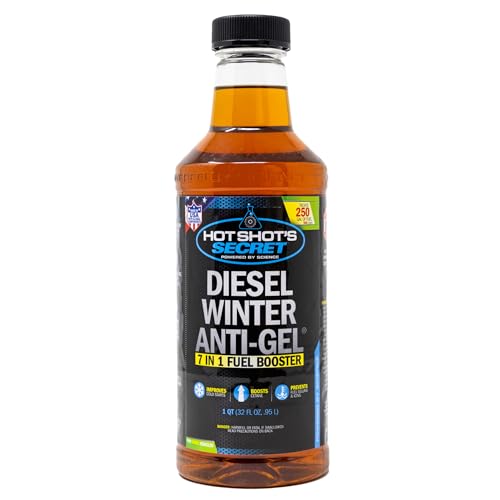
Hot Shot's Secret Winter Anti-Gel
Lists gelling protection down to -65F at 4 oz per 31 gallons.

Archoil AR6300 Winter
Winter formula with lubricity, cetane and injector cleaning.
Why Diesel Gels: Wax, Cloud Point and Filter Plugging
No. 2 diesel contains paraffin wax that stays dissolved in warm weather. As the fuel cools, the wax forms crystals and the fuel turns hazy, which is called the cloud point. Cool it further and the crystals grow large enough to coat the fuel filter, the cold filter plugging point.
Power Service explains on its winter fuel supplement page that paraffin in ultra-low sulfur diesel gels and stops fuel flow, while water in the fuel can freeze on the filter media and block it too. A good winterizer handles both.
Biodiesel blends add another layer. The Department of Energy’s guide to biodiesel blends notes that high-level blends can gel in cold temperatures. If your fuel stop sells one, pick a treatment that lists biofuels on the label.
What Makes the Best Diesel Additive for Anti Gel Duty
Every bottle here says it prevents gelling. The differences are in the label details and the extras.
- A wax crystal modifier: keeps crystals small enough to pass the filter.
- Water handling: filter icing protection or a demulsifier that lets the separator catch water.
- A stated temperature or CFPP claim: some makers print a number, others don’t. Trust only what the label states.
- Lubricity and cetane: many winter formulas add both to offset drier ULSD and ease cold starts.
- Treat ratio and bottle size: match the bottle to your tank.
Best Diesel Anti Gel Additive: Six Winter Treatments Reviewed
Claims come from each maker’s page or Amazon listing. Dosing differs by brand, so read the chart on your bottle.
1. Stanadyne Winter 1000 Cold Weather Formula: 64 oz Jug, Treats 500 Gallons
- Pour point lowered by up to 40F, depending on base fuel
- Reduces ice formation from water in the fuel
- Contains no alcohol
- Formulated for ultra-low sulfur diesel
Stanadyne is best known for building diesel fuel injection pumps, so its additives are written with pump and injector health in mind. Winter 1000 is the company’s cold-weather formula, sold here as a half-gallon jug (part 45697) that treats up to 500 gallons. That volume suits a household running more than one diesel, or a single truck that fills a large tank every week through January.
The listing makes a measurable claim: the formula can lower the pour point of diesel by as much as 40F, depending on the base fuel. Pour point is the temperature where fuel stops flowing altogether, and the qualifier is fair, since a summer blend and a winter blend start from different places. Stanadyne also says it reduces ice formation from water in the fuel, which helps guard the filter on frosty mornings.
Two more details may sway buyers. The listing states that Winter 1000 contains no alcohol and that it was formulated for ultra-low sulfur diesel. It does not list cetane or cleaning claims, so think of it as a focused cold-flow product. The brand field on this listing is generic, so check the Stanadyne part number on the label when it arrives, and dose from the chart on the jug.
View Stanadyne Winter 1000 on Amazon
2. Hot Shot’s Secret Diesel Winter Anti-Gel: 32 oz, Gelling Protection to -65F
- Rated to -65F at the label dose
- Cetane boost of up to 7 points
- Demulsifies water to fight fuel line freeze-ups
- Treats 250 gallons per 32 oz bottle
Hot Shot’s Secret Diesel Winter Anti-Gel stands out for printing a clear number: the listing says 4 oz per 31 gallons gives gelling protection down to -65F. The 32 oz bottle treats up to 250 gallons, which covers several fills of a large pickup tank. The maker says to add it before freezing temperatures arrive and to store the bottle above 32F.
According to the listing, the formula keeps wax crystals small enough to keep moving through the fuel system at temperatures 20 degrees below the point where wax starts to solidify. It also lists a cetane boost of up to 7 points for better cold starts, a lubricity and stabilization package, and an injector cleaner aimed at both internal and external deposits. A demulsifier disperses moisture to help prevent ice and fuel line freeze-ups.
This is a sensible choice for a truck that sleeps outside in a driveway or job site through the coldest weeks, where you want a published rating to plan around. The trade-off is that it does a lot at once, so owners who already run a separate year-round cleaner may not need the extra detergents. Measure carefully and use the dose the label gives for the temperature you expect.
View Hot Shot's Secret Winter Anti-Gel on Amazon

3. Opti-Lube Winter Anti-Gel Diesel Fuel Additive: 1 Quart, Treats 128 Gallons

- Cold-flow protection listed down to -40F
- Added lubricity for pumps and injectors
- Cetane increase of up to 3 points
- Compatible with all diesel engines and emission systems
Opti-Lube Winter is the cold-season version of the company’s diesel additive line, and this quart bottle treats up to 128 gallons. The listing describes it as a preventive treatment designed to keep fuel flowing in temperatures as low as -40F. It suits pickups as well as tractors, generators and other diesel equipment that may sit in a cold barn between uses.
Lubricity is a big part of the pitch. Opti-Lube says the formula improves diesel lubrication to protect injectors and pumps from wear, while also cleaning injectors and fuel system parts and guarding against rust and corrosion. The listing claims a cetane increase of up to 3 points, which is smaller than some rivals, so this one leans more toward protection than a starting boost.
Two features help with storage. A demulsifier separates water from the fuel, and the maker says the formula improves storage stability and can more than double diesel shelf life, which is handy for a generator or farm tank that may not turn over its fuel before spring. Opti-Lube lists it as compatible with all diesel engines and emission systems. As with any additive, follow the label ratio rather than adding extra for colder nights.
View Opti-Lube Winter on Amazon
4. Lucas Oil 10865 Anti-Gel Cold Weather Diesel Treatment: 1 Quart, Lowers CFPP

- Lowers the cold filter plugging point of ULSD and biofuels
- Water dispersants pull moisture from the fuel system
- Contains no alcohol
- No harmful effect on diesel particulate filters
Lucas Oil 10865 is a quart-size winter treatment from a brand many truck owners already know for its oil stabilizer. Instead of a single temperature rating, the listing says the formula lowers the cold filter plugging point of ultra-low sulfur diesel and biofuels. That wording matters because the plugging point is the temperature where wax actually starts to block the filter.
The mention of biofuels makes it a reasonable fit if your usual fuel stop sells a biodiesel blend, which can be more prone to gelling as the blend level rises. Lucas says the formula prevents fuel thickening and gelling and uses water dispersants to remove moisture from the whole fuel system. The maker also states that it contains no alcohol.
For owners of newer trucks, the listing says the treatment has no harmful effect on diesel particulate filters. What it does not list is a cetane figure or an injector cleaning claim, so it is a more focused cold-weather product than some of the all-in-one bottles here. If you want added cleaning, you could pair it with a separate fuel system cleaner during warmer months. Pour it in before filling so the incoming fuel mixes it, and use the dose printed on the bottle for your tank size and expected temperatures.
View Lucas 10865 Anti-Gel on Amazon

5. Archoil AR6300 Winter Diesel Treatment: 41 oz Anti-Gel with Lubricity and Cetane Boost
- Anti-gel protection for cold-weather starts
- Lubricity improved 43% in ASTM D6079 testing
- Cetane boost of up to 8 points
- Treats up to 275 gallons per 41 oz bottle
Archoil AR6300 is the winter version of the company’s AR6500 diesel treatment. The 41 oz bottle has a long neck and a measuring chamber for dosing at each fill-up, and it treats up to 275 gallons. Archoil says it suits all diesel vehicles and equipment, including modern high-pressure common-rail systems, and recommends switching back to AR6500 once winter ends.
Its main job is anti-gel protection to keep diesel flowing for reliable cold starts, though the listing does not print a specific temperature rating. Where it stands out is the extra chemistry. Archoil says the formula improves lubricity by 43% in ASTM D6079 testing to help protect wear-sensitive parts such as the CP4 pump, and raises cetane by up to 8 points. It also carries the AR6500 detergent package for injector deposits.
The listing adds claims for DPF and turbo deposit control, aimed at reducing soot and regeneration frequency. Lubricity helps, but no additive can promise to prevent a fuel pump failure, so keep up with filter changes and use clean fuel. This bottle suits owners of late-model pickups who want one product doing winter duty and routine treatment together. Leftover product can be stored in a cool, dark place until next season, according to the maker.
View Archoil AR6300 Winter on Amazon
6. Power Service Diesel 9-1-1: 32 oz Winter Rescue for Gelled Fuel and Iced Filters

- Reliquifies fuel that has already gelled
- De-ices frozen fuel filters
- Slickdiesel lubricator for pumps and injectors
- Works in ULSD and biodiesel blends
Every other bottle in this list is meant to go in before the cold arrives. Diesel 9-1-1 is the one you reach for after the cold has already won. Power Service sells it in a red bottle as an emergency treatment, and the 32 oz size is small enough to ride behind the seat of a pickup from November until the spring thaw.
According to the listing, the formula reliquifies fuel that has gelled and de-ices fuel filters that have frozen, the two faults that leave a truck cranking without catching. It also says the product helps prevent filter icing, and it carries the company’s Slickdiesel lubricator to protect pumps and injectors from the added wear linked to ultra-low sulfur diesel. Power Service lists it as effective in all diesel fuels, including biodiesel blends, and safe for all diesel engines.
Be realistic about what a rescue product can do. A filter packed solid with wax may still need replacing, and a truck that has stalled in deep cold may need warming before anything flows again. Read the directions on the bottle before you need them, not on the shoulder of the highway. Treat this as a backup to a preventive anti-gel rather than a substitute, and refill with treated fuel once the engine is running again.
View Power Service Diesel 9-1-1 on Amazon
The Six Treatments Side by Side
Where a maker gives no cold rating, the table says so. Picking the best diesel anti gel additive starts with that label claim.
| Treatment | Cold claim on the label | Extras listed | Suits |
|---|---|---|---|
| Stanadyne Winter 1000 | Pour point lowered up to 40F, depending on base fuel | Reduces water ice, no alcohol | Everyday pickups and multi-truck households |
| Hot Shot’s Secret Winter Anti-Gel | Down to -65F at the label dose | Cetane up to 7 points, injector cleaner | Trucks parked outside in deep cold |
| Opti-Lube Winter | Down to -40F | Lubricity, cetane up to 3 points | Trucks, equipment and storage tanks |
| Lucas 10865 Anti-Gel | Lowers CFPP of ULSD and biofuels | Water dispersants, DPF safe | Biodiesel blend users |
| Archoil AR6300 | Prevents gelling; no number given | Lubricity, cetane up to 8, injector cleaning | Modern common-rail trucks |
| Power Service Diesel 9-1-1 | Reliquifies gelled fuel and de-ices frozen filters | Slickdiesel lubricator, biodiesel safe | Emergency bottle for already-gelled fuel |
Choosing between a winter formula and a year-round cleaner? Our guide to the fuel system cleaner for diesel trucks covers the warm months, and many owners switch to a winterizer when nights near freezing.

Using Anti-Gel Through a West Michigan Winter
Grand Rapids winters bring sudden lake-effect cold snaps, and fuel bought in early fall may still be a summer blend. Whichever best diesel anti gel additive you choose, start at the first fill-up after nights near freezing and treat every fill until spring.
- Pour first, then fill. Incoming diesel mixes it through the tank.
- Dose to the label. Do not exceed what the maker states.
- Drain the water separator. Water causes filter icing even when the wax is under control.
- Keep the tank fuller. Less air space means less condensation.
Gas engines have their own storage needs, and our fuel stabilizer guide covers them. For daily-driven gas vehicles, the fuel system cleaner roundup is the better fit.

Gelled Already? When to Call a Mechanic
If the engine cranks but will not start, or starts and then loses power in the cold, the fuel filter may be waxed or iced. Even the best diesel anti gel additive will not clear a plugged filter. Warm the truck if you can, use a rescue product made for gelled fuel and expect a filter change.
A slow crank is a different problem. Weak batteries and a cold block cause many winter no-starts, and our article on a car not starting in cold weather walks through those checks. An engine block heater for a diesel truck helps the engine itself, while anti-gel protects the fuel.

If the check engine light stays on or the truck runs rough after a gelling episode, have it looked at. You can book a winter look-over alongside an oil change at our Creston shop, and tell us about the cold-start trouble so we can read any warning codes while it is in.
More Buying Guides
Frequently Asked Questions
When should I start adding a diesel anti-gel?
Start before the cold arrives. Hot Shot’s Secret says to add its anti-gel ahead of freezing weather, and Archoil suggests dosing at every fill-up through the winter months. Treating each tank means no untreated fuel is left sitting in the lines on a frigid night.
Will anti-gel fix fuel that has already gelled?
Usually not. Anti-gels are made to stop wax crystals from growing, not to dissolve a waxed filter. Use a rescue product sold for gelled fuel, such as Power Service Diesel 9-1-1 from the list above, warm the truck if possible and plan to replace the fuel filter.
What is the best diesel additive for anti gel and lubricity together?
Several winter formulas do both. Archoil AR6300 lists a lubricity gain under ASTM D6079, while Hot Shot’s Secret Winter Anti-Gel and Opti-Lube Winter each list a lubricity package for ULSD. No additive claim replaces normal fuel filter service, so keep to your maker’s schedule.
Is anti-gel safe for a diesel with a DPF?
Check the label. Lucas says its 10865 formula has no harmful effect on diesel particulate filters, Opti-Lube lists compatibility with all emission systems, and Archoil claims its winter formula helps control DPF deposits. Use the dose printed on the bottle.
Truck stalling on cold mornings or throwing a code after a gelling scare? Ring 456 AutoFix at 616-279-3832 between 8am and 5pm on weekdays, or request a winter check on our contact page.
If your workday runs long, our after-hours drop-off at 456 Carrier St NE, Grand Rapids, lets you leave the truck and the keys on your schedule.