
As an Amazon Associate, 456 AutoFix earns from qualifying purchases. Product links below go to Amazon, where you can confirm the right part for your vehicle.
An LS engine dropped into an old truck or muscle car will only run as well as the fuel behind it. The best fuel pump for LS swap work is the one that holds steady injector pressure, flows enough for your power level and actually fits the tank you are keeping.
Below we explain what an LS fuel system needs, then review six pumps sorted by chassis: squarebody and OBS trucks, third-gen Camaros, G-bodies, custom tanks and a budget inline setup. If you are still choosing a maker, our fuel pump brand comparison covers the wider market.
Quick answer
Which fuel pump should you use for an LS swap?
Pick an in-tank EFI pump made for your chassis whenever one exists, because it stays submerged and avoids starvation. A 255 LPH module covers most stock 4.8, 5.3 and 6.0 swaps. Step up to 340 LPH for big cams, boost or E85, and confirm the system holds about 58 psi.
Our Quick Picks
Three starting points: a squarebody truck, an OBS truck and a custom tank. Three more chassis-specific options are reviewed below.

Holley 12-308
Drop-in EFI module with a HydraMat to keep the pickup fed.

Aeromotive 18379
High-flow Stealth pump on a hanger made for the OBS tank.

Aeromotive Phantom 340
Turns a carbureted tank into an EFI tank without welding a sump.
What an LS Engine Asks of Its Fuel Pump
A carbureted small block lives on 5 to 7 psi from a mechanical pump. An LS is port fuel injected, so the injectors need far more pressure, held steady at every throttle position. Most LS swaps run at about 58 psi, although some GM engine control kits call for 60 psi, so read the documents for your engine and harness.
Three things decide whether a pump suits the job:
- Pressure control: a returnless setup regulates in or near the tank, often with a Corvette-style filter regulator. A return-style setup regulates at the rail and sends extra fuel back to the tank.
- Flow: listed in liters per hour (LPH). Flow drops as pressure rises, so a pump’s rating at 58 psi matters more than its free-flow number.
- Pickup: an old carbureted tank has no baffle, so fuel sloshes away from the pickup in corners and on hills, and a pump that sucks air will stumble the engine.
The engine’s own appetite is the last piece. Chevrolet Performance rates its LS3 crate engine at 430 horsepower, which sits comfortably inside what a quality 255 LPH module supports. Junkyard truck engines usually make less than that.
In-Tank Module or Inline Pump for a Swap?
An in-tank module puts the pump inside the fuel, which cools it, quiets it and keeps it fed. Chassis-specific modules also replace the old sending unit, so the gauge keeps working. This is the cleaner route on any vehicle where a module is made.
An inline pump mounts on the frame rail and pulls fuel from the tank. It costs less, but it pushes better than it pulls and still depends on a pickup that stays covered.
Sizing a Pump for a 5.3 LS Swap
A stock or lightly modified 5.3 is the most common swap engine, and a 255 LPH pump is plenty for it. Choose 340 LPH if a cam, turbo or E85 is planned later. A larger pump is usually fine on a return system, but a returnless regulator must be rated for the extra flow.
Best Fuel Pump for LS Swap: Six Pumps by Chassis
Each pick below is a specific listing. Vehicle modules fit the years and tank styles their makers name, so confirm year, model, engine and tank on Amazon before you order.
1. Holley 12-308: 255 LPH EFI Fuel Pump Module for 1973-87 GM C/K Trucks
- Flows 255 LPH for engines up to 550 hp
- Internally regulated to 58 psi
- HydraMat reservoir to reduce fuel starvation
- Drop-in module for 1973-87 GM C/K trucks
The Holley 12-308 is an in-tank EFI fuel pump module built for 1973-87 Chevy and GMC C/K trucks, the squarebody generation that has become one of the most popular LS swap platforms. It replaces the factory carbureted pickup and sending unit with a complete assembly, so the pump, pressure control and fuel level sender go into the tank together.
Holley lists a flow of 255 liters per hour and support for engines up to 550 horsepower, which covers a stock 4.8, 5.3 or 6.0 with room to spare. The module is internally regulated to 58 psi, the pressure most LS swaps need, so a separate return line to the tank is not required. Its HydraMat reservoir is a fabric-style pickup that draws fuel from a wide area of the tank floor, which helps the engine keep running when the fuel level is low or the truck is cornering.
Retail listings note that it suits the earlier non-injected tank style rather than the 1987 tank, and that it is not meant for PWM pump control. Check both points against your truck and engine controller before ordering. For a high-boost or E85 build, a 340 LPH unit gives more headroom.
2. Aeromotive 18379: 340 LPH Fuel Pump and Hanger for 1988-97 GM 1500/2500 V8 Trucks
- 340 LPH Stealth in-tank pump on a complete hanger
- Listed for 1988-97 Chevy/GMC 1500 and 2500 trucks
- Not for 6-cylinder trucks with the white plastic hat
- Replaces the factory pump and hanger assembly
The Aeromotive 18379 is a pump and hanger assembly for 1988-97 Chevy and GMC 1500 and 2500 pickups, the trucks owners call OBS. It drops into the factory tank in place of the original pump and hanger, so you keep the stock tank location and avoid cutting or welding. Aeromotive’s Stealth line is built to put a high-flow pump inside the tank, where fuel keeps it cool and quiet.
The pump is rated at 340 liters per hour, more than most stock truck engines need. That extra flow suits an OBS swap that will later get a cam, a turbo or a larger displacement engine, so the fuel system does not need replacing when the power goes up. Pressure is set by your regulator, so plan on a return-style setup or a regulator that handles this much flow.
Fitment is the main thing to check. The listing says it is not compatible with the 6-cylinder trucks from 1997 and 1998 that use a white plastic pump hat and bucket, and those may need a new tank. It is also listed as not legal on emission-controlled vehicles except as a direct OEM-spec replacement, so confirm your state rules before you order.
View Aeromotive 18379 on Amazon

3. Aeromotive Phantom 340 18688: Universal In-Tank Pump System for 6-10 in Tanks
- 340 LPH, up to 850 hp EFI per the listing
- Cut-to-fit hanger for tanks 6 to 10 inches deep
- Internal baffle and basket keep the pump submerged
- Three ORB-06 ports: supply, return and vent
The Aeromotive Phantom 340 is a universal in-tank fuel pump system for vehicles that have no ready-made EFI module. It fits most steel, aluminum or plastic tanks between 6 and 10 inches deep. You cut a hole in the top of the tank, trim the hanger to length and bolt the assembly in with the supplied bracket, retainer ring and gasket.
The listing rates the pump at 340 liters per hour, enough for up to 850 horsepower with EFI, so it will not hold back a typical LS swap. An internal baffle and basket keep the pump surrounded by fuel even as the level drops, which addresses the fuel slosh that troubles many older flat-bottom tanks. The listing says this removes the need to weld in a sump or add an external fuel cell.
Three ORB-06 ports handle supply, return and vent lines, so the Phantom is designed for a return-style system with a regulator near the engine. It works with gasoline or E85. The trade-off is labor: cutting a tank takes care, and the tank must be clean and free of fuel vapor first. It suits a hot rod, classic car or less common truck where no direct-fit module exists.
View Aeromotive Phantom 340 on Amazon
4. Aeromotive 18073: 340 LPH In-Tank Fuel Pump Assembly for 1982-92 Camaro

- 340 LPH pump pre-installed on the hanger
- Replaces the factory 1982-92 Camaro pump and hanger
- Calibrated 0-90 ohm fuel level sender included
- Billet hat with AN-06 outlet and return fittings
The Aeromotive 18073 is a complete in-tank pump assembly for the 1982-92 Camaro, a car that takes an LS swap well because the engine bay was built around a small block. It installs in the factory tank opening and replaces the original pump and hanger while keeping the stock outlet location and seal.
The assembly arrives pre-assembled with a 340 liter per hour pump and a calibrated fuel level sender. The listing gives the sender a 0 to 90 ohm range, so check that it matches your gauge, especially if the dash has been changed during the swap. A billet aluminum hat carries AN-06 outlet and return fittings, which makes it simple to plumb a return-style system with braided or PTFE line and a regulator near the engine.
The 340 LPH rating gives headroom for a built 6.0 or 6.2, a cam swap or forced induction, and the listing says it is compatible with gasoline and E85. It is a specific fit, so it does not suit Firebirds or Camaros from other generations unless the listing names them. Confirm your tank and model year on Amazon before you buy.
View Aeromotive 18073 on Amazon

5. Holley Sniper 12-329: 350 LPH In-Tank Fuel Pump Module for GM G-Body
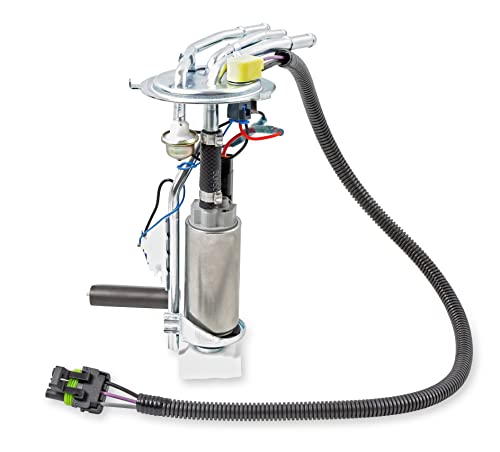
- Flows 350 LPH for EFI engines up to 750 hp
- Made for GM G-body coupes and sedans
- Pre-calibrated sender for the factory gauge
- Direct replacement for the factory pickup
The Holley Sniper 12-329 is an in-tank EFI fuel pump module for GM G-body coupes and sedans. Retailers list the 1978-88 Monte Carlo, Malibu, Cutlass, Regal and Grand Prix among the cars it covers, a family that is popular for LS swaps because of its size, frame and rear-wheel drive layout. It replaces the factory pickup and sending unit in the original tank.
Holley rates the pump at 350 liters per hour and says it can support EFI engines up to 750 horsepower. That is far more than a stock 5.3 needs, so the module leaves room for later upgrades without another trip under the car. A pre-calibrated fuel level sender is included and is designed to work with the factory gauge, which keeps the dash reading correctly after the swap.
Retail listings name separate Holley regulators to go with this module, so plan the pressure control and return line as part of the job. As with any direct-fit module, check the exact year and body of your car against the listing, because G-body years vary between sellers. If your G-body tank is badly rusted, replace it rather than fitting a new module into a dirty tank.
View Holley Sniper 12-329 on Amazon
6. Walbro GSL Inline Fuel Pump: 255 LPH External Pump for EFI Swaps

- 255 LPH in-line electric pump
- 10 mm x 1.00 female inlet and outlet
- Gasoline pump, sold as the pump only
- Made by TI Automotive, the owner of Walbro
The Walbro GSL inline pump is a compact external electric pump rated at 255 liters per hour. It is made by TI Automotive, which owns the Walbro brand, so new units carry the TI Automotive stamp rather than the Walbro name. The listing describes it as suitable for most EFI applications, and inline pumps of this type have long been a low-cost way to feed an LS swap.
It comes as the pump only, with 10 mm x 1.00 female threaded inlet and outlet ports. You add the fittings, a pre-filter, a mounting bracket and a 58 psi filter regulator, such as a Corvette-style unit, to complete a returnless system. The listing marks it for gasoline, so choose a different pump for an E85 build. Wire it through a relay with a proper fuse and a solid ground.
An inline pump is better at pushing fuel than pulling it, so mount it low on the frame rail, close to the tank and below the fuel level. Its weak point in a swap is the tank pickup: an unbaffled carbureted tank can uncover the pickup in turns or at low fuel. It suits a budget build or a truck with a sound tank and a well-placed pickup.
View Walbro GSL 255 LPH Inline on Amazon
Matching the Pump to Your Swap Vehicle
| Swap vehicle | Pick | Flow | Note |
|---|---|---|---|
| 1973-87 Chevy/GMC C/K truck | Holley 12-308 | 255 LPH | Regulated to 58 psi inside the module |
| 1988-97 Chevy/GMC 1500/2500 (OBS) | Aeromotive 18379 | 340 LPH | V8 trucks; not the 6-cylinder plastic-hat tanks |
| 1982-92 Camaro | Aeromotive 18073 | 340 LPH | Return line built into the hat |
| 1978-88 GM G-body | Holley 12-329 | 350 LPH | Keeps the factory gauge reading |
| Custom or unlisted tank | Aeromotive Phantom 340 | 340 LPH | Cut-to-fit for tanks 6 to 10 inches deep |
| Budget build with good pickup | Walbro GSL inline | 255 LPH | Needs a separate 58 psi regulator |
Wire any pump through a relay with a proper fuse and heavy power and ground leads, because a pump short on voltage flows less. Also check whether your controller drives the pump with PWM, since some modules are not built for it.

Swap Trucks, Old Tanks and Michigan Winters
Many swap trucks around West Michigan carry steel tanks that have seen decades of road salt. Rust flakes and old varnish clog a new pump’s sock quickly, so inspect the tank before you drop a module in. A rusty tank usually costs less to replace than a second pump.
Lines from a carbureted build were never meant for 58 psi, so replace them with EFI-rated hose or hard line. After the first cold start of the season, check every fitting for fuel smell or seepage.

When the Fuel Pump Isn’t the Real Problem
A weak pump does cause lean codes and a flat spot under load, the kind of hesitation when accelerating that gets worse uphill. But vacuum leaks, a wrong injector setting in the tune or a failing sensor produce the same symptoms.
A pressure gauge on the rail tells you quickly whether fuel delivery holds up. If pressure stays put and the engine still misbehaves, read the codes. A light that comes on while the engine feels normal still deserves a look, as our guide to a check engine light on but car runs fine explains.

Our check engine light diagnostic in Grand Rapids reads the data and narrows down the cause before you buy more parts.
More Buying Guides
Frequently Asked Questions
What fuel pressure does an LS swap need?
Most LS swaps run at about 58 psi held steady at the rail. Some GM engine control kits call for 60 psi, so follow the documents for your engine and harness and confirm the number with a gauge.
What is the best fuel pump for LS swap 5.3 builds?
For a stock or mildly built 5.3, a 255 LPH in-tank module made for your chassis is enough, such as the Holley 12-308 in a 1973-87 GM truck. Choose 340 LPH if you plan boost, a big cam or E85.
Which fuel pump suits an OBS LS swap?
The Aeromotive 18379 pump and hanger is listed for 1988-97 Chevy and GMC 1500 and 2500 V8 trucks. It does not fit the 6-cylinder trucks with the white plastic pump hat and bucket, so check your tank first.
Is an inline fuel pump OK for an LS swap?
It can work on a budget build if the tank pickup stays covered and the pump is mounted low near the tank. An in-tank module is usually quieter and less prone to fuel starvation.
Swap running lean or throwing codes in Grand Rapids? Phone 456 AutoFix on 616-279-3832 between 8am and 5pm, Monday to Friday, or request a diagnostic appointment online.
Tied up while we are open? Bring the vehicle to 456 Carrier St NE after hours, use our after-hours drop-off, and leave a note on when the stumble shows up.