As an Amazon Associate, 456 AutoFix earns from qualifying purchases. Product links below go to Amazon, where you can confirm the right part for your vehicle.
Run your fingertips across a freshly washed hood and you may feel a sandpaper texture that soap never touched. The clay bar vs clay mitt choice is about how you remove that bonded grit: a soft block you knead and fold by hand, or a glove with a rubbery face you sweep across whole panels. Both do the same chemistry-free job, but they ask different things of your time, your hands and your paint.
This guide explains where each format shines, then reviews one bar kit, one mitt and a clay towel that sits between them. Product details come from each maker’s Amazon listing, so read the instructions on whatever you buy before the first pass.
Quick answer
Should you clay your car with a bar or a mitt?
Pick a clay bar for heavily contaminated paint, badges and tight edges, where you want control and a gentle, fine cut. Pick a clay mitt for quick, regular decontamination of large panels, since it rinses clean and lasts far longer. Many owners use a bar once, then maintain with a mitt or clay towel.
Our Quick Picks
For the clay bar vs clay mitt question, here are Adam's medium-grade bar and mitt side by side, plus a related third pick, a fine-grade clay towel.
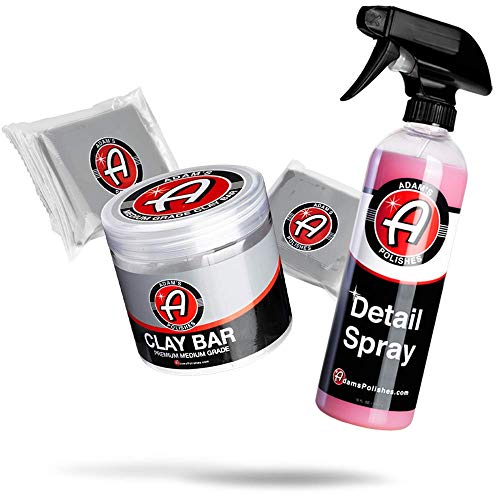
Adam's Medium Grade Clay Bar Kit
Traditional kneadable clay in the same grade as Adam's mitt.

Adam's Clay Mitt
Turns your whole hand into a claying surface.

P&S Reset Clay Towel
A flat clay towel for gentle passes on wide panels.
Same Job, Different Shape: How Each Tool Lifts Grit
Washing removes loose dirt, but some particles bond to the clear coat: rail dust, brake dust, industrial fallout, paint overspray and dried tree sap. Clay works by grabbing those raised bits as it glides over a lubricated surface. The paint underneath is left smooth, which helps wax, sealant or a coating bond and look glossier.
A traditional bar is a pliable block of detailing clay. You flatten a piece into a palm-sized patch, glide it over a wet section, then fold it to expose a clean face once it turns gray. A mitt, by contrast, bonds a synthetic rubber layer to a glove, so your whole hand becomes the claying surface and there is nothing to knead.
Gold Eagle, the company behind 303 car care products, sums up the trade-offs in its clay bar vs. clay mitt explainer. It puts a bar at roughly 20 applications against about 100 for a mitt. It also notes that a dropped bar should be thrown away, while a mitt can be rinsed under water and put back to work.
The same article says many detailers still find the bar better at clearing heavy contamination. That matches what most owners report: the bar wins on control, the mitt wins on speed and reuse.
Clay Bar or Mitt: Four Questions Before You Buy
How rough is the paint? Slip your hand into a thin sandwich bag and drag it lightly across the hood, roof and lower doors after a wash. If it feels gritty everywhere, a first claying with a bar lets you feel each spot clear. If it is only slightly rough, a mitt or towel usually handles it in less time.
How big is the vehicle? On a compact car, a bar is manageable in an afternoon. On a full-size SUV or pickup, the wider face of a mitt saves a lot of repetitive folding, and you can keep a steady pace across tall doors and a long roof.
How often will you clay? If this is a once-a-year job, a bar kit is a modest buy that you can store in a sealed case. Owners who decontaminate every season tend to prefer a reusable mitt or towel, since it rinses clean and does not dry out between sessions.
Will you polish afterward? Any clay can leave faint marring, especially a medium-grade mitt on soft or dark paint. If you have no plans to polish, start with the gentlest product you can find, keep the surface soaked with lubricant and test a small area first.
Clay Bar vs Clay Mitt: The Three Tools Reviewed
Below are one representative of each format plus a clay towel, a flat cousin of the mitt that many owners like for roofs and hoods. All three need a slick lubricant under them, so plan on a spray bottle of clay lube or the detail spray the maker recommends.
Adam’s Polishes Medium Grade Clay Bar Kit: Two 100 g Bars in a Storage Jar
- Two 100 g medium grade clay bars
- Resealable storage jar
- Targets small bonded particles
- Leaves paint smooth for wax or sealant
We chose this jar for the bar side of the comparison because it comes from the same maker, in the same medium grade, as the mitt reviewed next. That makes it a fair way to see what changes when only the format does. Adam’s listing says the jar holds two 100 gram bars made to go after the smaller particles that stay stuck after a wash.
Like any detailing clay, it needs a slick lubricant underneath, so pair it with a clay lube or detail spray and keep each section wet. Tear off part of a bar, flatten it into a patch about the size of your palm and glide it with light pressure. Fold it to a fresh face whenever it looks dirty, then wipe the area and feel for remaining roughness.
Two bars give you a spare, which matters because a dropped piece of clay picks up grit and should be thrown away. The jar keeps the unused bar from drying out between sessions. A bar is slower than a mitt across big panels, but it reaches around emblems, mirror housings and door handles, and it lets you feel exactly where the contamination is.
View Adam's Medium Grade Clay Bar Kit on Amazon

Adam’s Polishes Clay Mitt: Medium Grade Clay Infused Detailing Glove
- Medium grade clay face on a microfiber mitt
- Rinses clean with water for reuse
- For paint, glass, wheels and chrome
- Snug fit to stay on your hand
Adam’s Polishes built this mitt for owners who want to decontaminate a whole vehicle without kneading a bar panel after panel. One side carries a medium grade clay layer, which Adam’s describes as slightly more aggressive than its own Visco clay bar, while the glove itself is lined for comfort and sized to stay put on your hand.
The listing names overspray, heavy water stains, ferrous particles, pollen, acid rain marks, industrial fallout and rail dust among the deposits it handles. Adam’s is candid that the mitt can leave light micro-marring, which a polishing step would then correct. It recommends Adam’s Detail Spray as the lubricant, and says the mitt works on paint, glass, plastic wheels and chrome.
Because the clay face is so much wider than a bar, long doors, roofs and truck beds go quickly, and you rinse the mitt in water whenever it loads up instead of throwing anything away. Adam’s claims it lasts five to six times longer than a traditional bar. Owners of soft or dark paint who do not plan to polish may be happier with a finer-grade product.
View Adam's Clay Mitt on Amazon
P&S Reset Clay Decontamination Towel: Fine Grade 12 x 12 Inch Rubber Polymer Towel
- Fine grade rubber polymer clay face
- 12 x 12 inch towel format
- For paint, metal and glass
- Lifts fallout, overspray and rail dust
A clay towel sits between the two formats. Like a mitt, it uses a synthetic clay face that rinses clean, but it lies flat under your palm, so you can fold it over and spread light, even pressure across a hood or roof. P&S Professional Detail Products sells the Reset towel in a fine grade, which makes it the gentlest of the three tools reviewed here.
The maker says the rubber polymer surface removes industrial fallout, overspray, rail dust, water spots and surface rust from paint, metal and glass. P&S claims it works up to three times faster than a traditional clay bar, and stresses that it is meant to be used with proper lubrication. Like any clay, it smooths the surface so wax, sealant or a coating bonds well afterward.
The towel suits owners who clay a car once or twice a year and want a safer, finer cut on paint that is not badly contaminated. It is less handy than a bar for tight areas around badges and trim. Rinse it often during use, and keep it off the ground, since grit trapped in the face can scratch.
View P&S Reset Clay Towel on Amazon
Bar, Mitt and Towel Side by Side
The table lines up the practical differences, using the makers’ own descriptions where they give one. Grades are not standardized between brands, so a “medium” from one company can feel different from another’s.
| Point | Adam’s Medium Grade Bar | Adam’s Clay Mitt | P&S Reset Clay Towel |
|---|---|---|---|
| Format | Two 100 g hand-kneaded bars | Glove with a clay face | Flat 12 x 12 inch towel |
| Grade listed | Medium grade | Medium grade | Fine grade |
| If you drop it | Throw it away | Rinse and reuse | Rinse and reuse |
| Fits well | Heavier grit, badges, edges | Large panels, quick passes | Hoods, roofs, glass |
Whichever you choose, work in sections about two feet square, mist the area generously and let the tool glide with almost no pressure. When it starts to drag or squeak, add lubricant before you go any further. Wipe each section with a clean microfiber towel and check it by feel before moving on.

Claying removes old wax along with the grit, so the paint is bare when you finish. Plan to follow with polish if you see marring, then at least a coat of wax or sealant the same day. If the paint still feels rough in one spot after several passes, the contamination may be iron particles that respond better to a dedicated iron remover for cars before you clay again.
Want more bar options than the one reviewed here? Our clay bar kit buying guide compares six complete kits, from Mothers and Meguiar’s sets with detailer spray to a synthetic clay pad.
Decontaminating Paint After a Michigan Winter
Months of salt brine, slush and road film leave a gritty layer on lower doors, rocker panels and the back of the car. Spring is the natural time to clay in West Michigan, once nights stay above freezing and you can wash and dry the car without water icing on the panels. A fall session before the first snow also helps a fresh coat of wax or sealant bond well.
Cold, humid garages slow the drying of lubricant and protection products, so read the temperature range on each bottle. A mitt is handy here because you can rinse it in a bucket as the salt residue builds up, instead of folding a bar that fills with grit quickly.

Paint is only the visible part of salt damage. Add a look underneath to your winter car maintenance checklist, and read our guide to undercoating for road salt if brake lines, floor pans or subframe parts are starting to show surface rust.
When Rough Paint Is a Clue, Not Just Dirt
Claying a used car up close often shows things a quick walk-around misses. Overspray on trim, mismatched texture between panels or a line of fine grit at the bottom of the doors can point to past bodywork. Our guide to the paint thickness gauge for used cars explains how owners check for repainted panels.

Silt in crevices, a musty smell or rust in unusual places are worth more attention than any detailing product can give. Read how to tell if a car has flood damage, and if you are still deciding whether to buy, book a pre-purchase inspection in Grand Rapids. Our owner and head mechanic, Hendrick Hoffman, has worked in automotive service since 2005.
More Buying Guides
Frequently Asked Questions
What is the best clay bar mitt for car detailing?
It depends on the paint. A medium-grade mitt such as Adam’s clears heavier grit quickly but may leave light marring that needs polishing. A fine-grade mitt or towel is gentler for regular upkeep. Choose a known maker that states the grade and the lubricant to use.
Is a clay mitt as effective as a clay bar?
For routine decontamination, a mitt does the job in much less time. On paint that has never been clayed or carries heavy overspray, many detailers still reach for a bar because it lets them feel each spot and work small areas with control.
Can you use a clay bar wash mitt with car soap instead of lube?
Some makers allow a soapy wash solution, while others, Adam’s included, recommend a detail spray as the lubricant. Follow the instructions for your mitt. Whatever you use, keep the panel wet so the clay glides instead of grabbing.
How often should I clay my car?
Most daily drivers need it once or twice a year, often in spring after salt season and in fall before winter protection goes on. Use the plastic bag test after a wash. If the paint feels smooth, skip claying and just wax.
Smooth paint but worried about rust, brakes or something you spotted underneath? Give 456 AutoFix a call at 616-279-3832, Monday through Friday between 8am and 5pm, or send us a note through the contact page.
Can’t get away during the workday? Our after-hours drop-off lets you bring the car to 456 Carrier St NE, Grand Rapids, whenever it suits you.