As an Amazon Associate, 456 AutoFix earns from qualifying purchases. Product links below go to Amazon, where you can confirm the right part for your vehicle.
A fresh wash and a coat of wax can hide a lot on a used car lot. The best paint thickness gauge for used cars is a small meter you press against each panel to see how much paint sits on the metal, so a door or fender that was refinished after a crash stands out from the factory paint around it.
Below we explain how these meters read paint, which features earn their place in a coat pocket, and then review six gauges. A paint meter is one item in a bigger kit, and our roundup of tools for a used car inspection covers the rest of what to bring to a viewing.
Quick answer
Which paint gauge should a used car buyer carry?
Most buyers are well served by a digital meter that detects steel and aluminum on its own, such as the VVV-Group CM-224 Auto. Pick the POROMETISTO CTG01 if you want to save readings, or the Mcbazel magnetic pen for a battery-free check of steel panels. Compare panels against each other, not one number.
Our Quick Picks
Three meters that cover most used car viewings, from a full digital gauge to a battery-free pen.

VVV-Group CM-224 Auto
Factory-calibrated meter that also flags galvanized steel.

POROMETISTO CTG01
Saves readings and sends them to a Windows PC.

Mcbazel Magnetic Gauge Pen
Pocket pen that shows thickness as color bands.
How a Pocket Meter Reads the Paint on a Panel
A paint meter never touches the metal itself. On steel it measures how strongly a small magnet is pulled through the paint layer, and on aluminum it uses eddy currents, a tiny electrical field that weakens as the coating gets thicker. Gauge maker DeFelsko describes its PosiTector 6000 coating thickness gages as using these magnetic and eddy current principles to cover both ferrous and non-ferrous metals.
That matters because modern bodies mix materials. A hood, liftgate or front fender may be aluminum while the doors and roof are steel. A meter labeled Fe/NFe switches between the two methods by itself, while a magnet-only tool goes quiet on aluminum and gives no reading at all.
Readings come in mils (thousandths of an inch) or microns, and one mil equals 25.4 microns. Factory paint on most cars falls within a fairly narrow band that varies by maker and model, so the useful question is never “what is the right number” but “does this panel match the ones next to it”.
Features Worth Having When You Check a Car
Gauges for car buyers look alike in photos, but a few details matter:
- Automatic Fe/NFe detection: no switching modes as you move from a steel door to an aluminum hood.
- Continuous mode: the screen updates as you slide the probe, which speeds up a full lap of the car.
- Galvanized or filler recognition: a few meters flag zinc-coated steel or iron-powder filler, a hint that a panel was replaced or patched.
- A readable screen: backlit or color displays help under a dim parking canopy or on a gray winter afternoon.
- Calibration parts in the box: a bare metal plate and plastic foils let you zero and check the meter before a viewing.
Best Paint Thickness Gauge for Used Cars: The Six Meters Reviewed
Each description sticks to what the maker or the Amazon listing states. Zeroing steps differ a little, so read the included manual.
1. VVV-Group CM-224 Auto: 0-1500 Micron Paint Meter with Fe+Zn Detection
- Detects steel, aluminum and galvanized steel automatically
- 0-1500 µm range (0-59.1 mils), 0.1 µm resolution
- Single and continuous measuring modes
- Factory calibrated, with zero and multi-point calibration
The CM-224 Auto is a digital coating meter that VVV-Group sets up specifically for checking car bodies. It arrives factory calibrated, so the listing says you can install the batteries and start measuring without a calibration routine for ordinary body checks. Its range runs from 0 to 1500 microns (0 to 59.1 mils) with 0.1 micron resolution.
The feature that sets it apart from many cheaper meters is substrate detection that goes beyond plain steel and aluminum. It recognizes galvanized steel (Fe+Zn) as a third type, and the listing notes this can help identify panels that were replaced rather than repaired. It uses magnetic induction on steel and eddy current on aluminum, choosing between them automatically,.
Single mode suits careful spot checks, while continuous mode lets you sweep a door or hood quickly. Zero and multi-point calibration are there for anyone who wants to fine-tune, and a factory reset puts everything back if a setting goes wrong. It reads metal only, so plastic bumpers and carbon parts are outside its job, but for a buyer who wants one dependable meter it covers the common cases.
View VVV-Group CM-224 Auto on Amazon
2. POROMETISTO CTG01: 0-2000 Micron Paint Depth Gauge with USB-C Data Export
- Auto Fe/NFe detection for steel and aluminum
- 0-2000 µm range, 0.1 µm resolution up to 99.9 µm
- Stores 30 reading groups, exports over USB-C
- 2.0-inch color screen that rotates automatically
The POROMETISTO CTG01 is aimed at buyers who want a record of what they measured, not just a number on the screen. It reads steel and iron as well as aluminum and copper, switching on its own, and measures from 0 to 2000 microns. Resolution is 0.1 micron up to 99.9 microns and 1 micron above that, with the maker quoting accuracy of plus or minus 3 percent of the reading plus 2 microns.
Its memory holds 30 groups of readings, and a USB-C cable moves them to a Windows PC, which helps when comparing several cars over a weekend. A hold button freezes a reading in awkward spots, and continuous mode refreshes about every 0.3 seconds while showing the average, maximum and minimum of the last ten readings. The 2.0-inch color screen turns itself so the figures stay upright.
The kit includes a bare metal plate, calibration foils, a cable and three AAA batteries. The maker asks you to zero it on that plate before first use and to avoid tight curves, weld seams, rust and dirt. It does not read plastic, fiberglass or carbon fiber. It suits a careful buyer who likes data more than a quick yes or no.
View POROMETISTO CTG01 on Amazon
3. KNKCS KC-125: 0-2500 Micron Paint Meter with Body Filler Recognition
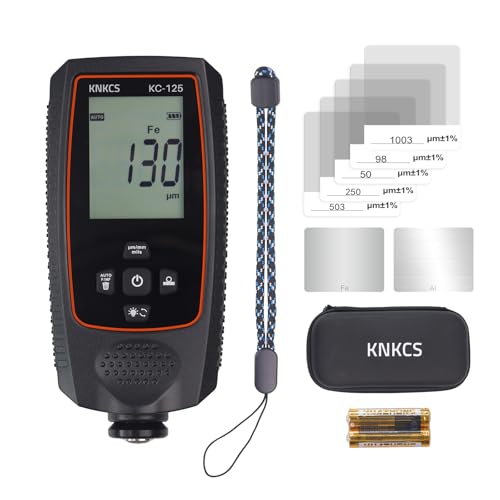
- 0-2500 µm measuring range
- 0.1 µm resolution, ±(3% + 1 µm) accuracy
- Recognizes iron powder filler and iron-zinc coated steel
- Continuous mode and a rotating screen
The KNKCS KC-125 leans toward finding repairs rather than simply measuring paint. Its listing highlights recognition of iron powder filler and of iron-zinc coated steel, two things that tend to show up where a panel was patched or swapped. That can help explain a strange reading on a panel.
The measuring range is the widest in this group, from 0 to 2500 microns, so thick filler or several layers of refinish stay on the scale. KNKCS quotes 0.1 micron resolution and accuracy of plus or minus 3 percent plus 1 micron. Continuous measurement lets the screen update as you drag the probe across a panel, and the display rotates so you can read it while working on a roof or a lower door.
The maker pitches it at both used car shoppers and detailers. Like every meter here, it measures coatings over metal only, so plastic bumper covers need a visual check. If your main worry is hidden bodywork on an older car that has seen Michigan winters, the filler recognition is a useful extra layer on top of the basic thickness reading.
4. Kakalote Paint Thickness Gauge: 0-2000 Micron Fe/NFe Meter with Green Backlit LCD

- Automatic Fe/NFe substrate recognition
- 0-2000 µm range, ±(3% + 1 µm) accuracy
- Reads in µm, mm or mils on a green backlit LCD
- Includes 7 calibration films and a wrist strap
The Kakalote gauge is a plain, no-frills digital meter that covers the basics a used car buyer needs. It recognizes ferrous and non-ferrous metal automatically, so a steel door and an aluminum hood can be checked without changing settings. The range runs from 0 to 2000 microns, accuracy is listed as plus or minus 3 percent plus 1 micron, and you can switch the display between microns, millimeters and mils.
The green backlit screen is large for a meter this size, and the listing points to clear reading in bright sun or a dark garage. The body measures about 4.8 by 2 by 0.9 inches, which fits a jacket pocket, and a wrist strap is attached. A battery indicator warns you before the power runs out, and the meter turns itself off after five minutes without use.
The box includes seven calibration films, the strap and a manual, but the two AAA batteries are not included, so pack them before a viewing. The maker says to run a zero calibration before first use. The listing doesn’t mention memory, filler alerts or a continuous scan mode, so treat it as a simple meter that suits a first-time buyer who mainly wants to compare panels on one or two cars.
View Kakalote Paint Thickness Gauge on Amazon
5. Abizarch HW-300PRO: Fe/NFe Coating Thickness Gauge with 50-Reading Statistics
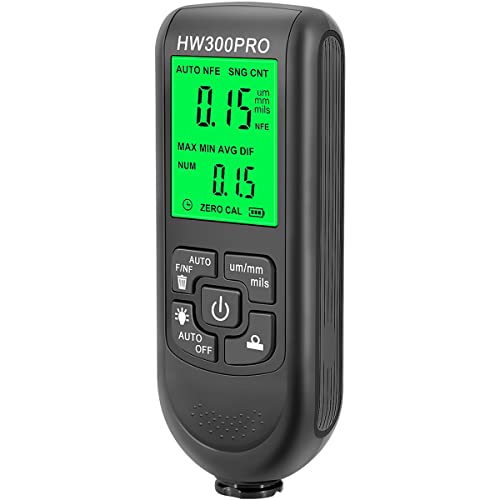
- F probe (magnetic induction) and N probe (eddy current)
- 0-2000 µm range, ±(3% + 1 µm) accuracy
- Shows average, maximum, minimum and difference
- Statistics on up to 50 readings
The Abizarch HW-300PRO is a general coating meter with a statistics function that suits a careful lap around a car. It keeps track of the average, maximum, minimum and the difference between readings, and holds up to 50 readings for those figures. That shows how much one panel varies, which can reveal a blended repair.
Its integrated probe uses electromagnetic induction on steel (the F side) and eddy current on aluminum and copper (the N side), and the meter works out which one applies on its own. The range is 0 to 2000 microns with listed accuracy of plus or minus 3 percent plus 1 micron. The LCD shows the metal type, mode, reading count and battery level alongside the result in microns, millimeters or mils.
Abizarch markets it for workshops and industrial coatings as well as car paint, so the listing is broader than the automotive meters here. It shuts off after three minutes without use to save the battery. For a buyer who wants numbers to back up a hunch, or a detailer checking paint before polishing, the statistics help, though the meter still reads coatings over metal only and not plastic or fiberglass parts.
View Abizarch HW-300PRO on Amazon
6. Mcbazel Magnetic Paint Thickness Gauge Pen: Battery-Free Color Band Checker for Steel
- Magnetic principle, no batteries or charging
- Color bands for marked thickness ranges
- Pocket size, about 4.1 by 0.5 inches
- For steel or iron panels only
The Mcbazel pen is the simplest tool in this guide: a magnetic paint gauge with no screen, no batteries and no calibration. You hold it against a clean, flat steel panel and pull it away, and a mechanical scale shows blue, green, yellow, red or black bands for the marked thickness ranges. Comparing the band you see on one door with the band on the next is the whole method.
Because it relies on magnetism, it only works on steel or iron panels. The maker states plainly that it does not read aluminum, plastic or other non-magnetic parts, so you need to know what the body is made of before you trust a result. Newer cars with aluminum hoods or fenders will leave gaps.
At about 4.1 inches long with a cap, it lives easily in a glove box or a pocket, ready for an unplanned look at a car. The maker also notes that a color difference is a clue for a closer look, not proof of an accident. It suits a quick first pass or a backup to a digital meter, and serious buyers will still want numbers on any car that raises doubts.
View Mcbazel Magnetic Gauge Pen on Amazon
Reading the Numbers Panel by Panel
Start on the roof, which is rarely repainted, and use it as your baseline. Then take three or four readings on every panel: hood, fenders, each door, quarter panels and the trunk lid or liftgate. Keep the probe flat and away from edges and seams.
| What you see | What it may point to | What to do next |
|---|---|---|
| Every panel reads about the same | Factory paint, or a very even full repaint | Check door jambs and under the hood for overspray |
| One panel reads clearly higher | That panel was refinished | Look at panel gaps and ask about the repair |
| A small spot reads very high | Body filler under the paint | Check for rust bubbles around the spot |
| A panel reads lower than the rest | Heavy polishing or a replaced panel | Compare color and look for tool marks on bolts |
| No reading on a metal-looking part | Plastic or composite panel, or a steel-only tool on aluminum | Confirm the material before drawing conclusions |
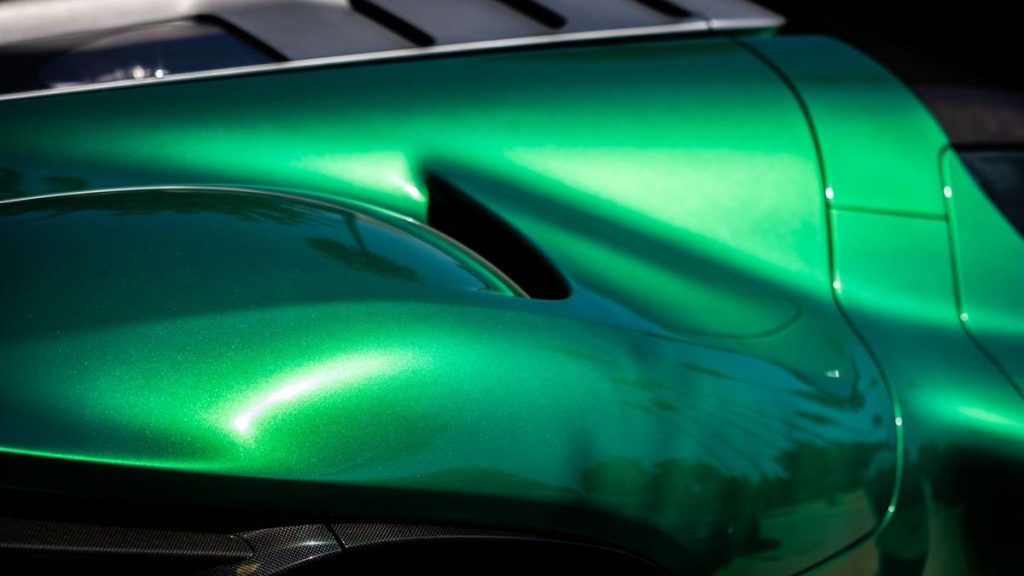
A repaint is not always bad news, since scuffs and keyed doors get refinished all the time. What you want is a story that matches the readings: a seller who says “never been in an accident” while the front end reads double the roof deserves more questions.
Salt, Rust Repair and Flood Cars in West Michigan
Road salt is hard on rocker panels, wheel arches and the bottom edges of doors, and those are the spots where a quick rust repair is usually hidden. A meter that jumps sharply over a small patch near a wheel opening often marks filler over a rusted-out section. Pair that reading with a look underneath, and our guide to undercoating against road salt explains what protection a Michigan car should have.
Used cars also arrive here from storm-hit parts of the country. A gauge can’t see water damage, but fresh paint on lower panels together with a musty cabin is a reason to dig deeper, and we cover the signs in how to tell if a car has flood damage.
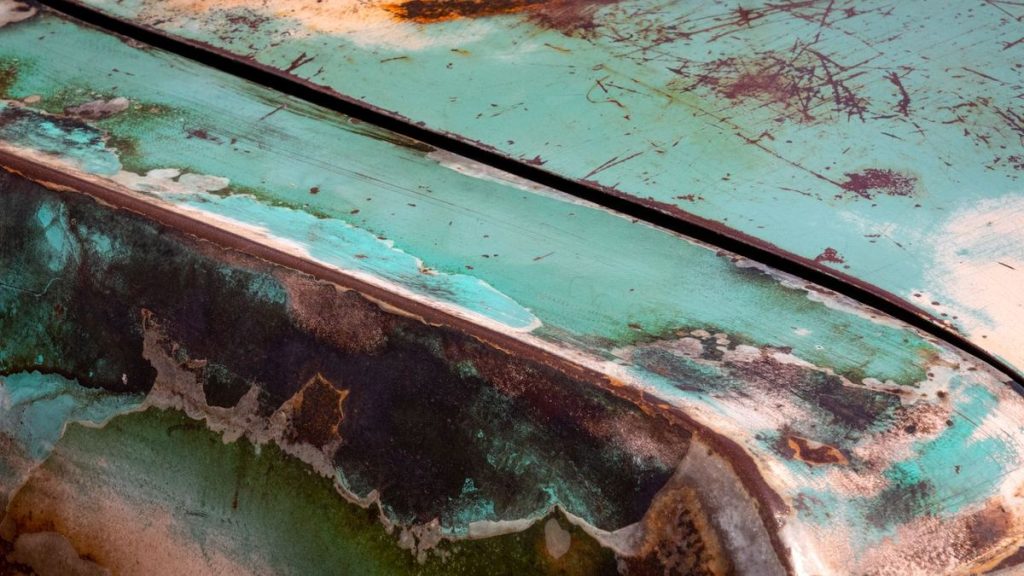
Cold weather affects the meter as well as the car. Batteries lose strength in the cold, so carry spares, and wipe off road grime before each reading because a layer of dried salt adds thickness that isn’t paint. Our article on buying a used car in winter covers what snow can hide.
When a Reading Means a Closer Look
A paint meter tells you where something happened, not how well it was fixed. It can’t check a bent frame rail, a deployed airbag that was never replaced or a sensor knocked out of alignment. If the numbers raise doubts, or you are about to spend serious money, have the car looked at on a lift before you sign.
Our pre-purchase inspection in Grand Rapids puts the car in front of an ASE certified mechanic before any money changes hands, and you can read what a pre-purchase inspection includes before you book. Bring your paint readings along, since they tell us which areas to study first. For the questions to ask a seller, keep our used car buying checklist on your phone.
More Buying Guides
Frequently Asked Questions
What paint reading means a car was repainted?
There is no single cutoff, because factory paint thickness varies by maker. Look for a panel that reads clearly higher than the roof and the panels beside it. A big jump on a small spot usually points to filler.
Does a paint thickness gauge work on aluminum panels?
A digital meter labeled Fe/NFe reads aluminum using eddy currents. A magnetic pen or a steel-only meter does not, so it shows no reading on an aluminum hood or fender.
Can a paint gauge check plastic bumpers?
No. The meters in this guide only measure paint over metal. Judge plastic bumpers and trim by color match, texture and the gaps around them.
Is an affordable digital gauge accurate enough for a used car?
For comparing panels on one car, yes. You are looking for differences between panels rather than lab-grade numbers, so zero the meter on its plate before each viewing and take several readings per panel.
Readings on that used car don’t add up? Call 456 AutoFix at 616-279-3832, Monday to Friday 8am to 5pm, or set up a pre-purchase inspection through our contact page.
If the seller can only meet after work, ask about our after-hours drop-off. Our Creston shop is on Carrier St NE, at number 456.