As an Amazon Associate, 456 AutoFix earns from qualifying purchases. Product links below go to Amazon, where you can confirm the right part for your vehicle.
Walk down any detailing aisle and the word “graphene” now sits next to “ceramic” on half the bottles. If you are weighing ceramic coating vs graphene coating for your own car, the honest answer is that they are close relatives, and the choice turns on a few specific traits rather than a whole new kind of protection.
This guide sorts out what graphene adds, what stays the same, and how each one copes with a Michigan winter. Then it looks closely at one SiO2 coating, one graphene coating and a graphene spray for owners who want less work. If you have already settled on a traditional coating, our guide to the best ceramic coating for cars covers more options.
Quick answer
Is a graphene coating better than a ceramic coating?
Not dramatically. Most graphene coatings are silica (SiO2) coatings with graphene oxide blended in, and makers credit the additive with slicker paint and fewer water spots. Both need identical prep and careful washing. Pick on the product’s stated durability, how easy it is to level, and how you maintain the car.
Our Quick Picks
For the ceramic coating vs graphene coating choice, here is a two-layer SiO2 kit and a graphene paint coating side by side, plus a related third pick, a graphene spray for owners who want an easier step up.

GYEON Q2 Syncro EVO
A conventional silica coating with a slick top layer for extra gloss.

Ethos Graphene Coating PRO V2.0
A bottle coating built on a graphene matrix with a long rated life.
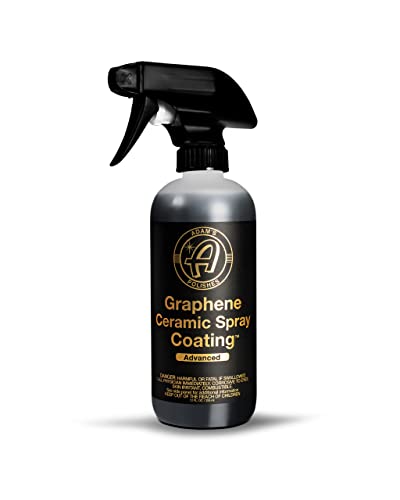
Adam's Graphene Ceramic Spray Coating
A spray-on graphene layer that skips the bottle-coating process.
What “Graphene” Actually Means on a Coating Label
A conventional ceramic coating is a liquid built around silicon dioxide. As the solvent flashes off, the silica cures into a thin, hard, glassy film that bonds to the clear coat and sheds water and grime. That chemistry has been the backbone of paint coatings for over a decade.
Graphene coatings for cars usually keep that silica base and add a small share of graphene oxide or reduced graphene oxide (often written rGO). Ethos, for example, describes its Resist spray as a graphene-infused SiO2 formula. You are not painting a sheet of pure graphene onto the car, so treat any claim that a bottle is a totally different material with some caution.
What the additive is said to change is fairly narrow:
- Water spotting: makers claim water sheets off with fewer mineral spots left behind, which matters if you park under sprinklers or wash with hard water.
- Slickness: graphene products are marketed as feeling slicker, so dust and road film release more easily during a wash.
- Easier leveling: some graphene formulas are sold as more forgiving to wipe off, with less risk of a hard high spot.
- Hardness and lifespan: numbers such as 9H or 10H and “up to 10 years” are the maker’s own ratings, not an industry standard, so compare them with care.
Independent long-term comparisons are scarce. In practice, how well the paint was prepped and how the car is washed afterward decide the real lifespan far more than the word on the bottle.
The Same Weekend of Prep, Whichever You Choose
Neither type will bond to dirty, waxed or oily paint, and neither hides swirl marks. A coating freezes the surface underneath it in place for years, so every defect you leave stays visible under a glossy layer.
GYEON’s own steps for its Q2 Syncro EVO two-stage coating show the typical order: polish first, wash with a degreasing shampoo, apply a panel prep and let it sit, then lay down the coating on a cool, dust-free surface. Graphene kits ask for the same groundwork. A practical plan looks like this:
- Wash and decontaminate. An iron remover handles embedded brake dust and rail dust, and clay lifts what is left. Our pick list for the best clay bar kit helps with that step.
- Polish. Remove the swirls you don’t want sealed in, even if it is a one-step polish.
- Strip oils. Use a dedicated panel prep or the wipe the coating maker names, so polish residue doesn’t block the bond.
- Coat in small sections. Work in good light, level each section on time, and check for streaks before moving on.
- Let it cure. Keep the car dry and out of the weather for as long as the label asks.
Wear nitrile gloves and work with the garage door open or a fan running, as most coating labels advise. The solvents are strong, and the coating sticks to skin as readily as to paint.
Ceramic Coating vs Graphene Coating: Three Kits Up Close
Here is one product from each side of the debate and a sprayable graphene option for owners who want protection without a full coating day. All three are listed on Amazon US, so confirm the size and kit contents on the listing before you order.
GYEON Q2 Syncro EVO: 30 ml Two-Layer SiO2 Ceramic Coating Kit Rated Up to 5 Years
- Q2 Mohs EVO base layer plus Q2 Skin EVO top layer
- 9H hardness and up to 5 years, per the listing
- Maker lists pH tolerance of 2 to 11
- 12 hours with no water contact after application
GYEON Q2 Syncro EVO represents the ceramic side of this comparison, and it is a two-stage silica system rather than a single bottle. Q2 Mohs EVO goes down first as the base layer for hardness and chemical resistance, and Q2 Skin EVO goes on top to add gloss, slickness and stronger water repellency. The Amazon listing rates the system at 9H hardness with up to 5 years of protection, and GYEON’s own page lists a real-world lifespan of up to 50 months.
Application follows GYEON’s steps closely. After polishing, you wash with a degreasing shampoo, wipe on Q2M Prep and wait 15 minutes, then coat the whole car with Mohs EVO. Skin EVO follows right away, and it wipes off within 10 to 30 seconds. GYEON’s full box also includes a bottle of Q2M Cure for upkeep, while the lighter box does not, so check which version the listing ships.
The listing calls for 12 hours with no water contact, and GYEON says the job can be done outdoors if you avoid direct sun and keep the surface dry. A 30 ml pair covers a typical car, since the maker estimates 15 to 25 ml per vehicle. The second layer adds time, so it suits a patient owner rather than someone in a hurry.
View GYEON Q2 Syncro EVO on Amazon

Ethos Graphene Coating PRO V2.0: 50 ml Graphene Paint Coating Rated Up to 10 Years
- Proprietary graphene matrix formula
- Up to 10 years of protection, per the listing
- Spreads and levels without crystallizing, per Ethos
- Hydrophobic barrier against UV, oxidation and chemicals
Ethos Graphene Coating PRO V2.0 is the graphene side of the comparison, a full paint coating rather than a spray. Ethos describes it as a proprietary graphene matrix that forms a strong but flexible layer, and the listing rates it for up to 10 years of protection, citing ASTM lab testing. That rating is the maker’s own, so read it as an upper limit for a well-prepped, well-maintained car.
The listed protection covers UV rays, oxidation, chemicals and general road grime, with a hydrophobic finish meant to keep the car cleaner between washes. Ethos also claims the formula spreads smoothly and levels easily without hardening or crystallizing during application. For a first-time coater, that promise of a more forgiving wipe-off is the most practical selling point, because high spots are the usual DIY mistake.
The prep is no lighter than for a silica coating. You still need a washed, decontaminated and polished car, an oil-free panel wipe, gloves and good ventilation. The 50 ml bottle gives some margin for a larger vehicle or a second coat on the hood and bumper, but confirm the coverage and cure guidance on the label. It suits an owner who wants a graphene product and is ready for a full prep day.
View Ethos Graphene Coating PRO V2.0 on Amazon
Adam’s Advanced Graphene Ceramic Spray Coating: Sprayable Graphene Oxide Coating Rated 18+ Months
- Graphene oxide spray coating
- 18+ months of protection, per the listing
- UV tracer shows coverage under a blue light
- Safe on paint, wheels, glass, trim and chrome
Adam’s Advanced Graphene Ceramic Spray Coating is the related third pick, aimed at owners who like the idea of graphene but not a full coating day. It is a sprayable graphene oxide formula, and the listing rates it for more than 18 months of protection. That sits well below a bottle coating’s rating, yet well above the life of most waxes and spray sealants.
The spray carries Adam’s Ceramic Glow tracer, which shows where you have applied product when you shine a UV blue light on the panel. Adam’s sells the flashlight on its own as well as in kits, so check what this listing includes. Adam’s lists a long range of safe surfaces: paint, wheels, glass, headlights, plastic trim, bed liners, tonneau covers, chrome and bare metal. The maker recommends working panel by panel to control overspray rather than spraying the whole car at once.
Prep still matters, because any spray coating bonds most reliably to clean, decontaminated paint with no old wax on it. It also works as a topper for an existing ceramic or graphene coating, adding slickness after a wash. Work on cool panels out of direct sun, and wear gloves as the label advises. It suits a driver who wants more than wax with far less risk than a coating.
View Adam's Graphene Ceramic Spray Coating on Amazon
How the Two Coating Types Compare
The table lines up the practical differences. Lifespan figures are the makers’ own ratings, and real results depend on prep, parking and wash habits.
| Factor | Ceramic (SiO2) coating | Graphene coating |
|---|---|---|
| Main ingredient | Silicon dioxide resins | Silica resins with graphene oxide or rGO added |
| Rated lifespan | Commonly 2 to 5 years (GYEON lists up to 50 months for Syncro EVO) | Often marketed at 5 to 10 years |
| Water spotting | Can spot if hard water dries on it | Marketed as more resistant to spotting |
| Application | Flash, then level within minutes | Similar, some formulas sold as easier to level |
| Prep required | Wash, decontaminate, polish, panel wipe | The same full prep |
| Upkeep | pH-neutral washes plus an SiO2 topper | pH-neutral washes plus a graphene or SiO2 topper |
Look past the headline numbers. A coating rated for ten years on a car that goes through brush washes every week will fade faster than a modest coating on a hand-washed car, whichever chemistry it uses.

If neither a ceramic nor a graphene coating sounds like your kind of weekend, a good wax or sealant is still a valid choice. Our car wax vs ceramic coating comparison explains where the simpler products make more sense.
Which Holds Up Better Through a Grand Rapids Winter?
Road brine, slush and sand spray coat every car here from late fall into spring. Either coating type helps that film rinse off at a touchless wash or with a pressure washer, and a slicker graphene surface may release it a little more easily. Neither stops salt from collecting in seams, wheel wells and underbody panels.
Timing matters more than chemistry. Coatings cure slowly in cold, damp air, and GYEON asks you to keep the surface dry while the coating begins to cure. Plan the job for a mild, dry stretch before the first hard freeze, and read the label for the temperature range it allows.

Paint is only one part of winter protection. Work through our winter car maintenance checklist for the mechanical side, and treat the frame and floor pans with the best undercoating for road salt, since no paint coating reaches underneath the car.
Through the salt months, keep up the washes. A coated car still needs regular rinsing, and a wheel cleaner for ceramic coated wheels lifts brake dust from coated rims without stripping them.
Check a Used Car Before You Coat It
A fresh coating makes any paint look newer than it is, which is exactly why it should not be the first thing you do to a car you just bought. Bubbling paint, rust at the rocker panels or a musty smell under the carpet point to problems a coating will only hide.

Our guide on how to tell if a car has flood damage lists the warning signs to check first. For the parts that matter for safety, a pre-purchase inspection in Grand Rapids covers brakes, suspension, steering and more before the car becomes yours.
More Buying Guides
Frequently Asked Questions
How long does a graphene coating last compared with ceramic?
Makers often rate graphene coatings at 5 to 10 years and SiO2 coatings at 2 to 5, but those are their own figures. Prep quality, parking, wash method and toppers decide the real result, so a well-kept ceramic coat can outlast a neglected graphene one.
Can you put a graphene spray over a ceramic coating?
Yes, as a topper on a clean car. A graphene or SiO2 spray adds slickness and beading on top of the coating without harming it. Check the coating maker’s instructions for how long to wait after the coating cures.
Does a graphene coating stop water spots?
It may reduce them, which is the main claim makers attach to graphene. No coating is spot-proof, though. Hard water left to dry in the sun can still etch any coated surface, so dry the car after washing.
Is a graphene spray the same as a graphene coating?
No. A spray goes on in minutes and is rated in months, while a bottle coating is more concentrated, needs full paint prep, and is rated in years. The spray is an easier step up from wax or a sealant.
Coatings look after the paint, and our shop looks after what’s underneath it. For brakes, suspension, steering or a pre-purchase check, phone 456 AutoFix on 616-279-3832 between 8am and 5pm, Monday to Friday, or reach us through the contact page.
Busy all day yourself? Bring the car by after hours and use the drop-off at 456 Carrier St NE, Grand Rapids, MI 49505.