As an Amazon Associate, 456 AutoFix earns from qualifying purchases. Product links below go to Amazon, where you can confirm the right part for your vehicle.
The best brake cleaner spray for your garage depends on one choice printed on the can: chlorinated or non-chlorinated. That choice decides whether it can catch fire, how fast it dries, what it does to paint and whether it can even be sold where you live.
Below: how the two types differ, what else to read on the label, six cans worth knowing, and how to use them safely. If you’re cleaning parts during a pad swap, pair this with our guide to the best brake pads for daily driving.
Quick answer
Which brake cleaner spray should you buy?
For most DIY brake jobs, a non-chlorinated, low-VOC cleaner such as CRC Brakleen 05050 or Permatex 82220 is the practical choice. Pick a non-flammable chlorinated can like CRC Brakleen 05089 when you need faster drying and no fire risk, with good ventilation. Always keep either type off hot parts and paint.
Our Quick Picks
Three quick picks for the main choices: a low-VOC non-chlorinated can, a non-flammable chlorinated can and a non-chlorinated can labeled safer for aluminum. All six are reviewed below.
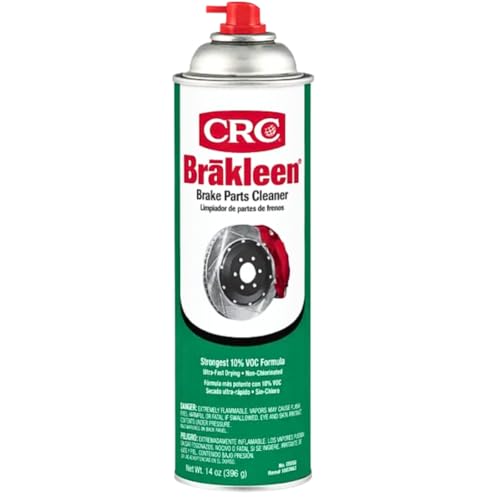
CRC Brakleen 05050
A widely sold non-chlorinated can for routine pad and rotor jobs.

CRC Brakleen 05089
The classic red can for fast, no-flame cleaning of heavy grime.

Permatex 82220
A single can that the listing calls safer for aluminum parts.
Chlorinated vs Non-Chlorinated Brake Cleaner
Every brake cleaner does the same basic job. It dissolves brake fluid, grease, oil and brake dust, then evaporates so the pads and rotors are left bare. The difference is the solvent that does the work.
- Chlorinated: built on solvents such as perchloroethylene (PCE). Usually non-flammable, very fast drying and strong on grease, but more toxic, and heated vapor can form dangerous gases, so never near hot parts or welding.
- Non-chlorinated: built on solvents such as acetone and light hydrocarbons. Usually low VOC and sold in more places, but flammable, a little slower to dry and harder on paint and plastics.
Rules are moving toward the non-chlorinated side. The EPA’s perchloroethylene risk management page names brake cleaners as a common consumer use of PCE. Its December 2024 rule phases PCE out of all consumer use, and the agency opened that rule for review in 2025, so the shelf may keep changing.
Makers are reformulating too. CRC says on its Brakleen product page that its newly reformulated non-flammable red can has less than 10% VOC and is available in all 50 states. Read the label on the can you actually receive, because older stock and newer formulas can share a name.
What Else to Read on the Can
Once you know which type you want, a few details separate the best brake cleaner spray for your job from the rest:
- Flammability: if the can doesn’t say “non-flammable”, treat it as a fire risk near sparks, pilot lights and drop lights.
- Residue: a brake cleaner should evaporate completely. Any oily film on a rotor or pad is wrong for brakes.
- VOC and state rules: look for “low VOC” or “50 state formula”. Some listings also state where a can can’t be sold.
- Nozzle and can size: a strong jet reaches caliper brackets without taking things apart, and a larger can covers both axles.
- Approved surfaces: some labels say safer on aluminum. Few say safe on paint.
In West Michigan, road salt and brake dust bake into a crust on calipers and hub faces over the winter. A cleaner with a forceful spray helps here, but salt scale and rust need a wire brush as well. Our guide to the best brake cleaner for rust covers that job in detail.
Best Brake Cleaner Spray: The Picks in Detail
Each listing below is one can size or pack size from a wider range. Check the formula type, can size and pack count on Amazon before you order, and confirm the can can be sold where you live.
1. CRC Brakleen 05050: Non-Chlorinated 50 State Brake Cleaner with PowerJet Spray
- Non-chlorinated, low VOC formula
- Meets state and federal VOC rules
- PowerJet spray for a forceful blast
- Degreases fast and leaves no residue
CRC Brakleen 05050 is the non-chlorinated version of the Brakleen line, sold as a 50 state formula. The listing says it meets all state and federal VOC regulations, which matters if you live somewhere with strict air quality rules or simply want a can you can buy and use anywhere. It is a low VOC formula that degreases on contact and leaves no residue on the parts it cleans.
The PowerJet technology is the main practical feature. CRC describes it as a powerful spray that blasts away contaminants, which helps when you are flushing brake dust out of a caliper bracket or rinsing brake fluid off a rotor face without taking the whole assembly apart. CRC also notes on its Brakleen page that the non-chlorinated line is ultra-fast drying, so parts are ready to handle soon after you spray them.
Because it is non-chlorinated, this cleaner is flammable. Use it with the garage door open, away from heaters, pilot lights and sparks, and only on brakes that have fully cooled. Keep it off painted wheels and plastic trim. For a routine pad swap or new rotor install at home, it is a sensible default can to keep on the shelf.
View CRC Brakleen 05050 on Amazon
2. CRC Brakleen 05089: Non-Flammable Brake Parts Cleaner, 19 oz Two-Pack
- Non-flammable formula
- Removes grease, brake dust and brake fluid
- 19 oz cans, pack of two
- Listing: not for sale for use in CA or NJ
CRC Brakleen 05089 is the red can that the listing calls the original brake parts cleaner. It is a non-flammable formula made to remove grease, brake dust, brake fluid, oil and other contaminants from brake parts, linings and pads. CRC’s Brakleen page lists the Original Formula as non-flammable and chlorinated, and says Brakleen first appeared in 1971. This listing is a pack of two 19 oz cans.
A non-flammable cleaner is the one to reach for when the job is greasy, or when you can’t keep every heat source out of the garage. It dries very quickly, so you can clean a caliper, hub face and rotor in one pass and move on. CRC also says its brake cleaners use a carbon dioxide propellant. Chlorinated vapor is still toxic, so ventilate well, never spray hot parts, and keep it far from any welding or grinding.
Sale limits apply to this listing. It states the cleaner cannot be sold for use in California or New Jersey, or on Catalina Island. CRC says its newly reformulated red can is available in all 50 states, so check which version the listing ships before you order.
View CRC Brakleen 05089 on Amazon
3. Permatex 82220: Non-Chlorinated Brake and Parts Cleaner, 14.5 oz Aerosol
- Non-chlorinated formula
- Listed as safer for aluminum
- No contaminant-attracting residue
- Cleans without disassembling the brake
Permatex 82220 is a non-chlorinated brake and parts cleaner in a single 14.5 oz aerosol can. The listing says it penetrates, dissolves and removes dirt and oil from brake systems and metal parts, and that it can be applied without disassembling the brake unit because the spray penetrates to clean. That makes it useful for a quick clean of a squeaky brake or a dusty drum.
Two label points set it apart. Permatex describes it as safer for aluminum, which suits many modern calipers, brackets and wheel hubs, and says it helps manage EPA halide limits. It also leaves no contaminant-attracting residue and no chlorinated solvent run-off, so the parts stay clean instead of collecting new dust from a film. The suggested uses go beyond brakes to CV joints, machinery, tools and farm equipment, so one can covers several jobs in the garage.
As a non-chlorinated cleaner it is flammable. Use it in a ventilated space with no open flames or sparks nearby, and never on a hot rotor or drum. Mask off painted surfaces and plastic parts. A single can is a good size for one or two wheel jobs, and multi-packs are listed separately.
4. GUNK Brake Parts Cleaner: Non-Flammable Chlorinated Spray, 19 oz Case of 12

- Chlorinated, non-flammable formula
- Lifts brake dust, grease and oil
- Fast drying with no residue
- 19 oz cans, case of 12
GUNK’s non-flammable brake parts cleaner is a chlorinated formula sold here as a case of twelve 19 oz cans. The listing says the chlorinated blend gives stronger cleaning action on brake pads, rotors and calipers while staying non-flammable. It is meant to penetrate and lift brake dust, grease and oil so the parts can be cleaned with less scrubbing.
The formula dries quickly and the listing says it leaves no residue, so parts are ready for reassembly once they are dry. The spray is aimed straight onto the pads, rotors and calipers, which suits a pad change or a full brake service on several wheels. A case makes sense if you keep more than one car on the road, help friends with brake jobs, or work through a long list of spring repairs after a salty West Michigan winter.
Chlorinated cleaners need the most care. Work with good airflow, wear gloves and eye protection, and let every part cool before you spray it. Never use it near welding, grinding or a torch, and keep it off painted surfaces. Check that a chlorinated cleaner can be sold and used where you live before you order a full case.
View GUNK Non-Flammable Brake Parts Cleaner on Amazon
5. Berryman Brake Parts Cleaner: Chlorinated Degreaser for Disc and Drum Brakes, 19 oz
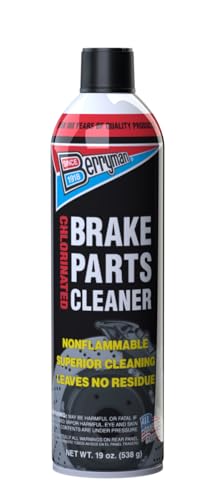
- Chlorinated degreasing formula
- Removes brake fluid, grease and oil
- Fast drying, residue-free finish
- Made in the USA, single 19 oz can
Berryman’s chlorinated brake parts cleaner is a single 19 oz can from a company the listing says has been making products in the USA since 1918. It is a brake system degreaser designed to remove brake fluid, grease, oil and other contaminants from brake components. The chlorinated formula is meant to penetrate and lift stubborn grime, which suits a heavily soiled wheel or a brake fluid spill.
The listing names disc and drum brakes, including linings, drums, pads and rotors, so it covers older cars with rear drums as well as modern disc setups. It dries fast and leaves no sticky or oily residue, which matters because a film on the pad and rotor contact surfaces would reduce grip. Buying one can rather than a case is handy if you only need a chlorinated cleaner for one job and use a non-chlorinated can the rest of the time.
Follow the label closely. Use it only with plenty of ventilation, keep it away from hot parts, welding and open flames, and protect paint and plastic from overspray. Confirm that chlorinated brake cleaner can be sold where you live, since rules on these solvents vary and are changing.
View Berryman Chlorinated Brake Parts Cleaner on Amazon
6. Penray 4620: Non-Chlorinated Brake Cleaner, 14 oz Aerosol Case of 12

- Non-chlorinated formula
- Cleans shoes, drums, rotors and cylinders
- Cleans without disassembly
- No residue and non-staining
Penray 4620 is a non-chlorinated brake cleaner sold as a case of twelve 14 oz aerosol cans. The listing says it cleans and degreases brake shoes, drums, cylinders, rotors, disc brakes and other brake parts, and that its cleaning power extends beyond brakes to other parts in the garage. It can be used without disassembling the brake assembly, which saves time on a quick clean.
The listing also says it leaves no residue and is non-staining, and that it helps stop brake squeaking. Squeal from dust and grime trapped between the pad and rotor often eases after a thorough clean, though worn pads or missing hardware need replacing rather than spraying. A case of non-chlorinated cans suits someone who does brake work often and wants the less toxic formula on hand for every job.
Like any non-chlorinated cleaner, it is flammable. Spray it in a ventilated space with no flames, sparks or running heaters nearby, and only on brakes that have cooled down. Keep it away from painted wheels, body panels and plastic covers, and check the label for any limits on where it can be sold or used.
View Penray 4620 Non-Chlorinated Brake Cleaner on Amazon
Which Brake Cleaner Type Fits the Job
Use this table to narrow down the best brake cleaner spray for the work in front of you. For a normal pad swap in a ventilated garage, either type will do.
| Job | Better fit | Why |
|---|---|---|
| Routine pad and rotor swap | Non-chlorinated, low VOC | Cleans fluid and dust, widely sold, less toxic |
| Heavy grease or brake fluid spill | Chlorinated, non-flammable | Cuts grease fast and dries almost at once |
| Work near a heater, pilot light or drop light | Chlorinated, non-flammable | No flame risk, but still never on hot metal |
| Aluminum calipers and brackets | Non-chlorinated labeled safe for aluminum | Avoids chlorinated run-off on the metal |
| Near welding or grinding | Neither until parts are cool and dry | Heat breaks chlorinated vapor into toxic gas; non-chlorinated vapor burns |
| Painted wheels, bodywork or plastic covers | Neither | Solvents can dull paint and soften plastic |
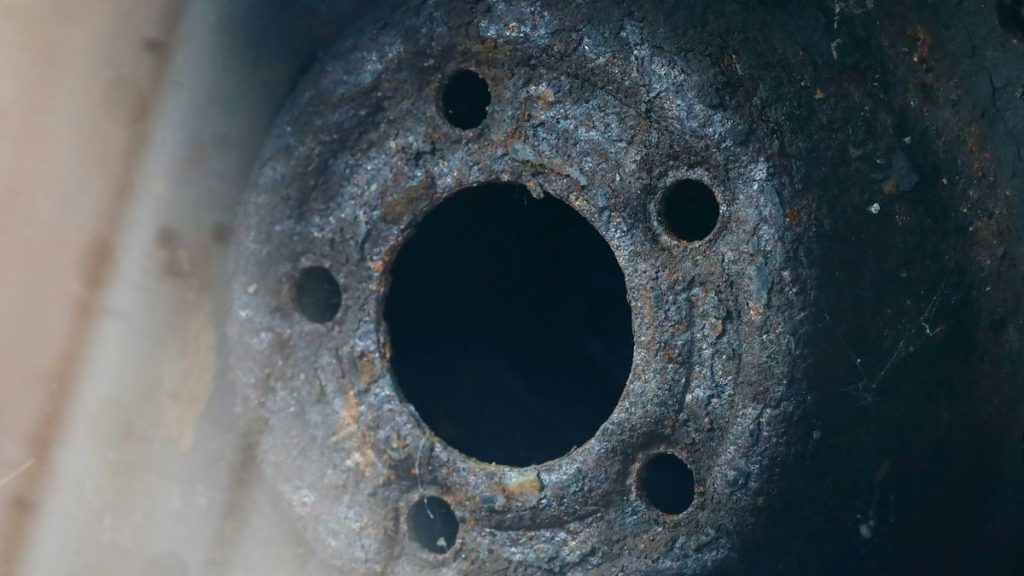
How to Use Brake Cleaner Safely
Even the best brake cleaner spray is a hazardous chemical, so follow its label. The common rules are simple:
- Ventilate: open the garage door or work outside. The vapor collects low, where you kneel.
- Let the brakes cool: never spray a rotor, drum or caliper still hot from driving.
- No flames, sparks or welding: keep flammable cans away from heaters and grinders, and never weld or torch near parts still wet with chlorinated cleaner.
- Protect paint and rubber: cover painted wheels and fenders, and wipe overspray off plastic and rubber boots quickly.
- Wear gloves and eye protection: nitrile gloves and safety glasses keep the solvent off your skin and out of your eyes.
When to use it: on new rotors to remove the factory oil film before you fit them, on caliper brackets and hub faces during a pad job, and after a brake fluid spill. For rotor choices, see our guide to the best brake rotors. Let the parts dry fully before you reassemble anything.
When a Can of Cleaner Won’t Fix It
The best brake cleaner spray only removes dirt and fluid from the surface. It won’t save pads that have soaked up brake fluid or grease, and those should be replaced. It also won’t free a caliper that drags, pulls the car to one side or leaves one wheel much hotter than the others; our page on sticking brake caliper symptoms explains those signs.
A wet patch inside a wheel or a soft pedal points to a leak, not dirt. Grinding and pulsing are covered in our list of signs you need new brakes.
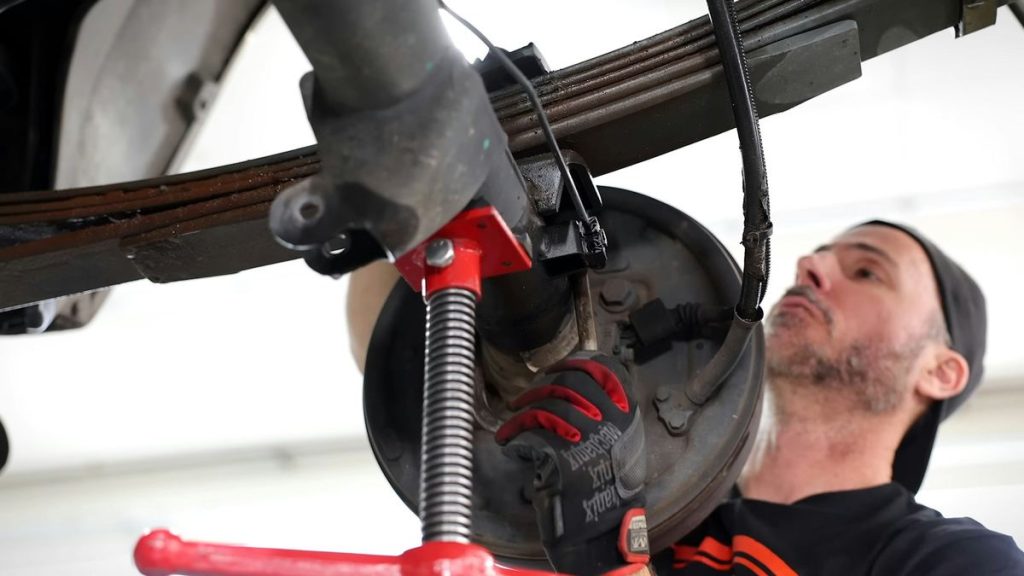
If you find a leak or a seized part, let a technician look at it. Our brake repair in Grand Rapids covers pads, rotors, calipers and brake lines on foreign and domestic vehicles.
More Buying Guides
Frequently Asked Questions
Is chlorinated or non-chlorinated brake cleaner better?
Chlorinated cleaner dries faster and won’t catch fire, but it is more toxic and must never meet heat or welding. Non-chlorinated cleaner is flammable but less toxic and sold in more places. For most home brake jobs, a non-chlorinated, low-VOC can does the job.
Can I spray brake cleaner on hot brakes?
No. Let the rotors, drums and calipers cool first. Flammable cleaner can ignite on hot metal, and heat can break chlorinated cleaner down into toxic gases.
Will brake cleaner damage paint or plastic?
It can. The solvents can dull or lift paint and soften some plastics and rubber. Cover painted wheels and bodywork, and wipe off any overspray straight away.
Should I clean new rotors with brake cleaner?
Yes, in most cases. New rotors often ship with a light oil coating to stop rust in storage. Spray both faces, let them dry fully, and follow any instructions in the rotor box.
Brakes still noisy, pulling or soft after a clean-up in Grand Rapids? Call 456 AutoFix at 616-279-3832, Monday to Friday 8am to 5pm, or book a brake inspection through our contact page.
Can’t make it during the day? Use our after-hours drop-off. We’re at 456 Carrier St NE in Creston.