As an Amazon Associate, 456 AutoFix earns from qualifying purchases. Product links below go to Amazon, where you can confirm the right part for your vehicle.
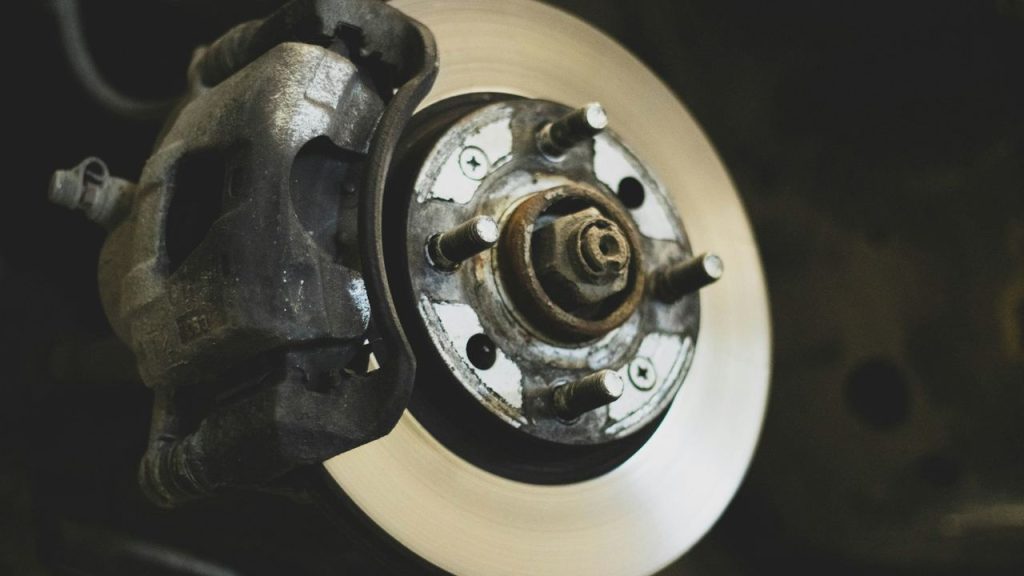
A West Michigan winter tests brakes in ways summer never does. The best brake pads for winter still stop well on a frozen morning, shrug off slush and survive months of road salt without the friction material lifting off a rusted backing plate.
This guide sticks to cold, wet and salt. For general pad choice, see our roundup of the best brake pads for daily driving.
Quick answer
What are the best brake pads for winter?
Look for pads that resist salt first: a galvanized or coated backing plate, coated hardware and good shims. NRS Galvanized and Bosch QuietCast suit most cars, Power Stop Z17 and Raybestos Element3 pair with coated rotors, and Bosch Blue or Power Stop Z36 suit heavier vehicles. Keep your car’s original friction type.
Our Quick Picks
Three lines that cover the main winter needs. Each link shows one common listing, so use Amazon's fit checker for your own car.

NRS Galvanized Brake Pads
Zinc-plated plates and hook retention built to stop rust jacking.

Power Stop Z17 Coated Rotor Kit
Matched pads, fully coated rotors and stainless hardware in one kit.

Power Stop Z36 Truck and Tow
Heavy-duty pads with a coated plate and hardware for loaded vehicles.
What Winter Does to Brake Pads
Winter attacks brakes in three ways, and the friction compound only answers one of them.
- Cold bite: on a frozen morning the rotor can carry a film of moisture or ice, so the first stop or two may feel weak. A gentle press early in the drive dries the surface.
- Slush and spray: water and grit sit between pad and rotor. Slots and chamfers on the pad face help clear it.
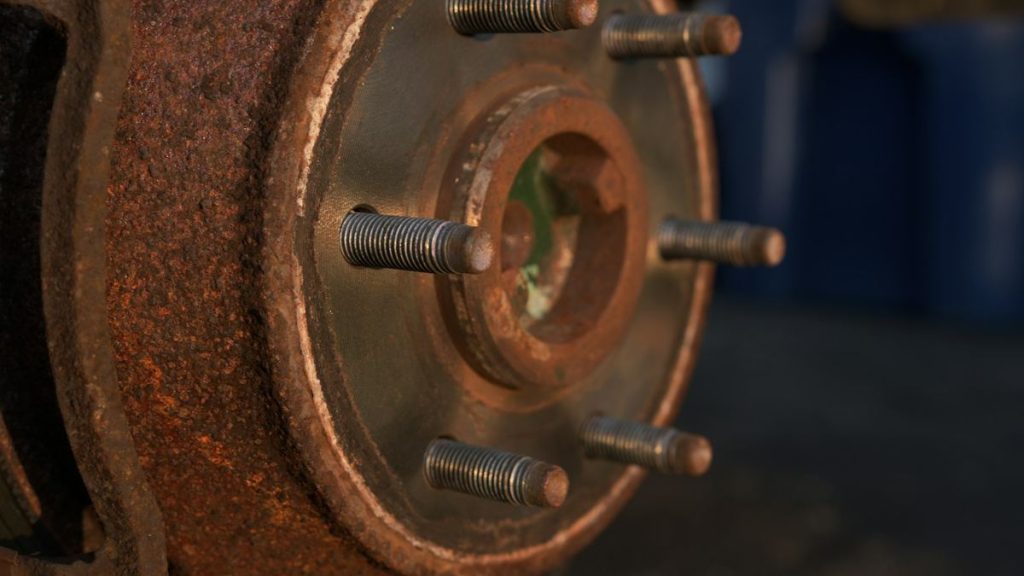
- Salt corrosion: brine creeps under the edge of the friction material. Rust grows there and pushes the material up, which is called rust jacking. Left alone, it cracks or separates from the plate (delamination).
Rust also builds in the caliper bracket where the pad ears slide. The pad binds, drags or stops retracting, and one pad wears far faster than its partner. That is why salt can cut pad life so sharply, as our guide to how long brake pads last in Michigan explains.
Best Brake Pads for Winter: Six Salt-Ready Picks
We chose these lines for winter traits the makers publish: protected backing plates, coated hardware and coated rotors. Brake pads are vehicle-specific, so each link goes to one common listing as an example. Part numbers vary by year, model and axle, so use Amazon’s fit checker before you buy.
1. NRS Galvanized Brake Pads: Galvanized Steel Plates with Mechanical Retention
- Galvanized steel backing plate and metal parts
- Friction held on by steel hooks, not glue
- Pre-attached shims and piston cushions
- Complete hardware kit included
NRS Galvanized pads take the most direct approach to road salt. Instead of painting the steel backing plate, NRS galvanizes it, and the listing says all of the set’s metallic components are galvanized steel. The friction material is held on by small steel hooks rather than adhesive alone, which the maker says eliminates edge lift, rust jacking and delamination. The hooks give the material a mechanical grip on the plate, so it does not rely on glue alone once salt reaches the edge.
That matters in a salt state, where pads often fail because the plate rusts under the friction material, not because the material wears out. Sets come with pre-attached shims, noise-cancelling piston cushions and a complete hardware kit. NRS offers semi-metallic and ceramic formulations, so you can stay with the friction type your car came with.
Part numbers vary by vehicle. The linked set, NS914, covers a range of Honda and Acura models, so use Amazon’s fit checker to find the right number for your car and axle. NRS coverage is narrower than the biggest brands, and a galvanized pad will still bind in a rusty caliper bracket, so clean the bracket and slide pins during the job.
View NRS Galvanized Brake Pads on Amazon
2. Bosch QuietCast Premium: Ceramic Brake Pads with Powder-Coated Backing Plate

- Powder-coated backing plate against rust
- Multilayer rubber-core shims
- Slots and chamfers on the pad face
- Hardware kit and synthetic lubricant
Bosch QuietCast Premium is a familiar replacement pad, and it earns a winter spot for its corrosion details. Bosch lists a powder-coated backing plate that prevents rust and corrosion, plus pre-attached multilayer rubber-core shims that it says improve strength and corrosion resistance. The pad face has slots and chamfers, which also help clear water and grit in slush.
Bosch’s own product page describes PTFE and rubber coated hardware that helps keep pads from binding in the caliper, a common winter problem when brackets scale up. The set covers one axle and includes a hardware kit where available and synthetic lubricant for the sliding contact points. The ceramic friction is aimed at quiet, low-dust stops. Pads that slide freely wear evenly, so the inner and outer pads are more likely to last about the same time.
Part numbers vary by vehicle. The linked set, BC1623, is a front set for the Mazda CX-5, so use Amazon’s fit checker to find the version for your car. Bosch also sells QuietCast in semi-metallic for cars that came with it. Powder coat protects only while it is intact, so a chipped plate edge can still let salt in.
View Bosch QuietCast Premium on Amazon
3. Power Stop Z17 Brake Kit: Ceramic Pads with Fully Coated Rotors
- Front and rear Z17 ceramic pads
- Fully coated rotors to resist rust
- Multi-layer rubberized shims
- Stainless steel installation hardware
If your rotors are rusty or near their limit anyway, a kit replaces both parts at once. The Power Stop Z17 kit pairs Z17 ceramic pads with rotors that carry a full GEOMET coating, which the listing says helps resist rust and corrosion. Power Stop describes the pads as having a powder-coated backing plate that resists rust.
Multi-layer rubberized shims keep the pads quiet, and stainless steel installation hardware comes in the box, along with high-temperature lubricant according to the maker. On a West Michigan car, the coating on the rotor hat, edges and cooling vanes is the useful part, because the coating on the braking surface wears off in normal use. Replacing both parts together also means the new pads bed in on a fresh, flat rotor surface instead of a rusted, uneven one.
Part numbers vary by vehicle. The linked kit, CRK7609, covers the front and rear of a 2016 to 2025 Mazda CX-5, and Power Stop sells front-only and rear-only kits too, so use Amazon’s fit checker. The pads are ceramic only. If your rotors are still in good shape, a pad-only set costs you fewer parts.
View Power Stop Z17 Coated Rotor Kit on Amazon
4. Raybestos Element3 EHT: Hybrid Brake Pads with Multi-Layer Shims

- Hybrid of ceramic and semi-metallic
- EHT formula for added stopping power
- Multi-layer noise-damping shims
- Application-specific formulations
Raybestos Element3 is a hybrid pad. The listing describes its EHT, or Enhanced Hybrid Technology, formulations as a blend of ceramic and semi-metallic materials, aimed at better pad wear and more stopping power during hard braking. Multi-layer shims are designed to keep it quiet across a wide range of temperatures, which suits a car that sees both frozen mornings and warm afternoons. Raybestos makes each formula for a specific application rather than one compound for all cars.
For winter, the stronger reason to choose Element3 is the matching rotor, which is sold separately. Raybestos describes its Element3 coated rotors as coated over the entire surface, including the cooling vanes, with a rust prevention finish. Coated vanes matter because the vanes are hard to clean and are where rust tends to build out of sight. Pairing the two gives a firmer bite and protected rotor vanes.
Part numbers vary by vehicle. The linked set, EHT1623H, is a front set for the 2013 to 2023 Mazda CX-5, so use Amazon’s fit checker to find yours. A hybrid pad can leave a little more dust than a pure ceramic. It suits drivers who want more initial bite on cold, wet roads than a soft ceramic gives.
View Raybestos Element3 on Amazon
5. Bosch Blue: Semi-Metallic Brake Pads with Rust-Inhibitive Plate Coating

- Platform-specific semi-metallic friction
- Rust-inhibitive coating on the backing plate
- OE-style multi-layer shim
- Hardware kit and synthetic lubricant
Bosch Blue is a semi-metallic pad line, which makes it a different choice from QuietCast rather than a repeat. Bosch formulates the friction material for each vehicle platform and says it is built for stopping power, reduced brake fade and long life. Semi-metallic compounds are generally known for a strong bite and good heat tolerance. That makes the line a natural fit for minivans, larger crossovers and cars that left the factory with semi-metallic pads.
The winter detail is on the back of the pad. Bosch applies a rust-inhibitive coating to the steel backing plate to prevent the rust and corrosion that lead to pad degradation and noise. An OE-style multi-layer shim damps noise, slots and chamfers are cut into the friction material, and the set includes a hardware kit and synthetic lubricant.
Part numbers vary by vehicle. The linked set, BE1089H, is a front set for models such as the 2007 to 2011 Honda CR-V and 2005 to 2010 Honda Odyssey, so use Amazon’s fit checker for your car. Semi-metallic pads usually bring more noise, dust and rotor wear than ceramic. Choose this line if your car came with semi-metallic pads or you want more bite.
View Bosch Blue Semi-Metallic on Amazon
6. Power Stop Z36 Truck and Tow: Carbon-Fiber Ceramic Pads with Hardware
- Carbon-fiber ceramic friction
- Built for trucks, SUVs and towing
- Powder-coated backing plate
- Installation hardware included
The Power Stop Z36 Truck and Tow line is built for pickups, large SUVs and 4x4s. It uses a carbon-fiber ceramic compound that Power Stop says increases stopping power over OE replacement pads while staying quiet. The listing points to towing, hauling, lifted trucks and hilly driving, where it aims to reduce brake fade. The friction compound is matched to the extra weight these vehicles carry.
Power Stop’s own product page lists a powder-coated backing plate along with stainless steel shims and hardware, which suits a truck that spends the winter on salted roads and sits in slush at job sites. Installation hardware comes with the pads. A heavy vehicle is also where the stronger bite of a truck compound helps most on a cold, wet morning. Stainless parts hold up better than plain steel clips in brine.
Part numbers vary by vehicle. The linked set, Z36-1363, is a front set for models such as the Chevrolet Silverado 1500, Tahoe and GMC Yukon, so use Amazon’s fit checker to confirm yours. Power Stop sells Z36 for many other trucks, including the Ford F-150. It is more pad than a compact car or small crossover needs.
View Power Stop Z36 Truck and Tow on Amazon
Ceramic, Semi-Metallic or Hybrid in Cold Weather
Ceramic suits most commuters year round. Semi-metallic or hybrid pads can make sense for a winter driver who wants a stronger first bite, drives a heavy SUV or truck, or tows through the season.
| Pad type | In cold and wet | Trade-offs | Winter fit |
|---|---|---|---|
| Ceramic | Smooth, consistent, quiet | Softer first bite for some drivers | Commuter cars and crossovers |
| Semi-metallic | Strong bite, handles heat and loads | More noise, dust and rotor wear | Trucks, heavy SUVs, towing |
| Hybrid | Firmer bite with less noise | Varies by brand | Mixed driving, drivers who want more bite |
If your car left the factory with semi-metallic pads, keep them. On an Audi or similar car, a new wear sensor usually goes in with the pads, or the Audi brake pad warning light can stay on.

Shims, Hardware and Rotor Rust After Sitting
A coated pad in a rusty bracket still sticks. Treat these as part of every winter pad job:
- Abutment clips: replace them, and clean scale off the bracket underneath.
- Slide pins: clean and lubricate them. A seized pin causes the classic sticking brake caliper symptoms of pulling and a hot wheel.
- Shims: keep any pre-attached shim in place and fit new ones where the set calls for them.
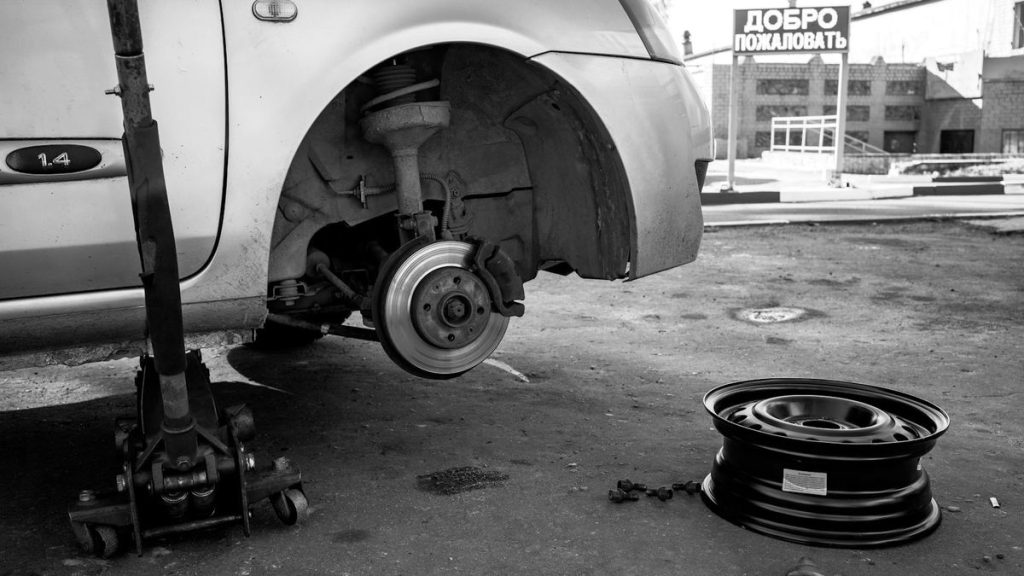
- Hub face: scrape rust off before a new rotor goes on, or the rotor can sit crooked and wobble.
Orange rust on the rotors after a wet night or a car wash is normal. It scrubs off within a few gentle stops. A car parked for weeks in the cold can leave a rusted pad imprint, and that patch may cause the pulsing described in our guide to why a car shakes when braking.
When Winter Brake Work Belongs in a Shop
Leave it to a professional if you notice grinding, a soft pedal, pulling to one side or a pad that has cracked away from its plate. Rusted lines are a separate risk covered in our guide to road salt and brake line rust.
Our brake repair in Grand Rapids covers foreign and domestic vehicles. Pair it with the rest of our Michigan winter car maintenance checklist before the first big storm.
More Buying Guides
Frequently Asked Questions
Are ceramic or semi-metallic brake pads better for winter?
Ceramic pads work well for most cars in winter and stay quiet. Semi-metallic pads give a stronger bite and handle heavy loads, so they suit trucks, towing and cars that came with them. Corrosion protection on the backing plate matters more than the compound in a salt state.
Why do my brakes feel weak on a cold morning?
A thin film of moisture or ice on the rotors can reduce grip for the first stop or two. Press the pedal gently early in the drive to dry them. If the pedal feels soft or sinks, have the brakes checked right away.
What is brake pad rust jacking?
Rust jacking happens when rust forms between the friction material and the steel backing plate. The rust expands and lifts the material, which can crack or separate from the plate. Galvanized or well coated backing plates help prevent it.
Are coated rotors worth it in a salt state?
Usually, yes. The coating on the braking surface wears off quickly, but the coating on the hat, edges and cooling vanes keeps protecting. That slows rust that can make rotors look bad, run hot or vibrate.
Want winter-ready brake pads fitted properly in Grand Rapids? Call 456 AutoFix at 616-279-3832, Monday to Friday 8am to 5pm, or book a brake inspection through our contact page.
Can’t make it during the day? Use our after-hours drop-off. We’re at 456 Carrier St NE in Creston.