As an Amazon Associate, 456 AutoFix earns from qualifying purchases. Product links below go to Amazon, where you can confirm the right part for your vehicle.
On a January night in Grand Rapids, a home charger has to deal with snow on the cable, ice around the connector and a battery that pulls more power than it did in July. The best EV charger for cold weather keeps a sealed enclosure, a cable that still bends at dawn and a schedule that warms the car while it is still plugged in.
Below: what winter changes, which features matter outdoors, and six Level 2 units whose listings speak to snow or ice. For the full field, our Level 2 EV charger buying guide compares the full field.
Quick answer
Which home EV charger copes with a Michigan winter?
Pick a sealed Level 2 unit with a cable its maker says stays flexible in the cold. The Grizzl-E Classic Avalanche Edition is IP67 and plugs into a NEMA 14-50 outlet. The Autel MaxiCharger is NEMA 4X rated against ice. For a hardwired 48 amp install, the Grizzl-E Ultimate uses a cast aluminum case.
Our Quick Picks
Three quick picks: a sealed plug-in unit, a plug-in with a cold-flexible cable and a hardwired 48 amp station. All six are reviewed below.

Grizzl-E Classic Avalanche 40A Charger
A simple, sealed charger the listing calls suitable for any weather.

Autel MaxiCharger 40A Plug-In Charger
A smart charger whose cable is designed to stay flexible no matter the cold.

Grizzl-E Ultimate 48A Hardwired Charger
A cast aluminum station the listing says is built for the harshest weather.
What a Michigan Winter Does to Home EV Charging
Cold does more harm to driving range than to the charger itself. The government’s fuel economy in cold weather page reports that at 20°F an EV’s efficiency can fall roughly 39 percent in mixed driving and its range about 41 percent, with around two-thirds of that extra energy spent heating the cabin.
You use more energy per mile, so refills take longer, and a cold pack may accept charge slowly until its heater warms it. The same page notes that preheating the cabin while the car is still on the charger can extend range, which is why a Level 2 unit with scheduling earns its place in a snowy driveway.
Plug-in hybrids follow the same pattern. Our car battery for hybrids guide covers the 12 volt battery that wakes the system on a frozen morning.
Cold-Weather Features That Separate One Charger From Another
Nearly every Level 2 listing says “indoor/outdoor”. These details show how a charger will behave when snow drifts against the garage wall.
- Enclosure rating: NEMA 4 or 4X and IP66 or IP67 mean the case is sealed against hose-directed water and dust. NEMA 4 and 4X also cover damage from ice forming on the outside, and 4X adds corrosion resistance.
- Cable jacket: a cable that turns stiff at 5°F is hard to coil; look for “cold-resistant” or “stays flexible” in the listing.
- Holster and connector: a holster that points the plug downward keeps meltwater from settling in the pins and freezing.
- Plug-in or hardwired: a NEMA 14-50 model is easy to move, but an outdoor receptacle needs an in-use cover and GFCI protection; hardwiring avoids the outlet entirely.
- Scheduling: timed charging finishes just before you leave, so the car preconditions on grid power.
Best EV Charger for Cold Weather: Six Chargers Reviewed
Our best EV charger for cold weather list splits between plug-in NEMA 14-50 models and hardwired 48 amp stations. Every rating and cold-weather claim is as the listing states.
1. Grizzl-E Classic Avalanche Edition: 40A Level 2 Charger with IP67 Enclosure and NEMA 14-50 Plug
- Up to 40 amps on a 50 amp breaker
- IP67 water resistant, fire resistant case
- Built-in GFCI and over temperature protection
- 24 ft cable, NEMA 14-50 plug
The Grizzl-E Classic Avalanche Edition is a Level 2 charging station with no app, no Wi-Fi and few parts to fail when the temperature drops. It plugs into a NEMA 14-50 receptacle, carries a 24 foot cable, and the listing describes it as heavy duty and suitable for any weather. It works with EVs and plug-in hybrids sold in North America that use the J1772 connector.
The enclosure is rated IP67 for water resistance and listed as fire resistant. Protection covers over current, over and under voltage, ground fault, missing diode and over temperature, and a GFCI is built in. Output is set to match the breaker: 40 amps on a 50 amp circuit, 32 on a 40, 24 on a 30 and 16 on a 20. The listing puts the charge rate at 28 to 30 miles of range per hour at 40 amps.
That simplicity suits an outside garage wall or a post beside the driveway, where an app-based unit might lose its Wi-Fi signal in a storm. Power outage recovery restarts charging on its own after the lights come back. The trade-off is control: there is no scheduling, so preconditioning has to be set from the car’s own app.
View Grizzl-E Classic Avalanche 40A Charger on Amazon
2. Autel MaxiCharger AC Home: 40A Plug-In EV Charger with NEMA 4X Case and Cold-Flexible 25 ft Cable
- Adjustable 16, 24, 32 or 40 amps
- NEMA 4X rated against ice formation
- 25 ft cable made to stay flexible in cold
- App scheduling and optional RFID start
Autel’s MaxiCharger AC Home in its 40 amp plug-in form connects to an existing NEMA 14-50 receptacle and can be set to 16, 24, 32 or 40 amps. The listing says the updated 25 foot charging cable is designed to remain flexible no matter the cold, which is the detail that matters most when you are coiling it at 7am in January. A 2.63 foot power cord gives some leeway in where the outlet sits.
The case is NEMA 4X rated, and the listing spells out what that covers: windblown dust and rain, splashing and hose-directed water, and damage from external ice formation. Through the Autel Charger app you can set start and stop times to catch off-peak utility rates, and an optional RFID card can block unauthorized use in a shared driveway. The listing quotes about 40 miles of range per hour of charging.
Scheduling is useful in winter because you can time the session to end close to departure while the car warms its battery on grid power. The plug-in design is easy to take down if you move. It still depends on a properly installed 14-50 outlet, and the app needs a steady Wi-Fi signal at the mounting spot.
View Autel MaxiCharger 40A Plug-In Charger on Amazon
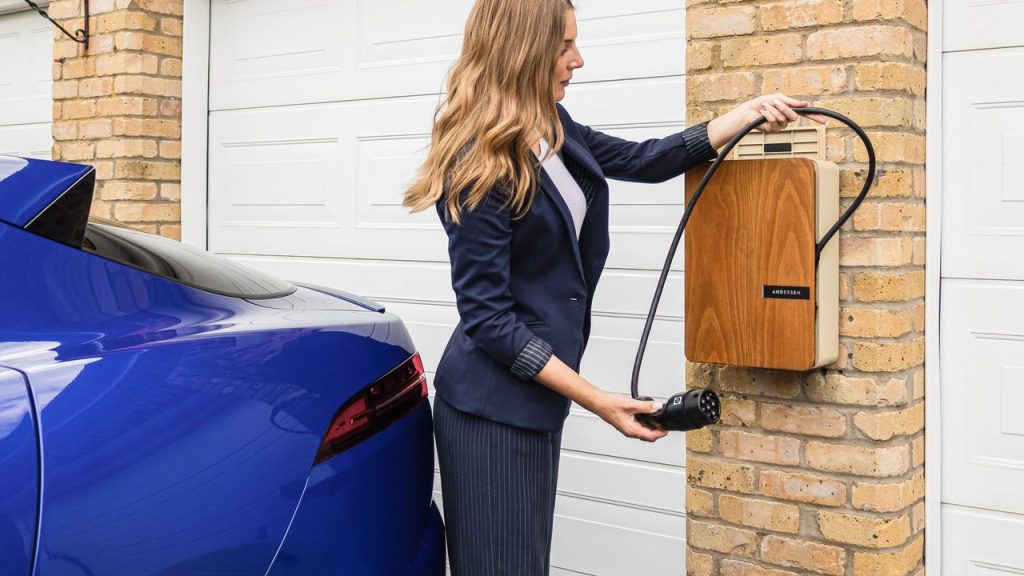
3. ChargePoint HomeFlex: Smart Level 2 J1772 Charger with NEMA 14-50 Plug and Cold-Resistant Cable

- Plugs into a 14-50 outlet on a 40A or 50A circuit
- Cold-resistant charging cable
- UL certified for indoor or outdoor install
- App reminders and smart home links
The ChargePoint HomeFlex in its NEMA 14-50 version plugs into a 240 volt receptacle on a 40 or 50 amp circuit and charges through a J1772 connector. The listing says it is UL certified, can be installed indoors or outdoors by an electrician, and includes a cold-resistant cable. ChargePoint quotes up to 45 miles of range per hour, depending on the vehicle.
Most of its appeal is in the app. The ChargePoint Mobile App lets you control the charger, set reminders, link to smart home devices, review charging data and find public stations on the same account you use on the road. Teslas need an adapter to use the J1772 plug, as the listing notes.
For a driver who parks in an unheated attached garage, the cold-resistant cable and app scheduling cover the two winter needs: a lead that coils without a fight and a session timed to end near departure. Having home and public charging in one app is handy on long winter trips when range drops. If you prefer a unit that runs entirely offline, a simpler charger may suit you better, since much of this one’s value depends on the app and a working Wi-Fi connection.
View ChargePoint HomeFlex NEMA 14-50 Charger on Amazon
4. Grizzl-E Ultimate 48A: 11.5 kW Hardwired Level 2 Charger with UL Type 4 Aluminum Enclosure
- 48 amps, 11.5 kW output
- UL Type 4 cast aluminum enclosure
- Hardwire kit and mounting bracket included
- Wi-Fi app, charges with or without a connection
The Grizzl-E Ultimate 48A is a hardwire-only Level 2 station that delivers up to 48 amps, or 11.5 kW. It is made in Canada, and the listing describes a heavy-duty, UL Type 4 rated cast aluminum enclosure and a durable 25 foot J1772 cable meant for the harshest weather conditions. A mounting bracket and a hardwire kit with terminal lugs and heat shrink come in the box.
It is a smart charger running Grizzl-E Connect software, with real-time monitoring, schedules, energy statistics, updates and diagnostics. The listing notes that charging works with or without an online connection, so a dropped signal during a storm does not stop the session, and an external antenna helps reach a weak router. Load balancing can share power between more than one charger, either equally or with a priority vehicle. The unit is UL and Energy Star certified.
Because it is hardwired, there is no outdoor receptacle to collect moisture or trip a GFCI on a wet night. A 48 amp unit needs a 60 amp dedicated circuit, so plan on an electrician and possibly a panel check before buying. If your panel can only spare a 50 amp breaker, a 40 amp plug-in model may make more sense.
View Grizzl-E Ultimate 48A Hardwired Charger on Amazon
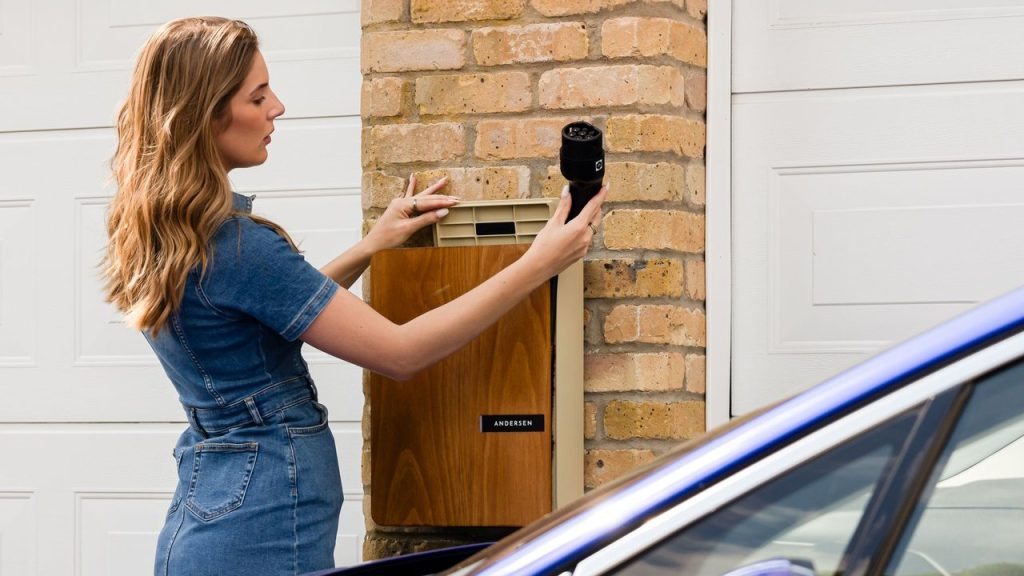
5. Wallbox Pulsar Plus: 48A Hardwired J1772 Charger with Wi-Fi, Bluetooth and Solar Compatibility

- Up to 11.5 kW with adjustable current
- Hardwired install by an electrician
- Wi-Fi and Bluetooth app control
- Weather-resistant, UL and Energy Star certified
The Wallbox Pulsar Plus 48A is a compact hardwired Level 2 charger with a J1772 connector and a 25 foot cable. The listing quotes up to 45 miles of range per hour depending on the vehicle, up to 11.5 kW of output and adjustable current, so an electrician can set it to match the circuit. A 40 amp plug-in version is sold separately.
Wi-Fi and Bluetooth both connect it to the Wallbox app, which lets you monitor, control and schedule each session. Bluetooth is useful in a detached or block-wall garage where the home network barely reaches. The listing describes weather-resistant components for indoor and outdoor use, UL and Energy Star certification, final assembly in the US and compatibility with home solar energy.
In winter the scheduling is the main draw: set the session to finish before you leave so the car can warm itself without drawing on the battery. The small housing suits a tight attached garage where a bulky metal box would crowd the wall. Its listing does not quote a specific enclosure rating or operating temperature, so for a fully exposed outdoor post a unit with a stated NEMA 4 or IP67 rating is the safer choice. Teslas need an adapter.
View Wallbox Pulsar Plus 48A Hardwired Charger on Amazon
6. Lectron Nexus: 40A NEMA 14-50 Wall Charger with IP66 Rating and 23 ft Cable

- 40 amps, 9.6 kW at 240 volts
- IP66 for rain, snow, heat and dust
- 23 ft cable with charger holster
- UL 2594 and related safety listings, ETL
The Lectron Nexus is a wall-mounted Level 2 station that plugs into a NEMA 14-50 outlet and delivers up to 40 amps at 240 volts, or 9.6 kW. The listing puts that at up to 38 miles of range per hour for J1772 vehicles, with Teslas supported through a NACS adapter. A 23 foot cable and a charger holster are included.
Lectron lists the unit as IP66 weatherproof for indoor and outdoor use in rain, snow, heat and dust. Safety listings include UL 2594, UL 2231, UL 2251 and UL 817 through ETL, plus protection against overheating, overcurrent, voltage faults and ground faults. It also carries Energy Star and FCC certification.
The included holster is worth using in winter: hang the connector face down so snowmelt drains away from the pins instead of freezing in them. A 23 foot cable reaches the far side of most cars in a single garage bay. The listing says no electrician is required when a 14-50 outlet already exists, but the outlet itself must be installed by a licensed electrician on a dedicated circuit. The listing does not mention scheduling or an app, so plan to set charging times from your car if you want to precondition before leaving.
View Lectron Nexus 40A Home Charger on Amazon
Matching a Charger to Where the Car Sleeps
| Where you park | Install style | Listed protection | Pick |
|---|---|---|---|
| Driveway, charger on an outside wall | NEMA 14-50 plug-in | IP67, built-in GFCI | Grizzl-E Classic Avalanche |
| Carport or post exposed to ice | NEMA 14-50 plug-in | NEMA 4X, cold-flexible cable | Autel MaxiCharger 40A |
| Unheated garage, may move house later | NEMA 14-50 plug-in | Cold-resistant cable | ChargePoint HomeFlex or Lectron Nexus |
| New 60 amp circuit, outdoor wall | Hardwired, 48 amp | UL Type 4 aluminum case | Grizzl-E Ultimate 48A |
| Attached garage, solar at home | Hardwired, 48 amp | Weather-resistant build | Wallbox Pulsar Plus 48A |
A 48 amp charger needs a 60 amp circuit, since continuous loads are sized at 125 percent, while a 40 amp unit sits on a 50 amp breaker. If your panel is near its limit, a lower setting still refills most cars overnight.

Winter Charging Habits for West Michigan Driveways
Set the car’s departure time so the battery and cabin warm on grid power, then unplug and drive. Holster the connector face down, and brush snow off the port door before opening it.
Lake-effect snow and plow berms bury cables left across a driveway, so coil the lead on a hook between sessions, away from the salty slush that drips off the tires.

A household inverter in the car is no substitute for a wall charger; it suits laptops and small tools, and our power inverter for car guide explains its real limits.
Installation, Safety and When to Bring the Car In
Any 240 volt charger, plug-in or hardwired, belongs on a dedicated circuit installed by a licensed electrician to local code, with a permit where the city requires one. Plug-in models need a heavy-duty 14-50 receptacle, with a weatherproof in-use cover outdoors.

Some winter trouble is in the car, not the wall. If the charger faults with only one vehicle, the port door keeps freezing shut, or the 12 volt battery goes flat between sessions, our car electrical repair in Grand Rapids service covers body and engine electronics, including tracing a drain that empties the battery overnight.
More Buying Guides
Frequently Asked Questions
Do EV chargers work in cold weather?
Yes. A Level 2 charger rated for outdoor use keeps delivering power in winter, but the car may draw less at first while it heats its battery, and range per charge drops. Scheduling the session to end near departure time helps the car start its drive warm.
Is it safe to mount an EV charger outside in snow?
It is when the unit carries an outdoor rating such as NEMA 4, NEMA 4X, IP66 or IP67 and an electrician installs it to local code. Mount it above the usual snow line, use a weatherproof cover on any outdoor receptacle and keep the connector holstered between sessions.
Should a cold-climate charger be plug-in or hardwired?
Both work. A NEMA 14-50 model is easier to move or replace, while hardwiring removes the outdoor receptacle, a common spot for moisture and GFCI trips, and allows 48 amp units on a 60 amp circuit.
Why does my EV charge slower in the cold?
A cold battery limits how fast it can accept energy, so the car spends part of the session warming the pack. Charging in a garage, starting soon after a drive while the battery is still warm, or setting a departure schedule all reduce the slowdown.
Is the car throwing a charging fault every frosty morning, or is the 12 volt battery dying while the charger looks fine? Talk it through with us at 616-279-3832 any weekday between 8am and 5pm, or describe the problem on our contact page.
If the car can’t spare a workday, bring it to 456 Carrier St NE after we close and use the after-hours drop-off; a note with the charger brand and the fault message helps us start on the right circuit.