
As an Amazon Associate, 456 AutoFix earns from qualifying purchases. Product links below go to Amazon, where you can confirm the right part for your vehicle.
Trying to file a bracket or press a seal while the part slides across the bench is how knuckles get skinned. The best bench vise for you depends on what you clamp most often: brake calipers and axle shafts, plumbing pipe, or small hobby parts. Size, iron grade and how the vise mounts matter more than the paint color or the brand on the casting.
Below we cover sizing and mount types, then review six vises from a small clamp-on unit to a full 6-inch shop model, with specs as each Amazon listing states them.
Quick answer
Which bench vise should you buy for a home garage?
For most garages, a bolt-down vise with 5 to 6 inch jaws, a ductile iron body and a locking swivel base covers car parts, pipe and general repairs. The Wilton WVA6 is a strong all-rounder, the VEVOR 6-inch keeps the budget low, and the WORKPRO clamp-on suits small benches.
Our Quick Picks
Three vises that cover the main garage needs: a full-size all-rounder, a budget 6-inch model and a clamp-on unit for small benches.

Wilton WVA6 Apprentice 6-Inch Bench Vise
Full-size bench and pipe vise with an enclosed spindle.

VEVOR 6-Inch Swivel Bench Vise with Anvil
Full-size vise with mounting bolts and soft jaw pads in the box.

WORKPRO Dual Jaws Clamp-On Table Vise
Portable vise that clamps to a table edge with no drilling.
Best Bench Vise Size: Jaw Width, Opening and Throat
Vise listings lead with jaw width, but three numbers decide what the tool can actually hold.
- Jaw width: how wide the gripping faces are. Four inches handles hobby work, 5 to 6 inches covers most garage jobs, and 8 inches or more is for heavy fabrication.
- Jaw opening: the widest gap between the jaws. A caliper bracket or a small hub needs more opening than a bolt or a length of rod.
- Throat depth: the distance from the top of the jaws down to the slide. A deeper throat lets you clamp taller parts without them perching on the edge.
- Iron grade: listings give a PSI rating for the casting. Ductile iron in the 60,000 PSI range and up tolerates shock better than 30,000 PSI gray iron, which suits steady clamping more than heavy hammering.
If you are torn between two sizes, go one size up. A 6-inch vise does small jobs fine, but a 4-inch model cannot stretch to hold a large part.
Bench Vise or Clamp, and How a Leg Vise Differs
A bar clamp holds work flat to the bench top. A vise holds the part off the surface and lets you turn it, which matters when you file, cut, tap threads or work around a round part. For anything you plan to strike or twist, a mounted vise is the safer tool.
A bench top vise clamp, the clamp-on type, grips the edge of a table with a screw and needs no holes. It suits a folding bench but holds far less force than a bolted vise. A leg vise, also called a post vise, has a long leg that runs to the floor so hammer blows travel into the ground; it is a blacksmithing tool and rarely suits a car-repair bench.
Best Bench Vise Picks in Detail
Each best bench vise pick below is listed from the most capable all-rounder to the lightest option, with jaw sizes and iron ratings taken from its listing.
1. Wilton WVA6 Apprentice: 6-Inch Ductile Iron Bench Vise with Pipe Jaws
- 6 in jaw width, 6 in opening, 3-3/4 in throat
- 72,000 PSI ductile iron, 8,300 lb clamping force
- Pipe jaws for 1/4 in to 3 in round stock
- 360 degree swivel with two lockdowns, lifetime warranty
The Wilton WVA6 is a full-size bench vise from Wilton’s Apprentice line, built for garages, training benches and trade work. Its 6-inch jaws open to 6 inches, and the 3-3/4-inch throat leaves room for brackets, caliper bodies and small assemblies. Built-in pipe jaws below the main jaws hold round stock from 1/4 inch to 3 inches in diameter, so one tool covers flat and round work.
The body is cast from 72,000 PSI ductile iron, and Wilton lists up to 8,300 pounds of clamping force. A bullet-style housing covers the spindle to keep grit out, a machined slide bar steadies the front jaw, and rubber guards cover pinch points. The base swivels a full 360 degrees and locks with two hand lockdowns, and a flat anvil behind the jaws handles light shaping.
It bolts down through four 0.51-inch holes and is not a clamp-on design, so plan for a solid bench and your own bolts. Wilton warns against using it as a press or putting a pipe on the handle, which is designed to bend first. The lifetime warranty and replaceable jaws, spindle and handle make it a long-term buy for anyone who expects to use a vise every week.
View Wilton WVA6 Apprentice 6-Inch Bench Vise on Amazon
2. Yost 750-DI: 5-Inch Multi-Jaw Rotating Bench and Pipe Vise

- 5 in jaw width, 5 in opening, 4 in throat
- 65,000 PSI ductile iron casting
- Three jaw sets: serrated, pipe and V-jaws
- Head rotates 360 degrees with 12 lock positions
The Yost 750-DI is a 5-inch vise with a twist: the whole head rotates, so you can flip from the standard bench jaws to a second set of pipe jaws without unclamping and re-mounting. That makes it a good fit for anyone who switches between flat brackets, tubing and round bar in the same afternoon.
Yost casts the body from 65,000 PSI ductile iron and includes three sets of replaceable hardened steel jaws: parallel serrated jaws, pipe jaws and V-jaws for round stock. The listed jaw opening is 5 inches with a 4-inch throat, and pipe capacity runs from 1/8 inch to 3.5 inches. The base rotates 360 degrees on a V-grooved swivel with two lockdowns, while the head locks at every 30 degrees for 12 positions, and an anvil surface sits behind the jaws.
The rotating design adds parts that a simple vise does not have, so keep the pivot clean and oiled in a dusty or damp shop. Yost lists a 3-year limited warranty. If all you ever clamp is flat stock, a plain bench vise is simpler, but for plumbing, exhaust tubing or awkward castings the extra jaw sets earn their keep.
View Yost 750-DI Multi-Jaw Rotating Bench Vise on Amazon

3. VEVOR 6-Inch Bench Vise: 60,000 PSI Ductile Iron with 360 Degree Swivel Base
- 6 in jaw width, 5.9 in opening, 3.5 in throat
- 60,000 PSI ductile iron, 4,496 lb clamping force
- Mounting nuts, screws and magnetic jaw pads included
- Pipe jaws for 0.6 in to 2.9 in round stock
The VEVOR 6-inch bench vise gives you full-size capacity without stepping up to a premium brand. The jaws are 6 inches wide and open to 5.9 inches, with a 3.5-inch throat, which is enough for most brackets, hubs and small engine parts that land on a home bench.
The body is 60,000 PSI ductile iron with a powder-coat finish, and the listing rates the clamping force at 20 kN, or 4,496 pounds. The serrated jaw plates are replaceable carbon steel, and lower pipe jaws hold tube and pipe from 0.6 to 2.9 inches. The base swivels 360 degrees and locks in any direction, and a 2.9 by 3 inch anvil sits behind the fixed jaw for light tapping.
One practical plus is the box contents: VEVOR includes mounting nuts and screws plus a set of magnetic jaw pads, so you can bolt it down and protect finished parts on day one. Check that your bench top is thick enough for the supplied bolts. It suits a first serious vise for a garage where it will see steady, moderate use rather than daily heavy hammering.
View VEVOR 6-Inch Swivel Bench Vise with Anvil on Amazon
4. IRWIN 4935505: 5-Inch Multi-Purpose Bench Vise with Rotating Pipe Jaws

- 5 in jaw width
- Rotating pipe jaws
- Fused steel handle
- 360 degree swivel base with anvil
The IRWIN 4935505 is a 5-inch multi-purpose bench vise for a home garage that sees a little of everything: a bracket one weekend, a length of conduit the next, and a lawn mower blade before spring. Its middle size fits a standard workbench without taking over the whole corner.
The listing calls out rotating pipe jaws, so round stock and tubing can be gripped without a separate pipe vise. The fused steel handle makes adjustment quick, a swivel base turns a full 360 degrees to put the work where you need it, and an anvil area sits behind the jaws for light forming. IRWIN’s listing does not state an opening, throat depth or iron grade, so check the product details page if you need a particular capacity.
That missing detail is the main trade-off. If you know you need a deep throat or a published clamping force, the Wilton or Yost picks give you those numbers. For general repairs where 5-inch jaws are enough, the IRWIN is a straightforward choice from a brand many people already have in the toolbox. Bolt it down firmly and keep the screw oiled.
View IRWIN 4935505 Multi-Purpose 5-Inch Bench Vise on Amazon

5. Yost LV-4 Homeowner’s Vise: 4.5-Inch Jaws with 240 Degree Swivel Base

- 4.5 in jaw width, 3 in opening, 2.6 in throat
- 30,000 PSI gray iron casting
- 240 degree swivel head
- 3.5 x 2.7 in anvil surface
The Yost LV-4 is a compact homeowner’s vise for people who need something to hold small parts steady more than they need raw capacity. The 4.5-inch jaws open to 3 inches with a 2.6-inch throat, which handles bolts, small brackets, hose fittings and household items like a broken chair rung or a bike part.
Yost casts it from 30,000 PSI gray iron and adds a 3.5 by 2.7 inch anvil surface behind the jaws. The head swivels through 240 degrees, and the listed pipe capacity runs from about 0.6 to 1.85 inches in diameter. Mounting hardware is not included, so pick up bolts, washers and lock nuts that match your bench thickness before it arrives.
Gray iron is fine for steady clamping but less tolerant of hard hammer blows than ductile iron, so keep heavy striking for a larger vise or a real anvil. The small footprint suits a narrow bench, a pegboard wall station or an apartment storage unit. If you expect to clamp caliper brackets or hubs, choose a 5 or 6-inch model instead, since the 3-inch opening will run out quickly.
View Yost LV-4 Homeowner's 4.5-Inch Bench Vise on Amazon
6. WORKPRO Dual Jaws Table Vise: 2.5 and 1.5-Inch Clamp-On Vise with 360 Degree Swivel
- 2.5 in serrated and 1.5 in smooth jaws
- Clamp-on or bolt-down mounting
- Head and base swivel 360 degrees
- 7.7 lb, up to 660 lb clamping force
The WORKPRO Dual Jaws table vise is a true bench top vise clamp: it grips the edge of a table with a screw clamp, so you can use it on a folding work table or a shared bench without drilling holes. It can also be bolted down with 1/4-20 bolts, which are not included.
There are two sets of jaws on one head. The 2.5-inch serrated jaws grip pipe, tube and metal parts, while the 1.5-inch smooth jaws hold softer or finished pieces with less marking. Both the base and the head swivel 360 degrees, so you can angle a small part for filing, soldering or drilling. The body is ductile iron with carbon steel jaws hardened to 52 to 58 HRC, and the listing rates clamping force at up to 660 pounds.
At 7.7 pounds, it moves easily between the garage, the basement and a job site. That light weight is also its limit: it is meant for small parts and hobby work, not for heavy hammering or leaning on a long wrench. Treat it as a second vise next to a bolted 5 or 6-inch model, or as the only vise in a small workspace.
View WORKPRO Dual Jaws Clamp-On Table Vise on Amazon
Choosing Among the Six Vises at a Glance
| Vise | Listed jaw / opening | Mounting | Suits |
|---|---|---|---|
| Wilton WVA6 | 6 in / 6 in | Bolt-down | General garage and car parts |
| Yost 750-DI | 5 in / 5 in | Bolt-down | Pipe, round stock, odd angles |
| VEVOR 6-inch | 6 in / 5.9 in | Bolt-down, hardware included | First full-size vise on a budget |
| IRWIN 4935505 | 5 in | Bolt-down | Mixed home repairs |
| Yost LV-4 | 4.5 in / 3 in | Bolt-down | Light hobby and household work |
| WORKPRO Dual Jaws | 2.5 in and 1.5 in | Clamp-on or bolt-down | Small parts, portable use |
Brand matters less than the specs in that table. Wilton, Yost and IRWIN are long-established tool brands, and Wilton lists replacement jaws and other parts for its vises. VEVOR and WORKPRO compete more on included hardware and price. Pick the size and mount first, then compare brands within that group.

Mounting, Stands and Care in a Michigan Garage
The Canadian Centre for Occupational Health and Safety’s vise safety fact sheet advises bolting through every hole in the base with lock washers, and setting the fixed jaw just past the bench edge so long work clears it. Wear safety glasses whenever you strike, grind or saw on clamped work.
The best bench vise stand is often just a heavy bench. If you shop for a dedicated pedestal, look for a wide base you can bolt to the floor; a tall, narrow stand tips when you lean on a breaker bar. Keep your rolling shop creeper clear of the handle’s swing.
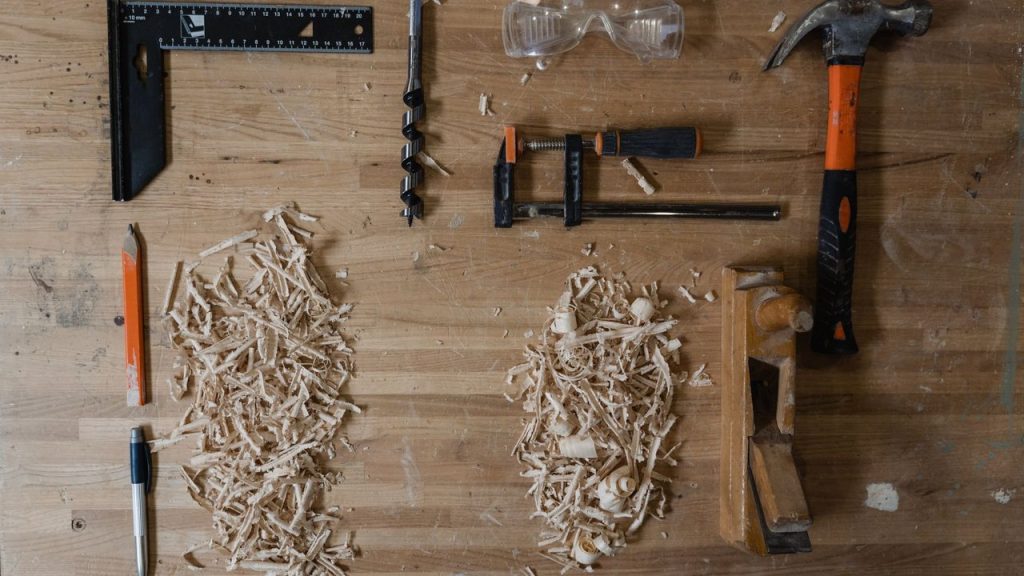
Unheated West Michigan garages swing from humid summers to freezing nights, and a bare steel spindle rusts fast in that cycle. Wipe off grit, put a few drops of oil on the screw a couple of times a season, and keep salt-crusted parts off the jaws until you rinse them. Never slip a pipe over the handle for extra force; that bends the handle and can crack the casting.
A vise pairs naturally with a bench grinder for sharpening and wire-wheel cleanup. Mount the two at opposite ends of the bench so sparks stay off the jaws.
When the Part on the Bench Needs a Mechanic
A good vise and a complete mechanic tool set take care of a lot of home repair work. Some jobs still need a press, an alignment rack or diagnostic equipment.
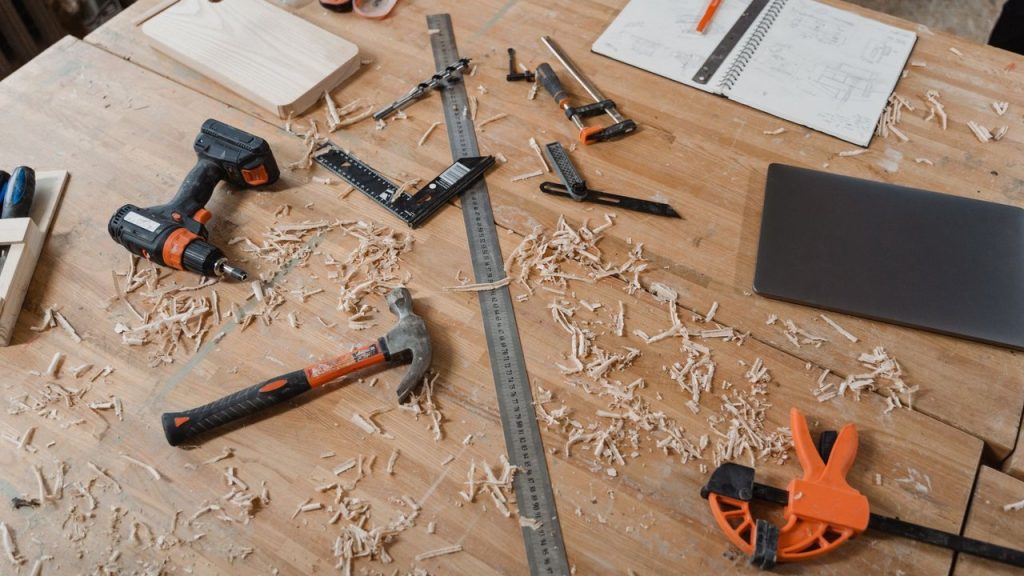
Pressing wheel bearings, rebuilding suspension parts or anything that holds a spring under load belongs on proper shop equipment. Our suspension repair team in Grand Rapids handles those, and our factory scheduled maintenance service covers the routine items.
More Buying Guides
Frequently Asked Questions
What size bench vise do I need for car work?
A vise with 5 to 6 inch jaws and at least a 5 inch opening handles most brackets, calipers and small suspension parts. Go larger only if you regularly clamp heavy fabrication work.
Should I get a bench vise or a clamp?
Use a clamp to hold flat work against the bench top. Choose a vise when you need to file, cut, tap or twist a part, or hold round stock, because it grips the part securely off the surface.
Is a bench vise or a leg vise better?
For a garage that works on cars, a bench vise is the practical choice. A leg vise sends hammer blows into the floor and suits blacksmithing, but it takes more floor space and is built for a different kind of work.
How do I keep a bench vise from marking parts?
Fit soft jaw pads made of aluminum, rubber or plastic over the serrated jaws. The VEVOR listed here includes magnetic jaw pads, and pads for other models are sold separately.
Found a cracked bushing or a seized ball joint once the part was finally clamped in the vise? Call 456 AutoFix at 616-279-3832 any weekday from 8am to 5pm, or send us the details through our contact page and we will look at the whole assembly on the car.
Need a seized part pressed out instead of fighting it in the vise? Drop the vehicle at 456 Carrier St NE in Grand Rapids and let us handle that job. If your workday overlaps our hours, bring the car by after closing through our after-hours drop-off and leave a note about what you found on the bench.