As an Amazon Associate, 456 AutoFix earns from qualifying purchases. Product links below go to Amazon, where you can confirm the right part for your vehicle.
A seized sway bar link, a caliper bracket that needs a wire wheel, a brake line waiting for a double flare. The best bench vise for automotive work clamps hard, takes hammer blows and holds greasy round parts, so it is heavier and deeper than a hobby vise.
Below we cover jaw width, throat depth and body material, then review five bolt-down vises and one that rides in a trailer hitch. Specs come from the maker or the Amazon listing. Our general bench vise guide covers lighter all-purpose models.
Quick answer
What vise should a home mechanic bolt to the bench?
Start with a 6-inch ductile iron vise that has a throat of about 4 inches, pipe jaws and a locking swivel base. The Wilton 746A Mechanics vise fits that brief closely. The Forward 1760 gives a 7-inch opening on a lighter frame, and an 8-inch Wilton Tradesman suits axle shafts and fabrication.
Our Quick Picks
Three vises that cover most garage repair work: a classic 6-inch mechanics vise, a lighter 6-inch model with a 7-inch opening, and a receiver-mount vise for work at the truck. All six are reviewed below.

Wilton 746A Mechanics Vise
A deep-throat 6-inch vise with a sealed spindle.
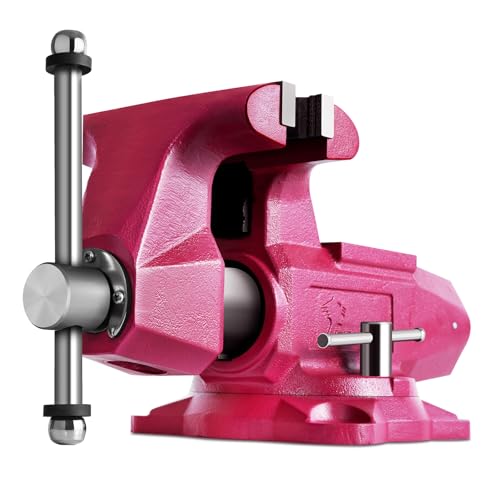
Forward 1760 6-Inch Vise
A deep-opening ductile vise at half the weight.

VEVOR Truck Hitch Vise
A receiver-mount vise for work at the truck.
Sizing a Vise for Car Parts, Not Birdhouses
Three numbers on a vise listing decide whether it can handle car parts. Look at them before the color or the anvil size.
- Jaw width: 6 inches holds most control arms, calipers and brackets. Eight inches adds grip on axle shafts and welded tube.
- Jaw opening: at least 5-1/2 inches, so a rotor edge or steering knuckle fits.
- Throat depth: jaw top to slide. Around 4 inches lets odd-shaped parts sit low and square.
- Pipe jaws: curved teeth below the main jaws grip exhaust pipe and tie rods without spinning them.
Ductile Iron, Cast Steel and a Bench That Won’t Walk
Car work hammers on a vise. Gray cast iron clamps well but can crack under impact, while ductile iron, rated in PSI, bends slightly before it breaks, and austempered ductile iron or cast steel goes further. Wilton lists the casting for each model on its vise line page, which is a useful way to compare models side by side.
An enclosed spindle keeps grinding grit and brake dust out of the screw. Pair the vise with a bench grinder for cleaning up bolts and brackets, and mount the two far enough apart that grinder sparks do not land in the vise screw.
Through-bolt the vise with grade 5 or grade 8 bolts and a backing plate, and set the fixed jaw just past the bench edge so axle shafts can hang straight down.
Best Bench Vise for Automotive Work: Six Picks Reviewed
Five of the six below bolt to a bench and carry pipe jaws and a swivel base, and the sixth mounts in a hitch receiver. All were chosen for the clamping and hammering that brake, suspension and exhaust work brings. Dimensions and materials are as the listing or maker states.
1. Wilton 746A Mechanics Bench Vise: 6 in Jaw, 4-1/8 in Throat and Enclosed Spindle
- 6 in jaws, 5-3/4 in opening, 4-1/8 in throat
- Replaceable pipe jaws for 1/4 to 3-1/2 in pipe
- Enclosed spindle with sealed-in grease
- 360 degree swivel with double lockdowns
Wilton sells the 746A as a mechanics vise, and its listing names automotive, maintenance and fabrication work as the jobs it was made for. The 6-inch hardened steel top jaws open to 5-3/4 inches, and the 4-1/8-inch throat is deeper than many vises of the same width. That extra depth lets a caliper bracket, steering knuckle or hub sit low and square in the jaws.
Below the main jaws sit replaceable pipe jaws that hold round stock from 1/4 to 3-1/2 inches, which covers exhaust tubing, tie rods and most driveshaft sections. The spindle and nut are fully enclosed with the lubrication sealed in, so grinding grit and brake dust stay out of the screw. The base turns a full 360 degrees and locks with two lockdowns, and a large anvil handles light forming.
The body is a 30,000 PSI iron casting with a powder-coat finish, and the whole vise weighs 69.5 pounds, so plan on a solid bench and four strong bolts, which are not included. Wilton backs it with a lifetime warranty against manufacturing defects and sells replacement jaw inserts. The maker states it is not a woodworking or precision machining vise, and its 30,000 PSI casting rating sits below the ductile iron and steel picks further down, which take heavy anvil work better.
View Wilton 746A Mechanics Vise on Amazon
2. Yost Vises ADI-6: 6 in Austempered Ductile Iron Vise with Geared 360 Degree Swivel

- 130,000 PSI austempered ductile iron
- 6 in jaw width, 7.875 in jaw opening
- Interlocking geared swivel with two lockdowns
- Machinist and pipe jaws, 0.75 to 3.5 in pipe
The ADI-6 is Yost’s professional-grade 6-inch vise, and its headline feature is the casting. Yost lists it as 130,000 PSI austempered ductile iron, a heat-treated iron that is much stronger than the gray and standard ductile castings on most bench vises. That matters when you strike a seized tie rod end or a rusty bracket held in the jaws.
The jaws are 6 inches wide and open to 7.875 inches, wide enough for a rotor edge or a big socket stack, with a 3.7-inch throat. The replaceable machinist and pipe jaws are hardened, serrated and zinc plated, and the pipe section grips round stock from 0.75 to 3.5 inches. Instead of a friction swivel, the base uses interlocking gear teeth and two lockdowns, so it holds its angle when you pull hard on a breaker bar.
The ADI base mounts through three holes, and the handle and lockdowns are zinc plated against rust in a damp garage. Yost backs it with a limited lifetime warranty and lifetime tech support. Its 3.7-inch throat is a little shallower than the Wilton 746A, so tall parts may need to sit higher in the jaws, and the vise needs a heavy, well-anchored bench to make use of its strength.
View Yost ADI-6 Heavy Duty Vise on Amazon
3. Wilton Tradesman 1780A: 8 in Bench and Pipe Vise with 4-3/4 in Throat

- 8 in jaws, 6-3/4 in opening, 4-3/4 in throat
- 60,000 PSI ductile iron body, jaw and base
- Pipe jaws from 1/8 to 3-1/2 in
- Rear-anchored spindle nut and slide bar
The Tradesman 1780A steps up to 8-inch jaws for anyone whose car work leans toward fabrication, trucks or long parts. It opens to 6-3/4 inches and has a 4-3/4-inch throat, the deepest of the bolt-down vises here, so axle shafts, leaf spring hangers and welded brackets can sit low in the jaws. Built-in pipe jaws hold round stock from 1/8 to 3-1/2 inches.
Wilton casts the body, jaw and base from 60,000 PSI ductile iron, which the listing describes as twice the strength of gray cast iron. Its round channel fully encloses the spindle and nut, keeping grease in and grit out. The design anchors a longer spindle nut at the rear of the channel, and a precision slide bar keeps the front jaw from shifting, so the jaws pull straight at any opening.
The jaw inserts are reversible, serrated on one side for grip and smooth on the other for softer parts, and replacements are sold separately. A large anvil takes forming work, and the 360-degree base locks with dual lockdowns. Wilton warns against cheater bars and press use, covers the vise with a lifetime warranty on defects, and its size means it needs a long, heavy bench rather than a light garage table.
View Wilton Tradesman 1780A 8-Inch Vise on Amazon
4. Forward 1760: 6 in Ductile Iron Vise with 7 in Opening and 14,000 lb Clamping Force
- 6 in jaw, 7 in max opening, 4 in throat
- 72,000 PSI ductile iron
- 14,000 lb listed clamping force
- Pipe jaws from 1/4 to 3 in, 35 lb net weight
Forward’s 1760 suits a home mechanic who wants a deep, strong 6-inch vise without the weight of a classic cast-iron mechanics model. It weighs 35 pounds net, about half the listed weight of the Wilton 746A, yet it opens to 7 inches with a 4-inch throat. That combination fits a steering knuckle, a brake rotor edge or a socket-and-receiver setup for small bushings.
The body is cast from 72,000 PSI ductile iron, which Forward lists as 2.5 times the strength of gray cast iron, and the rated clamping force is 14,000 pounds. It ships with two sets of replaceable serrated jaw plates and pipe jaws hardened to 45 to 56 HRC, and the pipe jaws hold round stock from 1/4 to 3 inches. A precision round slide bar and a longer spindle nut keep the front jaw steady and the pull straight.
The 3.9 by 3.1-inch anvil takes light forming and shaping work, and the base swivels a full 360 degrees. The overall footprint of 15.1 by 7.6 by 8 inches suits a garage bench that cannot spare much space. Pipe capacity tops out at 3 inches, a little less than the Wilton and Yost picks, and the listing does not state a warranty term, so check the seller page before ordering.
View Forward 1760 6-Inch Vise on Amazon
5. Yost Vises 908-HV: 8 in All Steel Combination Pipe and Bench Vise

- Structural cast steel (SC37) body
- 8 in jaw width and 8 in opening
- Permanent pipe jaws, 0.75 to 2.25 in
- 360 degree swivel, 2 lockdowns, no-pinch handle
Most vises are iron castings, and the Yost 908-HV is the exception in this list. Yost makes it from SC37 structural cast steel, a material that flexes rather than shatters when it takes repeated impact. For a home mechanic who bends brackets, straightens tabs and hammers on the anvil, a steel body removes most of the worry about cracking the casting.
The jaws are 8 inches wide and open to a full 8 inches, so wide parts like a differential cover, a big brake rotor or a stack of plate fit with room left over. The throat is 3.5 inches deep, which is shallower than the Wilton Tradesman, so tall parts sit higher in the jaws. Permanent pipe jaws grip round stock from 0.75 to 2.25 inches, and a large reinforced anvil sits behind the jaws.
The base swivels 360 degrees with two lockdowns, and the no-pinch main screw handle protects fingers when it drops. The high-visibility yellow paint makes the vise easy to spot and avoid walking into in a busy garage. Yost covers it with a five-year limited warranty, and its pipe capacity is the smallest here, so larger exhaust pipe and driveshaft tube need a vise with wider pipe jaws.
View Yost 908-HV All Steel Vise on Amazon
6. VEVOR Truck Hitch Vise: 6 in Ductile Iron Receiver Vise with Magnetic Jaw Pads
- Mounts in a truck or trailer receiver
- 6 in jaw, 5.6 in opening, 3.54 in throat
- 60,000 PSI ductile iron, 5,620 lb clamping force
- Magnetic jaw pads and handle locking structure
Not every repair happens at the bench. VEVOR’s hitch vise slides into a truck or trailer receiver and pins in place, turning the back bumper into a work station for driveway jobs, trail repairs or a garage without bench space. Check that your receiver size matches the listing’s shank before you order, since the vise does not fit every hitch.
The 6-inch jaws open to 5.6 inches with a 3.54-inch throat, and VEVOR lists 5,620 pounds of clamping force from a 60,000 PSI ductile iron body. A 5.91 by 2.32-inch anvil supports heavier parts, and the listing names sawing, grinding, drilling and pipe cutting as intended jobs. An added locking structure keeps the handle from rattling and loosening while you drive with the vise installed.
A pair of magnetic jaw pads comes in the box, which helps when you clamp aluminum, threads or painted parts that should not wear serrated marks. The receiver mount also lets you remove the vise and store it out of the weather between jobs. Clamping force and throat depth are lower than the bolt-down picks, and a hitch can flex under heavy hammering, so it suits field work rather than daily seized-bolt duty.
View VEVOR Truck Hitch Vise on Amazon
Which Vise for Which Repair Job
| Job on the bench | What the vise needs | Listed detail | Pick |
|---|---|---|---|
| Calipers, brackets, knuckles | 6 in jaw, deep throat | 4-1/8 in throat | Wilton 746A |
| Hammering rusted hardware | High-strength casting | 130,000 PSI ADI | Yost ADI-6 |
| Axle shafts, long tube | 8 in jaw, wide pipe jaws | Pipe 1/8 to 3-1/2 in | Wilton 1780A |
| Wide parts, smaller bench | Big opening, lighter body | 7 in opening, 35 lb | Forward 1760 |
| Bending and heavy forming | Cast steel body | SC37 structural steel | Yost 908-HV |
| Work at the truck or trailer | Receiver mount, soft jaws | Magnetic jaw pads | VEVOR hitch vise |
Add aluminum or rubber soft jaws to protect threads, chrome rods and aluminum control arms. Press-fit ball joints need a C-frame press, and our ball joint press kit reviews cover the adapters that job needs.

Salt-Seized Hardware in a Cold Grand Rapids Garage
Michigan road salt fuses suspension bolts, exhaust studs and brake line fittings into one piece of rust. The best bench vise for automotive work lets you soak, heat and lean on those parts off the car. Clamp them low, close to the slide, so force goes into the casting rather than the jaw tips.
Warm an unheated January garage before hammering on the anvil, and never slip a cheater pipe over the handle. Wear safety glasses whenever you hammer, grind or cut, because rust scale and wire bristles fly.
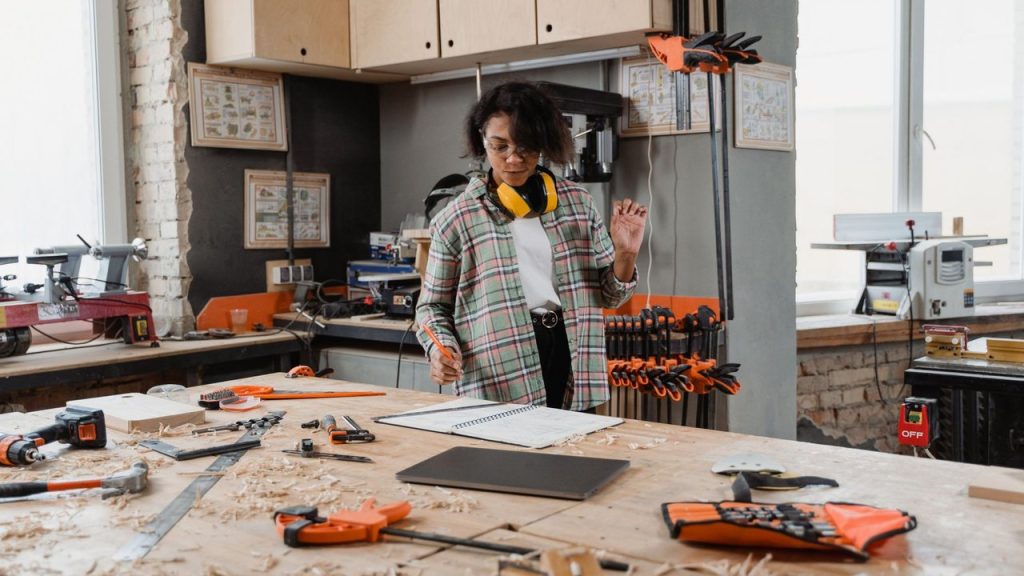
A vise is one piece of a working home shop. Our roundup of the mechanic tool set options for home garages covers the sockets and wrenches that free the part in the first place. A shop creeper that rolls over a concrete floor saves your back on the trips between the car and the bench.
When a Repair Is Better Handled at Our Bench
Pressing wheel bearings, swapping ball joints and replacing control arm bushings call for a hydraulic press, an alignment and exact torque specs. If clunks or wandering steering are what sent you to the bench, our suspension repair service in Grand Rapids handles those repairs.
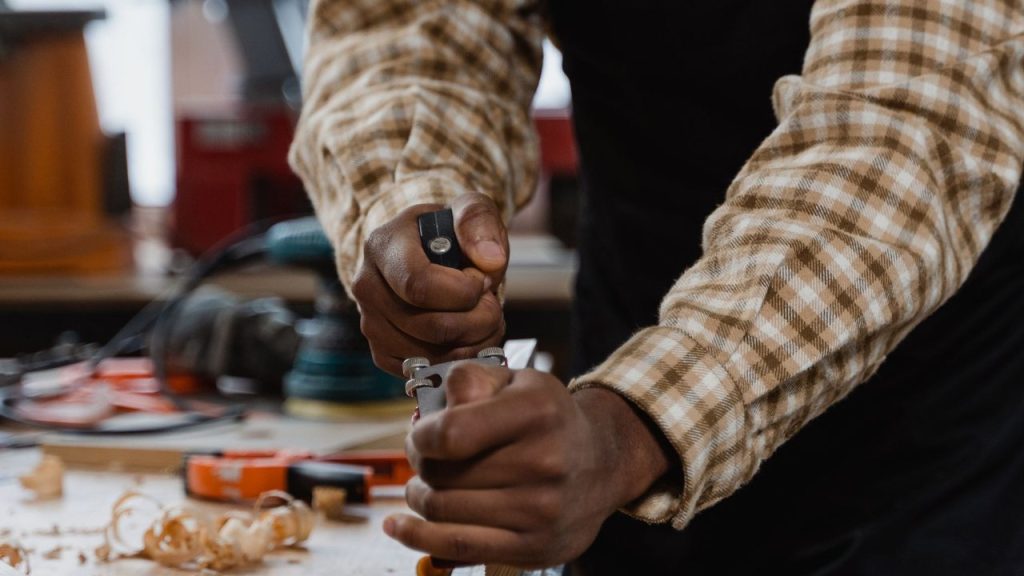
Rusted parts often show up during routine service first. When we do factory scheduled maintenance in Grand Rapids, we look over brake hardware, exhaust hangers and suspension joints, so you know what is wearing before it seizes.
More Buying Guides
Frequently Asked Questions
What size bench vise do I need for automotive work?
A 6-inch jaw with a throat near 4 inches covers most brake, suspension and exhaust parts. Go to 8 inches for axle shafts and fabrication tube.
Is ductile iron better than cast iron for a mechanic’s vise?
For car work, usually yes. Ductile iron tolerates hammering that can crack gray cast iron. Cast steel and austempered ductile iron sit higher still.
Can I press bushings or ball joints with a bench vise?
Small bushings sometimes come out with sockets in a vise, but several makers say their vises are not presses. Press-fit ball joints and wheel bearings need a C-frame press or a shop press, so the vise screw and casting are not overloaded.
How should I mount a heavy vise on a wooden workbench?
Through-bolt it with grade 5 or grade 8 bolts, large flat washers and a backing plate under the top. Place it over a bench leg if you can, which stops the bench from flexing when you hammer.
Got a part that refuses to budge even in a 6-inch vise? Phone Hendrick and the team on 616-279-3832 on any weekday between 8am and 5pm, or tell us about the seized part on our contact page.
Our garage sits at 456 Carrier St NE, Grand Rapids. If you are at work all day, the after-hours drop-off lets you leave the car in the evening with a note on which bolts or joints you could not free.