As an Amazon Associate, 456 AutoFix earns from qualifying purchases. Product links below go to Amazon, where you can confirm the right part for your vehicle.
Swirl marks hide on a cloudy day, then show up all at once under a garage light or a low winter sun. The best dual action polisher for most home detailers is a random orbital machine that cuts those fine defects out without the heat and haze a rotary buffer can leave.
Below we explain how a DA works, what orbit and pad size change, and review six machines. If a scratch catches your fingernail, read our guide to the best car scratch remover first, since a mark that deep may be past polishing.
Quick answer
Which dual action polisher should you buy first?
For a first machine, a corded short-orbit polisher such as the Griot’s Garage G9 or the Porter-Cable 7424XP is forgiving and easy to steer. A 15mm long-throw tool like the RUPES LHR15 Mark V covers big panels faster once you know the basics, and the Milwaukee M18 Fuel suits anyone already on that battery system.
Our Quick Picks
Three starting points: the corded Griot's Garage G9 for a first correction, the long-throw RUPES LHR15 Mark V for faster work on big panels, and the cordless Milwaukee M18 Fuel for battery users. All six polishers are reviewed below.

Griot's Garage G9 Random Orbital Polisher
A well-balanced short-throw polisher that is easy to control.

RUPES BigFoot LHR15 Mark V Polisher
A long-throw polisher that covers big panels with fewer passes.
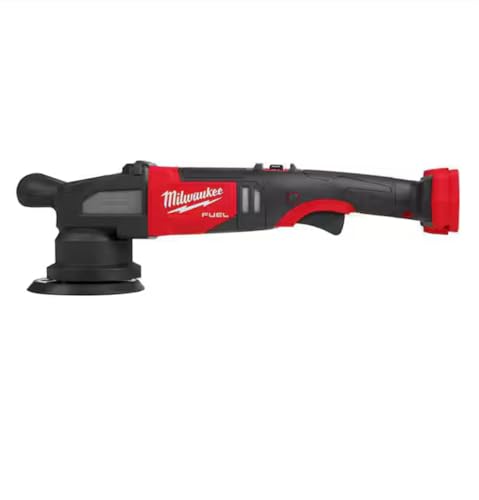
Milwaukee M18 Fuel 15mm Polisher
A cord-free long-throw polisher for the M18 platform.
Dual Action Polisher vs Rotary, and vs a Normal Buffer
A rotary buffer spins its pad on one fixed axis. It removes defects quickly, but it builds heat in one spot and can cut through clear coat on a body line in seconds.
A dual action polisher, also listed as a random orbital polisher, moves the pad in a small offset circle while it turns freely. Press too hard and the pad slows, which limits heat. The trade-off is slower cutting on heavy defects.
Cheap orbital waxers with a large bonnet are a third group: they spread wax evenly but remove little. Forced rotation machines sit between a DA and a rotary, with gears that keep the pad turning for harder cutting.
Orbit, Pad Size and Power: How to Choose a DA
- Orbit, or throw: short-throw tools around 8 to 9mm are compact and easy around curves. Long-throw tools around 15mm cover flat panels faster but want steadier pressure.
- Backing plate: a 5 inch plate works into curves and smaller cars, while a 6 inch plate covers a hood or roof sooner. Buy pads in the size the polisher maker recommends for that plate.
- Speed control: look for a dial that holds speed under load.
- Corded or cordless: a cord gives unlimited run time for a full correction. A battery tool keeps the cable off the paint but may need a second pack.
- Kit or tool only: kits add pads and liquids. With a tool-only listing, check the spindle thread before ordering spare backing plates.
RUPES lists its BigFoot LHR15 Mark V with a 125mm backing pad and a 15mm orbit, a typical long-throw layout. Many first-time polishers use about half that throw.
Best Dual Action Polisher Picks Reviewed
Our best dual action polisher shortlist runs from a mini detail tool to corded and cordless full-size machines. Specs come from each listing or the maker’s page.
1. Griot’s Garage G9: 1000W Random Orbital Polisher with 9mm Orbit and 6 in Plate
- 1000-watt motor with constant speed control
- 9mm orbit and 6 inch vented backing plate
- 6 speed settings, 2000-6400 OPM
- 10-foot quick-connect power cord
The Griot’s Garage G9 is a corded random orbital polisher built around a 1000-watt motor, a 9mm orbit and a 6 inch vented backing plate. That short throw keeps the head steady and predictable, which is why many people start with this kind of tool. The listing names swirl, scratch and oxidation removal as its main jobs, so it is a full correction machine rather than a wax spreader.
Six speed settings run from 2000 to 6400 OPM, and the dial can be reached from either hand. Griot’s says the motor uses constant speed control, so the pad should not bog down as you add pressure, and a fan-cooled counterbalance with upgraded bearings is meant to keep vibration low. A double-shot rubber grip and contoured shroud help on long sessions, and rest pads let you set the tool down without rolling it onto the plate.
It ships with a 10-foot quick-connect cord, and an optional 5 inch backing plate converts it for smaller pads and tighter curves. Pads and polish are not in this listing, so budget for them separately. Owners who want faster cutting on large flat panels may outgrow the 9mm throw, but for learning technique it is a sensible place to begin.
View Griot's Garage G9 Random Orbital Polisher on Amazon
2. PORTER-CABLE 7424XP: 4.5 Amp Variable Speed 6 in Random Orbit Polisher

- 4.5 amp AC motor
- Electronic variable-speed dial, 2,500-6,800 OPM
- Random orbit, swirl-free action
- Counterbalance for 6 inch sanding and polishing pads
The Porter-Cable 7424XP has been sold as a car polisher for years, and it still shows up on almost every beginner shopping list. It runs on a 4.5 amp AC motor, so it is corded only, and it uses a random orbit action that the listing describes as swirl-free for both sanding and polishing. That makes it a practical first step up from polishing by hand.
An electronic dial sets speed anywhere from 2,500 to 6,800 OPM. The low end suits spreading a glaze or sealant, while the upper range is where compounds and polishes do their cutting. The listing includes a proprietary counterbalance designed for use with 6 inch sanding and polishing pads, which keeps the head balanced when the pad is in contact with the panel.
Because the 7424XP has been around so long, pads, backing plates and side handles from many brands are easy to find, though you should match any replacement plate to the spindle thread. It is a simple tool without the soft-start electronics or long throw of newer designs, and it can feel slower on heavy defects. For learning, light swirl removal and wax application, it remains a reasonable choice.
View Porter-Cable 7424XP Polisher on Amazon
3. RUPES BigFoot LHR15 Mark V: 15mm Long-Throw Random Orbital Polisher, Tool Only
- 15mm orbit with 125mm backing pad (maker spec)
- POLYSYNTHEC composite gears for lower vibration
- Anti-spinning ring to protect pads and internals
- PrecisionPro backing pad with protective rubber edge
RUPES is the brand most linked with long-throw random orbital polishers, and the BigFoot LHR15 Mark V is the latest version of its 15mm tool. The maker lists a 125mm backing pad and a 15mm orbit, so each pass moves the pad further than a short-throw machine. On a large hood, roof or pickup door, that wider motion helps cover the panel sooner.
The listing points to POLYSYNTHEC composite gears that cut vibration, noise and friction, and a compact, redesigned body that improves handling. Better ventilation is meant to keep the motor cool during long correction sessions. An anti-spinning ring limits stress on pads and internal parts, and the PrecisionPro backing pad has a rubber edge that reduces the chance of marking trim or paint if you clip an edge.
This listing is tool only, so pads, compounds and cloths are bought separately, ideally sized for the 5 inch plate. A long throw wants a flat, steady hand, and it can feel lively on tight curves until you get used to it. It suits owners who have learned on a smaller tool, or a patient first-timer with a large vehicle to correct.
View RUPES BigFoot LHR15 Mark V Polisher on Amazon
4. Adam’s Polishes Swirl Killer 15mm: Long-Throw Dual Action Car Polisher

- 15mm long-throw orbit
- Comfortable design with low vibration
- Sized for Adam's 5.5 and 6.5 inch pads
- For polish, compound or scratch remover
Adam’s Polishes makes car care liquids and pads, and the Swirl Killer 15mm is its long-throw dual action polisher. The 15mm orbit puts it in the same class as the RUPES above, so it covers flat panels quickly while the free-spinning pad keeps heat down. The listing frames it as a swirl remover with strong correcting ability that will not harm the finish when used correctly.
Adam’s describes the tool as comfortable to hold, smooth running and low in vibration, which matters when a full correction can take most of a day. It is designed to work with the brand’s 5.5 and 6.5 inch pads, and the listing pairs it with car polish, polishing compound or a scratch remover. That makes it easy to build a matched system if you already use Adam’s liquids.
The listing gives fewer published specs than some rivals, so check the product page for the included backing plate, speed range and cord length before ordering pads. Like any long-throw tool, it takes a little practice on curves and around badges. It suits someone who wants a single brand for pads, polish and machine, or who wants a long-throw DA from a detailing company.
View Adam's Swirl Killer 15mm Polisher on Amazon
5. Milwaukee M18 FUEL 2684-20: Cordless 15mm Random Orbital Polisher, Bare Tool
- 15mm random orbit, cordless
- 8-speed dial, 2,650-5,100 RPM
- Variable speed trigger and lock-on switch
- Fits all M18 batteries and chargers
The Milwaukee M18 Fuel 15mm is a cordless random orbital polisher for owners who already run the M18 battery system. Without a cord there is nothing to drag across fresh polish or wrap around a tire, which helps when the car sits in a driveway or a garage without an outlet close by. The long 15mm orbit puts it among the faster-covering DA tools.
An 8-speed dial sets the range from 2,650 to 5,100 RPM, and a variable speed trigger lets you ease the pad up to speed on the panel. Milwaukee says electronic motor feedback holds speed and power under load, so the pad keeps turning as you press. A lock-on switch saves your trigger finger during long passes across a hood or roof.
This listing is the bare tool only, with no battery or charger, so it makes most sense if you already own M18 packs. A full correction on a large vehicle can drain more than one battery, so a second pack or a charger nearby keeps the job moving. Battery weight also adds to the feel of the tool compared with a corded polisher, which some users notice on long sessions.
View Milwaukee M18 Fuel 15mm Polisher on Amazon
6. ZOTA Mini Polisher: 380W 8mm Random Orbital with 2 in and 3 in Backing Plates

- 2 inch and 3 inch backing plates included
- 380W motor, 6 speeds, 3000-7200 RPM
- 8mm random orbit
- Lightweight body with foam, wool and microfiber pads
The ZOTA Mini Polisher is a small random orbital tool built for the places a 5 or 6 inch pad cannot reach. It ships with both a 3 inch and a 2 inch backing plate, which suit door pillars, mirror caps, bumper inserts, the areas around badges and headlight lenses. The listing also points to motorcycle tanks and other small painted parts.
A 380 watt motor drives an 8mm orbit, and a six-step dial runs from 3000 to 7200 RPM. ZOTA lists the weight at 3.75 pounds with a glass-filled nylon shell, so it is easy to hold at awkward angles. The box includes several 3 inch and 2 inch foam pads, a wool pad, a microfiber pad, a towel, a wrench and spare carbon brushes, which is enough to start without a separate order.
It is a companion tool, not a replacement for a full-size polisher, because working a whole hood with 3 inch pads takes a long time. Small pads also fill with product quickly, so clean or swap them often. If your full-size machine handles the panels and you keep finishing the tight areas by hand, a mini like this closes that gap.
View ZOTA Mini Polisher on Amazon
Matching a DA Polisher to the Job
| Job | Polisher style | Example from this guide | Watch for |
|---|---|---|---|
| First swirl removal on a sedan or hatchback | Short orbit, 6 inch plate, corded | Griot’s Garage G9, Porter-Cable 7424XP | Keep the pad flat and the pressure moderate |
| Large SUV, van or truck panels | 15mm long throw, 5 inch plate | RUPES LHR15 Mark V, Adam’s Swirl Killer 15mm | Steady, overlapping passes on curves |
| No outlet near where you park | Cordless long throw | Milwaukee M18 Fuel 15mm | Battery run time on a full correction |
| Pillars, mirrors and headlight lenses | Mini polisher with 2 and 3 inch plates | ZOTA Mini Polisher | Small pads load up with product quickly |
If you only buy one tool, the best dual action polisher for you is a full-size machine, with tight trim edges done by hand or later with a mini.

Polishing After a West Michigan Winter
A car that spent the season on salted Grand Rapids roads carries a gritty film that a polisher will grind into the paint. Wash and clay it before the machine touches anything. In a cold garage, let the car dry and warm up, and follow the temperature range on your polish label.
Winter highway driving also leaves rock chips, and no amount of polishing fills a chip. Dab those first using our guide to the best touch up paint for rock chips. If your session at wheel level turns up rust on the rocker panels or frame, our best undercoating for road salt roundup covers protecting the underside before next winter.

Start with a two-foot test spot, a polishing pad and a light polish at middle speed. Step up to a cutting pad or compound only if swirls remain, and clean the pad often.
Wear eye protection, keep the cord over your shoulder and consider hearing protection for long sessions. Follow each product label on gloves and ventilation.
When Polishing Will Not Fix the Paint
A polisher levels a thin layer of clear coat to remove marks inside it. It cannot repair peeling clear coat, scratches down to primer or paint already cut thin. Even the best dual action polisher cannot replace a body shop and fresh paint there.

Uneven gloss on a used car can also point to past bodywork. A gauge reading, explained in our guide to the best paint thickness gauge for used cars, shows how much film is on each panel before you cut. If you are still deciding on that car, our pre-purchase inspection in Grand Rapids gives you a second set of eyes before you buy.
More Buying Guides
Frequently Asked Questions
Can a dual action polisher damage car paint?
It can, but it takes effort. Holding the pad on an edge or using heavy compound on thin paint can cut through clear coat. Keep the pad flat, keep it moving and avoid sharp body lines.
What are the best dual action polisher pads to start with?
Start with foam pads in three grades: a cutting pad, a polishing pad and a soft finishing pad, all sized for your backing plate. Foam is easier to control than wool or microfiber, which cut harder and suit heavier correction once you have some practice.
Is a dual action polisher kit worth buying?
A kit makes sense for a first machine because the pads and liquids are matched to the tool. If you already own pads, a tool-only listing avoids paying for extras.
Do I need a mini dual action polisher?
Not for a first correction. A mini tool with 2 or 3 inch pads earns its place on pillars, mirror caps and headlight lenses, where a full-size pad will not fit.
Down at wheel level with the polisher, did you spot a crusty brake line, a weeping strut or a loose exhaust hanger? Ring 456 AutoFix on 616-279-3832 on a weekday between 8am and 5pm, or tell us what you found through our contact page.
Roll the freshly corrected car into 456 Carrier St NE in Grand Rapids and we will keep our hands on the brakes, suspension and exhaust, not your new finish. If you polish late and drive in late, our after-hours drop-off has you covered.