As an Amazon Associate, 456 AutoFix earns from qualifying purchases. Product links below go to Amazon, where you can confirm the right part for your vehicle.
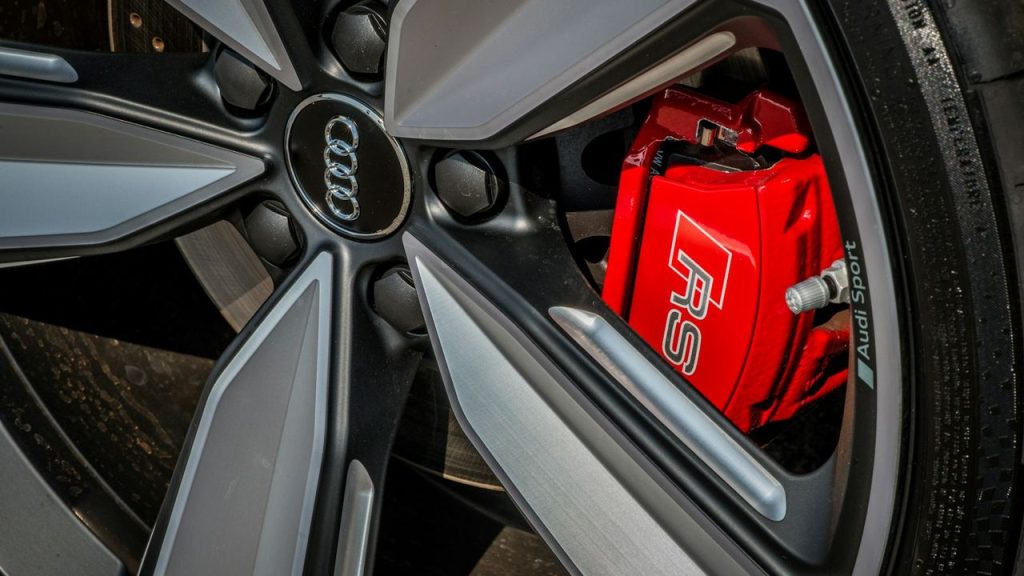
Brake fluid is easy to forget on an Audi because the car rarely complains about it. The best brake fluid for Audi owners is the one that matches the spec printed on the reservoir cap, stays fresh on Audi’s schedule and suits how hard you use the brakes.
This guide explains what Audi asks for, when genuine fluid is worth it and which five bottles fit different drivers. For the wider DOT 4 market beyond Audi, see our hub on choosing a DOT 4 brake fluid.
Quick answer
Which brake fluid should go in an Audi?
Use the low-viscosity DOT 4 fluid your owner’s manual and reservoir cap call for. Genuine Audi DOT 4 is the simplest match, and ATE SL.6 is a low-viscosity Class 6 alternative in a larger can. ATE TYP 200 adds heat margin, while Red Line RL-700 suits track days. Change it every two years.
Our Quick Picks
Three quick picks for Audi owners: the factory fluid, a low-viscosity can for full flushes and a racing grade for track days. All five fluids are reviewed below.

Audi Genuine DOT 4
The fluid Audi sells under its own part number, for a no-doubt match.

ATE SL.6
A full liter of low-viscosity fluid from a German brake maker.

Red Line RL-700
Very high boiling points for brakes that see sustained heat.
Reading Audi’s Brake Fluid Spec
Most Audis built in the last two decades call for a DOT 4 fluid with low viscosity, often written as DOT 4 LV. Fluid makers’ data sheets link the Volkswagen Group standard VW 501 14 with ISO 4925 Class 6, the low-viscosity grade. Older Audis may simply list DOT 4, so the cap and the manual for your model year settle it.
Low viscosity matters because the ABS and stability control pump has to move fluid quickly through narrow valves. A thinner fluid flows better on a frozen morning, which helps those systems respond as designed.
- DOT rating: the US federal standard, FMVSS 116, sets minimum boiling points. DOT 4 must reach 230°C dry and 155°C wet, against 205°C and 140°C for DOT 3.
- Class 6: the ISO grade that adds a tighter cold-viscosity limit on top of DOT 4 boiling points.
- Wet boiling point: the figure after the fluid has absorbed some water, and the one that counts on a car a few years into its fluid change.
- Chemistry: DOT 3, DOT 4 and DOT 5.1 are glycol-based and can mix. DOT 5 is silicone and must never go into an Audi system.
Genuine Audi Fluid or a Trusted Equivalent?
Genuine Audi fluid takes the guesswork out, because it is what the dealer pours in. The catch is the small 500 ml bottle, and a full flush on most models uses more than one.
Brands such as ATE sell Class 6 fluids in 1 liter cans, and plenty of independent shops use them. Audi doesn’t publish an approval list for aftermarket brands that we could check, so treat any equivalent as your call. Match the DOT grade and the low-viscosity class on the label, and you stay within what the cap asks for.
Best Brake Fluid for Audi: Five Fluids Up Close
Each fluid below is a glycol-based DOT 4 product listed on Amazon US. They run from the factory fluid to two racing grades, so pick by how you drive and what your reservoir cap states.
1. Audi Genuine DOT 4 High Performance B0007501MDSP: 500 ml Brake and Clutch Fluid
- Genuine Audi part B0007501MDSP
- Wet 170°C (338°F), dry 265°C (509°F)
- Meets FMVSS 116, SAE J1704 and ISO 4925
- For Audi and VW brake and clutch systems
This is Audi’s own DOT 4 High Performance fluid, sold under part number B0007501MDSP in a 500 ml bottle. The listing describes it as made for Volkswagen and Audi vehicles and suitable for both the hydraulic brake system and the hydraulic clutch on cars that use DOT 4. For an owner who wants exactly what the dealer would pour in, this removes any question about matching the spec.
Audi lists a wet boiling point of 170°C (338°F) and a dry boiling point of 265°C (509°F). Both figures sit comfortably above the federal DOT 4 minimums. The listing also names FMVSS 116, SAE J1704 and ISO 4925 as the standards it meets, which are the same labels you will see on the better aftermarket bottles.
The main drawback is volume. A complete flush on most Audis uses more than half a liter, so plan on two bottles or more, and keep one sealed for later top-ups. Once opened, brake fluid starts drawing in moisture from the air, so close the cap firmly and avoid keeping a half-used bottle for years. If your reservoir cap names a different fluid, follow the cap and the owner’s manual instead.
View Audi Genuine DOT 4 on Amazon
2. ATE Original SL.6 DOT 4: Low-Viscosity Class 6 Brake Fluid, 1 Liter Can
- Low-viscosity Class 6 DOT 4
- 1 liter metal can
- 5-year shelf life
- Compatible with DOT brake system seals
ATE is the brake brand of Continental, a German supplier of braking systems, and SL.6 is its low-viscosity DOT 4 fluid. The listing calls it a Class 6 fluid, the ISO grade for thin, fast-flowing DOT 4. ATE describes its SL.6 as optimized for modern systems with ABS and electronic stability control, which is the kind of setup found on recent Audi models.
It comes in a 1 liter metal can, which is enough for a typical flush on many cars and keeps light and moisture out better than a thin plastic bottle. ATE quotes a five-year shelf life for the sealed can and a flash point of 132°C. The listing also notes compatibility with the seal materials used in car and motorcycle brake systems.
In practice, SL.6 is a common choice for owners whose reservoir cap reads DOT 4 LV or Class 6 and who want a larger can than the genuine bottle. Audi does not publish an approval list for it that we could check, so confirm the grade printed on your cap first. It is not a track fluid, and drivers who regularly put the brakes through heavy heat may prefer a racing grade.

3. ATE Original TYP 200 DOT 4: Racing Quality Brake Fluid, 1 Liter Can
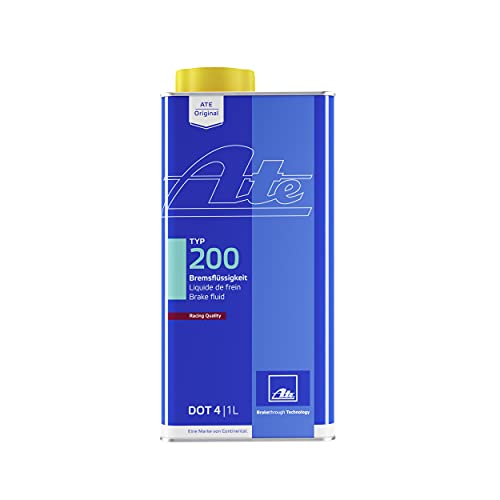
- Racing quality DOT 4
- Water locking slows boiling point drop
- Non-foaming during filling and bleeding
- Change intervals up to 3 years possible
TYP 200 is ATE’s racing quality DOT 4, sold in the same 1 liter metal can as its road fluids. It has long been a favorite with enthusiasts who drive hard on mountain roads or run the odd track day. The listing focuses on how the fluid holds up as it ages, rather than on a single headline boiling point.
ATE says its water locking properties keep the boiling point from falling much as moisture gets in, and it describes a high safety margin against vapor bubbles. The fluid is also listed as non-foaming while you fill and bleed the system, which helps when chasing air out of calipers. Selected additives provide corrosion protection, and the listing states that change intervals of up to three years are possible.
Audi’s two-year schedule still applies, so treat that three-year figure as the fluid’s limit, not a reason to stretch your service. The listing does not describe TYP 200 as a low-viscosity Class 6 fluid. If your cap calls for DOT 4 LV and the car is a daily driver, ATE SL.6 is the closer match. TYP 200 suits owners who value extra heat margin over cold-weather flow.
4. Red Line 90405 RL-700 Racing DOT 4: 335°C Dry Boiling Point, 16 oz
- Typical dry boiling point 335°C (635°F)
- Typical wet boiling point 205°C (401°F)
- Exceptionally low compressibility
- Exceeds FMVSS 116 DOT 4 and SAE J1704
Red Line is an American synthetic lubricant maker, and RL-700 is its racing DOT 4 brake fluid. The listing describes it as one of the highest boiling road-legal brake fluids the company has produced, formulated for racing conditions where brake systems run very hot. It comes in a 16 ounce bottle and conforms to FMVSS 116 DOT 4 and SAE J1704.
Red Line gives a typical dry boiling point of 335°C (635°F) and a typical wet boiling point of 205°C (401°F). Those figures sit well above the genuine Audi fluid’s numbers, which is the point of a track fluid. The listing also stresses exceptionally low compressibility, which helps the pedal stay firm when the pads and calipers are heat soaked after several laps.
This fluid makes most sense on an S or RS model, or any Audi that sees track days or autocross. For a car that only commutes, the extra heat margin brings little benefit. Racing fluids are usually changed more often by people who use them hard, and one 16 ounce bottle may not cover a full flush. RL-700 is not sold as a low-viscosity Class 6 fluid, so weigh that against your cap’s spec.
View Red Line RL-700 on Amazon
5. Brembo LCF 600 Plus: Low-Compressibility Racing Brake Fluid, 500 ml 12 Pack

- Typical dry boiling point 601°F
- Typical wet boiling point 399°F
- Low compressibility racing formula
- Case of twelve 500 ml bottles
Brembo is an Italian brake manufacturer widely known for performance calipers, and LCF 600 Plus is its low-compressibility racing fluid. The listing describes the formula as made exclusively for racing applications. It is sold here as a case of twelve 500 ml bottles, which points it at track groups, clubs and shops rather than a single owner doing one flush.
Brembo lists a typical dry boiling point of 601°F and a typical wet boiling point of 399°F. That wet figure is high, which matters because track fluid often goes a while between changes and soaks up moisture over that time. Brembo also states that it mixes safely with DOT 3, DOT 4 and DOT 5.1 racing brake fluids, so a top-up with another glycol fluid will not react badly.
For most Audi owners this is more fluid than they need, and it is aimed squarely at heat rather than cold-weather flow. If you share track days with friends who drive Audis with upgraded brakes, splitting a case can make sense. Keep unopened bottles sealed, as moisture starts to creep in once a cap is broken. Daily drivers are better served by the genuine Audi fluid or ATE SL.6.
View Brembo LCF 600 Plus on Amazon
Matching a Fluid to the Way You Drive
Most drivers don’t need a racing fluid. The table sorts the five picks by job, so the best brake fluid for Audi daily driving and the right choice for a weekend at the track don’t get mixed up.
| Your driving | Fluids that fit | Why | Watch for |
|---|---|---|---|
| Daily commuting, stock brakes | Audi Genuine DOT 4, ATE SL.6 | Low-viscosity grades that suit ABS and stability control | Buy enough for a full flush |
| Spirited driving, towing, mountain trips | ATE TYP 200 | Higher boiling margin for repeated hard stops | Listing doesn’t claim Class 6 low viscosity |
| Track days | Red Line RL-700, ATE TYP 200 | Built to resist fade under heat | Plan on more frequent changes |
| Shop or club bulk use | Brembo LCF 600 Plus | Sold as a 12-bottle case of racing fluid | More fluid than one driveway flush needs |
Fluid is only half of the braking picture. Fresh pads matter just as much, and our guide to brake pads for daily driving covers quiet, low-dust options. If the dash is already warning you about wear, read about the Audi brake pad warning light before you order parts.
How Often Audi Wants Fresh Fluid
Audi of America’s maintenance schedule lists a brake fluid change every two years regardless of mileage for all models. Mileage isn’t the trigger because brake fluid absorbs moisture from the air over time, even on a car that sits in the garage.
West Michigan makes that clock tick a little louder. Humid summers add moisture, and road salt speeds up corrosion on lines and fittings once water gets into the system. Our article on how often to change brake fluid explains why the interval is time-based.

Between changes, a quick check helps. A brake fluid tester pen gives a rough moisture reading at the reservoir, though it doesn’t replace the scheduled flush.
Flushing an Audi: Driveway Job or Shop Visit?
A basic two-person bleed is possible at home, but Audis add a few wrinkles. Air trapped in the ABS hydraulic unit can call for a scan tool routine, and rear brake work on models with an electronic parking brake needs the calipers put in service mode first. Ross-Tech’s guide to working on the electro-mechanical parking brake shows how involved that step is.
If you plan to do the work yourself, a capable scanner is part of the kit. Our roundup of the OBD2 scanners for Audi models covers tools that reach the brake modules.
Many owners leave the flush to a shop because a soft pedal after a botched bleed is a real safety risk. Our brake repair in Grand Rapids includes fluid flushes and bleeding, and our Audi repair team is led by a factory-trained Audi technician.
More Buying Guides
Frequently Asked Questions
Can I top up my Audi with regular DOT 3 fluid?
DOT 3 is glycol-based, so it won’t react with the DOT 4 in the system, but it lowers the boiling point and isn’t the grade Audi lists. For a top-up, use DOT 4 that matches the cap, and never add silicone DOT 5.
How much brake fluid does an Audi flush take?
It depends on the model and the method, but a full flush usually takes more than a single 500 ml bottle. Having about a liter on hand is a sensible start, with your service manual as the guide.
Is ATE TYP 200 a good idea on a daily-driven Audi?
It works in DOT 4 systems and gives extra heat margin, but it isn’t sold as a low-viscosity Class 6 fluid. If your cap calls for DOT 4 LV and you don’t track the car, ATE SL.6 is the closer match.
What is the best brake fluid for Audi Q5 and Q7 SUVs?
Both use DOT 4 on recent model years, so genuine Audi DOT 4 or ATE SL.6 suit daily use and towing within the limits in the manual. Confirm the spec on the reservoir cap for your year.
Due for a brake fluid change on your Audi in Grand Rapids? Call 456 AutoFix at 616-279-3832, Monday to Friday 8am to 5pm, or book a brake service through our contact page.
Can’t make it during the day? Use our after-hours drop-off. We’re at 456 Carrier St NE in Creston.