As an Amazon Associate, 456 AutoFix earns from qualifying purchases. Product links below go to Amazon, where you can confirm the right part for your vehicle.
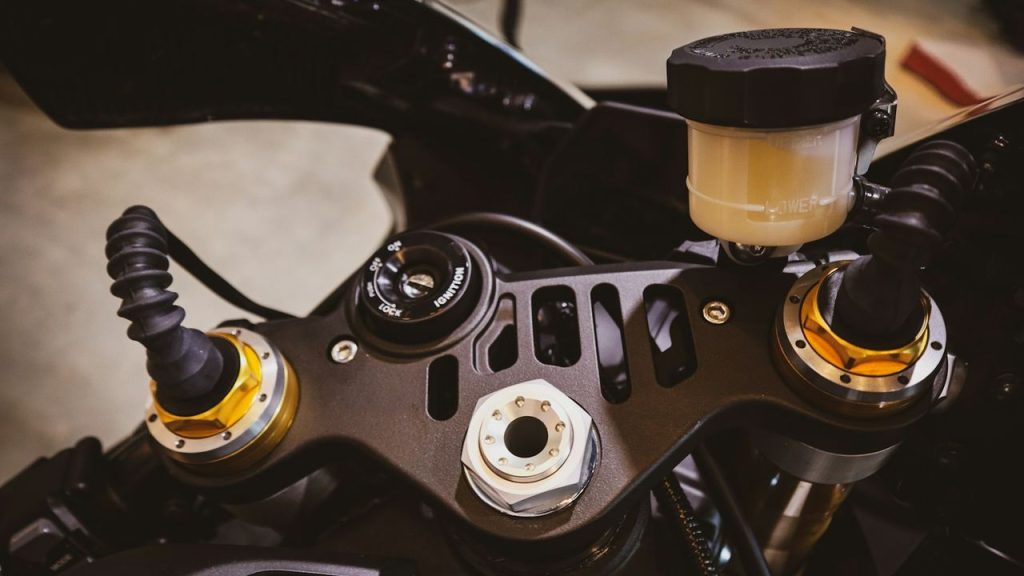
Look at the cap on your brake fluid reservoir and there is a good chance it says DOT 4. That small label settles the grade, but not the bottle. The best DOT 4 brake fluid for your car depends on whether the system wants a standard fluid, a low-viscosity version for ABS and stability control, or something built for track heat.
Below: how DOT 4 compares with other grades, what the boiling points mean, and six fluids on Amazon. For service timing, see our guide on how often to change brake fluid.
Quick answer
Which DOT 4 brake fluid should you buy?
Match the grade on the reservoir cap first. For an everyday car, a sealed bottle of synthetic DOT 4 such as Castrol or Valvoline does the job. If the manual asks for a low-viscosity fluid, Bosch ESI6 covers it. Motul RBF 600 suits track days, with a shorter change interval.
Our Quick Picks
Three quick picks for the main DOT 4 jobs: everyday driving, low-viscosity systems and track heat. All six fluids are reviewed below.
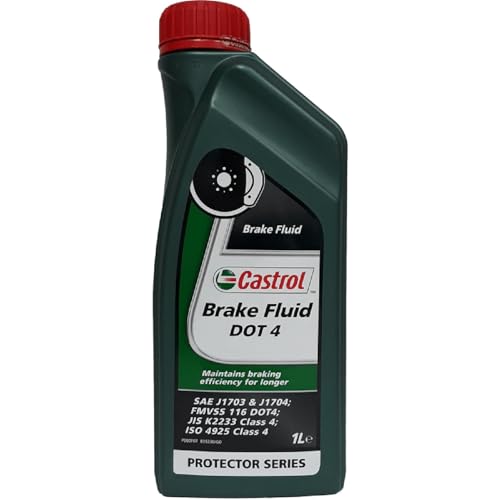
Castrol DOT 4 Synthetic
A mainstream synthetic DOT 4 that also lists DOT 3 compatibility.
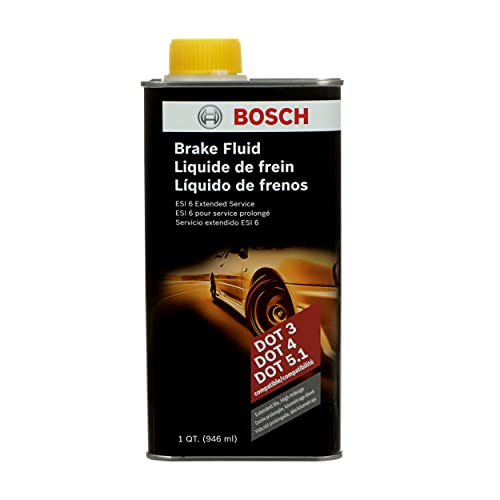
Bosch ESI6
Thin when cold, with a wet boiling point Bosch puts at 365°F.

Motul RBF 600
A high-heat fluid for track days, listed at 399°F wet.
How DOT 4 Compares With DOT 3, DOT 5.1 and DOT 5
The DOT grades come from Federal Motor Vehicle Safety Standard No. 116, published as 49 CFR 571.116 on the eCFR. It sets minimum boiling points and cold viscosity limits that every DOT 4 bottle must clear.
The dry boiling point is for fresh fluid. The wet figure is measured after a set humidity test, closer to fluid that has aged in a car. The federal minimums:
- DOT 3: at least 401°F dry and 284°F wet, with a cold viscosity limit of 1,500 mm²/s at minus 40°F.
- DOT 4: at least 446°F dry and 311°F wet, with a limit of 1,800 mm²/s at minus 40°F.
- DOT 5.1: at least 500°F dry and 356°F wet, and thinner in the cold at 900 mm²/s.
- DOT 5: silicone based, dyed purple under the standard, and a different chemistry altogether.
DOT 3, DOT 4 and DOT 5.1 are all glycol-based, so they can share a system, and DOT 4 can normally go into a car that asks for DOT 3. DOT 5 silicone is the exception: never mix it with glycol fluids in either direction.
Standard, Low-Viscosity or Racing DOT 4?
- Standard DOT 4: the everyday choice for most cars with disc or drum brakes and ABS.
- Low-viscosity DOT 4 (often sold as DOT 4 LV or Class 6): flows more freely when cold, helping ABS and stability control units react quickly. Use it when your manual or cap calls for it.
- Racing DOT 4: much higher boiling points for track heat, usually with more frequent bleeding.
For a daily driver, a standard fluid changed on time beats a racing fluid left in for years. Pads matter as much for everyday stopping, as our guide to brake pads for daily driving explains.
Best DOT 4 Brake Fluid: The Six Bottles in Detail
Each fluid below is sold as DOT 4 or as a DOT 3/4/5.1 fluid that covers DOT 4 systems. Figures come from the makers’ Amazon listings, so read the bottle and your owner’s manual before you pour.
1. Castrol DOT 4 Synthetic: Brake Fluid for Disc, Drum and ABS Systems
- Synthetic DOT 4 formula
- Suits disc, drum and ABS brakes
- Compatible with DOT 3 systems
- Replaces Castrol LMA brake fluid
Castrol’s synthetic DOT 4 is a general-purpose fluid aimed at the cars most people drive every day. The listing describes it for hydraulic systems with disc brakes, drum brakes and ABS, covering passenger cars, light trucks and motorcycles. Castrol also presents it as the replacement for its older LMA brake fluid, so owners who used that product will find the same role here.
The main selling points are a high boiling point to resist vapor lock and an additive package meant to protect internal parts from corrosion and wear. That matters because the calipers, master cylinder and ABS unit all sit in contact with the fluid for years. Castrol states the fluid is fully compatible with DOT 3 systems and can be used as a top-up or a complete flush in a car that originally called for DOT 3.
In practice this is a sensible default when your cap reads DOT 3 or DOT 4 and the manual asks for nothing more specific. It is not marketed as a low-viscosity fluid, so cars whose maker calls for DOT 4 LV or a Class 6 fluid should use one that says so on the label. It is also not intended as a dedicated track fluid. Check how many bottles a full flush of your car needs before ordering.
View Castrol DOT 4 Synthetic on Amazon
2. Bosch ESI6-32N: Low-Viscosity DOT 3/4/5.1 Fluid with 365°F Wet Boiling Point
- Low viscosity with 365°F wet boiling point
- Replaces DOT 3, DOT 4 and DOT 5.1
- Extended replacement interval claim
- Not compatible with silicone DOT 5
Bosch ESI6 is a single fluid that Bosch positions as a direct replacement for vehicles that specify DOT 3, DOT 4 or DOT 5.1. According to the listing, that covers the majority of brake systems launched since 1990. It comes in a one-quart bottle, and Bosch notes that a full fluid change will usually take more than one.
Its standout claim is the combination of low viscosity and a high wet boiling point, which Bosch puts at 365 degrees Fahrenheit. Low viscosity helps fluid move quickly through the small passages of ABS and stability control units, especially on cold mornings. Bosch also says the fluid is designed for longer replacement intervals than conventional DOT 3, DOT 4 and DOT 5.1 fluids, though your vehicle maker’s schedule still sets the timing.
The listing says ESI6 can top off DOT 3, DOT 4 and DOT 5.1 systems, with the best results after a full change. It is clearly marked as not compatible with silicone DOT 5 systems, which should only ever get DOT 5. This makes it a good fit for owners whose manual calls for a low-viscosity fluid, or who want one bottle on the shelf for several glycol-fluid cars. Racers who want the highest possible dry boiling point will look elsewhere.
3. Liqui Moly SL6 DOT 4: 1 Liter Brake Fluid with High Wet and Dry Boiling Points

- DOT 4 brake fluid, 1 liter
- High wet and dry boiling points
- Strong thermal stability
- Mixes with quality synthetic fluids
Liqui Moly is a German lubricant maker, and SL6 is its DOT 4 brake fluid sold here in a one-liter bottle. The liter size is handy for a full flush on a compact or midsize car, where small bottles can run out partway through bleeding. Owners of imported cars may prefer to stay with a European fluid brand.
The listing highlights strong thermal stability, high wet and dry boiling points and protection against the vapor bubbles that cause a spongy pedal under heavy braking. It also stresses good compatibility with the rubber seals and hoses in the brake system, an important point for a fluid that sits against those parts for years. Liqui Moly says SL6 is miscible with other high-quality synthetic brake fluids, so a top-up will not cause trouble.
The Amazon listing does not print boiling point or viscosity figures. If your car’s manual calls for a low-viscosity or ISO 4925 Class 6 fluid, check the bottle for that marking before you buy. Like any glycol fluid, it should not go into a silicone DOT 5 system. Keep the cap tight between uses, because an opened bottle starts taking on moisture.
View Liqui Moly SL6 DOT 4 on Amazon
4. Motul RBF 600 Factory Line: Racing DOT 4 with 399°F Wet Boiling Point
- Racing DOT 4, 500 ml
- Wet boiling point of 399°F (204°C)
- Non-silicone synthetic fluid
- For brake and clutch hydraulics
Motul RBF 600 is a racing brake fluid that meets the DOT 4 grade and has long been a common choice for track-day drivers and motorcyclists. It comes in a 500 ml bottle and suits hydraulic brake and clutch systems. Because it is a non-silicone synthetic, it shares the glycol family with DOT 3, DOT 4 and DOT 5.1 fluids.
The key figure is heat resistance. Motul lists a wet boiling point of 399 degrees Fahrenheit, or 204 degrees Celsius, far above the 311 degree federal minimum for wet DOT 4. That margin is the point of a racing fluid: repeated hard stops from high speed heat the calipers enough to boil ordinary fluid, which leaves a soft pedal and brake fade. Motul describes it as reducing vapor lock and fade under those conditions.
The tradeoff is upkeep. Track drivers typically bleed racing fluids often, and the small bottle reflects that use. On a car that only sees commuting and errands, the extra heat capacity brings little benefit, and a standard DOT 4 changed on schedule is the simpler path. If you take a car to the track, pair this fluid with pads and rotors rated for that heat, and bleed it before each event.
5. Valvoline DOT 4: 12 oz Full Synthetic Fluid for ABS, Disc and Drum Brakes

- Full synthetic DOT 4, 12 oz
- Surpasses FMVSS 116 and SAE J1703
- Meets ISO 4925 DOT 4 specification
- Suits ABS, disc and drum brakes
Valvoline’s DOT 4 is a full synthetic fluid sold in a 12-ounce bottle. That size suits a top-up after a pad change or a small repair, and a few bottles cover a flush. Valvoline also sells a combined DOT 3 and 4 fluid, but this listing is the dedicated DOT 4 version.
The listing states that it meets or surpasses three standards at the DOT 4 level: SAE J1703, FMVSS 116 and ISO 4925. In plain terms, it clears the federal boiling point and viscosity floors and the matching international test. Valvoline describes a high boiling point that helps prevent vapor lock and brake fade, plus resistance to moisture absorption and corrosion. It is listed for ABS, disc and drum brake systems, which covers most passenger cars and light trucks.
This is a straightforward choice for owners who want a well-known brand in a small sealed container. Smaller bottles have a practical advantage: you open only what you need, so leftover fluid is not sitting half-used in the garage soaking up humidity. It is not sold as a low-viscosity or racing fluid, so cars that call for either should use a product labeled for that job. Never add it to a silicone DOT 5 system.
View Valvoline DOT 4 on Amazon
6. Prestone AS800Y DOT 4: Synthetic Brake Fluid, 12 oz, Pack of 6
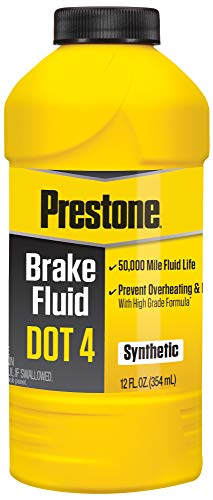
- Six 12 oz sealed bottles
- Synthetic, high grade DOT 4
- Maker-stated 50,000 mile fluid life
- Corrosion protection for all metals
Prestone’s AS800Y is a synthetic DOT 4 brake fluid sold as a pack of six 12-ounce bottles. The multi-pack makes sense for a household with several cars, or for anyone planning a full flush where one bottle will not be enough. Each bottle stays sealed until you need it, which keeps unused fluid away from moisture.
Prestone describes the formula as high grade and synthetic, aimed at preventing overheating and brake fade. The listing also says it protects against performance loss from water absorption and prevents corrosion of the metals inside the braking system. Prestone states a fluid life of 50,000 miles. Treat that as the maker’s claim about the fluid itself, and follow your vehicle manufacturer’s schedule, which is often time-based, for when the brakes actually need a fluid change.
This pack fits the everyday driver who wants a recognizable brand and plenty of fluid on hand. It is not labeled as a low-viscosity fluid, so cars whose manual asks for DOT 4 LV or a Class 6 fluid should use one marked for that. Like the other glycol fluids here, it must never go into a silicone DOT 5 system. Store spare bottles tightly capped in a dry spot.
View Prestone DOT 4 Six-Pack on Amazon
Matching a DOT 4 Fluid to Your Driving
The best DOT 4 brake fluid is the one that matches your car’s specification and how you use it. This table sums up where each bottle fits.
| Your situation | Fluid type | Bottles in this guide |
|---|---|---|
| Everyday car, cap says DOT 3 or DOT 4 | Standard synthetic DOT 4 | Castrol DOT 4, Valvoline DOT 4, Prestone DOT 4 |
| Manual calls for low-viscosity fluid | DOT 4 LV or a DOT 3/4/5.1 low-viscosity fluid | Bosch ESI6 |
| European car, DOT 4 on the cap | Synthetic DOT 4 from a European maker | Liqui Moly SL6, Castrol DOT 4 |
| Track days or hard mountain driving | Racing DOT 4 | Motul RBF 600 |
| Several cars or a full flush | Multi-pack of small sealed bottles | Prestone DOT 4 six-pack |
Buy sealed containers sized for the job. Glycol fluid starts taking on moisture once the seal is broken, so a half-used bottle left on a shelf for a year is no longer fresh fluid.
Moisture, Change Intervals and West Michigan Weather
Glycol brake fluid is hygroscopic, which means it draws water in from the air through seals, hoses and the reservoir cap. As water builds up, the boiling point drops toward the wet figure and corrosion can start inside calipers, lines and the ABS unit.
Change intervals come from your vehicle maker, not the bottle, and many are time-based. Our article on brake fluid change intervals and warning signs covers the details.

Grand Rapids summers are humid, and winter road salt then attacks steel brake lines from the outside. Our guide to road salt and brake line rust shows what to look for, and a fall fluid check is a sensible habit.
When the Brakes Need More Than a Fresh Bottle
Topping up does not replace the fluid in the lines and calipers. A full change means bleeding every wheel, and many ABS cars need a scan tool to cycle the pump, which is why many owners leave the job to a shop.
A low or falling fluid level usually means worn pads or a leak, not fluid that has evaporated. A sinking pedal needs attention right away, as our article on a brake pedal that goes to the floor explains, and so does an ABS light that stays on.
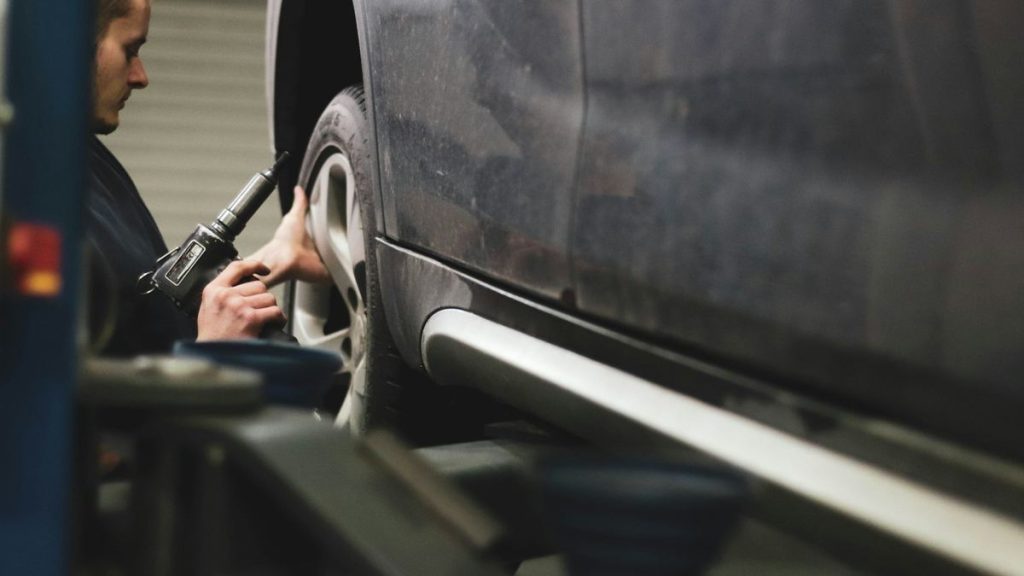
Our brake repair service in Grand Rapids covers fluid changes, bleeding, leaks and the parts around them on foreign and domestic vehicles.
More Buying Guides
Frequently Asked Questions
Can I put DOT 4 brake fluid in a car that calls for DOT 3?
In most cases, yes. Both are glycol-based, and DOT 4 has higher minimum boiling points than DOT 3. Several DOT 4 listings, including Castrol’s, state compatibility with DOT 3 systems. A full flush gives you the full benefit of the higher grade.
Can DOT 4 and DOT 5.1 be mixed?
They are both glycol-based and compatible, so a top-up will not harm the system. Mixing lowers the boiling point toward that of the weaker fluid, so stick with the grade your manual lists. Never mix either one with silicone DOT 5.
Do I need low-viscosity DOT 4 for a car with ABS?
Only if the vehicle maker asks for it. Many cars with ABS run on standard DOT 4. Low-viscosity fluid is specified mostly by European makers for their stability control systems, and the owner’s manual or reservoir cap will say so.
Is racing fluid the best DOT 4 brake fluid for a street car?
Usually not. Racing fluids like Motul RBF 600 have very high boiling points, but they are built for frequent changes between track events. For daily driving, a quality standard DOT 4 changed on your maker’s schedule is the more practical choice.
Due for a brake fluid change or chasing a soft pedal? Call 456 AutoFix in Grand Rapids at 616-279-3832, Monday to Friday 8am to 5pm, or book your brake visit through our contact page.
Tied up during the workday? Our after-hours drop-off lets you leave the keys and the car with us at 456 Carrier St NE in Creston.