
A low hum that grows louder as you speed up is easy to ignore until it turns into a growl. At 456 AutoFix in Creston, we diagnose that noise and handle wheel bearing replacement in Grand Rapids for foreign and domestic vehicles. Here’s how to tell bearing noise from other noises, what the repair involves and when it becomes urgent.
Quick answer
How do I know if a wheel bearing is going bad?
A worn wheel bearing usually makes a hum or growl that rises with speed and changes when you turn. It needs replacing once it is noisy, rough or loose. Depending on the vehicle, we press in a new bearing or bolt on a complete hub assembly. For wheel bearing replacement in Grand Rapids, call 456 AutoFix at 616-279-3832.
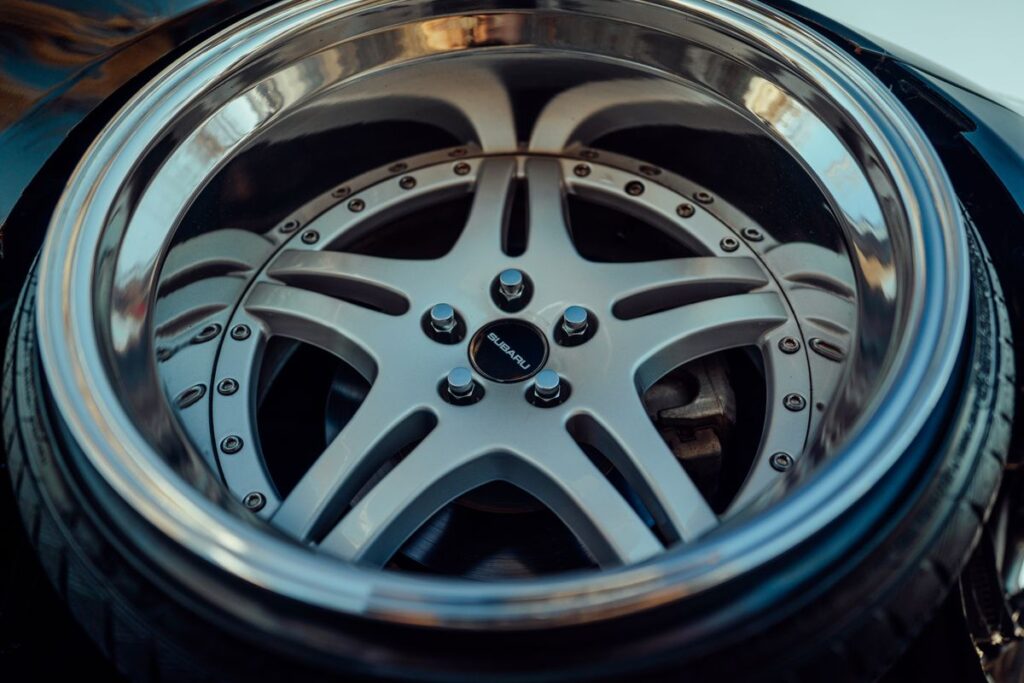
What a wheel bearing does
Each wheel spins on steel balls or tapered rollers held between two hardened rings called races. The bearing carries that corner’s weight and is sealed with grease inside to keep water and grit out.
Most modern bearings can’t be regreased or adjusted, so once the races are pitted, the fix is replacement. On many cars the bearing also carries the ring the ABS wheel speed sensor reads.
Signs you need a wheel bearing replaced
Bearing wear builds over weeks or months. Watch for:
- Humming or growling that rises with road speed, often easiest to hear somewhere between 30 and 50 mph.
- A noise that gets louder in a gentle turn or lane change. The bearing that is being loaded, usually on the outside of the turn, is the likely suspect.
- Play in the wheel. With the car lifted, the wheel rocks when pushed at the top and bottom.
- An ABS or traction control light, because a loose bearing can upset the wheel speed sensor signal.
- Uneven tire wear on one corner, though worn suspension parts and low tire pressure are more common causes.
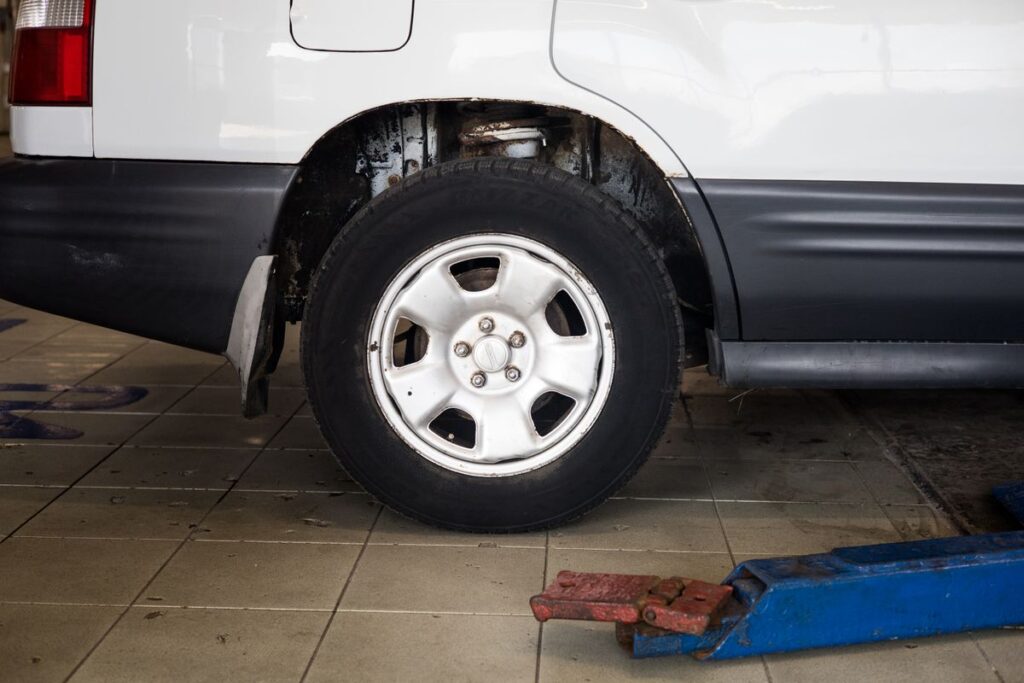
Bearing, tires, brakes or CV joint? Matching the noise
Cupped or unevenly worn tires are the most common false alarm. Use this table as a starting point, not a diagnosis.
| What you hear | Most likely cause | Quick tell |
|---|---|---|
| Hum or growl that rises with speed and changes in turns | Wheel bearing | Louder when you gently weave, not affected by the brake pedal |
| Steady drone that changes with the road surface | Tires (cupping, uneven wear) | Noise shifts on smooth vs rough pavement, not when steering |
| Squeal, scrape or grind when braking | Brakes (pads, rotors, calipers) | Changes or stops when you press or release the brake pedal |
| Clicking or popping in sharp, slow turns | Outer CV joint (sometimes bearing play) | Loudest at full lock in a parking lot while accelerating |
Bearing maker Timken’s technical tip on worn wheel hub bearing symptoms makes a useful point. A bearing hum is usually present in a straight line and gets stronger as you turn slightly, and the defective side is typically opposite the direction of the turn. If the noise is tied to the brake pedal instead, our brake repair service in Grand Rapids is the better place to start.

Press-in bearing vs bolt-on hub assembly
Some vehicles use a bearing pressed into the steering knuckle. Others use a complete hub bearing assembly that bolts on as one unit.
| Detail | Press-in bearing | Bolt-on hub assembly |
|---|---|---|
| What gets replaced | The bearing only, pressed into the knuckle | The hub, bearing and often the ABS sensor ring as one unit |
| Tools needed | Hydraulic press and the correct adapters | Hand tools and a torque wrench, plus effort if rusted in |
| Main labor | Removing the knuckle, pressing the old bearing out and the new one in | Unbolting the old hub, cleaning the mounting surface, fitting the new unit |
| Common on | Many front-wheel-drive cars and some European models | Many trucks, SUVs and newer cars |
Either way, the axle nut and hub bolts must be tightened to the manufacturer’s torque spec. An impact gun can over- or under-tighten them and shorten the life of the new bearing. If your vehicle has a hub-mounted wheel speed sensor, we check its signal afterward, and our auto electrical repair and ABS sensor diagnosis covers any wiring faults we find.

Why Michigan roads wear out wheel bearings
Freeze-thaw cycles open potholes faster than crews can patch them, and a sharp hit can dent a race or knock a seal out of place. The noise sometimes shows up weeks after the impact, so drivers rarely connect the two.
Salt brine is the other half. Once a cold-hardened or damaged seal lets salty water in, it rusts the races and washes out the grease. Our Michigan winter car maintenance guide covers other ways to protect your car.
Is it safe to drive on a bad wheel bearing?
A bearing that has just started to hum is not usually an emergency, but it will get worse. Have it checked soon.
Grinding or a wheel that feels loose means it’s time to stop putting it off. A bearing that is left to break apart can overheat and seize. In extreme cases, a failed hub bearing can let the wheel separate from the car. That is uncommon, but it’s why we don’t recommend driving on a loud bearing for months.
Wheel bearing replacement in Grand Rapids at 456 AutoFix
Wheel bearings are part of our suspension and steering repair in Grand Rapids, because the bearing sits right among the knuckle, ball joints and tie rods. Here is how we handle a bearing complaint:
- Road test to hear the noise and note when it changes.
- Lift the vehicle, check each wheel for play and spin it by hand to feel for roughness.
- Rule out tires, brakes, CV joints and other suspension parts before we call it a bearing.
- Explain what we found and what the repair involves before any work starts.
- Replace the bearing or hub assembly, torque everything to spec and road test again.
If the cause turns out to be tire wear, we’ll tell you plainly rather than replace parts you don’t need.
Audi and European vehicles
Many European cars use pressed-in front bearings and tight-fitting hubs, so the right press tools matter. Audi has also issued service bulletins about a clicking noise from front wheel bearings at parking speeds on some A4 and Q5 models. Our owner, Hendrick Hoffman, is Audi factory trained, and our Audi repair in Grand Rapids page covers the rest of what we do for those cars.
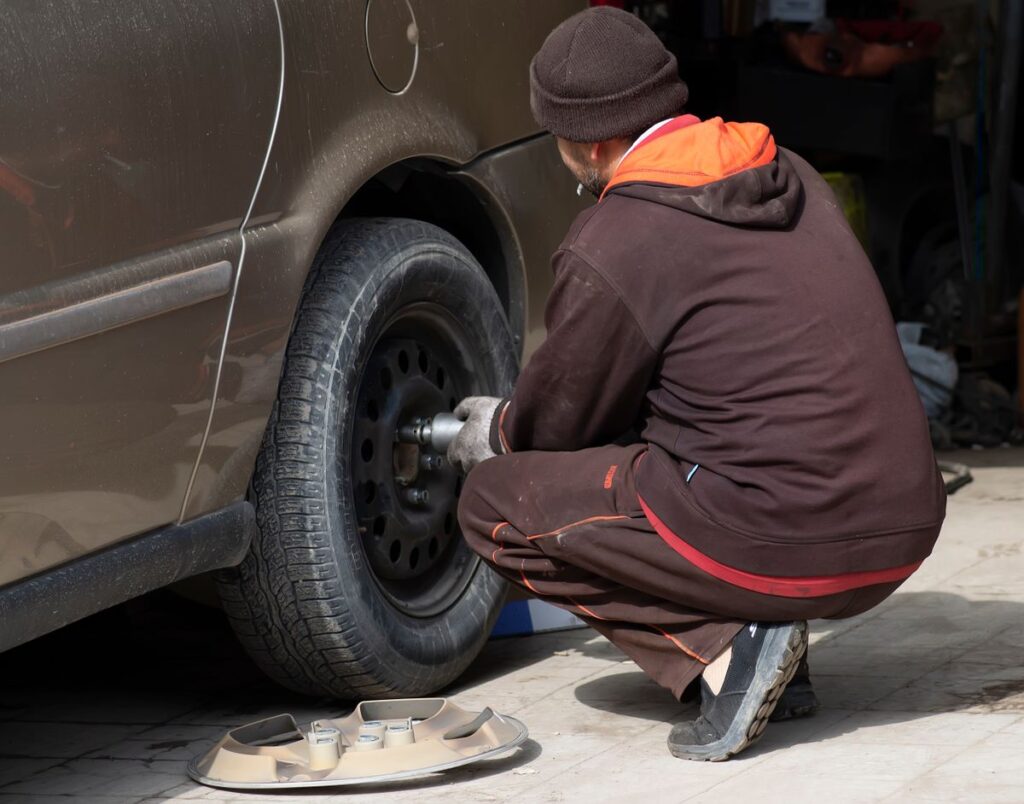
Why drivers choose our Creston shop
Hendrick has worked in automotive service since 2005 and holds ASE and State of Michigan certification in steering and suspension. Read more on our about 456 AutoFix page. We work on foreign car repair in Grand Rapids as well as domestic vehicles, and you can see everything else we handle on our full list of auto repair services.
Related guides
Frequently Asked Questions
How do I know which wheel bearing is bad?
A bad bearing usually gets louder when weight shifts onto it. If the hum grows in a gentle left turn, the right side is the likely suspect, and the other way around. A lift check for play and roughness confirms it.
Can a bad wheel bearing turn on the ABS light?
Yes. On many vehicles the wheel speed sensor reads a ring built into the hub, and a loose bearing can disturb that signal. The light can also come from a failed sensor or wiring, so it needs testing.
Do wheel bearings need to be replaced in pairs?
Not always. Bearings wear individually, so replacing only the noisy one is often fine. If the other side is also rough or loose, we’ll show you and let you decide.
Can hitting a pothole damage a wheel bearing?
Yes. A hard impact can dent the bearing races or unseat the seal and let water in. The noise may not start until weeks later.
Need wheel bearing replacement in Grand Rapids? Call 456 AutoFix at 616-279-3832, Monday to Friday 8am to 5pm, or book through our contact page.
Can’t make it during the day? Use our after-hours drop-off. We’re at 456 Carrier St NE in Creston.