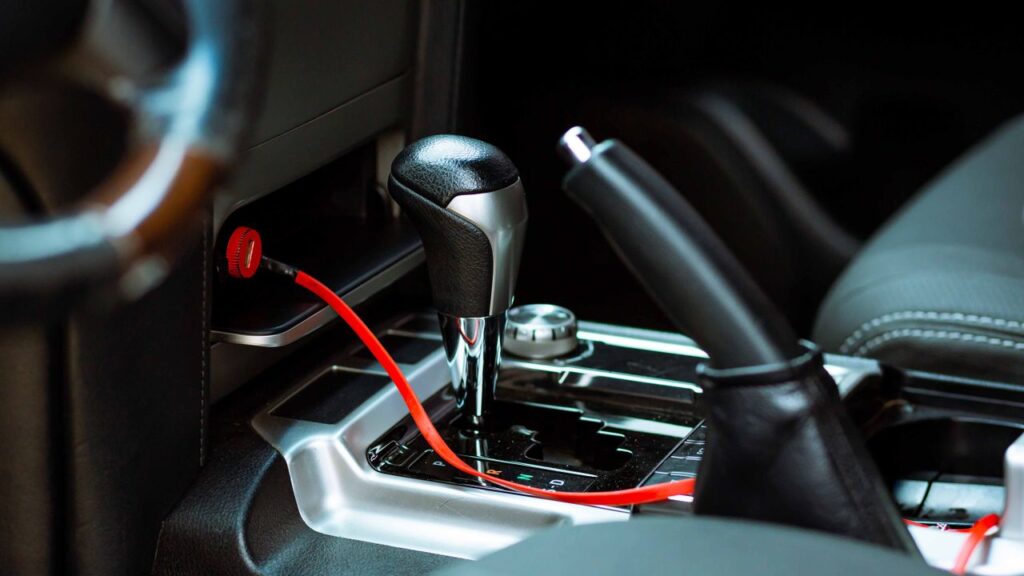
A parking brake stuck on is one of those problems that tends to show up on the coldest morning of the year. You release the lever, pedal or switch, and the car still won’t roll freely, or it moves but feels like it is dragging an anchor.
Here is why it happens, what to try, what to avoid and how to prevent it.
Quick answer
Why is my parking brake stuck, and how do I release it?
Most stuck parking brakes come from water freezing inside the cable, rusted cables or rear shoes, or an electronic parking brake that lacks battery voltage or has a motor fault. Start the engine, press the brake pedal, and apply and release a few times. If a wheel stays locked or smells hot, don’t drive it.
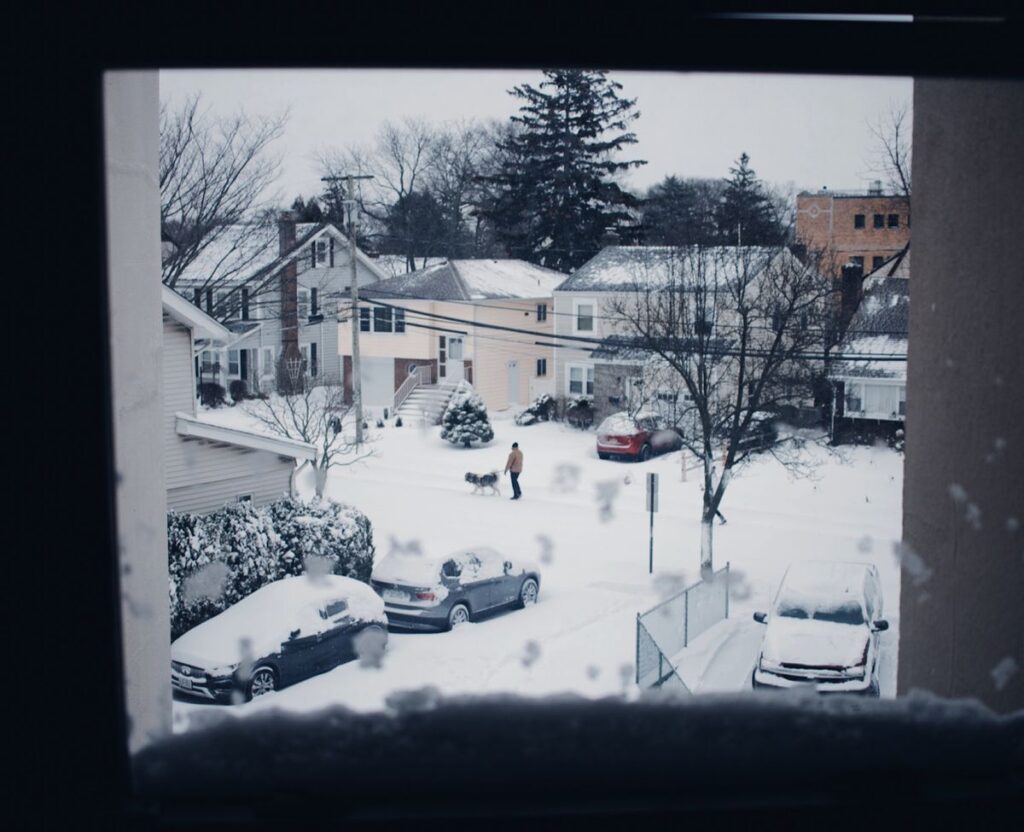
Why a Parking Brake Gets Stuck
Older parking brakes pull a steel cable to the rear brakes, while many newer cars use an electric motor on each rear caliper. Each design sticks in its own way.
A Frozen Parking Brake Cable
The cable slides inside a sheath sealed with rubber boots at each end. When those boots crack, water gets in, and after a slushy drive it can freeze overnight with the cable pulled tight. Phoenix Systems, a brake tool maker, explains in its guide to freeing a frozen parking brake cable that the corrosion often runs the full length of the cable, so thawing it once doesn’t fix the real problem.
Rusted Cables and Equalizer
Even without ice, salt and moisture can rust the cable inside its sheath or seize the equalizer bracket that splits the pull between the two rear wheels. The brake applies but springs back slowly, or one side stays partly on.

Rear Shoes or Pads Stuck in Place
Many cars with rear disc brakes have small parking brake shoes inside the rotor hat, called drum-in-hat. Those shoes can rust to the drum surface after the car sits, or freeze to it when wet brakes are parked overnight in the cold. On cars with the parking brake built into the rear caliper, a corroded caliper mechanism can hold the pads against the rotor.
A sticking caliper on the regular brakes usually shows up as vibration instead, covered in our guide to why a car shakes when braking.
Electronic Parking Brake Faults
An electronic parking brake needs electrical power to release, not just to apply. GEARS Magazine, a transmission trade publication, notes in its article on electronic parking brake problems that low voltage can keep the motors from retracting. Faults in a control module, the wiring or an actuator motor can do the same.
Most systems also have release conditions, such as the ignition on and the brake pedal pressed. A weak battery on a cold morning is a common trigger, and our post on a car battery that dies overnight explains how to track down a drain.

How to Release a Parking Brake Stuck On
Work through these steps, and stop if anything feels forced.
- Start the engine. This restores full voltage and starts warming the underside.
- Press the brake pedal and release normally. Many electronic systems require it.
- Apply and release a few times. This can break thin ice or a lightly stuck shoe free.
- Let it warm up. Idle in a ventilated spot, never a closed garage, so the ice can soften.
- Rock it gently. With your foot ready on the brake, shift between drive and reverse and use very light throttle. A soft pop means the shoes let go.
- Check that it really released. The warning light should be off and the car should roll freely.
If none of that works, the brake needs to be freed and inspected at the wheel. Leave the car parked and call us to talk through your options.
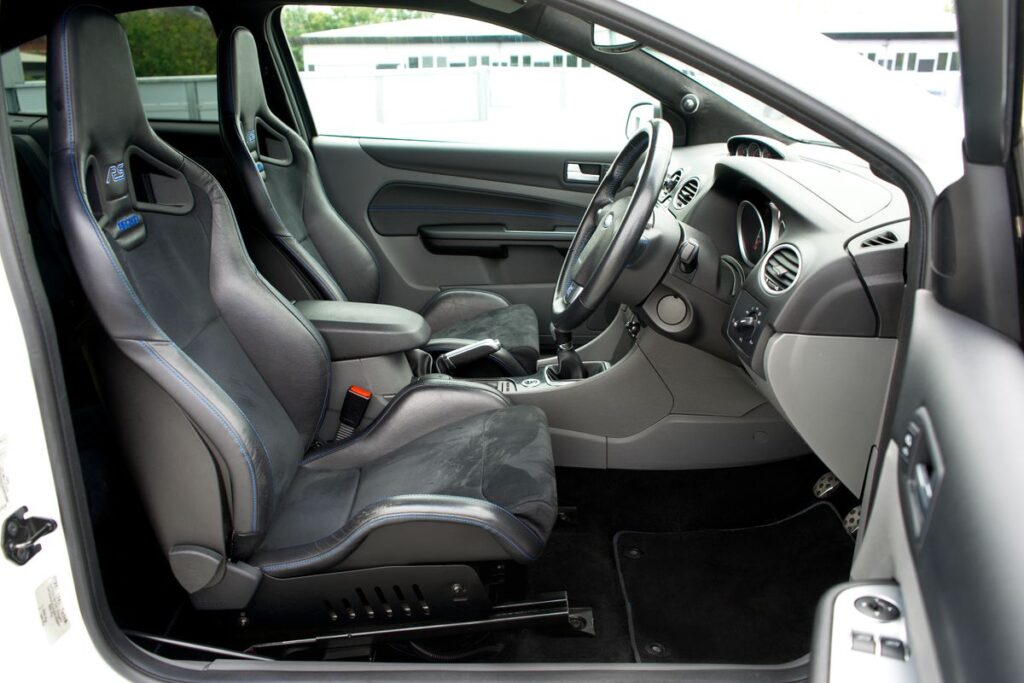
What Not to Do With a Stuck Parking Brake
Some common fixes do more harm than good:
- Don’t drive against a dragging brake. A burning smell, smoke or a very hot wheel means stop.
- Don’t use an open flame. Brake lines, fuel lines and rubber parts sit close to the parking brake cable.
- Don’t pour boiling water on the brakes. It adds water that refreezes.
- Don’t force the lever or hammer on the brakes. That can snap a cable or damage an electronic actuator.
- Don’t push rear caliper pistons back on an electronic brake. It needs a service mode first, which we touch on in our Audi brake pad warning light guide.
Also watch the opposite problem. If the lever suddenly feels loose with no resistance, the cable may have snapped, and Phoenix Systems warns a loose cable can catch on moving parts underneath. Don’t rely on that parking brake to hold the car until it is repaired.

Parking Brake Stuck Signs Compared by Urgency
Use this table to decide what to do next.
| What you notice | Likely cause | How urgent |
|---|---|---|
| A wheel stays locked, or smoke and a burning smell from a wheel | Brake fully or partly applied and overheating | High Stop driving and call us |
| Lever or pedal goes slack with no resistance | Snapped or disconnected cable | High Don’t rely on it to hold the car |
| Electronic brake won’t release and a warning light is on | Low voltage, actuator motor or module fault | Soon Check the battery, then have it scanned |
| Brake frees up after warming, but sticks on cold mornings | Water inside a cable with worn boots | Soon Have the cables inspected before deep winter |
| Car pulls slightly or one rear wheel runs warm | Rusted cable, equalizer or rear shoes dragging | Moderate Book an inspection |
| Lever needs more clicks than it used to | Stretched cable or worn parking brake shoes | Low Have it adjusted at your next service |
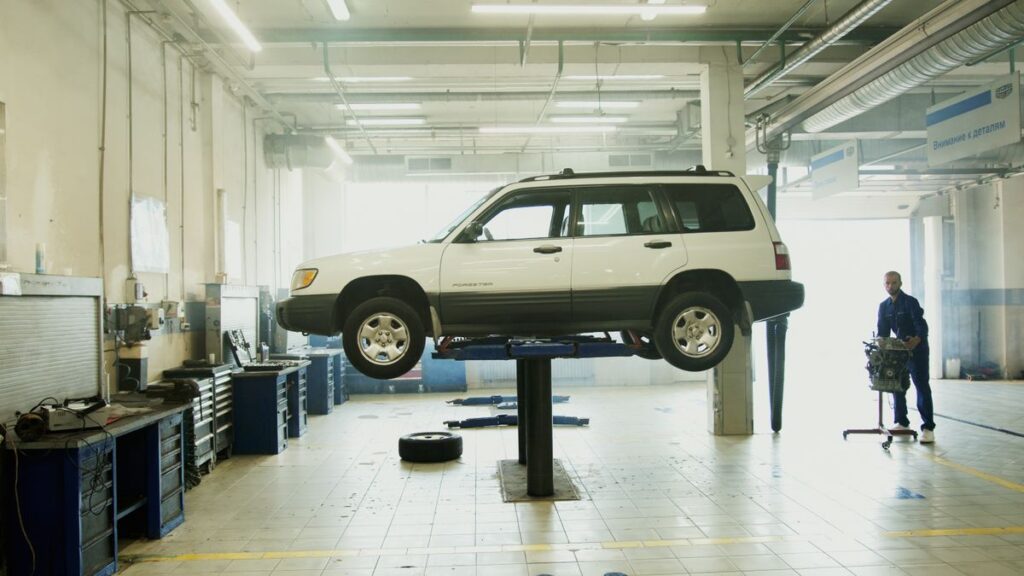
Preventing a Frozen Parking Brake This Winter
West Michigan slush, refreezing nights and road salt are hard on parking brakes. Many owner’s manuals say that when there is a risk of the brake freezing, such as after driving through deep slush or in very cold weather, you can park in P (or in gear on a manual) on level ground and skip the parking brake or use it only briefly. Check your own manual first, and block the wheels on a slope.
On dry days, use the parking brake regularly so the cable and shoes keep moving. Salt also attacks the rear calipers and the lines around them, which we cover in our post on brake line rust from road salt. Add a parking brake check to your winter car maintenance checklist so cracked boots get caught before the first freeze.
Our brake repair in Grand Rapids includes parking brake inspection and repair on foreign and domestic vehicles. Hendrick Hoffman, our owner and head mechanic, is ASE and State of Michigan certified in brakes and electrical, so both sides of the system get checked.
Frequently Asked Questions
Can a parking brake freeze?
Yes. Water that gets into the cable through worn boots can freeze with the cable pulled tight, and wet rear shoes or pads can freeze to the drum or rotor overnight.
Can I drive with the parking brake stuck?
No. A brake that stays applied overheats quickly and can damage the rear brakes, and a locked wheel makes the car hard to control. If it won’t release with the safe steps above, leave the car parked and call a shop.
Why won’t my electronic parking brake release?
The most common reasons are low battery voltage, a release condition not being met (usually the brake pedal pressed with the ignition on), or a fault in an actuator motor, the wiring or the control module. A scan tool reads the stored fault codes.
Should I use the parking brake in winter?
On most days, yes, because regular use keeps the parts moving. Many owner’s manuals say to skip it or apply it only briefly when there is a real risk of freezing, parking in P or in gear on level ground instead. Follow your own manual.
Need brake repair in Grand Rapids? Call 456 AutoFix at 616-279-3832, Monday to Friday 8am to 5pm, or book through our contact page.
Can’t make it during the day? Use our after-hours drop-off. We’re at 456 Carrier St NE in Creston.