
As an Amazon Associate, 456 AutoFix earns from qualifying purchases. Product links below go to Amazon, where you can confirm the right part for your vehicle.
A Volvo that idles a little rougher than it used to, or pauses for a beat before the turbo pulls, gets a lot of owners thinking about a bottle of cleaner. The best fuel system cleaner for Volvo engines depends less on the badge on the hood and more on whether the engine under it sprays fuel into the ports or straight into the cylinders.
Below we explain how the two engine families differ, what to read on the label, and then review five cleaners. For a wider look at detergent types across every make, see our guide to choosing a fuel system cleaner for any gasoline engine.
Quick answer
Which fuel system cleaner suits a Volvo?
For a Drive-E turbo four-cylinder, pick a PEA cleaner whose label covers direct injection, such as STP Complete or Gumout Multi-System Tune-Up. An older five-cylinder Volvo with high miles suits Valvoline MaxLife Complete. Pour it into a low tank before filling up, and remember no tank additive cleans carbon off DI intake valves.
Our Quick Picks
Three cleaners that cover the main Volvo jobs: a PEA formula for Drive-E turbo engines, a high-mileage formula for older five-cylinders, and a stabilizing cleaner for plug-in hybrids and stored cars.

STP Complete Fuel System Cleaner
A PEA cleaner whose listing names direct injection and hybrids.

Valvoline MaxLife Complete
A cleaner built around older engines with many miles on them.

Gumout Multi-System Tune-Up
Cleans injectors while keeping fuel fresh during long sits.
Drive-E or Five-Cylinder: Why Your Engine Matters
From roughly the 2015 model year, most Volvos in the US moved to the 2.0-liter Drive-E four-cylinder sold as the T5, T6 and T8. These engines are turbocharged and use direct injection, so the injector sits in the combustion chamber and fires fuel at very high pressure. A detergent in the tank reaches those injector tips, which is where it does its useful work.
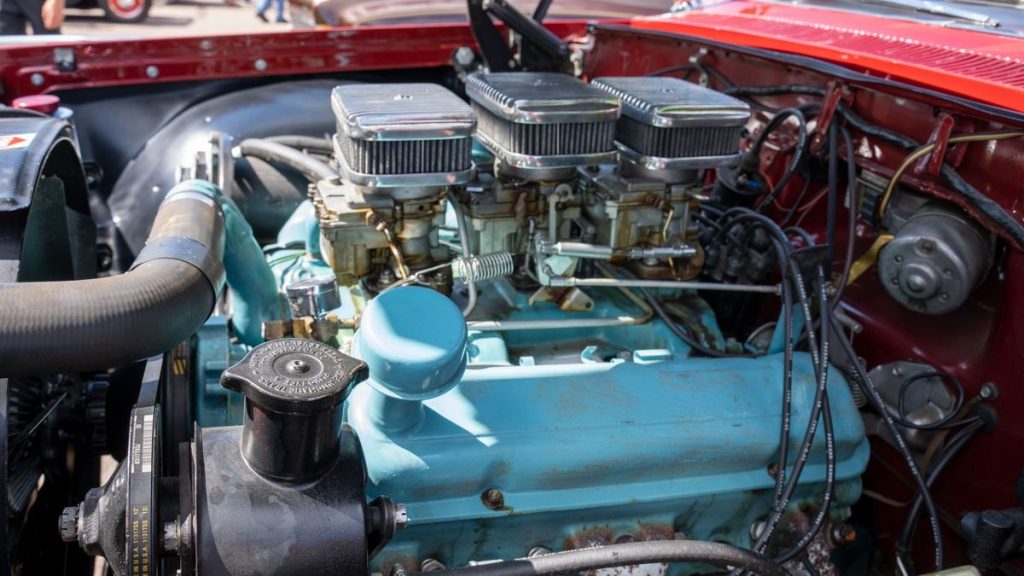
Older Volvos such as the S40, V50, C30, C70 and earlier S60 and XC70 mostly carry a five-cylinder engine, and the first XC90 also offered a 3.2 six. Many of those engines use port injection, which sprays fuel onto the back of the intake valves. On a port-injected car, a cleaner washes over the valves on every intake stroke, so it can help keep them clean as well as the injectors.
The 2015 and 2016 model years overlap, and some S60, V60, XC60 and XC70 trims were sold with either engine. Check the engine code in your owner’s manual or on the registration before you decide what a cleaner can do for your car.
Reading the Bottle Before You Buy
The front of most bottles promises power and mileage. The back label tells you more, and four details are worth a look before you choose the best fuel system cleaner for Volvo use.
- Engine coverage: a Drive-E owner wants a label that names direct injection or GDI and turbo engines.
- Detergent type: some makers say they use PEA (polyetheramine), a detergent known for cleaning hot injector tips. Others don’t name it, so only the label can confirm it.
- Treat rate: how many gallons one bottle covers. Compare it with your tank size, add the bottle to a low tank and fill once.
- Sensor safety: look for a statement that the product is safe for oxygen sensors and catalytic converters.
Plug-in T8 owners have one extra point to weigh. A car that runs mostly on battery power can keep the same tank of gasoline for weeks, so a cleaner that also stabilizes fuel earns its place in that garage.
Best Fuel System Cleaner for Volvo: Five Bottles Reviewed
None of these cleaners is made only for Volvo, and none needs to be. Each note below repeats what the maker or the Amazon listing states, so follow the label on dose and frequency.
1. STP Complete Fuel System Cleaner: 12 oz PEA Formula for Turbo and DI Engines
- One 12 fl oz bottle for gasoline engines
- PEA formula with corrosion inhibitor
- Listed for turbo, direct injection and hybrid engines
- Suggested use every 4,000 miles
STP Complete Fuel System Cleaner is a 12 fl oz bottle meant to be poured into the gas tank as a full treatment for gasoline engines. The listing describes it as a PEA fuel system cleaner and says it carries twice the cleaning agents of leading premium gasoline, which places it among the stronger treatments rather than a light dose for every fill-up.
For a Volvo owner, the most useful line on the listing is compatibility: it names turbo, direct-injection and hybrid engines, which covers the Drive-E T5, T6 and T8 models. The formula also includes a corrosion inhibitor, and STP suggests using one bottle every 4,000 miles as part of regular service. That interval lines up neatly with an oil change schedule if you like to keep things simple.
Add it to a low tank, fill up and drive normally so the treated fuel passes through the injectors. It suits a daily-driven XC60, XC90 or S60 that sees a mix of highway and short trips. It is a gasoline product only, so it does not suit a diesel, and like any tank cleaner it cannot reach the intake valves on a direct-injection engine. If a stumble remains after a full tank, look for another cause.
View STP Complete Fuel System Cleaner on Amazon
2. Valvoline MaxLife Complete Fuel System Cleaner: 12 oz for Engines Over 75K Miles
- 12 oz bottle for high-mileage engines
- Removes built-up fuel system deposits
- Helps protect against future buildup
- Aimed at reducing friction and wear
Valvoline MaxLife Complete Fuel System Cleaner belongs to the brand’s MaxLife family, which is aimed at engines that have already covered a lot of ground. The listing says it is designed for vehicles with more than 75,000 miles and that it removes stubborn deposits that build up over time in injectors, fuel pumps and carburetors.
That focus fits an older five-cylinder Volvo well. Cars like the S40, V50, C30 and earlier S60 and XC70 are now mostly well past that mark, and many of those engines use port injection, so the treated fuel also washes over the intake valves. Valvoline also says the formula helps reduce friction and wear and, with regular use, protects against deposits returning.
The bottle is a straightforward pour into a near-empty tank followed by a fill-up. It suits an owner who wants one cleaner to use on a steady schedule as the car ages, rather than a single rescue dose. The listing does not single out direct injection, so a Drive-E owner may prefer a product that names it on the label. It is also not a fix for a misfire or a lit warning light, which need a proper diagnosis first.
View Valvoline MaxLife Complete on Amazon
3. Gumout 510011 Multi-System Tune-Up: 16 oz PEA Cleaner and Fuel Stabilizer
- 16 oz bottle with PEA formula
- Cleans GDI injectors and carburetors
- Stabilizes fuel and fights ethanol corrosion
- Listed for gas, diesel and ethanol engines
Gumout’s 510011 Multi-System Tune-Up is a 16 oz bottle that combines a fuel system cleaner with a fuel stabilizer. Gumout describes it as a PEA formula and says it cleans GDI injectors and carburetors while helping prevent future carbon buildup, so it covers both newer and older engine designs in one product.
The stabilizer side is what sets it apart for some Volvo owners. A T8 plug-in hybrid that runs mostly on electric power can carry the same gasoline for weeks, and a car stored through the winter sits even longer. Gumout says the formula conditions fuel, fights ethanol and water corrosion and stabilizes gas, which suits both situations. The listing also says it works in gasoline, diesel and ethanol engines, plus small equipment such as lawn mowers.
Gumout lists several ways to use it, including the gas tank, the crankcase or through the intake. Most Volvo owners will only need the tank method, so follow the label for the dose. It suits a driver who wants one bottle for the car and the yard equipment. It is a gentler, multi-use treatment, so a car with a clear drivability complaint still needs a diagnosis rather than a second bottle.
View Gumout Multi-System Tune-Up on Amazon
4. Sea Foam High Mileage Fuel and Oil Treatment: 16 oz Cans, Pack of 6

- Six 16 oz cans for repeat treatments
- Cleans fuel injectors when added to fuel
- Upper engine lubrication
- Safe for all gasoline fuels and motor oils
Sea Foam High Mileage is the higher-mileage version of the brand’s long-running motor treatment, sold here as a pack of six 16 oz cans. Sea Foam says the formula is made to keep older cars and trucks running longer, and the six-pack makes sense for an owner who plans to treat the tank at regular intervals rather than once.
Added to the fuel, the listing says it cleans fuel injectors and carburetor jets and lubricates critical upper engine areas. Sea Foam also says it is safe for all gasoline fuels and all types of motor oil, and that regular use helps reduce long-term wear and rough running. For a high-mileage five-cylinder Volvo that still runs well, that steady approach fits the goal of keeping deposits from building up in the first place.
The listing also describes adding it to crankcase oil to help with the common causes of oil burning. Many owners keep additives out of the oil, especially on a car still under warranty, so check your owner’s manual before using it that way. It suits a driver who wants a mild, repeatable fuel treatment. It is not a strong one-tank deep clean, and the listing does not mention direct injection specifically.
View Sea Foam High Mileage on Amazon
5. Rislone 4700 Hy-per Fuel: 16.9 oz Six-in-One Complete Fuel System Cleaner
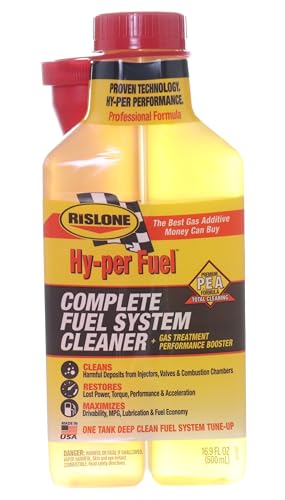
- 16.9 oz bottle with six functions
- Injector cleaner, upper cylinder lube and stabilizer
- EPA registered, safe with O2 sensors
- Targets rough idle, hard starting and hesitation
Rislone 4700 Hy-per Fuel is a 16.9 oz complete fuel system cleaner that Rislone sells as six products in one bottle. The listing says it equals an injector and fuel system cleaner, an upper cylinder lubricant, a fuel stabilizer and conditioner, dry gas, a gas treatment and an octane booster, which suits an owner who would rather buy one bottle than several.
Rislone ties the formula to specific complaints. The listing says it helps with noisy injectors and fuel pumps, rough idle, hard starting and hesitation, and that regular use can reduce fuel system and emission control repairs. It also states that the product is EPA registered, will not void a new vehicle warranty and is safe to use with oxygen sensors and catalytic converters, which is reassuring on any modern Volvo.
Pour it into the tank before a fill-up and follow the label for the dose. It suits a Volvo with a mild rough idle or a slow start on cold mornings, where deposits are a reasonable suspect. The listing does not name direct injection, so Drive-E owners may want to compare it with a cleaner that does. If the symptom stays after a full tank, a scan for codes is the next step.
View Rislone Hy-per Fuel on Amazon
Which Bottle for Which Volvo
The table sorts the five cleaners by the job they suit. The engine notes come straight from each listing, not from Volvo, which does not endorse any of them.
| Cleaner | Size | What the listing says | Good fit for |
|---|---|---|---|
| STP Complete | 12 oz | PEA, all gasoline engines incl. turbo, DI and hybrid | Drive-E T5, T6 and T8 |
| Valvoline MaxLife Complete | 12 oz | Made for engines past 75K miles | Older five-cylinder cars |
| Gumout Multi-System Tune-Up | 16 oz | PEA, cleans GDI injectors, stabilizes fuel | Plug-in hybrids and stored cars |
| Sea Foam High Mileage | 16 oz, 6-pack | Fuel and oil use, higher-mileage engines | High-mileage cars, regular doses |
| Rislone Hy-per Fuel | 16.9 oz | Six in one, safe with O2 sensors and converters | Rough idle or hard starting |
If your Volvo is a Drive-E car, start with a cleaner that names direct injection. If it is an older five-cylinder with a long service history, a high-mileage formula makes sense, and the best fuel system cleaner for Volvo cars in that group is often simply the one you will use on schedule.

Using a Cleaner Through a Michigan Winter
West Michigan winters bring a lot of short, cold trips, and an engine that rarely reaches full temperature gives deposits more chance to form. A cold tank that sits half empty can also collect condensation. Keeping the tank fuller in winter and adding a cleaner before a long highway drive gives the detergent heat and time to work.
Cars parked for the season need a slightly different plan. Add a cleaner with a stabilizer, fill the tank, then drive for ten minutes or so so the treated fuel reaches the injectors before the car sits. When spring comes, the first tank goes through a fuel system that was protected the whole time.
More is not better. Doubling the dose or adding a bottle every fill-up does not clean faster, and some labels say to wait a set number of miles between treatments. Good fuel and a steady oil change schedule do much of the same work, and our roundup of the 0W-20 and 0W-30 oils Volvo engines call for covers the oil side.
Symptoms a Bottle Won’t Fix
A cleaner is maintenance, not a repair. If your Volvo stumbles under throttle, a worn ignition coil, a tired spark plug, a boost leak or a failing sensor is just as likely as dirty injectors, and our guide on why a car hesitates when accelerating walks through the usual suspects. On a Drive-E engine, carbon on the intake valves needs a shop cleaning with the intake off.
A lit check engine light deserves a scan before any bottle goes in. The DOE and EPA fuel economy guide to keeping a vehicle in shape points out that modern cars can seem to drive normally even when a repair is needed. Our check engine light diagnostic in Grand Rapids reads the codes and live data so you treat the cause.
High-mileage five-cylinder Volvos raise one more point. Those engines use a timing belt, and many Drive-E four-cylinders do too, so a car that is due for a tune-up may also be due for its belt. Our comparison of timing belt kit brands and what each kit includes shows the parts involved, and our timing belt replacement service in Grand Rapids handles the job along with our wider foreign car repair.
More Buying Guides
Frequently Asked Questions
Does fuel injector cleaner work on a Drive-E Volvo?
It can help keep the direct injectors clean, and labels such as STP Complete and Gumout Multi-System Tune-Up name direct injection. It cannot reach the intake valves on these engines, because fuel never touches them. Carbon on those valves needs a shop cleaning.
What is the best fuel injector cleaner for a Volvo XC90 or XC60?
The engine matters more than the model. Newer XC90 and XC60 models with the 2.0 Drive-E engine suit a PEA cleaner rated for direct injection, while an older XC90 3.2 or five-cylinder XC60 can use a high-mileage formula. Confirm your engine in the owner’s manual first.
How often should I add a fuel system cleaner to my Volvo?
Follow the label. STP’s listing, for example, suggests one bottle every 4,000 miles. Adding extra bottles or doubling the dose does not clean any faster.
Is a fuel system cleaner safe for my catalytic converter?
Most major cleaners say they are safe for oxygen sensors and catalytic converters, and Rislone states it on its listing. If a bottle says nothing about sensor safety, choose one that does.
Rough idle, a stumble off the line or a warning light on your Volvo’s dash? Call 456 AutoFix at 616-279-3832, Monday to Friday 8am to 5pm, or request a drivability check through our contact page.
Working late most days? Bring the car to our Creston shop at 456 Carrier St NE after hours and use the drop-off, and we’ll take it from there.