
A steady check engine light is a reminder. A flashing one is a warning that something is going wrong inside your engine right now, while you drive.
Here’s what the flashing means, what to do in the next few minutes, and the usual causes.
Quick answer
Why is my check engine light flashing?
A flashing check engine light means your engine is misfiring badly right now. Unburned fuel is reaching the exhaust, where it can overheat and ruin the catalytic converter in a short time. Ease off the gas, avoid hard acceleration and towing, pull over if the car shakes, and get it diagnosed as soon as possible.
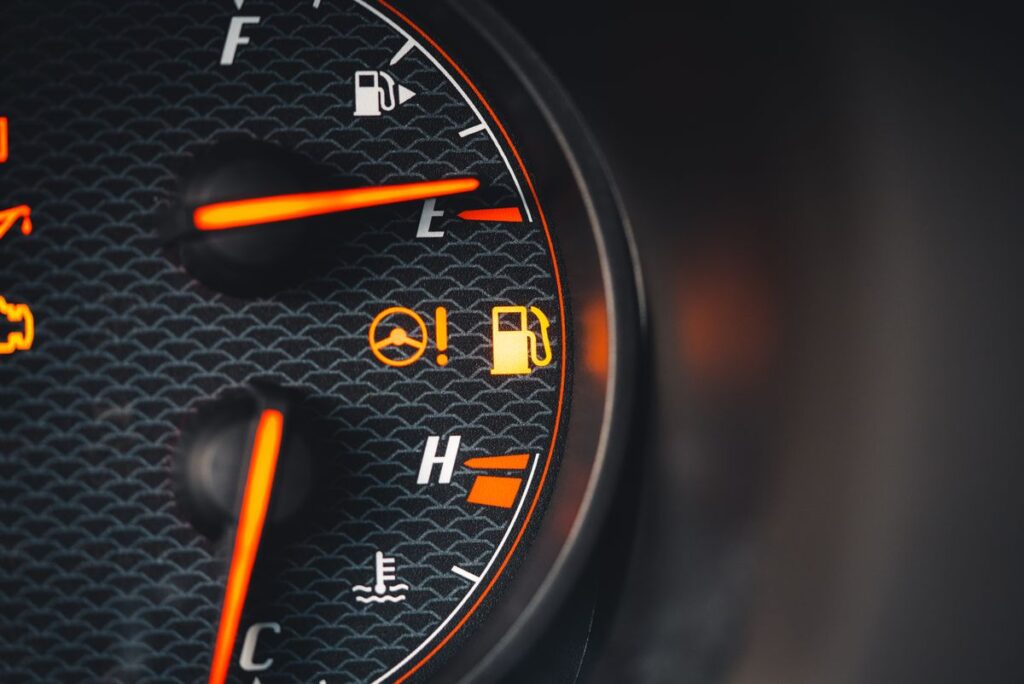
What a Flashing Check Engine Light Actually Means
Your engine’s computer counts misfires in every cylinder. A misfire happens when the air and fuel in a cylinder don’t burn properly. When the misfire rate gets high enough to harm emissions parts, the light flashes instead of holding steady.
The real danger is the fuel that doesn’t burn. It flows into the exhaust and ignites inside the catalytic converter, which can push the converter far past its normal temperature. The US EPA’s fact sheet on on-board diagnostics notes that severe misfire over only a short period can seriously damage the catalytic converter, and advises drivers to reduce speed and seek service.
A melted converter turns one repair into two. If you notice a rotten egg smell or a rattle underneath, our guide to exhaust leak symptoms and what they mean and our exhaust and catalytic converter repair in Grand Rapids page cover that side of the problem.
What to Do Right Now When the Light Flashes
You don’t need to panic, but you do need to change how you drive immediately. Work through these steps in order.
- Ease off the gas. Misfires usually get worse under load. Gentle throttle often makes the flashing slow or stop.
- Avoid hard acceleration, steep hills and towing. Pulling a trailer or merging hard is exactly the kind of load that makes a weak cylinder misfire more.
- Pull over if the car shakes or loses power. Find a safe spot, shut the engine off and let it sit for a few minutes.
- Check the other gauges. A rising temperature gauge or oil pressure warning means the engine should stay off.
- Don’t keep driving long distances. A short, gentle drive to a shop is one thing. A highway trip risks the converter.
- Get it diagnosed promptly. If the engine runs very rough, a tow is safer.

Don’t relax just because the light stops flashing. That often only means you’ve backed off the throttle, and the misfire returns under load.
Why Is My Check Engine Light Flashing? 6 Common Misfire Causes
Every cylinder needs three things to fire: a strong spark, the right amount of fuel and good compression. Lose any one of them and you get a misfire.
1. Worn or Fouled Spark Plugs
As plugs wear, the gap grows until the spark can’t jump it reliably under load. Fouling does the same. Intervals vary by engine, so check your owner’s manual or your factory scheduled maintenance plan.
2. Failing Ignition Coils
Most modern engines have one coil sitting on top of each plug. A cracked or weak coil often causes a misfire in a single cylinder that gets worse when the engine is hot or working hard. Coil and wiring faults are very common on foreign and European cars.
3. Clogged or Leaking Fuel Injectors
An injector that sprays too little fuel makes a cylinder run lean. One that leaks or sticks open floods the cylinder. Either way, the mixture won’t burn cleanly.

4. Vacuum Leaks
A split hose or failed intake gasket lets in air the computer didn’t measure. This tends to cause misfires at idle, sometimes with a hissing sound and a lean code alongside the misfire codes.
5. Low Compression
Worn rings, a leaking valve or a head gasket problem can leave a cylinder unable to hold pressure. It’s the least common cause, but worth ruling out before buying parts.
6. Bad Fuel or Water in the Tank
Contaminated fuel can cause misfires across several cylinders at once. Suspect it if the flashing started right after a fill-up, but it’s less common than ignition faults.

Misfire Causes Compared: Signs and Urgency
| Cause | Common signs | How urgent |
|---|---|---|
| Worn or fouled spark plugs | Rough idle, hesitation when accelerating, worse on cold starts | High Drive gently and book a diagnosis now |
| Failing ignition coil | One cylinder misfire, shaking under load or when hot | High Limit driving, converter at risk |
| Fuel injector fault | Rough running, fuel smell, poor mileage | High A leaking injector can flood the cylinder |
| Vacuum leak | Misfire mainly at idle, hissing, lean codes | Soon Get it checked within days |
| Low compression | Steady misfire in one cylinder, possible ticking or coolant loss | High Stop driving until tested |
| Bad fuel or water in fuel | Several cylinders misfire after a fill-up, stalling | Soon Avoid long drives until checked |
Flashing vs Steady: The Short Version
| Light | What it usually means | How urgent |
|---|---|---|
| Steady, car drives normally | A stored fault, often a sensor or emissions item | Moderate Book a diagnosis soon |
| Steady, rough running | A fault already affecting how the engine runs | Soon Get it checked within days |
| Flashing | Active severe misfire, converter at risk | High Ease off and get it diagnosed now |
For the full picture on steady lights, loose gas caps and how a proper diagnosis works, see our check engine light diagnosis in Grand Rapids page.
Why P0300 to P0308 Point to a Cylinder, Not a Part
Misfire codes follow a simple pattern. P0300 means random or multiple cylinder misfires. P0301 through P0308 name the cylinder: P0301 is cylinder 1, P0304 is cylinder 4, and so on.
Notice what the code doesn’t say. It tells you where the misfire is, not why it’s happening. A P0303 could be a plug, a coil, an injector, a wiring fault or low compression in cylinder 3.

That’s why swapping parts based on a code is a gamble. A good diagnosis narrows it down with tests:
- Moving the coil to another cylinder to see if the misfire follows
- Inspecting the plug for wear or fouling
- Reading freeze-frame data for speed and load
- Testing injectors, wiring and compression when needed
A random P0300 usually points to something all cylinders share, like a vacuum leak or bad fuel. Wiring faults can also trigger misfires, which is where engine electronics and wiring repair comes in.
Misfires and West Michigan Weather
Cold starts are hard on weak ignition parts. A worn plug or tired coil that copes in summer often starts misfiring on a January morning in Grand Rapids. Melting snow and salty road spray can also let moisture into coil wells.
Michigan has no emissions test to force the issue, so it’s easy to ignore a light. A flashing one needs attention now, before a misfire repair becomes a converter replacement.
Frequently Asked Questions
Can I drive with a flashing check engine light?
Only gently and only as far as you need to, ideally straight to a shop. If the engine shakes, loses power or other warnings appear, pull over and have it towed.
Why did my check engine light flash and then go solid?
The misfire rate dropped below the flashing threshold, often because you eased off the gas. The fault is still stored, and it will usually flash again under load, so get it diagnosed.
Can a bad spark plug make the check engine light flash?
Yes. Worn or fouled spark plugs and failing ignition coils are among the most common causes of a flashing light. A proper test confirms which one before you replace anything.
Will disconnecting the battery fix a flashing check engine light?
No. It may clear the light briefly, but it erases useful diagnostic data. The misfire is still there, so the light returns and the converter stays at risk.
Need a flashing check engine light diagnosed in Grand Rapids? Call 456 AutoFix at 616-279-3832, Monday to Friday 8am to 5pm, or book through our contact page.
Can’t make it during the day? Use our after-hours drop-off. We’re at 456 Carrier St NE in Creston.