As an Amazon Associate, 456 AutoFix earns from qualifying purchases. Product links below go to Amazon, where you can confirm the right part for your vehicle.
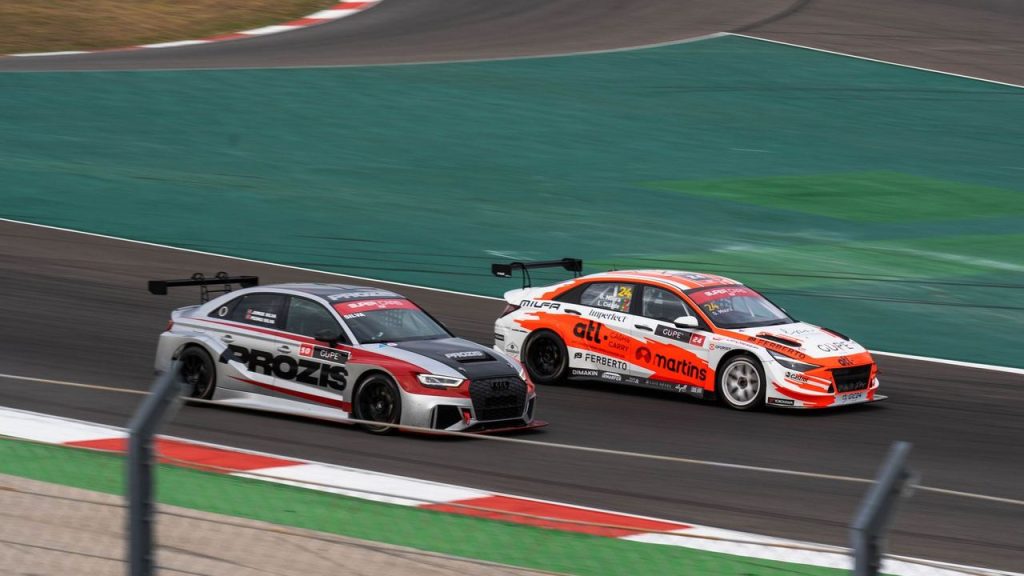
A lapping day, an autocross run or a few quick passes at the strip can heat brake fluid far beyond anything a commute does. The best brake fluid for performance driving is the one that stays liquid at those temperatures, matches the DOT class your car calls for and gets changed often enough to keep its numbers.
Below, the boiling point figures explained, then six high-temperature fluids. For everyday street fluid, see our DOT 4 brake fluid guide is the better starting point.
Quick answer
What brake fluid holds up to hard laps and repeated hard stops?
Pick a racing-grade fluid in the class printed on your reservoir cap. RAVENOL R340+ and VP Racing 622 are DOT 4 fluids with dry boiling points above 600°F on their listings. Wilwood Hi-Temp 570 suits DOT 3 systems. All of them need changing more often than street fluid, so flush before the season and after hot events.
Our Quick Picks
Three starting points: a dual-purpose DOT 4, a track-day DOT 4 and a fluid for DOT 3 systems. All six are reviewed below.

RAVENOL R340+
A racing DOT 4 that the listing describes for track days and demanding road use.

VP Racing 622
Full synthetic DOT 4 with 622°F dry and 399°F wet boiling points.

Wilwood Hi-Temp 570
A high-temperature fluid that keeps DOT 3 cars inside their class.
Why Hard Driving Boils Ordinary Fluid
Braking turns speed into heat, and some of it soaks through the caliper pistons into the fluid. On the street the system cools between stops. On a road course, with hard braking every few hundred yards, the caliper can stay hot all session.
If the fluid in the caliper boils, it forms vapor bubbles. Vapor compresses where liquid does not, so the pedal goes soft or sinks toward the floor. That is different from pad fade, where the pedal stays firm but the car simply stops less.
The dry boiling point applies to fresh fluid from a sealed container, and the wet figure applies after it has absorbed a set amount of water. Glycol fluids pull that moisture from the air over time. The federal standard, FMVSS No. 116, sets the minimums for each class:
| Class | Minimum dry boiling point | Minimum wet boiling point | Base |
|---|---|---|---|
| DOT 3 | 401°F (205°C) | 284°F (140°C) | Glycol |
| DOT 4 | 446°F (230°C) | 311°F (155°C) | Glycol and borate ester |
| DOT 5.1 | 500°F (260°C) | 356°F (180°C) | Glycol and borate ester |
| DOT 5 | 500°F (260°C) | 356°F (180°C) | Silicone, never mixed with the others |
Choosing a Fluid for the Way You Drive
Start with the reservoir cap and the owner’s manual, which name the class your system was designed around. Glycol fluids rated DOT 3, DOT 4 and DOT 5.1 are made to be compatible, while silicone DOT 5 never goes into a system built for glycol.
- Spirited street driving: a strong wet boiling point matters more than the dry figure, since flushes are far apart.
- Autocross and drag racing: short runs build less heat, so a high-temperature DOT 3 or DOT 4 usually covers it.
- Road course track days: look for a dry boiling point near 600°F or higher and bleed before each event.
- Endurance sessions or heavy cars: high dry and wet ratings together, plus brake cooling if the car allows it.
Best Brake Fluid for Performance Driving: Six Fluids in Detail
Boiling points below are quoted as each listing or maker states them. The class on the container still has to match your car.
1. RAVENOL R340+ Racing Brake Fluid: 500 ml DOT 4 with 648°F Dry Boiling Point
- Listed maximum dry boiling point of 342°C / 648°F
- Wet boiling point of 210°C / 410°F
- Meets FMVSS 116 DOT 4, ISO 4925-4 and SAE J1704
- Listed as ABS compatible and neutral to rubber seals
RAVENOL R340+ is the German oil maker’s racing brake fluid, sold in a 500 ml container. The listing describes it as suited to racing, track days and demanding road use, and it carries the full set of standard approvals: FMVSS 116 DOT 4, ISO 4925-4 and SAE J1704.
The headline figure is a maximum dry boiling point of 342°C, or 648°F, the highest on this page. More useful for a dual-purpose car is the wet boiling point of 210°C (410°F), which stays well above the DOT 4 minimum once the fluid has picked up moisture. RAVENOL lists a boric acid ester and glycol ether base with additives for thermal and chemical stability, and says compressibility is very low for a consistent pedal.
The listing also states the fluid is neutral toward rubber and plastic parts and works with ABS systems, which covers most cars built in the last few decades. A single 500 ml container may not be enough for a full flush on a larger car, so count on buying two. Drivers who never leave the street will get little from its track margin.
2. Pagid RBF Racing Brake Fluid: 0.5 Liter Can with 626°F Dry Boiling Point

- Typical dry boiling point of 330°C / 626°F
- Typical wet boiling point of 200°C / 392°F
- Formulated for very high operating temperatures
- Sealed 0.5 liter metal can
Pagid is widely known in motorsport for its racing brake pads, and its RBF Racing Brake Fluid is formulated to support that brake hardware at very high temperatures. It comes in a 0.5 liter metal can, and the listing notes the same fluid is also sold in multi-can packs.
Pagid quotes a typical dry boiling point of 330°C (626°F) and a wet boiling point of 200°C (392°F). That wet figure is one of the stronger numbers here, which helps when a flush runs a little late. The listing says the fluid keeps its viscosity, lubricity and low compressibility at extreme temperatures, the properties that keep pedal travel steady through a long session.
The listing does not print a DOT class, so read the can label or ask Pagid before mixing it with other fluid or putting it in a street car with a specified class. Pagid also tells buyers to follow the vehicle maker’s recommendations, keep the fluid clean and dry, store it in its original container and dispose of used fluid responsibly. It suits drivers who run longer sessions on heavy brakes more than casual autocross.

3. VP Racing 622 Brake Fluid: Full Synthetic DOT 4 with 622°F Dry Boiling Point
- Dry boiling point of 622°F / 328°C
- Wet boiling point of 399°F / 204°C
- Viscosity 1495 cSt at -40°C
- Full synthetic DOT 4, 500 ml
VP Racing is a fuel company with a long motorsport history, and its 622 Racing Brake Fluid is a full synthetic DOT 4 in a 500 ml bottle. The name comes from its stated dry boiling point of 622°F (328°C). The listing puts the wet boiling point at 399°F (204°C) and points out that standard DOT 4 fluids only need to reach 311°F when wet.
The listing explains the two problems it is meant to prevent. Vapor lock is the loss of pedal pressure when fluid boils in the caliper, and fade is the soft, spongy pedal that comes from heat building up at speed or from riding the brakes.
VP also publishes viscosity figures: 1495 cSt at -40°C and 2.59 cSt at 100°C. The cold number is useful context for a car that still sees winter use, because thicker fluid at low temperature can slow ABS and stability control response. Check your owner’s manual if the car calls for a low-viscosity fluid. For a regular track day driver who flushes each spring, it is a sensible all-round choice for the whole season.
4. Millers Racing Brake Fluid 300 Plus: Fully Synthetic DOT 4 Rated Near 600°F

- Dry boiling point of almost 600°F
- Fully synthetic DOT 4 racing fluid
- Aimed at vapor lock and fade resistance
- 500 ml container
Millers Oils is a British lubricant maker with a motorsport range, and its Racing Brake Fluid 300 Plus is a fully synthetic DOT 4 in a 500 ml container. The 300 in the name refers to its dry boiling point, which the listing gives as almost 600°F. That places it comfortably above the DOT 4 minimum of 446°F and in the same group as most racing fluids here.
The listing focuses on three results: resistance to vapor lock, resistance to brake fade and better brake feel with more feedback for the driver. Those are the qualities that matter in hill climbs, sprints and club races, where hard stops come close together and a soft pedal costs time.
The Amazon listing is short and does not give a wet boiling point or name an ABS note, so check the label or Millers’ own data sheet before relying on it for a car that spends most of its time on the road. Treat it as a fluid to flush in before an event season and replace afterward. Drivers who want one fill to last a full year of commuting should look at the higher wet ratings above.
View Millers 300 Plus on Amazon
5. Allstar Performance ALL78108: Hi-Temp DOT 4 Racing Fluid with 594°F Dry Boiling Point

- Dry boiling point of 594°F
- Wet boiling point of 383°F
- Conforms to DOT 4 specifications
- Designed for high temperature racing
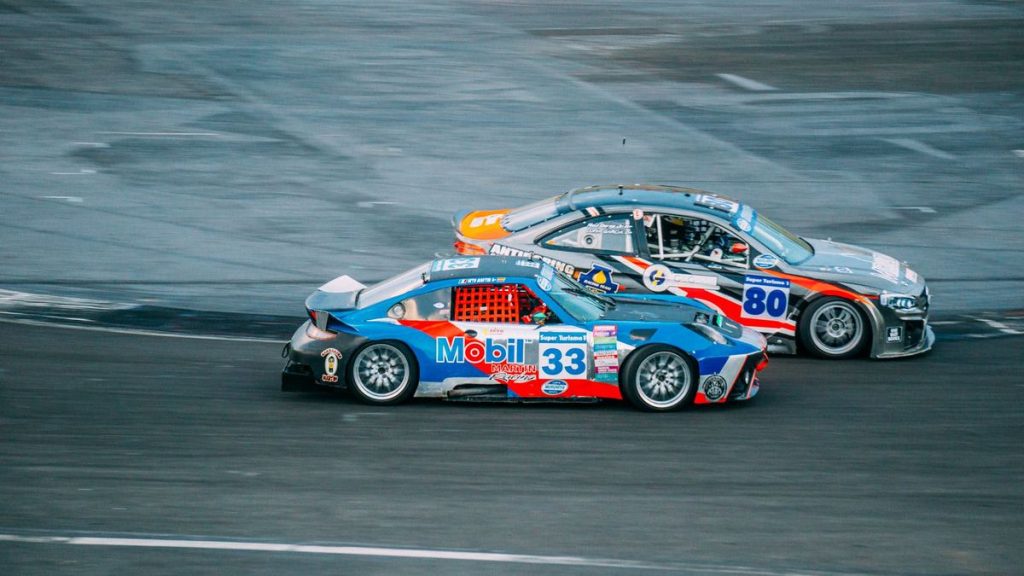
Allstar Performance supplies parts to oval track and drag racers, and its ALL78108 Hi-Temp Racing Brake Fluid is aimed at those cars. The listing says it is designed for extreme, high temperature racing conditions and conforms to DOT 4 specifications. That keeps it in the same class as the other DOT 4 fluids here, so it can follow a full flush in a DOT 4 system.
Allstar gives a dry boiling point of 594°F and a wet boiling point of 383°F. Both numbers sit well above the DOT 4 minimums of 446°F dry and 311°F wet, and the wet figure gives some margin for a car that runs a few events between flushes. Short track and drag cars put heat into the brakes in quick bursts, which is exactly the use this fluid is built around.
The listing is brief and does not state a container size in its feature list, so check the product photos and description before ordering enough for a full flush. A road course car that runs long sessions may want the higher ratings of the RAVENOL or Pagid fluids instead.
View Allstar ALL78108 on Amazon
6. Wilwood Hi-Temp 570: DOT 3 Racing Brake Fluid, 12 oz Bottle
- Dry boiling point of 573°F (Wilwood data)
- Wet boiling point of 313°F (Wilwood data)
- Classed as DOT 3
- Single 12 oz bottle
Wilwood Hi-Temp 570 is a long-running racing fluid from the American brake maker, sold here as a single 12 oz bottle. It is classed as DOT 3, which makes it the pick on this page for cars whose reservoir cap and manual call for DOT 3.
Wilwood’s product page lists a dry boiling point of 573°F and a wet boiling point of 313°F. The dry figure is far above the DOT 3 minimum of 401°F, while the wet figure is closer to everyday fluid, so the fresh-fill advantage fades faster than with the DOT 4 fluids above. Wilwood names high-performance street cars, autocross, dual-purpose street and track cars, drag racing, moderate-temperature dirt tracks and hydraulic clutch systems as typical uses.
Wilwood advises flushing the system completely when changing fluid rather than mixing classes, and suggests a yearly flush for street cars. A 12 oz bottle is small, so most cars need two or more bottles for a complete flush and bleed. It suits classic and muscle cars on DOT 3 systems far better than a modern car specified for low-viscosity DOT 4.
View Wilwood Hi-Temp 570 on Amazon
How the Six Compare on Paper
Where a listing gives no figure, the table says “not stated”.
| Fluid | Class on listing | Dry / wet boiling point | Good fit |
|---|---|---|---|
| RAVENOL R340+ | DOT 4 | 648°F max / 410°F | Street and track on one fill |
| Pagid RBF | Not stated | 626°F / 392°F | Long, hot road course sessions |
| VP Racing 622 | DOT 4 | 622°F / 399°F | Regular track day drivers |
| Millers 300 Plus | DOT 4 | Almost 600°F / not stated | Club racing and hill climbs |
| Allstar ALL78108 | DOT 4 | 594°F / 383°F | Short, hot racing runs |
| Wilwood Hi-Temp 570 | DOT 3 | 573°F / 313°F | DOT 3 street and strip cars |
Read the wet column as closely as the dry one. A car that sees a few events a year spends most of its life between the two numbers, so a strong wet rating protects you when a flush is overdue.
Several makers mention low compressibility for a firm pedal, but none gives a number to compare. A thorough bleed that clears every bubble does more for feel than switching brands.
Track Season From West Michigan
Our humid summers are hard on brake fluid, which draws moisture through hoses and the reservoir vent even while the car sits between events. Wilwood suggests a yearly flush for street cars and notes on its Hi-Temp 570 page that track cars can benefit from fresh fluid after every race weekend.
A sensible routine is a full flush in spring before the first event, a caliper bleed before each event after that and a second flush when the season ends. Our guide on how often to change brake fluid covers the street side of the schedule, and a brake fluid tester pen gives a quick moisture check between flushes.
Racing fluid left in a stored car over winter will be near its wet number by spring. Road salt also attacks brake lines and bleeder screws, so a seized bleeder is common on cars driven year round.
When to Hand the Flush to a Shop
A caliper bleed with a helper is a common driveway job. A full flush on some ABS cars needs a scan tool to cycle the hydraulic unit and clear old fluid from it. If the pedal sinks after a bleed, park the car and read our notes on a brake pedal that goes to the floor.
Fresh fluid will not fix glazed pads, cracked rotors or a sticking caliper. A track car that also commutes may need a compromise pad, and our list of brake pads for daily driving shows what suits the street side of that split.

Brake work here is overseen by owner and head mechanic Hendrick Hoffman, who holds ASE and State of Michigan brake certifications. Before the season, our brake repair service in Grand Rapids can check the pads, rotors, hoses and lines and flush the system before your first event.
More Buying Guides
Frequently Asked Questions
Can I use racing brake fluid on the street?
Yes, if its class matches your reservoir cap and owner’s manual. A high dry boiling point fades as moisture builds, so keep flushing on a regular schedule.
Can I mix a racing DOT 4 with the fluid already in my car?
Glycol DOT 3, DOT 4 and DOT 5.1 fluids are built to be compatible, but mixing drags the boiling point down toward the weaker fluid. Wilwood advises against mixing classes, so a full flush is the better plan. Silicone DOT 5 never mixes with any of them.
What is the best brake fluid for performance driving on a DOT 3 car?
A high-temperature DOT 3 such as Wilwood Hi-Temp 570 keeps you inside the class the car was built for. Many DOT 3 systems also accept DOT 4, so check your owner’s manual before choosing one of the DOT 4 fluids here.
Getting the car ready for track season? Call 456 AutoFix at 616-279-3832, Monday to Friday 8am to 5pm, or set up a brake inspection through our contact page.
Busy on weekdays? Our after-hours drop-off lets you leave the car at 456 Carrier St NE in Creston and pick it up once the work is done.