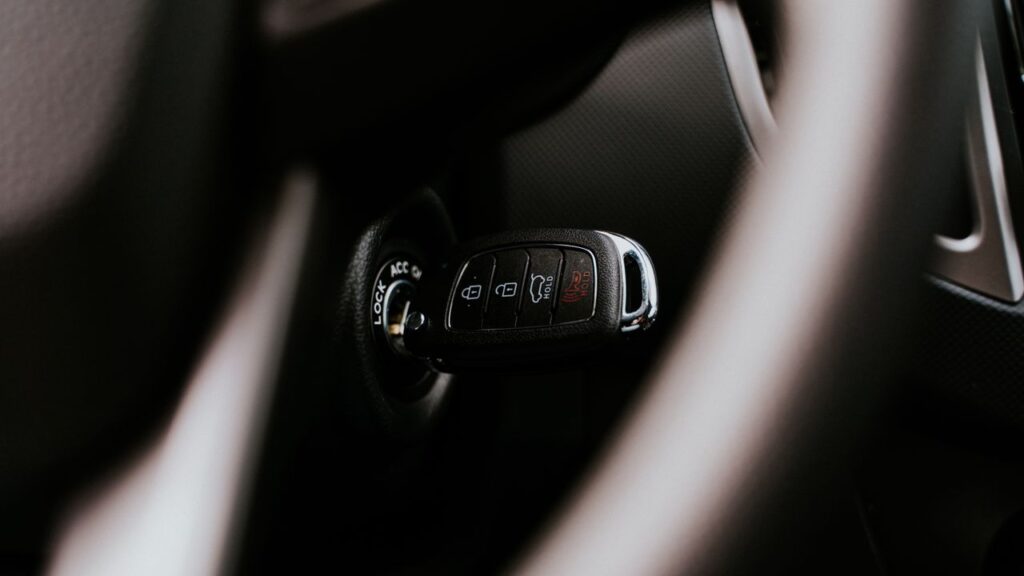
Bad starter symptoms are easy to mistake for a dead battery. You turn the key or press the button and get a click, a grind, a whir or nothing at all, and the engine never turns over.
Here are the signs that point to the starter, how to rule out the battery and wiring, and which ones are urgent.
Quick answer
What are the signs of a bad starter?
The common signs are a single click with bright dash lights but no crank, grinding while cranking, a whir with no engine movement, a starter that keeps running after the engine fires, starts that fail on some days but not others, no crank when the engine is hot, and smoke or a burning smell near the starter.

What the Starter Does
The starter is a small, powerful electric motor bolted near the back of the engine. When you turn the key, a relay sends a signal to the starter solenoid, which pushes a small pinion gear forward and closes a heavy switch.
The pinion meshes with the ring gear on the flywheel or flexplate, the motor spins the engine, and the engine fires. Each of those steps can wear out, and each fails with its own sound.
7 Bad Starter Symptoms to Watch For
1. One Click, Bright Lights, No Crank
A single solid click each time you turn the key, while the dash lights and headlights stay bright, usually means the solenoid is getting power but the motor is not spinning. Rapid clicking with dimming lights points more toward a weak battery. Our guide to a car not starting in cold weather breaks down each starting sound in more detail.
2. Grinding While Cranking
A harsh metal-on-metal grind means the pinion gear is not meshing cleanly with the ring gear, from worn teeth, a weak solenoid or a loose mount. Keep cranking like that and you can chew up the ring gear too. If the noise is more of a rattle, see our guide to a rattling noise when starting your car for the flexplate angle.

3. Whirring With No Crank
You hear the starter spin with a high whine, but the engine does not turn, because the drive gear is not gripping the ring gear. A slipping one-way clutch or a stuck pinion is the usual cause.
4. Starter Keeps Running After the Engine Starts
Once the engine fires and you let go of the key, the starter should drop out. If you hear a continued whine or grinding while the engine idles, the solenoid contacts may be sticking, or the ignition switch or relay may be holding the circuit on.
This one is urgent. A starter that stays engaged can overheat fast, damage the ring gear and drain the battery. Shut the engine off and have it checked before driving again.
5. Starts Some Days, Not Others
An intermittent no-crank that shows up in warm weather as well as cold is a strong starter clue. Worn brushes or a dead spot on the armature mean the motor works only when it happens to stop in a good position.
A tap on the starter may get you home once, but it signals a starter near the end, not a fix.
6. No Crank When the Engine Is Hot
The car starts fine in the morning, but after a drive and a short stop it will not crank, then starts again once it cools. Starters often sit near the exhaust, and heat raises resistance in worn windings. This heat-soak pattern usually means the starter is wearing out.
7. Smoke or a Burning Smell
Repeated cranking with a failing starter pulls heavy current and can overheat the motor or its cable. If you see smoke or smell hot wiring from under the car, stop trying to start it. Let it cool and get it inspected.
Starter, Battery or Wiring?
Many no-crank problems are not the starter at all. A few simple checks help narrow it down:
- Dash lights: bright lights with no crank lean toward the starter or its circuit. Lights that dim heavily or go out lean toward the battery or its cables.
- A jump start: if the car still just clicks with a good jump, the battery is probably not the problem.
- Battery terminals: white or green corrosion and loose clamps can block current and mimic a bad starter.
If the battery keeps going flat after sitting, the cause is usually a drain, covered in our guide to a car battery that dies overnight. If it dies while driving or the battery light comes on, read about bad alternator symptoms and charging problems.
How a Mechanic Tests a Starter
A new starter will not fix a corroded cable or a bad relay. Automotive Training Centre’s guide to bad starter symptoms and what techs test first lays out the usual order. Typical steps include:
- Test the battery’s state of charge and its health under load.
- Check the starter relay and confirm the starter gets its signal when the key turns.
- Run a voltage drop test on the main cable and the ground circuit while cranking.
- Measure the current the starter draws. High draw suggests internal drag, low draw suggests poor contact or engagement.
- Inspect the cables, ground straps and the starter mounting for corrosion or looseness.
Only after the battery, signal and wiring check out does the starter get the blame.
Bad Starter Symptoms Compared by Urgency
Use this table to decide how soon to book.
| Symptom | Starter, battery or wiring? | How urgent |
|---|---|---|
| Starter keeps running after the engine starts | Starter solenoid, relay or ignition switch | High Shut it off and get it checked now |
| Smoke or burning smell when cranking | Starter motor or its cable overheating | High Stop cranking and have it inspected |
| Grinding while cranking | Starter pinion or ring gear teeth | Soon Book within days to protect the ring gear |
| Single click, bright lights, no crank | Usually the starter or its signal circuit | Soon Expect to be stranded until it is fixed |
| Whirring with no crank | Starter drive or one-way clutch | Soon Book a diagnosis |
| Intermittent or hot-engine no-crank | Worn starter or a loose connection | Moderate Get it tested before it fails for good |
| Rapid clicking, dim lights | Battery low or weak | Moderate Test and charge the battery |
| Corroded or loose battery terminals | Battery connections | Low Clean and tighten, then recheck |
Starters and West Michigan Winters
Cold mornings make every starter work harder, because thick oil drags on the engine and a cold battery delivers less power. Road salt also corrodes cable ends and grounds, which can cause bad starter symptoms when the starter is fine.
Our car electrical repair in Grand Rapids covers starting and charging diagnosis on foreign and domestic vehicles. Hendrick Hoffman, our owner and head mechanic, is ASE and State of Michigan certified in electrical.
Frequently Asked Questions
Can a starter work sometimes and not others?
Yes. Worn brushes, a dead spot on the armature or a loose connection can make a starter work one time and fail the next. An intermittent starter usually fails completely before long.
What does a bad starter sound like?
It depends on what failed. A single click points to the solenoid or motor, grinding points to the gears not meshing, a whir with no crank points to the drive, and a whine after the engine starts means the starter has stayed engaged.
Can a bad starter drain the battery?
It can. A starter that stays engaged or has an internal short pulls heavy current, and repeated cranking with a weak starter also runs the battery down. A battery that goes flat while the car sits is more often caused by another drain.
Can you drive with a bad starter?
Once the engine is running, the starter is not needed, so the car will drive. The risk is being stranded the next time you shut it off. If the starter keeps running after the engine starts, do not drive it.
Need starter or electrical diagnosis in Grand Rapids? Call 456 AutoFix at 616-279-3832, Monday to Friday 8am to 5pm, or book through our contact page.
Can’t make it during the day? Use our after-hours drop-off. We’re at 456 Carrier St NE in Creston.