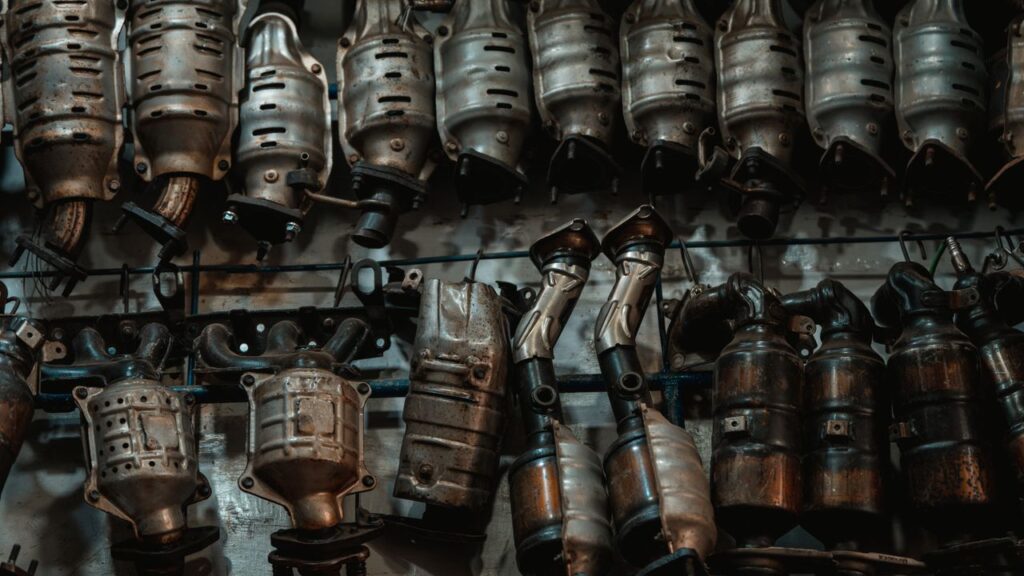
Most bad catalytic converter symptoms creep in slowly: a check engine light, a sulfur smell after a drive, or a car that feels flat when you merge. The converter itself rarely just wears out. Something upstream usually kills it.
That matters, because a new converter on an engine with the same problem can fail too. Below are the warning signs, how urgent each is, and the causes to fix first.
Quick answer
What are the symptoms of a bad catalytic converter?
The common signs are a check engine light with code P0420 or P0430, a rotten-egg smell, sluggish acceleration, a rattle under the car, unusual heat from the underbody and worse fuel economy. Most converters fail because of misfires, oil burning, coolant leaks or a rich-running engine, so fix the cause before replacing it.
6 Bad Catalytic Converter Symptoms to Watch For
The catalytic converter sits in the exhaust between the engine and the muffler. Inside, a honeycomb coated with precious metals cleans up the exhaust. When it gets coated, melted or broken, these signs appear.
1. Check Engine Light With P0420 or P0430
Your car has an oxygen sensor before the converter and another after it. The engine computer compares them, and if the rear sensor starts looking like the front one, it decides the converter isn’t doing its job. That sets P0420 (bank 1) or P0430 (bank 2 on V6 and V8 engines).
A steady light with normal driving is rarely an emergency, and our guide to a check engine light that is on while the car runs fine covers it. A flashing light is different.
2. A Rotten-Egg or Sulfur Smell
Fuel contains small amounts of sulfur. A healthy converter turns the resulting hydrogen sulfide into odorless gases. When it stops working well, or when the engine runs rich and overloads it, you smell rotten eggs at the tailpipe, especially after a hard drive.
3. Sluggish Acceleration and Loss of Power
A clogged or melted converter acts like a cork in the exhaust. The engine can’t push gases out freely, so it feels weak climbing hills or merging onto the highway.

4. Rattling Under the Car
A rattle from the middle of the car, loudest at startup or idle, can mean the honeycomb has broken apart inside the shell. Loose pieces can also block the flow further down. On salty Michigan roads, a rusted heat shield makes a similar tinny rattle.
5. Overheating Underbody
Converters run hot by design, but a restricted or overloaded one runs far hotter. You might notice heat coming up through the floor, a burning smell or the converter shell glowing after a drive. That heat can damage nearby parts and is a fire risk over dry grass or leaves.
6. Falling Fuel Economy
Back pressure from a clogged converter makes the engine work harder for the same speed. A drop can also point to the problem that is killing the converter, such as a misfire or rich running.
Catalytic Converter Symptoms, Likely Cause and How Urgent
Use this table to match what you notice. Only a proper diagnosis can confirm the cause.
| Symptom | Likely cause | How urgent |
|---|---|---|
| Flashing check engine light | Active misfire sending raw fuel into the converter | High Ease off and get it checked right away |
| Heat through the floor or a glowing converter | Converter restricted or overloaded with fuel | High Stop driving and have it checked |
| Severe power loss or stalling | Clogged or melted converter | High Avoid driving until it is diagnosed |
| Rattle under the car | Broken honeycomb or loose heat shield | Soon Book an inspection within days |
| Rotten-egg smell | Rich running or a worn converter | Soon Have it checked this week |
| Steady light with P0420 or P0430 | Low converter efficiency, O2 sensor or exhaust leak | Moderate Diagnose within a few weeks |
| Slowly falling fuel economy | Early restriction or an upstream engine fault | Low Mention it at your next service |
A flashing light deserves extra care. Our post on a flashing check engine light and severe misfires explains why driving hard on one can ruin a healthy converter quickly.
What Usually Kills a Catalytic Converter
Mechanics like to say converters don’t die, they get killed. When one fails early, look for one of these culprits.
Misfires and Unburned Fuel
A worn spark plug, a weak ignition coil or a leaking injector lets raw fuel reach the converter. That fuel burns inside the honeycomb and can melt it from the inside. It is the most common killer, so never ignore a misfire.
Oil Burning
Worn piston rings, valve seals or a faulty PCV system let oil burn in the cylinders. The ash coats the honeycomb so exhaust can’t reach the catalyst. Some engines are known for it, which we cover in our post on Audi 2.0T oil consumption.

Coolant in the Exhaust
A leaking head gasket or cracked head lets coolant into the combustion chamber. It leaves deposits that clog the converter. Sweet-smelling white exhaust and a coolant level that keeps dropping are the clues.
A Failing O2 Sensor and Rich Running
The front oxygen sensor helps the engine computer set the fuel mixture. A lazy sensor can let the engine run rich for months, overheating the converter.
Physical Damage
Hitting a curb, debris or a deep pothole can crack the brittle honeycomb inside. Our long West Michigan winters add road salt, which rusts pipes, clamps and heat shields around the converter.
Is It Really the Converter?
A P0420 doesn’t always mean the converter is dead. The computer only infers converter health from the two oxygen sensors. A slow rear sensor, wiring damage or an exhaust leak near a sensor can all fake the reading.
Exhaust leaks are common on salted Michigan roads, and our guide to exhaust leak symptoms like ticking and fumes covers what to listen for. A good diagnosis checks sensor data, looks for leaks and tests back pressure before anyone orders a converter.

Sudden Loud Exhaust? Check for Theft
If your car roars like a race car the first time you start it one morning, look underneath. A missing converter leaves cut pipes and a gap in the exhaust. The precious metals inside make converters a target for thieves.
The National Insurance Crime Bureau reported that catalytic converter theft claims rose from 16,660 in 2020 to 64,701 in 2022. NICB suggests parking in well-lit areas or a monitored garage, adding an anti-theft device and etching your VIN on the converter.

Getting Converter Problems Diagnosed in Grand Rapids
At home, you can note when the smell or noise happens, check your oil and coolant levels, and have the codes read. Don’t crawl under a hot exhaust, and don’t keep driving on a flashing light.
Our exhaust repair in Grand Rapids covers converters, pipes and mufflers on foreign and domestic vehicles. For codes and misfires, our check engine light diagnostic in Grand Rapids finds the root cause first. Hendrick Hoffman, our owner and head mechanic, is ASE and State of Michigan certified in engine repair and engine tune-up.
Frequently Asked Questions
Can you drive with a bad catalytic converter?
With only a steady light and normal driving, you can usually drive gently until it is diagnosed. If the car loses power, stalls, overheats underneath or the check engine light flashes, stop driving and have it checked, because a clogged converter can damage the engine and is a fire risk.
Does P0420 always mean I need a new catalytic converter?
No. P0420 means the computer thinks the converter is working poorly, based on the oxygen sensors. A slow rear O2 sensor, damaged wiring or an exhaust leak can set the same code, so test before replacing.
Why did my new catalytic converter fail again?
Usually because the problem that killed the first one was never fixed. Misfires, oil burning, coolant leaks and rich running will damage a new converter the same way. Some low-quality replacement converters also fall short of the efficiency the computer expects.
Need exhaust or catalytic converter repair in Grand Rapids? Call 456 AutoFix at 616-279-3832, Monday to Friday 8am to 5pm, or book through our contact page.
Can’t make it during the day? Use our after-hours drop-off. We’re at 456 Carrier St NE in Creston.