As an Amazon Associate, 456 AutoFix earns from qualifying purchases. Product links below go to Amazon, where you can confirm the right part for your vehicle.
Volkswagen is unusually specific about what goes in the brake reservoir. The best brake fluid for Volkswagen cars is the one that matches the VW 501 14 standard your manual asks for, flows freely through the ABS and stability control unit on a cold morning, and gets changed on Volkswagen’s time-based schedule.
Below we explain that standard, genuine fluid versus equivalents, and five bottles worth a look. For the wider picture, see our guide to choosing a DOT 4 brake fluid.
Quick answer
Which brake fluid should go in a Volkswagen?
Use what your owner’s manual names, which on most modern VWs is a fluid meeting VW 501 14, a low-viscosity DOT 4. Genuine VW fluid from a dealer is the safe default. An aftermarket bottle for a newer car should say LV and name VW 501 14, while older cars on plain DOT 4 can use Pentosin Super DOT 4.
Our Quick Picks
Three quick picks for the main VW cases: older cars on plain DOT 4, track days and a German-brand alternative. The other two bottles follow in the full reviews.

Pentosin Super DOT 4
A full liter of standard DOT 4 that cross-references older VW fluid numbers.

Red Line RL-600
A racing DOT 4 for GTI and Golf R owners who take the car on track.

Liqui Moly DOT 4
A synthetic DOT 4 with moisture scavengers in a one-liter bottle.
What Volkswagen Actually Specifies
The reservoir cap and manual usually say DOT 4. Volkswagen’s own page on genuine Volkswagen brake fluid names that standard as VW 501.14. Fluid makers that sell low-viscosity DOT 4 list VW 501 14 among the specs those LV fluids meet, which is why owners treat the two terms as a pair.
Low viscosity matters for one reason: cold flow. The federal brake fluid rule, FMVSS 116, lets a DOT 4 fluid be as thick as 1,800 square millimeters per second at minus 40 degrees. An LV fluid sits well under that limit, so the ABS pump can move it quickly when the car is frozen.
The same rule sets minimum boiling points. Fresh DOT 4 must not boil below 230°C (446°F), and its wet boiling point, measured after the fluid has taken on moisture, must stay at 155°C (311°F) or above. Plain DOT 3 is held to lower figures, 205°C dry and 140°C wet.
- DOT 3, DOT 4 and DOT 5.1: all glycol-based, so they can mix, though mixing a lower grade into an LV system lowers what you have in the lines.
- DOT 5: silicone-based. It does not mix with the others and has no place in a VW system built for glycol fluid.
- Moisture: brake fluid is hygroscopic, so it pulls water from the air and its boiling point falls with age.
Genuine VW Fluid or an Equivalent Bottle?
Genuine Volkswagen fluid is the simplest route, because it is made to the VW standard by definition. We could not find a Volkswagen-branded bottle sold directly on Amazon US, so the practical way to buy it is a VW dealer parts counter. Ask for the brake fluid listed for your VIN and they will give you the current part number.
Some aftermarket listings print Volkswagen OE reference numbers. That is the fluid maker’s cross-reference, not a Volkswagen approval. Fluids with no VW claim suit cars whose manual asks only for DOT 4, while a newer VW that names 501 14 needs a bottle marked low viscosity or LV.
Best Brake Fluid for Volkswagen: The Five Bottles Reviewed
Each fluid below is a glycol-based DOT 4 sold on Amazon US. VW part numbers are quoted only where the listing prints them, so check the manual for your year and model before you order.
1. Pentosin Super DOT 4 1204116: 1 Liter Corrosion-Resistant Brake Fluid for ABS
- Universal DOT 4 for ABS systems
- Lists Audi/VW B 000 700 A1, A3 and A6
- Resists water absorption
- 1 liter bottle for a full flush
Super DOT 4 is Pentosin’s standard DOT 4, sold here in a one-liter bottle. Pentosin’s listing presents it as a universal fluid for modern brake systems and a good match for cars with ABS. It prints Audi and Volkswagen OE reference numbers B 000 700 A1, A3 and A6, the earlier family of VW brake fluid part numbers.
Pentosin’s claims center on safety against vapor lock, resistance to absorbing and holding water, and corrosion protection. Those are the qualities that matter on an older Golf, Jetta or Passat that spends years between fluid changes, because water in the lines lowers the boiling point and attacks calipers from the inside. The liter size is enough for a typical flush on a compact car, with some left for the clutch reservoir on manual cars that share the fluid.
This is not sold as a low-viscosity fluid, so it is the wrong choice for a newer VW whose manual names VW 501 14. Use it where the cap and manual ask only for DOT 4, and cap the bottle tightly once it is open.
View Pentosin Super DOT 4 on Amazon
2. Liqui Moly DOT 4: 1 Liter Synthetic Brake Fluid with Moisture Scavengers
- Synthetic glycol ether formula
- High wet and dry boiling points
- Corrosion and oxidation inhibitors
- Scavengers to suppress vapor bubbles
Liqui Moly is another German maker that many VW owners already know from its oils and additives. This listing is its standard DOT 4 in a one-liter bottle, not the SL6 or low-viscosity versions the company also sells. The formula is a synthetic blend based on glycol ethers, alkyl polyglycols and glycol ether esters, the usual chemistry for DOT 4.
The listing points to a high wet and dry boiling point and inhibitors that guard against corrosion and oxidation at high temperatures. It also mentions special scavengers meant to suppress vapor bubbles as moisture builds up, which helps a fluid keep its pedal feel later in its service life. Because it is glycol-based, it can share a system with other DOT 3 and DOT 4 fluids.
Choose it for an older VW whose manual asks for DOT 4 without a low-viscosity requirement, or for an owner who wants a familiar European brand on the shelf. The listing does not claim VW 501 14 or print Volkswagen part numbers, so it is not the bottle for a newer car that names that standard.
View Liqui Moly DOT 4 on Amazon
3. Red Line RL-600 90404: 500ml Track and Street DOT 4 Racing Brake Fluid
- Built for racing and performance use
- Meets FMVSS No. 116 DOT 4
- Holds viscosity at extreme temperatures
- Resists brake fade and vapor lock
Red Line is an American lubricant company founded in 1979, and RL-600 is its high-performance DOT 4 for track and street use on performance cars. The listing says it is engineered to hold its viscosity, lubricity and compressibility at extreme temperatures, which helps protect against brake fade and vapor lock in racing. It conforms to and exceeds the US FMVSS No. 116 DOT 4 specification.
This is the fluid to consider if your GTI or Golf R goes to autocross or track days, where repeated hard stops build far more heat than daily driving. Red Line notes that RL-600 blends with other DOT 4 fluids, but warns that mixing may compromise its performance. For the full benefit, flush the old fluid out completely rather than topping up.
RL-600 is not marketed as a low-viscosity fluid, and the listing makes no VW 501 14 claim. Many owners who run racing fluid change it more often than the factory schedule and return to spec fluid when the car goes back to daily duty, especially before a Michigan winter. Plan on more than one 500ml bottle for a full flush.
View Red Line RL-600 on Amazon
4. Lucas Oil 10788: 1 Quart Synthetic DOT 4 Brake Fluid with Seal Protection

- Synthetic DOT 4 formula
- Helps prevent seal hardening or softening
- Protects against rust and corrosion
- 1 quart bottle
Lucas Oil is a US brand best known for oil additives and fuel treatments, and its 10788 is a synthetic DOT 4 brake fluid sold in a one-quart bottle. The listing keeps its claims short: it is meant to prevent seals from hardening or softening, to protect against rust and corrosion, and to provide good lubricity for the moving parts in the system.
Seal protection matters on older VWs, where the rubber in the master cylinder and calipers has already spent many years in contact with fluid. A quart is close to the amount a typical flush pushes through a compact car, so one bottle often covers a careful DIY job. Like other glycol DOT 4 fluids, it can be mixed with DOT 3 and DOT 4.
The listing gives no boiling point figures and no low-viscosity or VW 501 14 claim, and it prints no Volkswagen part numbers. That limits it to VWs whose manual asks only for DOT 4. For newer cars on the low-viscosity standard, a fluid that states LV on the label is the better match.
View Lucas Oil DOT 4 on Amazon
5. STP Synthetic DOT 4: 12 oz Brake Fluid for ABS, Disc and Drum Systems

- Synthetic DOT 4 formula
- Works with ABS, disc and drum brakes
- Suits DOT 3 or DOT 4 systems
- 12 oz bottle for top-ups
STP is a familiar name on parts store shelves, and its synthetic DOT 4 comes in a 12-ounce bottle that is easy to keep in the garage. The listing describes it for ABS, disc and drum brake systems, and says it suits vehicles that require DOT 3 or DOT 4 fluid. It is ready to use with no mixing.
STP highlights high-temperature protection against vapor lock and an additive package that helps guard brake parts against corrosion and wear. Those are the core basics you want from any DOT 4. The small size makes sense for topping up a reservoir that has dropped toward the minimum mark, although a falling level is often a sign of worn pads or a leak that deserves a look.
The listing mentions low viscosity in its title but gives no VW 501 14 claim or Volkswagen part numbers, so treat it as a general DOT 4 rather than a match for the VW standard. For a full flush or a newer car, choose a larger bottle of a fluid that names the standard your manual requires.
View STP Synthetic DOT 4 on Amazon
Matching the Fluid to Your VW
The best brake fluid for Volkswagen owners depends mostly on the age of the car and what the manual prints. Use this table as a starting point, then confirm with the cap and the owner’s manual.
| Your VW | What to look for | Fluids in this guide |
|---|---|---|
| Newer Golf, Jetta, Tiguan or Atlas whose manual names VW 501 14 | Low-viscosity DOT 4 (LV) | Genuine VW fluid from a dealer, or an LV bottle that names VW 501 14 |
| Older VW whose manual asks for plain DOT 4 | Any DOT 4 that meets FMVSS 116 | Pentosin Super DOT 4, Liqui Moly DOT 4, Lucas DOT 4, STP DOT 4 |
| GTI or Golf R used for track days | Racing DOT 4 with a high boiling point | Red Line RL-600, then back to spec fluid for the street |
| Quick top-up before a proper flush | Same DOT grade already in the reservoir | A small bottle of the fluid already in the system |
Pads matter as much as fluid. Our roundup of brake pads for daily driving covers the street side.
Change Interval and West Michigan Conditions
Volkswagen’s fluid page says a new VW should get its first brake fluid change after three years and every two years after that, with no mileage condition. US schedules can differ by model year, so your maintenance booklet decides. Our article on how often to change brake fluid explains why time, not mileage, sets it.
West Michigan weather works on brake fluid from both ends. Humid summers give it more water to absorb, and January mornings ask it to flow through the ABS unit at its thickest.

Road salt adds a third problem: fresh fluid does nothing for lines rusting from the outside. Our guide to brake line rust on Michigan cars shows what to look for, and a brake fluid tester pen gives you a quick moisture reading between scheduled changes.
When a Shop Should Do the Flush
Topping up is a driveway job. A full flush means pushing old fluid out of every caliper and the ABS unit without letting air in, and on some VWs that takes a scan tool to run the ABS pump. Our guide to the scan tool for VW owners covers which models list that function.
If the pedal feels soft, sinks toward the floor or the ABS warning stays lit, stop and have the system checked rather than adding fluid. Our brake repair service in Grand Rapids handles flushes, bleeding and related repairs on foreign and European vehicles.
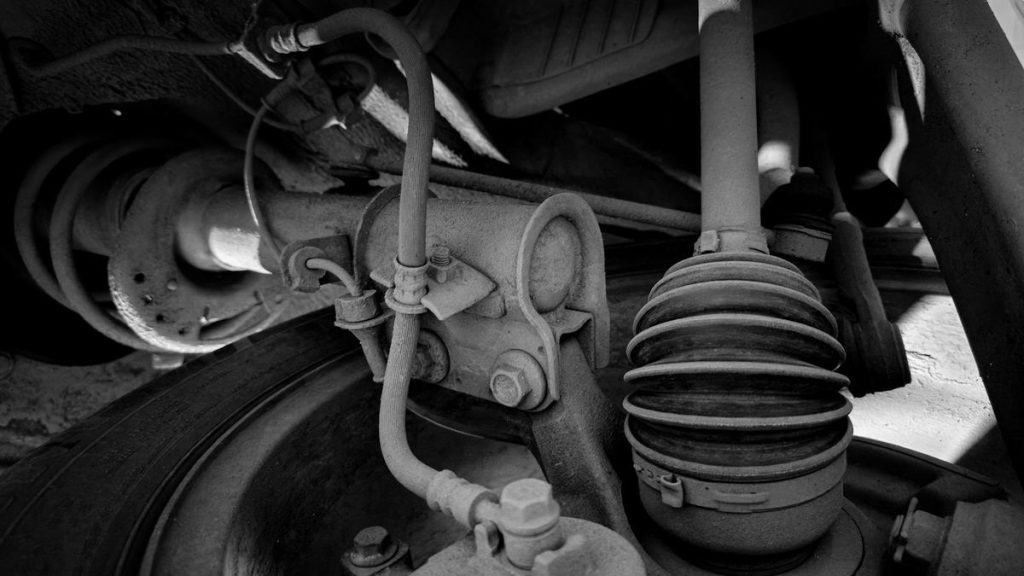
Write the date of each change on your service record so the next one is easy to time.
More Buying Guides
Frequently Asked Questions
What brake fluid does Volkswagen use?
Volkswagen names its standard as VW 501 14, and fluid makers sell it as a low-viscosity DOT 4. Your owner’s manual and reservoir cap give the exact requirement for your car, and a VW parts counter can supply the genuine fluid.
Can I use regular DOT 4 in my VW?
If the manual asks only for DOT 4, yes. If it names VW 501 14 or a low-viscosity fluid, use an LV fluid, because regular DOT 4 is allowed to be much thicker in the cold and mixing it in lowers what the system was designed around.
Is DOT 5.1 safe in a Volkswagen?
DOT 5.1 is glycol-based and mixes with DOT 4, but Volkswagen specifies its own DOT 4 standard, so follow the manual. Never use silicone DOT 5, which does not mix with glycol fluids.
Is the best brake fluid for Volkswagen cars always the genuine VW bottle?
Genuine fluid is the safe default because it is made to the VW standard. An aftermarket LV fluid that prints the VW part numbers it replaces is a reasonable alternative, as long as the label matches what your manual asks for.
Due for a brake fluid change on your Golf, Jetta or Tiguan? Call 456 AutoFix in Grand Rapids at 616-279-3832, Monday to Friday 8am to 5pm, or book a brake service through our contact page.
Busy during our hours? Use our after-hours drop-off. We’re at 456 Carrier St NE in Creston.