As an Amazon Associate, 456 AutoFix earns from qualifying purchases. Product links below go to Amazon, where you can confirm the right part for your vehicle.
A rusted brake line rarely announces itself until fluid is dripping onto the driveway or the pedal sinks halfway to the floor. Choosing the best brake lines for your car starts with one question: are you replacing rigid metal tubing along the frame, or the flexible hoses that connect to each caliper?
Below are the materials, the fitting details that trip up first-time buyers, and six of the best brake lines across coils, a pre-bent kit and braided hoses. If corrosion is what sent you here, our article on brake line rust and road salt explains how far the damage usually spreads.
Quick answer
Which brake lines should you buy for a rust repair?
For hand-bent hard lines, a copper-nickel coil such as the 4LifetimeLines 3/16 in kit is the easiest material to route and flare. Stainless coil lasts longer but needs better tools, a pre-bent stainless kit saves the bending on listed vehicles, and DOT-labeled braided hoses replace worn rubber hoses at the wheels.
Our Quick Picks
Three starting points: a copper-nickel coil for custom hard lines, a pre-bent stainless kit for one listed vehicle, and DOT-certified braided hoses for the wheels.

4LifetimeLines Copper-Nickel Kit
A hand-bendable coil with a spread of SAE tube nuts for custom hard lines.

The Stop Shop Cherokee Front Kit
Factory-shaped front lines that drop in without bending or flaring.

Goodridge G-Stop Impreza Kit
DOT-certified braided hoses that replace the factory rubber at each wheel.
Rigid Tubing or Flexible Hose: Know Which Part Failed
Rigid tubing carries fluid from the master cylinder along the frame, and short flexible hoses bridge the gap to the calipers and rear axle, which move with the suspension.
- Plain or coated steel: the factory norm. Once the coating wears through, salt eats it from the outside.
- Copper-nickel: a 90/10 alloy that resists corrosion, bends by hand and flares easily, the common pick for home repairs.
- Stainless steel: the toughest against corrosion, but stiff. It needs a bender and a quality flaring tool.
- Flexible hoses: rubber from the factory, or stainless braid on upgrade kits, which resists swelling and gives a firmer pedal.
A coil does nothing for a cracked hose, and a hose kit won’t fix a rotted line above the fuel tank. Find where the wet spot sits before you order.
Sizes, Flares and Fittings to Check First
Most cars use 3/16 inch tubing, while some trucks and master cylinder runs use 1/4 inch. Measure the old line rather than guessing.
- Flare type: domestic vehicles mostly use a double (inverted) flare, and many imports use a bubble (ISO) flare. Our guide to the brake line flaring tool covers both styles.
- Tube nut threads: SAE 3/8-24 and 7/16-24 are common on domestic cars, M10x1.0 and M12x1.0 on imports. A nut that binds is the wrong thread.
- Hose labeling: under federal brake hose standard FMVSS 106, hydraulic brake hose carries the DOT symbol, a maker designation and a date. Buy braided kits that state DOT compliance.
Best Brake Lines for Rust Repairs and Upgrades: Six Picks
Three coils, one pre-bent kit and two braided hose kits follow. Sizes and fitment come from each Amazon listing, so confirm the year, model and options for your car before buying.
1. 4LifetimeLines Copper-Nickel Brake Line Kit: 3/16 in x 25 ft Coil with 16 Tube Nuts
- 3/16 in OD x 25 ft copper-nickel coil
- 16 inverted flare tube nuts, four thread sizes
- Bends by hand, no tubing bender needed
- Made to SAE and ISO brake tubing specs
The 4LifetimeLines kit pairs a 25 foot coil of 3/16 inch copper-nickel tubing with 16 inverted flare tube nuts. The nut assortment is listed as ten 3/8-24, two 7/16-24, two 1/2-20 and two 9/16-18, which covers the thread sizes found on many domestic master cylinders, proportioning valves and calipers. The listing describes the tubing as made to SAE and ISO brake tubing specifications.
The main appeal is how easily the alloy works. The listing says it is soft enough to route along a frame rail by hand, with no tubing bender, and that it takes clean flares with a standard double flaring tool. Copper-nickel also resists rust, road salt and moisture far better than plain or coated steel line, which matters on a car that sees salted roads every winter.
This kit suits owners replacing rusted 3/16 inch steel line on a domestic car, truck or SUV with an SAE double flare system. It is less suited to imports that use metric M10 or M12 bubble flare fittings, since those nuts are not in the box. The maker advises checking your tube nut threads before ordering, and that step saves a second trip.
View 4LifetimeLines Copper-Nickel Kit on Amazon
2. AGS NiCopp Nickel/Copper Brake Line Tubing Coil: 3/16 in x 25 ft for Brake and Fuel Lines

- 3/16 in x 25 ft nickel/copper coil
- Listed as DOT approved for hydraulic and ABS brakes
- Rust and corrosion resistant alloy
- Black oxide coated tube nuts mentioned
The AGS NiCopp coil is 25 feet of 3/16 inch nickel/copper tubing, the same alloy family that many shops and restorers have used for years to replace rusted steel brake line. The listing calls it DOT approved for hydraulic and ABS brake systems, and also lists fuel, power steering and transmission cooling line replacement as uses.
AGS describes the tubing as the easiest bending line it sells and as rust and corrosion proof. In practice, that means you can shape gentle curves by hand and reserve a bender for tight bends near fittings, then flare it with an ordinary double or bubble flaring tool. The listing also mentions black oxide coated tube nuts for added protection, so check the product details to see whether the nuts you need come with the coil or are sold separately.
This coil suits someone who already knows the thread sizes on their car, or who is buying metric or specialty fittings to match an import. It is a plain tubing product rather than a full kit, so it does not suit a buyer who wants every nut and union in one box. Measure your old line before ordering, since some trucks use 1/4 inch tubing instead.
View AGS NiCopp 3/16 in Coil on Amazon
3. 4LifetimeLines 316L Stainless Brake Line Kit: 3/16 in x 25 ft with SAE and Metric Fittings

- 3/16 in x 25 ft 316L stainless coil
- SAE inverted and M10/M12 bubble fittings
- 0.028 in wall, 15,310 PSI burst rating
- Works with DOT 3, 4, 5 and 5.1 fluid
This 4LifetimeLines kit uses 316L stainless tubing, a marine-grade alloy that the listing says outlasts both copper-nickel and galvanized steel against road salt and moisture. The 25 foot coil has a 0.028 inch wall and a listed burst pressure of 15,310 PSI, and it is rated for DOT 3, DOT 4, DOT 5 and DOT 5.1 brake fluid.
The fitting assortment is the standout. The box includes 7/16-24 and 3/8-24 inverted nuts, 1/2-20 and 9/16-18 nuts, plus M10x1.0 and M12x1.0 bubble fittings and M10x1.0 inverted fittings. That spread covers many domestic and import brake systems from one purchase. The listing says the tubing bends by hand or with a standard bender, cuts with a tube cutter and takes single and double flares.
Stainless is stiffer than copper-nickel, so expect to use a bender for tight curves and a quality flaring tool for consistent results. A cheap flaring tool is the usual source of trouble with stainless, since a flare that splits or seats poorly will weep under pressure. This kit suits owners who want the longest-lasting hard line and have the tools to work it, and it is less suited to a first-time line job with basic tools.
View 4LifetimeLines 316L Stainless Kit on Amazon
4. The Stop Shop Front Brake Line Kit: Pre-Bent 304 Stainless for 97-01 Jeep Cherokee Non-ABS
- Listed for 1997-2001 Jeep Cherokee without ABS
- CNC bent to reproduce factory routing
- 304 stainless tubing, plated steel nuts
- Spring guards in factory positions
The Stop Shop builds this front brake line kit for the 1997-2001 Jeep Cherokee without ABS, according to the listing. It includes every line in the front engine compartment: from the master cylinder down to the valve or valves, then from the valves out to the left front and right front wheels. Each tube arrives already bent and flared, so there is no coil to straighten and no flaring tool to buy.
The lines are CNC bent as exact reproductions of the originals and made from 304 stainless tubing. Tube nuts are plated steel for corrosion resistance, and the listing says fittings and tube sizes match the factory lines. Where the original tubes had spring guards to protect them from chafing, this kit places them in the same spots.
This kit suits Cherokee owners in salt country who want factory routing without custom bending. It does not suit an ABS-equipped Cherokee, other Jeep models or the rear lines, which are a separate purchase. Confirm the year, model and brake options on Amazon before buying, and plan for seized fittings at the old valves, since those are often the hardest part of the job.
View The Stop Shop Cherokee Front Kit on Amazon
5. Goodridge G-Stop Stainless Brake Line Kit: 4 Hoses for 11/92-01 Subaru Impreza with Rear Discs
- Listed for 11/92-01 Subaru Impreza, 2WD and 4WD
- Bolt-on replacements for all rubber hoses
- Meets FMVSS 106, DOT certified
- Abrasion and corrosion resistant braid
Goodridge G-Stop kits replace a car’s rubber brake hoses with stainless steel braided hoses. This version is listed for the Subaru Impreza from November 1992 through 2001, in two-wheel and four-wheel drive form with rear disc brakes, and it contains four lines. The listing describes them as direct bolt-on replacements for all of the rubber brake hoses on that application.
For a street car, compliance is the key detail: Goodridge states that the hoses conform to Federal Motor Vehicle Safety Standard 106, the federal brake hose standard, and are U.S. Department of Transportation certified as well as T.U.V. approved. The braided outer layer is listed as abrasion and corrosion resistant, and braided construction resists the swelling that older rubber hoses show under hard braking, which many drivers feel as a firmer, more consistent pedal.
This kit suits Impreza owners whose rubber hoses are cracked or soft, or who want a firmer pedal for spirited driving. It does not replace any rigid metal lines, and it does not fit Imprezas with rear drum brakes or later generations. Check the production date of your car on Amazon’s fit tool.
View Goodridge G-Stop Impreza Kit on Amazon
6. Russell 695770 Stainless Braided Brake Line Kit: Hose Set for 2001-2006 GM HD Trucks
- Listed for 2001-2006 GM heavy-duty trucks
- Braided stainless with zinc-plated fittings
- Corrosion resistant construction
- Made in the United States
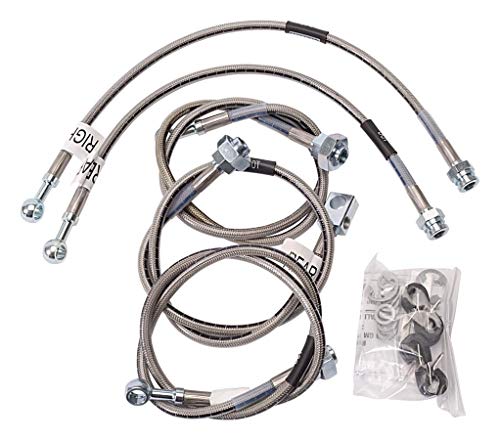
Russell, part of the Edelbrock family, lists the 695770 as a stainless steel braided brake line kit for 2001-2006 GM heavy-duty trucks. Like other Russell street kits, it replaces the factory rubber hoses at the wheels rather than the rigid lines along the frame. The listing gives the country of origin as the United States.
The hoses use a braided stainless design with zinc-plated fittings, and Russell describes the kit as corrosion resistant, easy to install and designed to give improved braking and pedal feel. On a heavy pickup that tows or hauls, rubber hoses that have aged and softened can make the pedal feel spongy, and braided hoses hold their shape better under pressure.
The listing gives little detail about which GM HD cab, drive and brake configurations it covers, so check the fit with your truck’s details on Amazon or Russell’s catalog before ordering. It is also worth confirming DOT compliance for your use, since the listing does not state it. This kit suits owners of those trucks who are already replacing worn hoses, and it does not suit anyone whose problem is a rusted hard line.
View Russell 695770 GM HD Kit on Amazon
Comparing Coils, Pre-Bent Kits and Braided Hoses
| Type | Products above | Suits | Trade-off |
|---|---|---|---|
| Copper-nickel coil | 4LifetimeLines CuNi kit, AGS NiCopp | Custom hard-line runs, home rust repairs | Softer surface, so clip it securely and keep it away from sharp edges |
| Stainless coil | 4LifetimeLines 316L kit | Long service life, mixed SAE and metric systems | Needs a bender and a quality flaring tool |
| Pre-bent stainless | The Stop Shop Cherokee kit | Exact factory routing on the listed vehicle | Fits only the vehicle and options it names |
| Braided hose kit | Goodridge G-Stop, Russell 695770 | Worn rubber hoses, firmer pedal feel | Vehicle-specific; confirm DOT labeling |
Many owners mix formats: a copper-nickel coil for the long runs to the rear, plus new hoses at the same time, since the system needs a full bleed either way. Even the best brake lines only work as well as the flares and the bleed behind them.
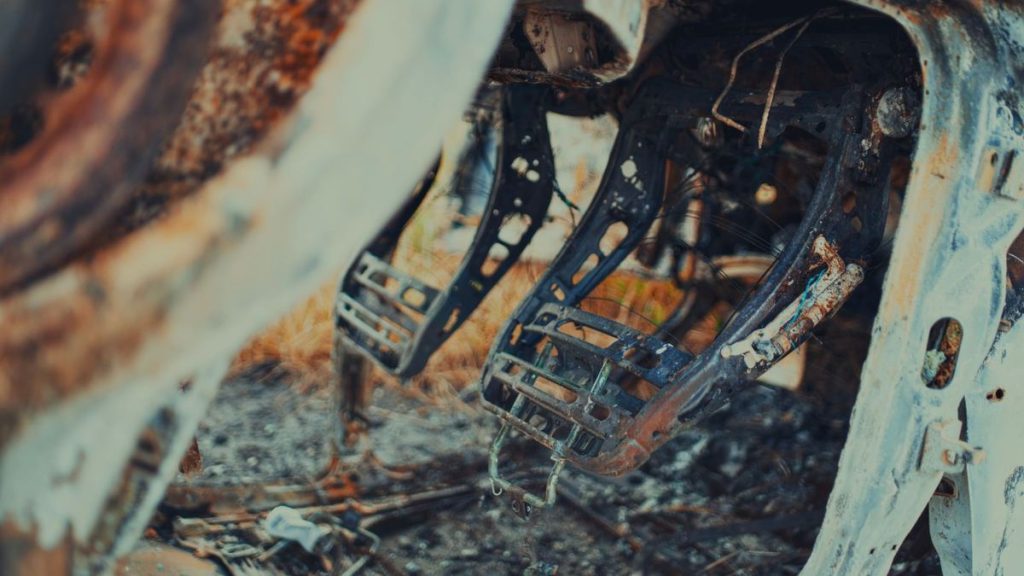
Once the new lines are in, every wheel needs bleeding until the fluid runs clear and free of air. Our guide to the brake bleeder kit options explains the pressure, vacuum and bottle methods.
Road Salt and the Life of a Brake Line in West Michigan
Grand Rapids streets get salted all winter, and brine settles along the frame rails where hard lines are clipped. Rust tends to start under the clips and where lines cross the fuel tank, places you can’t see without a lift.
Rinsing and treating the underbody slows the damage. Our review of the undercoating for road salt compares the oil-based and wax-based products. Copper-nickel and stainless resist salt far better than bare steel, but the steel tube nuts and the brackets around them still corrode.
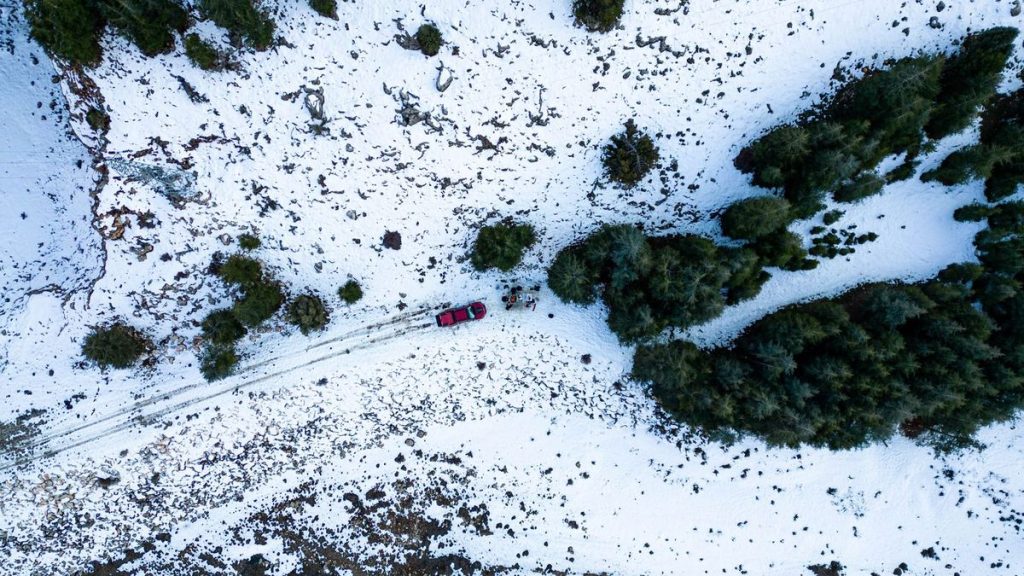
If one section has rusted through, the rest of the original line is usually close behind. That is why the best brake lines for a Michigan car are full new runs, not a patch with unions.
When Brake Line Replacement Belongs at a Shop
Brake fluid pressure can pass a thousand pounds per square inch during a hard stop, so a flare that weeps in the driveway can let go on the road. Seized tube nuts, lines above the fuel tank and ABS units that need a scan tool bleed push the job past a weekend project. If your pedal is sinking now, read why a brake pedal goes to the floor and park the car until it is fixed.
Our owner and head mechanic, Hendrick Hoffman, holds ASE and State of Michigan certification in brakes, among other areas. Our brake repair in Grand Rapids covers rusted hard lines, hoses and the full bleed afterward, and we check pads and rotors while the wheels are off. If yours are getting thin, our guide to brake pads for daily driving lists quiet, low-dust choices.
More Buying Guides
Frequently Asked Questions
Is copper-nickel or stainless brake line better?
It depends on your tools and how long you plan to keep the car. Copper-nickel bends by hand and flares easily, which makes it the forgiving choice for home repairs. Stainless resists corrosion and abrasion even longer, but it is stiff and needs a bender and a quality flaring tool to make reliable flares.
Are stainless braided brake hoses street legal?
They are when the hose meets the federal brake hose standard, FMVSS 106, and carries the DOT marking. Kits sold for street use, such as the Goodridge G-Stop line, state that compliance on the listing. Avoid unmarked universal hoses on a road car.
What size brake line does my car use?
Most passenger cars use 3/16 inch tubing, and some trucks and master cylinder lines use 1/4 inch. The tube nut thread and flare style vary too, so measure the old line or check a parts catalog for your exact vehicle before ordering.
What are the best brake lines to use for a full replacement at home?
For most home mechanics, a 25 foot copper-nickel coil with the right tube nuts is the practical choice, because it routes by hand along the frame. If a pre-bent stainless kit is listed for your exact vehicle, it saves the bending and matches the factory routing.
Found more rust than you want to tackle in the driveway? Call 456 AutoFix at 616-279-3832, Monday to Friday 8am to 5pm, or request a brake line appointment online.
If the car can’t get to us during business hours, after-hours drop-off is available at 456 Carrier St NE, Grand Rapids, MI 49505.