As an Amazon Associate, 456 AutoFix earns from qualifying purchases. Product links below go to Amazon, where you can confirm the right part for your vehicle.
A scraped knuckle from a stuck lug nut, a burn from a hot hose clamp, a child’s skinned knee at a rest stop: most first aid in a car is small stuff. The best car first aid kit is the one that covers those everyday injuries, fits where you can reach it, and still has usable supplies after a year of summer heat and January cold.
Below we go through what a kit should hold, how to pick a format for your vehicle, and five real kits that suit different drivers. It pairs well with our winter car emergency kit guide, which covers the shovel, blanket and jump starter side of the trunk.
Quick answer
What makes a good car first aid kit?
A good car first aid kit holds assorted bandages, gauze pads, tape, antiseptic wipes, gloves and a cold pack in a case you can find in seconds. Keep it secured inside the cabin, check it twice a year, and add personal medication. The First Aid Only 298-Piece, Surviveware Premium and Adventure Medical Kits 2.0 cover most drivers.
Our Quick Picks
Three quick picks for the most common setups: a soft family kit for the glove box, a mountable labeled kit for a seat back and a slim pouch for small cars. All five kits are reviewed below.

First Aid Only 298-Piece
A broad everyday kit that stays compact enough for the front of the car.

Surviveware Premium 98 Pcs
A rugged bag that straps to a seat back or cargo wall instead of sliding around.

Adventure Medical Kits 2.0
A thin, weather-resistant pouch that fits a glove box or console.
Car First Aid Kit Items: A List Worth Checking
Piece counts on the box tell you very little, because a 300-piece kit can be mostly small adhesive strips. A better test is to compare the contents against a known list. The American Red Cross first aid kit list for a family of four is a sound benchmark, and it includes these items:
- Dressings: 25 assorted adhesive bandages, two 5 x 9 inch absorbent compress dressings, five 3 x 3 inch and five 4 x 4 inch sterile gauze pads.
- Wraps and tape: a 3 inch gauze roll, a 4 inch roller bandage, two triangular bandages and a roll of adhesive cloth tape.
- Wound care: antiseptic wipes, antibiotic ointment packets and hydrocortisone ointment packets.
- Protection and comfort: two pairs of nonlatex gloves, a breathing barrier with a one-way valve, an instant cold compress and an emergency blanket.
- Tools and extras: tweezers, a non-glass oral thermometer, low-dose aspirin packets and printed first aid instructions.
The Red Cross also suggests adding personal medications and emergency phone numbers, and checking expiration dates regularly. Very few store kits match the list item for item, so plan on adding a few things.
Pouch, Hard Case or Trauma Kit: Choosing the Format
Where the kit lives in your vehicle should decide its shape. A soft zippered pouch squeezes into a glove box, door bin or seat-back pocket, which suits compact cars and anyone who wants supplies within reach of the driver’s seat. A hard case protects the contents from being crushed under luggage and groceries, but it needs a spot in the cargo area of an SUV, minivan or truck.
Mountable kits with MOLLE straps, D-rings or screw holes stay put on a seat back, cargo wall or truck bed box. A loose kit tends to slide to the back of the trunk, and in a crash it can end up out of reach or flying forward. Whichever format you choose, keep it inside the cabin where possible. A trauma kit for severe bleeding is a separate add-on, not a replacement.
Best Car First Aid Kit Picks, One by One
The five kits below cover a glove box, a seat back, a cargo area and serious bleeding. Contents come from each maker’s Amazon listing, so open the box when it arrives and check it against the list above.
1. First Aid Only 298-Piece Family Kit: Two-Layer Soft Case for Home and Car
- 298 pieces for cuts, scrapes and burns
- Bandages, gauze, wound closures and cold pack
- Two layers with clear pockets
- Sized for a glove box or backpack
First Aid Only has supplied first aid products since 1988, and this 298-piece family kit is one of its long-running general kits. It packs adhesive fabric and plastic bandages, antibiotic ointment, BZK antiseptic towelettes, burn cream packets, a gauze roll and pads, wound closures and a cold pack. That mix covers the cuts, scrapes and small burns that make up most first aid on the road.
The soft-sided zippered case opens into two layers, with individual compartments and clear plastic pockets, so you can see supplies before you reach for them. First Aid Only lists it as small enough for a glove box, a vehicle compartment or a backpack. A soft case also squeezes into a seat-back pocket or door bin more easily than a rigid box, which helps in a small car with little spare room.
The listing says the kit is HSA and FSA eligible. It is built around minor injuries, so it has no tourniquet, splint or trauma dressing, and much of the piece count is small bandages. Add extra nonlatex gloves, an emergency blanket and any personal medication your household needs, and it makes a solid everyday base kit.
View First Aid Only 298-Piece on Amazon
2. Surviveware Comprehensive Premium 98-Piece Kit: Labeled Compartments and MOLLE Straps
- 98 pieces plus a first aid guide
- Removable CPR pouch
- 600D rip-resistant, water-resistant polyester
- MOLLE straps, snaps and D-rings for mounting
Surviveware designed this 98-piece kit for outdoor trips, and its layout suits a car just as well. Inside are supplies for minor wounds, cuts, scrapes and burns, plus a removable CPR pouch and a printed first aid guide. The piece count is lower than many budget kits, but fewer pieces often means fewer filler strips and more of the items you actually reach for.
The outer bag is made from 600D rip-resistant polyester and is water resistant, and the internal items sit in laminate pouches to keep moisture out. The inner compartments are labeled, so a passenger who has never opened the kit can still find gauze or tape quickly. That matters more than piece count when someone is hurt and you are trying to stay calm on a busy shoulder.
Removable MOLLE-compatible straps, snaps and D-rings let you fix the bag to a seat back, a cargo wall or a truck headrest instead of leaving it loose, where it can slide out of reach. Check that the straps clear your seat controls and headrest posts before you settle on a spot. The listing describes it as suited to cars, trucks and boats, and it is HSA and FSA eligible.
View Surviveware Premium 98 Pcs on Amazon

3. Adventure Medical Kits Adventure First Aid 2.0: Slim Kit with Medications and Elastic Bandage
- About 6 x 8.5 x 1.5 inches
- Rated for 1 to 4 people for 1 day
- Waterproof inner storage pouches
- Medications for pain, inflammation and allergies
The Adventure First Aid 2.0 from Adventure Medical Kits is the slim option in this group. It measures about 6 x 8.5 x 1.5 inches, and the maker rates it for 1 to 4 people for 1 day, which lines up with a typical commute or day trip. It slides into a glove box, a center console or the pocket behind a seat without taking over the space.
The coated nylon outer bag holds waterproof inner storage pouches, so the supplies stay dry if a bottle leaks or snow melts off your boots onto the floor. Supplies are sorted into injury-specific pockets, which makes it quicker to grab what you need for a cut, a blister or a sprain. A wide elastic bandage is included to help support sprains and suspected fractures until you reach care.
Unlike many basic kits, it includes medications for pain, inflammation and common allergies, according to the listing. Medications carry expiration dates and storage temperatures, so look them over each spring and fall and replace anything out of date. For a family on long highway trips or a work vehicle with a crew, a larger kit or a second kit makes more sense.
View Adventure Medical Kits 2.0 on Amazon
4. Swiss Safe 2-in-1 348-Piece Kit: Hard Case with Bonus 32-Piece Mini Kit

- 348 pieces in a hard case
- Bonus 32-piece mini kit
- Two-way front and back opening
- Organized interior, HSA and FSA eligible
The Swiss Safe 2-in-1 pairs a large hard case of 348 pieces with a separate 32-piece mini kit. That split works well in a car: the big case rides in the cargo area, and the small one goes in the glove box or a bag for minor cuts on the go. A quick scrape then never means digging through luggage to reach the main kit.
The impact-absorbing hard case protects contents from being crushed under groceries, coolers or sports gear, which is a common way soft kits get damaged. Swiss Safe uses a two-way design that opens from the front and the back, and the interior is organized so items are easier to find. The listing presents it as a kit for road trips, camping, hiking and home use.
It is HSA and FSA eligible, according to the listing. A hard case takes up more room than a pouch and has no straps for a headrest or seat back, so it suits SUVs, minivans and trucks with a cargo area better than a compact sedan with a small trunk. Like most large general kits, it is aimed at everyday injuries rather than severe bleeding.
View Swiss Safe 2-in-1 on Amazon
5. RHINO RESCUE Car Tactical IFAK: Headrest-Mount Trauma Kit with C-A-T Tourniquet
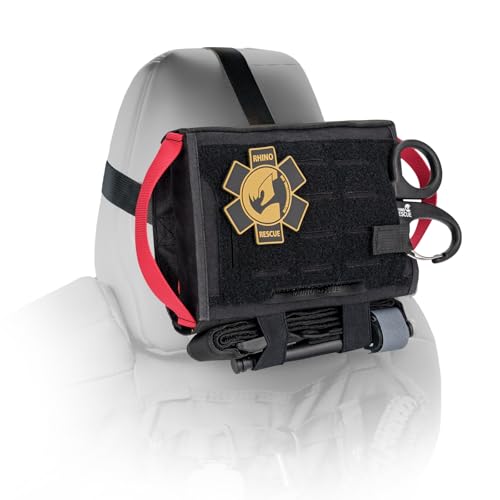
- Mounts to a vehicle headrest
- Red quick-draw tab
- External holders for tourniquet and shears
- C-A-T tourniquet, Israeli bandage and chest seals
The RHINO RESCUE Car Tactical IFAK is a different tool from the other kits here. It is a trauma kit built around severe bleeding rather than cuts and scrapes, and the listing says it includes a genuine C-A-T tourniquet, an Israeli bandage and chest seals. It belongs next to a general kit, not in place of one.
The pouch mounts to a headrest, so it stays within reach instead of sliding around the cargo floor. A red quick-draw tab lets you pull the whole kit free in one motion, and external holders keep the tourniquet and trauma shears ready without opening the pouch. Inside, the compartments are organized around the TCCC approach to trauma care.
Gear like this only helps if someone knows how to use it. The American College of Surgeons Stop the Bleed program runs bleeding control courses that teach three basic actions. Make sure the strap suits your headrest posts and that the pouch does not crowd a rear passenger’s knees or block your view. For drivers who cover long rural highways or often travel with others, it adds a layer that general kits lack.
View RHINO RESCUE Car IFAK on Amazon
Best Car First Aid Kit Options Side by Side
| Kit | Case | Mounting | Good fit |
|---|---|---|---|
| First Aid Only 298-Piece | Soft zippered, two layers | Loose, glove box size | Family cars and commuters |
| Surviveware Premium 98 Pcs | 600D polyester bag | MOLLE straps, snaps, D-rings | Seat backs and SUV cargo walls |
| Adventure Medical Kits 2.0 | Coated nylon, waterproof inner pouches | Loose, slim | Small cars and solo drivers |
| Swiss Safe 2-in-1 | Hard case plus mini kit | Loose | Minivans, SUVs and road trips |
| RHINO RESCUE Car IFAK | Trauma pouch | Headrest mount | Severe bleeding, added to a general kit |
For most households, one general kit in the cabin plus a small pouch in a second vehicle is enough. The best car first aid kit for a busy family SUV may be a different one from the kit for a solo commuter, so match the case to the space you have. Anyone who wants bleeding control gear can mount the trauma pouch beside a general kit.

Heat, Cold and a Crowded Trunk
A parked car goes through bigger temperature swings than a medicine cabinet. A humid West Michigan July can bake the cabin, and a January cold snap can freeze an instant cold pack solid. Adhesive bandages lose their stick and medication labels list storage temperatures a car often exceeds, so plan to refresh a car kit.
A simple habit helps: check the kit when you swap to winter gear in the fall and again when the snow brush comes out of the car in spring. Our winter car maintenance checklist is a good moment to do it, since you are already going through the trunk. Replace anything used, torn, sticky or past its date.

Keep car care bottles away from the kit too. If you store a detailing bag with the products from our best car wax guide, put it in its own bin so a leaking bottle can’t soak the gauze. The same goes for spray lubricants: the cans from our white lithium grease buying guide belong in a closed tote, well away from wound care supplies.
DIY First Aid Kit for Car: Topping Up a Store Kit
Building a kit from scratch works, but buying a decent base kit and filling the gaps is usually quicker. Compare what came in the box against the Red Cross list, then add what’s missing. The items most often short in store kits are larger dressings, a roller bandage, extra nonlatex gloves and an emergency blanket.
- Personal medication for anyone who rides with you often, with a written note of doses.
- A card with emergency contacts, allergies and your insurance details.
- Hand sanitizer and a small flashlight.
- A window breaker within reach of the driver, such as the tools in our window breaker tool guide.
When the Car Itself Is the Hazard
Many roadside injuries happen while someone is working on a car that has already let them down: a hand burned on a radiator cap, a cut from a jack slipping, frostbitten fingers while waiting for help with a dead heater. A kit treats the injury, but maintenance prevents many of those moments.
Never open a hot cooling system, and never get under a car held up only by a jack. If the cabin heat fades on the highway, book car heater repair in Grand Rapids before the next cold trip. A visit for factory scheduled maintenance catches worn belts, hoses and brakes before they leave you stranded on the shoulder.
More Buying Guides
Frequently Asked Questions
What is the best first aid kit for a car?
For most drivers, a mid-size general kit with labeled pockets, such as the First Aid Only 298-Piece or the Surviveware Premium, kept secured in the cabin. Small cars do well with a slim pouch like the Adventure Medical Kits 2.0, and a headrest trauma pouch is an optional add-on for serious bleeding.
Where should you keep a first aid kit in a car?
Inside the cabin, within reach of the front seats if you can. A glove box, a seat-back pocket or a strap mount on a seat or headrest all work. Avoid leaving it loose in the trunk, where it can slide out of reach or get crushed.
Does heat or cold damage a car first aid kit?
It can. Summer heat breaks down adhesives and ointments, and freezing temperatures can ruin an instant cold pack. Check the kit each spring and fall, and replace medications that are past their date or have been stored outside their label temperature range.
Do I need a tourniquet in my car first aid kit?
A general kit doesn’t need one for everyday cuts and burns. If you want to be ready for serious bleeding, add a dedicated trauma kit with a tourniquet and take a bleeding control course so you know how to use it correctly.
Picked a kit and want the rest of the car to be as ready as the trunk? Ring 456 AutoFix at 616-279-3832 any weekday from 8am to 5pm, or request a maintenance visit through our contact page.
If the workday leaves no time, bring the car to 456 Carrier St NE and use the after-hours drop-off, with a note on anything that has been leaving you stuck at the roadside.