As an Amazon Associate, 456 AutoFix earns from qualifying purchases. Product links below go to Amazon, where you can confirm the right part for your vehicle.
A compressed coil spring holds enough energy to break bones, so the tool squeezing it matters more than almost anything else in the toolbox. The best coil spring compressor for you depends on where the spring sits: wrapped around a MacPherson strut, or trapped between the upper and lower control arms.
Below are clamp pairs, a clamshell, stand and hydraulic units and an internal front coil tool. Not sure the spring is the problem? Read our guide to broken coil spring symptoms first.
Quick answer
Which coil spring compressor should you buy?
For an occasional strut rebuild on a car, a forged hook pair such as the OTC 7294 does the job if you go slowly. For frequent or heavy truck struts, a stand-mounted Branick 7600 holds the spring far more securely. Front coils between control arms need an internal tool like the OTC 7045B.
Our Quick Picks
Three starting points: a forged hook pair for occasional strut jobs, a stand-mounted unit for heavy truck struts and an internal tool for front coils.

OTC 7294
A classic two-rod hook set from OTC for car and crossover struts.

Branick 7600
A stand-mounted shop compressor for big coil-overs and frequent use.
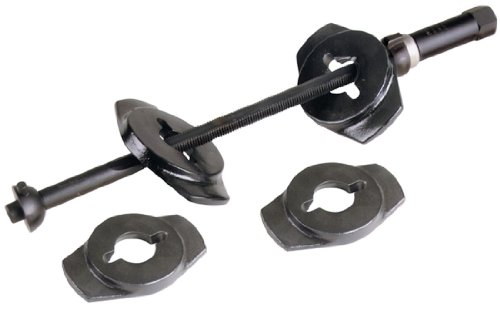
OTC 7045B
An internal compressor for springs trapped between control arms.
Four Ways to Squeeze a Spring
Every compressor shortens the spring enough to unload the strut mount or control arm. How each tool grips the spring is what separates them.
- Hook or clamp pairs: two hooked threaded rods tightened in turns from opposite sides. Cheap and compact, but safety depends on keeping both sides even.
- Clamshell or yoke tools: a single body with two jaws that wrap the coil, so the load stays centered and locking pins hold the jaws in place.
- Stand-mounted and hydraulic units: the strut sits in a fixed frame and a screw or jack pulls the hooks together. Much steadier under load.
- Internal compressors: plates and a center rod inside the coil, for springs between the control arms.
Choose the type first, then the model. A clamp pair cannot reach inside a front coil on a body-on-frame truck, and an internal tool is no help on a strut.
Spring Size, Wire Diameter and Stroke
Before you order, measure the spring you plan to compress. Three numbers decide whether a tool will hold it:
- Outside diameter: the jaws or hooks must seat fully across the coil.
- Wire thickness: thick truck coils need jaws rated for that wire, and thin coils can slip from oversized jaws.
- Stroke: short, stiff springs leave little room between coils, so check the tool travels far enough.
Makers that publish these numbers make the choice easier. OTC lists its 6494 clamshell compressor for springs from 4 to 9 inches outside diameter with wire from 7/16 to 11/16 inch, which tells you right away whether a given strut is in range.
Best Coil Spring Compressor Options: Six Tools Compared
The six tools below cover each compressor type, from a budget clamp pair to an internal front coil tool. Check your spring and suspension layout against each listing.
1. OTC 7294 MacPherson Strut Spring Hook Compressor: Two Forged-Hook Rods with Storage Case
- Pair of hook-style compressors for MacPherson strut springs
- Heat-treated alloy thrust screw, 5/8"-11 x 12"
- Forged hooks on each assembly
- Storage case included
The OTC 7294 is the traditional external strut spring compressor: two separate hook assemblies that clamp the coil from opposite sides of the strut. OTC describes it as a set that compresses most sizes of MacPherson strut springs, with fast, simple setup and a storage case to keep the pair together between jobs.
Each assembly uses a heat-treated alloy thrust screw, listed by OTC at 5/8″-11 by 12 inches, with forged hooks at both ends. You compress the spring by alternating from one assembly to the other, a few turns at a time, so the coil shortens evenly instead of tilting toward one side. That alternating method is the core skill with any hook pair, and it rewards patience.
The benefit is size and simplicity. The set fits in a drawer, needs no bench or wall space and handles the strut springs found on many cars and smaller crossovers. The trade-off is that safety depends heavily on technique, and short, stiff or very heavy truck springs leave little room for the hooks. If you rebuild struts every week or work on full-size trucks, a clamshell or stand-mounted unit is a steadier choice.
2. OMT MacPherson Strut Spring Compressor Set: 10.5″ Range Acme Rods with Detent Pins

- Pair of hook compressors with a 10.5" range
- Acme-threaded rods with built-in detent pins
- Fits 1/2" square drive or 13/16" hex sockets
- Heat-treated steel, black oxide rods, blow-molded case
Orion Motor Tech’s MacPherson strut spring compressor set is a budget take on the hook-pair design. The listing aims it at the MacPherson struts and springs found on most small and medium-sized cars.
The rods are Acme-threaded, a thread form that carries load well and resists stripping, and built-in detent pins lock the hooks onto the coil so they are less likely to walk off as you tighten. The listing gives a 10.5-inch range and says the ends accept a 1/2-inch square drive or a 13/16-inch hex socket. OMT lists heat-treated steel construction, a black oxide finish on the threaded rods and zinc-coated heads for corrosion resistance, all packed in a blow-molded case.
This set suits a driveway mechanic doing one car’s front struts who wants a compact, low-commitment tool. Even with power tool compatibility on the listing, a hand ratchet is the safer way to keep both rods even. It is not the tool for heavy truck coils, short stiff performance springs or front coils mounted between control arms, and it rewards slow, careful work more than speed. Inspect the threads and pins before each use.
View OMT Strut Spring Compressor Set on Amazon
3. OTC 6494 Clamshell Strut Spring Compressor: 4″ to 9″ Springs with Safety Locking Pins

- Compresses 4" to 9" O.D. springs
- Wire diameters from 7/16" to 11/16"
- Safety locking pins hold the jaws in place
- Built for use with an impact wrench, made in the USA
The OTC 6494 trades the two loose rods of a hook pair for a single clamshell body. Two jaws wrap around the coil and a central screw draws them together, so the load stays centered on the strut instead of depending on how evenly you turn two separate tools.
OTC states that the tool compresses springs from 4 to 9 inches in outside diameter with wire diameters from 7/16 to 11/16 inch, and that it fits a wide range of struts without a special adapter shoe. Safety locking pins hold the jaws in place once they are set. Unlike most hook pairs, OTC builds the 6494 to be used with an impact wrench, which speeds up work in a garage that does struts regularly. The Amazon listing names the United States as the country of manufacture.
This is a sensible step up for anyone who has used a clamp pair and wants more control. The published size range also makes it easy to check a spring before buying. It still needs a vise or a secure way to hold the strut, and it will not cover very large truck coil-overs or springs mounted between control arms.
View OTC 6494 Clamshell on Amazon
4. Branick 7600 Strut Spring Compressor: Heavy-Duty Acme Thread with Multi-Position Hooks
- No adaptors required
- Heavy duty Acme thread
- Multi-position hooks and versatile mounting options
- All-steel construction
The Branick 7600 is a full strut spring compressor rather than a hand tool. The strut sits inside a steel frame, and a heavy screw pulls the upper and lower hooks together, so neither your hands nor your sense of balance are holding the spring. Branick, which has made automotive equipment since 1917, says the 7600 is known as the standard in the industry.
The listing highlights a heavy-duty Acme thread, all-steel construction, multi-position hooks, versatile mounting options and no need for adaptors. On its own 7600 product page, Branick says the 7600 handles the heaviest coil-over shocks on light trucks and SUVs, has longer handles for extra torque, a longer compression stroke and an integrated structural ring guard around the spring.
This tool suits a shop or a serious home garage that rebuilds struts often, especially on pickups and SUVs. The guard and frame make it a far more controlled setup than any hook pair. It is a large purchase for someone doing one car, and it needs solid mounting space. It is also a strut tool, not an internal compressor for front coils between control arms.
5. OMT Hydraulic Strut Spring Compressor: 1-Ton Compression Force with 4.5-Ton Jack

- 1-ton rated compression force, 4.5-ton hydraulic jack
- 12.6" compression stroke with 8 height settings
- Clasps for 4.3"-5.1" and 5.5"-6.7" springs
- 39.4" safety chain and bolt-down H-shaped base
Orion Motor Tech’s hydraulic strut spring compressor replaces hand-turned screws with a hydraulic jack. The strut stands upright in a frame, the spring clasps grip the coil and the jack pushes the lower clasps toward the upper ones.
The listing gives a 1-ton rated compression force, a 4.5-ton hydraulic jack capacity and a 12.6-inch compression stroke, with 8 height settings to suit different spring lengths. It comes with two large clasp holders for 5.5- to 6.7-inch coil springs and two small holders for 4.3- to 5.1-inch springs. A locking mechanism holds the spring until the discharge pedal is pressed, a 39.4-inch safety chain wraps the spring to stop it from escaping, and the H-shaped base has two pre-drilled holes for anchoring it to the floor.
This kind of stand suits a garage that does struts often and has floor space for a permanent tool. Compared with a hook pair, it keeps the spring on a fixed axis and away from your body. Check your spring’s diameter against the two clasp ranges before buying, and bolt the base down as the listing suggests. Like the Branick, it does not handle front coils between control arms.
View OMT Hydraulic Strut Spring Compressor on Amazon
6. OTC 7045B Front Coil Spring Compressor: Internal Tool with Four Self-Aligning Plates
- For coil springs between the upper and lower control arms
- Fits most late-model RWD domestic vehicles (per OTC)
- Four case-hardened self-aligning plates
- Two 3-3/8" ID and two 4" ID plates; not for Mercedes-Benz
The OTC 7045B solves a different problem from the strut tools above. Many rear-wheel-drive trucks and cars carry the front coil spring between the upper and lower control arms rather than on a strut, and there is no room for external hooks. This internal compressor goes inside the coil instead, with plates above and below and a threaded rod through the middle.
OTC states that it fits most late-model rear-wheel-drive domestic vehicles in which the coil springs are between the upper and lower control arms. It uses four case-hardened, self-aligning plates to spread the load correctly under tension, and the kit includes two plates with a 3-3/8-inch inside diameter and two with a 4-inch inside diameter. OTC also says plainly that it will not work on Mercedes-Benz vehicles, and the listing mentions a lifetime limited warranty.
This is the right type for replacing a broken front coil or lower control arm on that kind of suspension, where trying to lever the spring out is a real hazard. Confirm your vehicle uses this layout before ordering. It is not a strut compressor and will not help with MacPherson struts or most front-wheel-drive cars.
Which Compressor Fits Your Suspension and Workload?
The best coil spring compressor for a weekend strut swap is rarely what a busy garage would pick. Match your job to a tool type below.
| Your job | Tool type | Tools in this guide |
|---|---|---|
| One or two car struts, a few times a year | Hook or clamp pair | OTC 7294, OMT clamp set |
| Regular strut work on cars and crossovers | Clamshell with locking pins | OTC 6494 |
| Heavy truck and SUV coil-overs, frequent rebuilds | Stand-mounted or hydraulic | Branick 7600, OMT hydraulic |
| Front coil between upper and lower control arms | Internal plate compressor | OTC 7045B |
Doing only one car? A loaded strut arrives with the spring and mount already fitted, so there is nothing to compress; our guide to shocks and struts for daily drivers covers the quick-strut options.
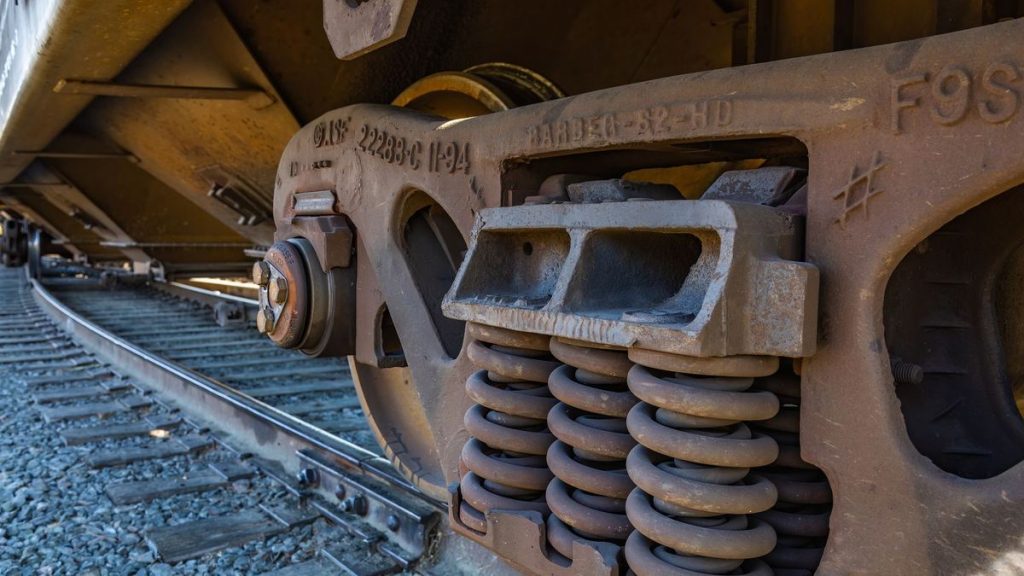
Stored Energy: Respect the Spring
A coil spring under compression is loaded with stored energy. If a hook slips or a jaw lets go, the spring can fly out with enough force to cause serious or fatal injuries, and it rarely gives a warning first. Treat every compressed spring as dangerous until the load is fully released.
- Use a tool rated for the spring’s size, and retire any hook, thread or pin that is bent, cracked or galled.
- On hook pairs, set the hooks directly opposite each other, catch as many coils as the tool allows and tighten each side a little at a time.
- Don’t run an impact gun on the threaded rods of a hook-style compressor. Turn them with a hand ratchet so you feel the load and keep both sides even; use an impact only on a tool its maker builds for one, such as the OTC 6494.
- Keep your body out of the spring’s path, wear eye protection, and never loosen the strut rod nut until the spring is free of the mount.

Follow the maker’s instructions for your exact tool over any video tip. If the spring bows sideways or creaks as you tighten, back off and reset the tool.
Rusty Springs, Seized Nuts and When to Call a Shop
West Michigan winters are hard on springs. Road salt eats into the coating and spring seats, and freeze-thaw potholes can crack a weakened coil, so a spring that looks whole may already be close to breaking. Clean and inspect the coil before you compress it, and do not reuse a spring with deep pitting or a crack.
Salt also seizes strut rod nuts. A stuck nut tempts you to lean harder on a loaded assembly, which is exactly when accidents happen, so soak it and take your time or hand it off.
Plan for a wheel alignment once new struts or springs are in. To skip the compressor work entirely, our suspension repair service in Grand Rapids can replace springs and struts for you. Not sure the struts are the issue? See how to tell if struts are bad first.
More Buying Guides
Frequently Asked Questions
Are cheap clamp-style spring compressors safe?
They can be, on the right spring and used with care. Keep the hooks opposite each other, tighten in small even steps and stop if the spring bows. Short, stiff or heavy springs are a better match for a clamshell or stand-mounted tool.
What is the best coil spring compressor for front springs between the control arms?
That layout needs an internal compressor, which works from inside the coil. The OTC 7045B is built for late-model rear-wheel-drive domestic vehicles with the spring between the upper and lower arms. OTC states it will not work on Mercedes-Benz vehicles.
Should I buy loaded struts instead of a spring compressor?
For a single daily driver, often yes. A loaded strut comes with the spring and mount already installed, so you skip compressing the spring altogether. A compressor makes more sense if you rebuild struts often or want to keep your existing springs.
Do I need an alignment after replacing struts or springs?
Typically yes. New springs can change ride height, and removing a strut often shifts camber and toe, so an alignment keeps the car tracking straight and protects the tires.
Leaning on a strut that won’t come apart? Call 456 AutoFix at 616-279-3832, Monday to Friday 8am to 5pm, or book a suspension check through our contact page.
Working the same hours we do? Bring the car by 456 Carrier St NE in Grand Rapids whenever suits you and leave it in our after-hours drop-off.