As an Amazon Associate, 456 AutoFix earns from qualifying purchases. Product links below go to Amazon, where you can confirm the right part for your vehicle.
A torque wrench is one tool where spending a little more pays off, yet you do not need a professional digital model to tighten lug nuts and caliper bolts properly. The best torque wrench for value is the one with a range that fits your jobs, a stated accuracy you can trust and a build that holds calibration for years of seasonal use.
This guide explains where the money goes in a budget wrench, which drive size to buy first and how to keep an affordable click wrench reading true. If wheels are your main job, our lug nut torque wrench guide goes deeper on that task.
Quick answer
Which torque wrench gives you the most for your money?
For most home mechanics, a click-type wrench with a printed calibration certificate is the sweet spot. A 3/8 in TEKTON TRQ51402 covers brakes and engine-bay bolts, while a 1/2 in LEXIVON LX-183 or CDI 1503MFRMH handles lug nuts. Pick a range that puts your usual specs near the middle of the scale.
Our Quick Picks
Three wrenches for the main jobs and budgets. All six are reviewed below.
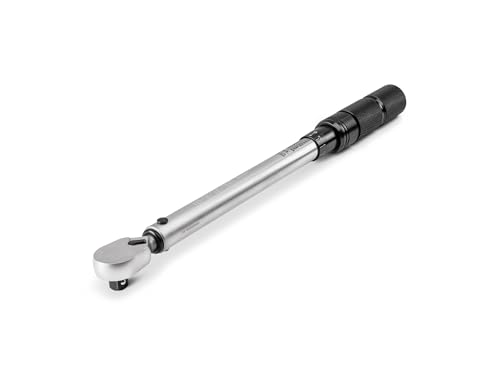
TEKTON TRQ51402
Dual-direction micrometer wrench with a serialized certificate.

LEXIVON LX-183
Low starting point for a 1/2 in wrench, with dual scales.

CDI 1503MFRMH
US-built click wrench with a NIST-traceable certificate.
Where Your Money Goes in a Budget Torque Wrench
Two click wrenches can look identical and still differ where it counts. Budget models usually save money in a few predictable places.
- Stated accuracy: budget models often quote plus or minus 4 percent, while better ones quote 3 percent. Either is fine for wheels and brakes if the wrench is used and stored properly.
- Calibration paperwork: a serialized certificate tells you the wrench was checked before it shipped. A unit with no paperwork gives you nothing to go on.
- Ratchet head: finer heads (72 to 90 teeth) need less swing, which helps in a tight wheel well or behind a caliper.
- Case and finish: a fitted case protects the adjuster mechanism, and a corrosion-resistant finish matters in a damp garage.
A digital readout or angle gauge adds cost without making a lug nut any safer, so spend on accuracy and paperwork first.
Drive Size and Range: Buy the Right One First
Click wrenches are least reliable at the very bottom of their scale, so a wrench that spans a huge range is not automatically a bargain. Look up the specs you tighten most often in your owner’s manual or a service manual, then choose a range where those numbers fall in the middle third.
| Drive and range | Typical jobs | Fits poorly |
|---|---|---|
| 3/8 in, about 10-100 ft-lb | Caliper brackets, oil drain plugs, many engine-bay bolts, some lug nuts on small cars | Truck lug nuts and large suspension bolts |
| 1/2 in, about 10-150 ft-lb | Lug nuts on most cars and crossovers, brake and suspension hardware | Small fasteners below about 20 ft-lb |
| 1/2 in, about 50-250 ft-lb | Truck and SUV lug nuts, axle nuts, heavy suspension bolts | Anything under about 50 ft-lb |
If you can only buy one, a 1/2 in wrench that reaches down to 10 or 20 ft-lb covers the widest spread of work on a car. Owners of heavier trucks will lean toward the 50 to 250 ft-lb tools. A 3/8 in wrench makes a natural second purchase once you start doing brake jobs and engine maintenance, and it fits well alongside a starter kit like the ones in our car maintenance tools for beginners roundup.
Best Torque Wrench for Value: Our Six Picks
Every wrench here is a mechanical click design, listed in the order we would suggest most home mechanics look at them.
1. TEKTON TRQ51402: 3/8 Inch Drive 10-100 ft-lb Micrometer Torque Wrench with Calibration Certificate
- 10-100 ft-lb range, 3/8 in drive
- Rated within 3% in both directions
- Serialized ISO calibration certificate
- 90-tooth fixed ratchet head
The TEKTON TRQ51402 is a 3/8 inch drive micrometer click wrench with a working range of 10 to 100 ft-lb. That span covers a large share of the fasteners a home mechanic meets: caliper bracket bolts, oil drain plugs, valve cover hardware and many sensor brackets. TEKTON rates it within 3 percent in both directions, so it can also be used on the occasional left-hand thread.
Each wrench ships with a serialized certificate that lists its own test results, the equipment used and the conditions of the check. TEKTON calibrates across the full range to the ISO standard, which the listing says also meets the ASME standard. The 90-tooth fixed head keeps nine teeth engaged under load and needs only a 4-degree swing, which helps when a bolt sits behind a strut or deep in an engine bay.
The scale uses one unit with high-contrast laser markings on a satin handle, which keeps glare down under a shop light. The single-unit scale means metric specs need converting before you set it. For a first 3/8 inch wrench, or as the partner to a larger 1/2 inch tool, it gives you dependable paperwork and a practical range without paying for electronics. It is too small for most truck lug nuts, which call for a 1/2 inch wrench.
View TEKTON TRQ51402 on Amazon
2. LEXIVON LX-183: 1/2 Inch Drive 10-150 ft-lb Click Torque Wrench with Dual-Range Scale
- 10-150 ft-lb (13.6-203.5 Nm)
- Pre-calibrated to ±4% with certificate
- Heat-treated Cr-V ratchet head
- Electro-Black corrosion-resistant finish
The LEXIVON LX-183 is a 1/2 inch drive click wrench that runs from 10 to 150 ft-lb, or 13.6 to 203.5 Nm. That low starting point is unusual for a 1/2 inch tool and lets one wrench handle both lug nuts and many smaller brake and suspension fasteners. LEXIVON makes it in Taiwan and ships it pre-calibrated to within 4 percent, with a certificate carrying a traceable serial number.
The ratchet head is built from hardened, heat-treated chrome vanadium steel and reverses for both directions, though the wrench measures torque clockwise only. LEXIVON’s patent-pending dual-range scale uses yellow markings on a black body, which stays readable in a dim garage or under a car. The proprietary Electro-Black finish is designed to resist rust, a real benefit if your tools live in an unheated space through a salty winter.
A knurled handle gives a firm grip without slipping when your hands are greasy. If you only want to buy one torque wrench for a sedan, hatchback or small SUV, this range makes it a sensible single purchase. Owners of heavy trucks with lug specs above 150 ft-lb should look at a 250 ft-lb model instead. Because it only reads clockwise, it does not suit left-hand threads.

3. CDI 1503MFRMH: 1/2 Inch Drive 20-150 ft-lb Click Torque Wrench Made in the USA
- 20-150 ft-lb (34-197 Nm) range
- ±3% clockwise, ±4% counterclockwise
- NIST-traceable serialized certificate
- Molded case, quick-release head
The CDI 1503MFRMH is a 1/2 inch drive click wrench made in City of Industry, California, with a range of 20 to 150 ft-lb, or 34 to 197 Nm. It costs more than most budget wrenches, but it moves you into a tool built to professional standards while staying in the mechanical, non-electronic class. For many owners, that is where long-term value starts.
CDI rates it at 3 percent clockwise and 4 percent counterclockwise from 20 to 100 percent of full scale. The wrench meets or exceeds ASME B107.14-2004 and ISO 6789, and each one is individually serialized with a matching certificate traceable to N.I.S.T. A positive lock with a spring-loaded pull-down ring holds the setting, and laser-marked dual scales read in both ft-lb and Nm, so metric specs need no conversion.
The handle is lightly knurled for a secure grip, and a quick-release button helps keep sockets on the head and lets them off cleanly. It arrives in a custom molded storage case, which protects the adjuster between seasonal tire swaps. The range suits lug nuts on most cars and light trucks, plus suspension and brake hardware. It starts at 20 ft-lb, so pair it with a smaller wrench for light fasteners.
4. CRAFTSMAN CMMT99434: 1/2 Inch Drive 50-250 ft-lb Micrometer Torque Wrench with Case

- 50-250 ft-lb (68-339 Nm) range
- Meets or exceeds ASME specifications
- Locking adjuster, bi-material handle
- Scales stamped into the housing
The CRAFTSMAN CMMT99434 is a 1/2 inch drive micrometer wrench with a range of 50 to 250 ft-lb, or 68 to 339 Nm. That higher window suits full-size trucks, larger SUVs and the heavy suspension and axle fasteners that go well past what a car’s lug nuts need. CRAFTSMAN lists it as meeting or exceeding ASME specifications.
A locking feature lets you set the value quickly and then hold it there while you work around the wheel. The scales are stamped into the housing in both imperial and metric units, so the markings will not rub off the way printed numbers can. A bi-material handle gives a comfortable, grippy hold during the long pulls a high-torque job needs. CRAFTSMAN’s CMMT99434 product page lists a one-year limited warranty and includes a durable case for storage.
Because the scale starts at 50 ft-lb, this is not the tool for caliper slide pins or drain plugs, and accuracy is weakest at the very bottom of any click wrench’s range. It makes more sense as the wrench you reach for when the spec is 120 ft-lb or more. For a truck owner who wants a known brand at a moderate cost, it covers the heavy end well.
View CRAFTSMAN CMMT99434 on Amazon

5. Neiko PRO 03709B: 1/2 Inch Drive 50-250 ft-lb Click Torque Wrench with 25 Inch Bar

- 50-250 ft-lb range, 1/2 in drive
- 25 in bar for extra leverage
- Calibrated to ±4%
- Lockable blow-molded ABS case
The Neiko PRO 03709B is a 1/2 inch drive adjustable click wrench with a range of 50 to 250 ft-lb. Its 25 inch bar is long for this class, and that extra length lowers the effort needed to reach a high setting on truck lug nuts or large suspension bolts. Neiko machine tests and calibrates it to within 4 percent, a tolerance shared by many budget click wrenches.
The body and head are made from heat-treated chrome vanadium steel, which Neiko chose for toughness and shock resistance. A textured handle helps you keep a steady grip as you pull toward the click. The wrench comes in a custom-fitted blow-molded ABS case with a key and lock, which keeps the tool together and protected when it is not in use.
The Neiko listing also mentions loosening lug nuts, but a torque wrench lasts longer and stays accurate when a breaker bar does that job. Treat it as a tightening tool only. The long bar can be awkward in a cramped wheel well or under a low car, and the 50 ft-lb floor rules out lighter work. For heavier vehicles where specs sit between about 100 and 200 ft-lb, it is a straightforward way to get a high-range wrench.
View Neiko PRO 03709B on Amazon
6. Amazon Basics 3/8 Inch Drive Click Torque Wrench: 15-80 ft-lb with Dual Scale

- 15-80 ft-lb (20.4-108.5 Nm)
- Pre-calibrated to ±4%
- Hardened Cr-V ratchet head
- Plastic storage case
The Amazon Basics 3/8 inch drive click wrench covers 15 to 80 ft-lb, or 20.4 to 108.5 Nm. That compact range matches many brake caliper bolts, drain plug specs and smaller engine fasteners. It ships pre-calibrated to within 4 percent with a high-contrast dual-range scale, and the listing recommends setting values on the imperial scale for the most precise adjustment.
The ratchet head is made from hardened chrome vanadium steel with a bright polished chrome finish that wipes clean and resists rust. A plastic case keeps the wrench protected when it sits on a shelf. The instructions are simple and worth following: unlock the collar before adjusting, lock it once the value is set, and wind it back to the lowest setting when you finish so it is ready for next time.
The listing also warns against overloading the wrench, so keep it away from seized fasteners and lug specs above its range. With an 80 ft-lb ceiling, it is too small for lug nuts on most cars. As an inexpensive way to start torquing brake and engine hardware correctly, or as a light-duty partner to a 1/2 inch wrench, it does a narrow job sensibly. It suits occasional use more than weekly work.
View Amazon Basics 3/8 in Click Torque Wrench on Amazon
Keeping an Affordable Wrench Reading True
Even the best torque wrench for value only stays accurate when you treat it as a measuring tool rather than a ratchet. Habits, not age, knock most wrenches out of calibration.
- Back it off after use: turn the handle down to the lowest marking before storage so the internal spring is not left compressed.
- Never loosen with it: breaking free a seized nut can overload the mechanism. Use a breaker bar, then switch to the torque wrench for the final tightening.
- Pull smoothly: pull at a steady pace from the handle grip and stop at the first click.
- Store it in the case: a drop onto a concrete floor can shift the reading without any visible damage.

Consider a calibration check every year or so if you use the wrench often, or sooner after a drop. Keep the original certificate with the case so you know where it started.
Seasonal Wheel Swaps on West Michigan Roads
Many drivers around Grand Rapids swap to winter wheels in late fall and back again in spring, which means a full set of lug nuts gets tightened at least twice a year. Road salt and freeze-thaw cycles can leave studs and nuts crusty, and that corrosion makes it tempting to lean on the torque wrench to break them free. Don’t: crack them loose with a breaker bar, clean the threads if your manual allows it, and use the torque wrench only for the final pass.

Tighten in a star pattern in two stages, first to about half the spec and then to the full value from the owner’s manual. Many makers advise rechecking the torque after a short drive on freshly mounted wheels.
When a Shop Visit Makes More Sense
A torque wrench cannot tell you whether a stud is stretched or a bolt is cross-threaded. If a lug nut keeps loosening or a wheel wobbles after a swap, stop and have the car looked at.

Some jobs on newer cars also call for torque-plus-angle bolts, one-time-use fasteners or exact sequences that sit outside a basic wrench’s job. Our factory scheduled maintenance in Grand Rapids follows the maker’s specs, and our brake repair in Grand Rapids covers caliper and rotor hardware when a home brake job goes sideways.
More Buying Guides
Frequently Asked Questions
Is a cheap torque wrench accurate enough for lug nuts?
A budget click wrench rated at plus or minus 4 percent is close enough for lug nuts when it comes with a calibration certificate and is stored at its lowest setting. The bigger risks are dropping it, using it to loosen nuts or reading the wrong scale.
Should my first torque wrench be 3/8 in or 1/2 in drive?
For most drivers, a 1/2 in wrench that starts around 10 to 20 ft-lb is the more useful first buy because it covers lug nuts and most suspension bolts. Add a 3/8 in wrench later for brake brackets, drain plugs and engine-bay work.
What makes the best torque wrench for value different from the cheapest one?
Value comes from a stated accuracy, a serialized certificate, a range that fits your jobs and a case that protects the mechanism. The cheapest unit often skips one or more of those, which can cost more later if it reads wrong or fails.
Do I need to get a torque wrench recalibrated?
Heavy users often have a wrench checked about once a year, and any wrench that has been dropped should be checked before you trust it again. Occasional home use with careful storage can go longer, but keep the original certificate as a reference.
Rather leave the wheel and brake torque to a technician in Grand Rapids? Call 456 AutoFix at 616-279-3832, Monday to Friday 8am to 5pm, or set up a visit through our contact page.
Busy during shop hours? Our after-hours drop-off at 456 Carrier St NE in Grand Rapids lets you leave the car whenever it suits your schedule.