
As an Amazon Associate, 456 AutoFix earns from qualifying purchases. Product links below go to Amazon, where you can confirm the right part for your vehicle.
A late 1-2 shift on a frosty morning or a few drops of red fluid on the garage floor often send people looking for the best transmission additive. A bottle can help with some of these signs, but it cannot replace worn clutch packs or a failed solenoid.
Below, additives for transmission problems are sorted by job, then six are reviewed. Engine oil treatments are a separate family, and our oil additive guide covers those.
Quick answer
Which transmission additive should you use?
For a conventional automatic in decent shape, Lubegard Platinum is a broad protectant that also targets shudder. Lucas Transmission Fix suits older units with seepage and rough shifts. A CVT needs a CVT-labeled product such as Lubegard CVT Recharge and Protect, because most ATF additives exclude belt and chain CVTs.
Our Quick Picks
Three bottles that cover the common cases: a broad protectant for conventional automatics, a seal conditioner for older units and a formula made for CVTs.
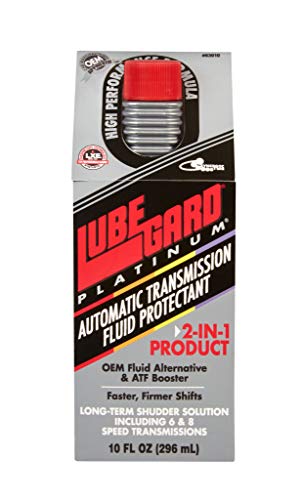
Lubegard Platinum
Broad conditioner for shift quality, shudder and fluid life.

Lucas Transmission Fix
Thick conditioner for seepage, foaming and rough shifts.

Lubegard CVT Recharge
Made for the friction needs of belt and chain CVTs.
Do Additives for Transmission Problems Actually Work?
They work on chemistry problems, not mechanical ones. Automatic transmission fluid carries friction modifiers, detergents, anti-foam agents and seal conditioners, and heat slowly uses those up. An additive tops some of them back up.
That can help with shrunken seals, varnish that makes valves stick, foaming and mild converter shudder. It will not rebuild a burnt clutch pack or a dead speed sensor, and if the fluid smells burnt or shows metal flakes, a bottle is unlikely to help.
How to Choose the Best Transmission Fluid Additive
The best transmission additive for you depends on which of three groups fits the problem.
- Protectants and conditioners: top up friction modifiers and anti-wear chemistry, like Lubegard Platinum and BG ATC Plus.
- Seal conditioners: soften hardened seals so small leaks slow down, like Lucas Transmission Fix.
- Cleaners: loosen varnish in the valve body, often before a fluid change, like Sea Foam Trans Tune.
Transmission type matters most. Many ATF additives exclude CVTs, and some exclude dual-clutch units, so look for wording that names your transmission.
Ford, GM 6L80 and other specific units: there is no single best transmission additive for Ford or the best transmission additive for 6L80 that replaces the fluid spec in your owner’s manual. Fill with the specified fluid, then pick an additive that works with it. Lubegard lists base ATF matches on its Platinum product page.
Best Transmission Additive Picks Reviewed
All six are sold on Amazon US, with details from each listing or maker page.
1. Lubegard 63010 Platinum: 10 oz Universal ATF Protectant with Anti-Shudder Chemistry
- Universal ATF protectant
- Synergol TMS anti-shudder technology
- Conditions seals and o-rings
- No zinc (ZDDP) or ash
Lubegard Platinum is a protectant you add to the automatic transmission fluid already in the unit. Lubegard describes it as a universal ATF protectant, and its maker page says it can go into any ATF except CVT fluid and the old Ford Type F used in 1986 and earlier models. The listed dose is 1 oz per quart of total transmission capacity, added with the engine idling.
The formula uses what Lubegard calls Synergol TMS technology, a synthetic molecule meant to tighten the shift cycle while keeping the friction modification needed when the torque converter clutch locks. That is the part aimed at shudder. The listing also says it reduces friction and wear, inhibits oxidation and foaming, frees sticking valves, conditions seals and o-rings, and will not harm yellow metals or change the fluid’s sulfur balance.
In practical terms, this is the bottle for a conventional automatic that still shifts but has started to feel less crisp, or that you want to protect between fluid changes. It contains no zinc or ash, according to the listing. It is not the right product for a CVT, and it will not cure a transmission with worn clutches or a failed electrical part, so check codes and fluid condition first.
View Lubegard Platinum on Amazon
2. Lucas Oil 10009 Transmission Fix: 12 oz Solvent-Free Seal and Shift Treatment
- Contains no solvents
- Lowers operating temperatures
- Stops foaming
- Add without draining fluid
Lucas Transmission Fix is a thick, solvent-free treatment sold in a 12 oz bottle. Its listing says it contains no solvents, lowers operating temperatures, stops foaming and can be added to the existing fluid without draining any out. Lucas markets it for older transmissions that have started to slip, shift roughly or seep at the seals.
Because it has no solvents, the product works by conditioning and adding body to the fluid rather than by cleaning. That approach suits a high mileage unit where seals have hardened over the years and a small leak or a slightly soft shift is the main complaint. Foam control matters too, since aerated fluid does not hold pressure well, and foaming tends to rise when a unit runs hot.
Check your level before adding it and leave room for the bottle so you do not overfill. Read the label to confirm it suits your fluid type; it is not a CVT-specific product, and dual-clutch or CVT owners should look for a formula that names those units. It is a sensible choice for an older automatic that still drives well, but it will not restore a unit with worn friction material, a failed pump or electrical faults.
View Lucas Transmission Fix on Amazon

3. Lubegard 67010 CVT Recharge & Protect: 10 oz Belt and Chain CVT Fluid Treatment
- For all CVT transmissions
- Maintains belt traction
- Anti-shudder durability
- Seal-safe, no shrink or swell
Lubegard CVT Recharge and Protect is one of the few additives made specifically for continuously variable transmissions. The listing says it is for use in all CVT transmissions, while the maker page describes it as a treatment for belt and chain CVTs that treats 6 to 10 quarts of CVT fluid. The stated dose is 1 ounce per quart of total capacity, and the label says not to exceed 2 ounces per quart.
A CVT relies on the fluid to grip the belt or chain against the pulleys, so a regular ATF additive can upset the friction balance it needs. This formula is meant to correct problems caused by worn-out fluid, maintain belt traction, reduce noise and foaming, and add anti-shudder durability. The listing also says it protects the belt or chain and pulleys from excessive wear and lubricates seals without shrinking or swelling them.
It suits a CVT owner whose fluid is aging and who has started to notice a whine, a judder from a stop or a slightly rubbery feel. It is not a substitute for the CVT fluid your maker specifies, and it is not meant for conventional automatics. A CVT with a warning light or a harsh shudder should have its codes read first.
View Lubegard CVT Recharge on Amazon
4. BG ATC Plus: Automatic Transmission Conditioner for Oxidation and Seal Protection

- Works in new or used ATF
- Improves oxidation stability
- Conditions hardened seals
- Helps control shudder and varnish
BG ATC Plus is a conditioner made to be added to automatic transmission fluid. The listing says it enhances the properties of both new and used automatic transmission fluid, so it can go in with fresh fluid or into fluid that has some miles on it. This Amazon listing is for a single can, so check the can’s label for the treat rate.
Its main job, according to the listing, is oxidation stability. Fluid that resists oxidation lasts longer before it thickens and forms varnish, which helps the transmission too. The formula also conditions hardened seals to keep them soft and pliable, helps control transmission shudder, slows the formation of sludge and varnish deposits, and prevents foaming. That combination makes it a general maintenance product rather than a fix for one symptom.
It is a reasonable fit for a conventional automatic that you plan to keep for many years, especially one that sees heat from towing or long summer drives. Follow the can’s directions for how much to use for your fluid capacity, and confirm on the label that your transmission type is covered, since CVTs and dual-clutch units often need their own products. It will not repair mechanical wear or fix electrical faults.

5. Liqui Moly 5135 ATF Additive: 250 ml Seal Conditioner for Automatics and Power Steering

- Regenerates seals
- Helps prevent fluid loss
- Damps shifting operations
- Also for power steering systems
Liqui Moly ATF Additive comes in a 250 ml bottle and is aimed at automatic transmissions and hydraulic power steering systems. The listing says it prevents oil loss, regenerates seals, cleans and protects, damps down shifting operations and protects from wear. Liqui Moly is a German brand that sells a wide range of fluids and treatments, and this is its general ATF conditioner.
The seal regeneration is the headline. Rubber seals that have shrunk or hardened after many heat cycles can start to seep, and a conditioner that softens them can slow small leaks. The listing also mentions improved steering feel and reduced noise when the product is used in a power steering system, which makes it useful if both systems on an older car have started to weep fluid.
Follow the dose on the bottle for your fluid capacity, and do not use it as a top-up for a level that is far below the mark; find the leak first. Confirm on the label that your transmission is covered, since CVTs and dual-clutch transmissions often need a dedicated product. It is a good match for an older automatic with light seepage and slightly soft shifts, not for a unit that slips badly or shows metal in the fluid.
View Liqui Moly ATF Additive on Amazon
6. Sea Foam Trans Tune TT16: 16 oz Transmission Cleaner for Varnish and Sticky Valves

- Cleans varnish from valve bodies
- Works in power steering fluid
- Compatible with typical seals
- 16 oz treatment can
Sea Foam Trans Tune is a cleaner rather than a friction modifier. The listing says it cleans sticky varnish from valve bodies, shift actuators and solenoids to help automatic transmissions shift smoother and more consistently. It is meant for petroleum-based fluids, both conventional and synthetic, and the maker says it is compatible with typical seals, gaskets, o-rings and clutch materials.
Sea Foam’s directions say a 16 oz can can be added to the transmission without draining fluid, as long as the level is not already overfilled. When it is used before a fluid change, the maker says to drive at least 30 miles so it can circulate and clean before the old fluid comes out. It can also stay in for the whole fluid interval as a conditioner, and it works in power steering and hydraulic systems.
That makes it a good companion to a planned drain and fill on a transmission that shifts late or inconsistently because of varnish. It does not restore worn clutches or seals, and its listing does not mention CVT fluid, so CVT owners should look elsewhere. If the fluid is very dark or smells burnt, have the transmission checked before adding a cleaner.
View Sea Foam Trans Tune on Amazon
Six Transmission Additives Side by Side
Use the table to match a bottle to the transmission and the symptom you are dealing with.
| Additive | Type | Main job | Transmission |
|---|---|---|---|
| Lubegard Platinum | Protectant | Shift quality, shudder, fluid life | Automatic ATF (not CVT) |
| Lucas Transmission Fix | Seal conditioner | Seepage, foaming, heat | Older automatics |
| Lubegard CVT Recharge | CVT protectant | Belt traction, noise, shudder | Belt and chain CVTs |
| BG ATC Plus | Conditioner | Oxidation, seals, varnish | Automatic ATF |
| Liqui Moly ATF Additive | Conditioner | Seals, shift damping, noise | Automatics and power steering |
| Sea Foam Trans Tune | Cleaner | Sticky varnish in valve bodies | Petroleum-based ATF |
For a conventional automatic, a protectant covers the widest range of symptoms. A CVT owner should skip the ATF rows and use the CVT product, or fresh fluid from our CVT fluid shortlist.

Best Additive for an Old Transmission in West Michigan
Older transmissions tend to show hardened seals and varnish first. Grand Rapids winters mean many cold starts and short trips that never fully warm the fluid, and summer towing adds the heat that breaks fluid down fastest.
For that mix, the best additive for an old transmission is usually a seal conditioner or protectant. If the fluid is long overdue, a drain and fill often does more than any bottle. Our guide to transmission fluid for high mileage cars covers that choice, and the same thinking applies to the engine in our high mileage oil guide.

Adding a Transmission Additive Safely
- Park on level ground and set the parking brake. Wear gloves and eye protection, since hot fluid can burn.
- Check the fluid level the way your owner’s manual describes. Some sealed units have no dipstick.
- Measure the dose for your fluid capacity. Lubegard, for example, says 1 oz per quart for Platinum, and Sea Foam says one 16 oz can of Trans Tune can go in without draining, as long as the level is not already high.
- Add slowly with a clean funnel. Overfilling can make the fluid foam.
- Drive normally and recheck the level once the fluid has cycled.
Sealed transmissions are usually filled from underneath on a lift, so leave those to a shop. Used correctly, the best transmission additive is a small top-up, not a full refill.

When It Is Not an Additive Problem
There is no best additive for a bad transmission when the trouble is mechanical. Warning lights, limp mode or harsh shifts after a battery change often come from sensors, wiring or software. Our check engine light diagnostics in Grand Rapids can pull the stored codes so you know what you are dealing with.
A fresh look at all the fluids helps too. While your car is in for an oil change at our Creston shop, ask us to point out any drips we see underneath. A fuel system cleaner solves engine problems, not transmission ones.
More Buying Guides
Frequently Asked Questions
What is the best additive for a CVT transmission?
Use a product whose label names CVTs, such as Lubegard CVT Recharge and Protect. Most ATF additives, including Lubegard Platinum, say they are not for CVTs. The correct CVT fluid still matters more than any additive.
Can a transmission additive fix slipping?
Sometimes, if the cause is worn-out fluid or a low level from a small seal leak. If clutch material is worn or a solenoid has failed, no additive will stop the slip for long. Check the level and condition first.
Is it better to change the fluid or add an additive?
Fresh fluid of the right spec does more for an aging transmission than an additive in old fluid. Many owners do both: a drain and fill, then a protectant or conditioner in the new fluid. A cleaner like Sea Foam Trans Tune is meant to go in before a change.
Can you mix two transmission additives?
It is safer not to. Stacking them can overfill the unit or upset the friction balance, so pick one and follow its label.
Shifts still feeling off after a bottle and a few hundred miles? Phone 456 AutoFix on 616-279-3832 on any weekday from 8am to 5pm, or send us a note from the contact page to book a diagnostic visit.
If your workday overlaps our hours, the after-hours drop-off at 456 Carrier St NE, Grand Rapids, lets you leave the car with us in the evening instead of taking time off.