
As an Amazon Associate, 456 AutoFix earns from qualifying purchases. Product links below go to Amazon, where you can confirm the right part for your vehicle.
A cabin filter is a cheap part that is easy to overspend on. The best value cabin air filter is the one that seals properly in your housing, filters what bothers you and keeps the cost of each yearly change low, not simply the lowest number on the shelf.
This page looks at budget filters only, grouped by common vehicle families. For a wider look at filter types and brands, start with our main cabin air filter buying guide, and to plan the timing, see how often to change a cabin air filter.
Quick answer
Which is the best value cabin air filter for most drivers?
For most cars, a two-pack of carbon filters in your exact size, such as the EPAuto CP134 for many Hondas or the Puroma CP285 pack for older Toyotas, gives the lowest cost per change. If odors don’t bother you, a plain particulate filter like the ECOGARD XC10622 does the basic job for less.
Our Quick Picks
Three budget filters that cover the most common needs; all six are reviewed below.

EPAuto CP134 2-Pack
Two carbon filters for a long list of Honda and Acura models.
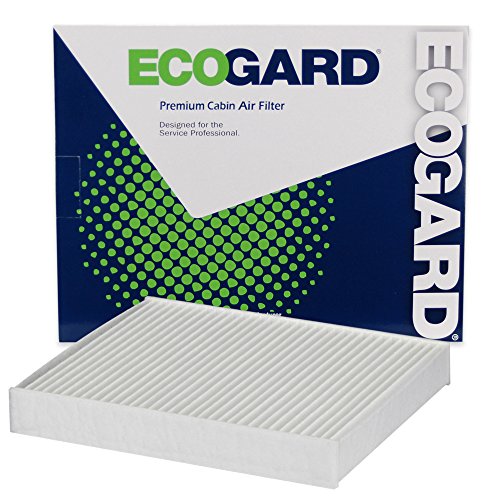
ECOGARD XC10622
A plain dust and pollen filter for newer Toyota and Subaru models.

Spearhead BE-150
A heavier carbon filter that lasts longer between changes.
What Makes a Cabin Filter Good Value
Every cabin filter does the same core job: it catches dust, pollen and road grit before the blower pushes air into the car. A low-cost filter that does that job and fits tightly is good value. One that leaves gaps around the frame lets dirty air slip past, so the saving is wasted.
Four things decide what you really pay over a few years:
- Exact fit: the filter must match your housing size and shape, so the frame seals on all sides.
- Media type: a particulate filter traps dust and pollen; activated carbon adds odor and fume control. Pay for carbon only if smells bother you.
- Pack size: a two-pack in the right size puts next year’s filter on the shelf, which usually lowers the cost of each change.
- Rated life: a filter rated for more miles means fewer changes, which matters for high-mileage drivers.
The Car Care Council’s Car Care Guide links a musty smell from the vents to a dirty or clogged cabin filter and suggests regular checks to protect the HVAC system. A cheap filter changed on time beats a premium one left in for three years.
Find Your Filter Number Before You Shop
Cabin filters are sold by size, and one size often covers dozens of models across several brands. That is why the listings below carry numbers like CF10285 or CP134. Those are cross-references that let you compare brands for the same housing.
The simplest way to get your number is to pull the old filter and read its frame, or look it up in your owner’s manual. Then enter your year, model and engine in Amazon’s fitment tool before you order. Model years change filter sizes more often than people expect, so a Civic or RAV4 from one generation may not take the same filter as the next.
Best Value Cabin Air Filter: The Picks in Detail
Each pick names the vehicles its listing covers. Treat those as a starting point and confirm your exact year, model and engine on Amazon before buying.
1. EPAuto CP134 2-Pack: Activated Carbon Cabin Filter for Honda and Acura
- Two filters per box
- Cross-references FRAM CF10134
- Activated carbon with soda
- Rated 12 months or 12,000 miles
The EPAuto CP134 is a pleated cabin air filter sold in this listing as a two-pack, so the next change is already sitting in your garage. It crosses to FRAM CF10134 and to a long run of Honda genuine part numbers, including 80292-SDA-A01 and 80292-SHJ-A01. Because one size covers so many Honda and Acura models, it is an easy filter to keep on hand.
The listing names the Accord from 2003 to 2022, the Civic from 2006 to 2015, the CR-V from 2007 to 2016, the Odyssey from 2005 to 2017 and the Pilot from 2009 to 2022. Acura coverage includes the TSX, TL, MDX and RDX across many years. Newer Civic and CR-V generations take a different filter, so confirm your year, model and engine on Amazon before buying.
The media includes activated carbon along with soda, which EPAuto says helps freshen the air that comes through the vents. The listing suggests a change every 12 months or 12,000 miles, so one box covers about two years for a typical driver. It is a disposable filter with no washable parts. If you need a HEPA-rated filter for allergies, look elsewhere.
View EPAuto CP134 2-Pack on Amazon
2. Puroma CP285 2-Pack: Activated Carbon Cabin Filter for Toyota and Lexus

- Two filters per box
- Replaces CP285 and CF10285
- Soda layer plus activated carbon
- Airflow arrow on the frame
Puroma’s two-pack fits the CP285 or CF10285 size, which appears in a large number of Toyota and Lexus vehicles from the mid-2000s through the late 2010s. Each filter pairs a soda-woven layer with activated carbon, so it targets odors as well as dust and pollen. The listing cross-references many part numbers, including Toyota 87139-YZZ08, which makes it simple to match the old filter you pull out.
Listed Toyota fitment includes the Camry from 2007 to 2017, the Corolla from 2009 to 2019, the RAV4 from 2006 to 2018, the Highlander from 2008 to 2019 and the Tundra from 2007 to 2021. It also names Lexus models such as the ES350 and RX350, plus the 2010 to 2019 Subaru Legacy and Outback. Later RAV4 and Camry models moved to another size, so check your exact year and model on Amazon first.
Puroma says installation takes about 10 minutes, and an arrow on the side of the frame shows which way the air flows. The listing recommends a change every year or 12,000 miles, or every 5,000 miles on dirt roads or in heavy pollution. The second filter in the box is ready for next season. It is disposable, not washable.
View Puroma CP285 2-Pack on Amazon

3. ECOGARD XC10622: Particulate Cabin Air Filter for 2019-2025 RAV4 and Corolla
- Particulate media, no carbon
- Captures up to 99.5% of particles
- Cross-references FRAM CF12157
- Fits 2019-2025 RAV4 2.5L
The ECOGARD XC10622 is a plain particulate cabin filter, with no carbon layer, for newer Toyota and Subaru models. That keeps the job simple: it catches dust, pollen, pet dander and other airborne particles before they reach the cabin. ECOGARD rates it to filter up to 99.5 percent of those particles, which covers what most drivers need from a cabin filter.
The listing title names the 2019 to 2025 Toyota RAV4 2.5L, the 2019 to 2027 Corolla 2.0L, the 2019 to 2022 Corolla and Prius AWD-e 1.8L, and the 2019 to 2023 Subaru Crosstrek 2.0L. It also mentions other models that share the size, such as the C-HR, Venza and Forester. ECOGARD lists FRAM CF12157 among its cross-references and asks buyers to check fitment with the listing’s vehicle filter lookup.
A particulate-only filter suits a driver who doesn’t notice smells from traffic or the vents and mainly wants steady airflow. ECOGARD notes that it helps air move freely through the heating and cooling system, which reduces strain on the blower. If odors are a problem, a carbon filter is the better match. Replace it on your owner’s manual schedule or when airflow starts to drop.
View ECOGARD XC10622 on Amazon
4. ECOGARD XC10434: Particulate Cabin Air Filter for 2014-2020 Nissan Rogue
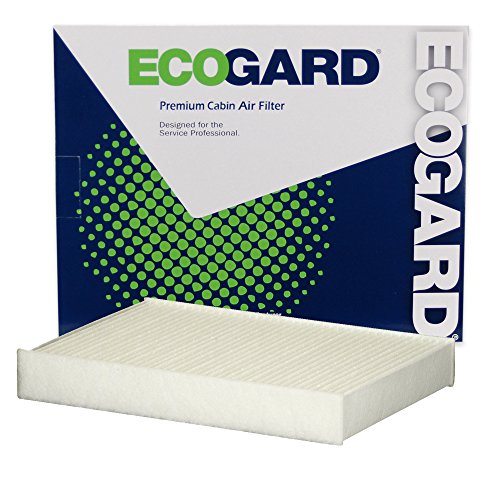
- Particulate media, no carbon
- Captures up to 99.5% of particles
- Replaces FRAM CF11854
- Fits 2014-2020 Rogue 2.5L
The ECOGARD XC10434 is a particulate cabin air filter for the Nissan Rogue and Rogue Sport. Like the rest of this ECOGARD line, it is rated to capture up to 99.5 percent of dust, pollen, pet dander and other particles from outside air. It leaves out the carbon layer, which keeps it a direct, no-frills choice for routine maintenance on a family crossover.
The listing names the 2014 to 2020 Nissan Rogue 2.5L and the 2017 to 2022 Rogue Sport 2.0L for the US market. It also replaces other brands’ numbers, including FRAM CF11854 and ACDelco CF3351, which helps if your old filter came from a different maker. Rogue model years outside that range are not listed, so check your year and engine on Amazon before you order.
Check your owner’s manual for the access steps before you start; on many crossovers the housing sits behind the glove box. ECOGARD suggests replacing the filter on the vehicle maker’s schedule or once airflow begins to fall off. Because it has no carbon, it won’t do much about exhaust smells in slow traffic. For a crossover used mostly for commuting and errands, it covers the basics.
View ECOGARD XC10434 on Amazon
5. FRAM CF10374 Fresh Breeze: Cabin Air Filter for Toyota Tacoma V6

- Fresh Breeze odor-control line
- Filters 98% of contaminants
- Fits 2016-2023 Tacoma 3.5L
- Slides in behind the glove box
The FRAM CF10374 is part of FRAM’s Fresh Breeze range, the line FRAM sells with Arm and Hammer baking soda in the media to help with odors. In this size it is best known as a Toyota Tacoma filter. FRAM states that it filters 98 percent of contaminants such as dust and pollen, keeping those irritants out of the cab for the driver and passengers.
The listing names the 2016 to 2023 Tacoma 3.5L and the 2005 to 2015 Tacoma 4.0L, along with the 2003 to 2008 Pontiac Vibe 1.8L and the 2013 to 2016 Dodge Dart. Four-cylinder Tacomas are not named in the title, so confirm your year, model and engine on Amazon before buying. A filter that doesn’t match the housing won’t seal and won’t do its job.
FRAM describes the install as reaching into the glove compartment area, sliding the filter in and letting it lock into place. That makes it a reasonable first DIY job for a truck owner who has never changed a cabin filter. It comes as a single filter rather than a pack. For a Tacoma that sees dusty job sites or gravel roads, check it more often than once a year.
6. Spearhead BE-150 Breathe Easy: Activated Carbon Filter for Ford F-150
- Coconut shell activated carbon
- Rated up to 15,000 miles
- Heavier electrostatic media
- Fits 2015-2025 F-150
The Spearhead BE-150 is a Breathe Easy cabin filter for Ford’s full-size trucks and SUVs. It uses pleated electrostatic media infused with coconut shell activated carbon, which targets fumes and odors as well as fine particles. Spearhead says the media is twice as heavy as a standard cabin filter, with densely packed carbon to adsorb gases before they reach the cab.
The listing covers the 2015 to 2025 F-150, the 2022 to 2025 F-150 Lightning, the 2017 to 2025 F-250 and F-350, and the 2018 to 2024 Expedition and Lincoln Navigator. Spearhead asks buyers to enter their vehicle in Amazon’s fitment tool first to confirm the match. An installation guide comes with every order, which helps if this is your first cabin filter change on a truck.
Spearhead rates the filter for up to 15,000 miles, about 25 percent longer than the 12,000-mile standard it compares against. For drivers who pile on miles, fewer changes over the life of the truck is where the value comes from. It is a single filter, and the heavier media is not a HEPA rating. Allergy-focused buyers should look at a filter labeled HEPA instead.
View Spearhead BE-150 on Amazon
Six Budget Filters Side by Side
The table sums up the media, pack size and main vehicles for each listing. It is a quick way to see which picks add carbon and which ones keep to plain particulate media.
| Filter | Media | In the box | Main vehicles listed |
|---|---|---|---|
| EPAuto CP134 | Activated carbon and soda | 2 filters | Many Honda and Acura models, 2003 to 2022 |
| Puroma CP285 | Activated carbon and soda | 2 filters | Older Camry, Corolla, RAV4, Highlander, Lexus |
| ECOGARD XC10622 | Particulate | 1 filter | 2019 to 2025 RAV4, newer Corolla, Crosstrek |
| ECOGARD XC10434 | Particulate | 1 filter | 2014 to 2020 Rogue, 2017 to 2022 Rogue Sport |
| FRAM CF10374 | Fresh Breeze odor media | 1 filter | 2005 to 2023 Tacoma V6 |
| Spearhead BE-150 | Heavy carbon media | 1 filter | 2015 to 2025 F-150, Super Duty, Expedition |
If two picks both list your vehicle, choose by media. Carbon helps in stop-and-go traffic, behind diesel trucks and with musty vents. Plain particulate media is enough for a car that mostly sees highway miles and doesn’t pick up smells.

Making Each Filter Last Through West Michigan Seasons
Our seasons load a cabin filter in different ways. Spring and early summer bring heavy tree pollen, fall drops leaves and seeds into the cowl below the windshield, and winter adds fine salt dust from treated roads. Each one shortens the time before airflow starts to drop.
- Clear the cowl: brush leaves and debris out of the cowl area in the fall so they don’t get pulled toward the filter.
- Time the change: fitting a fresh filter in early spring gives you clean media for pollen season.
- Use recirculate sensibly: recirculate helps in heavy traffic or dusty roadwork, but fresh air mode clears fogged glass faster in winter.
- Check after gravel roads: dusty trips can load a filter well before its rated interval.

A spare from a two-pack makes these habits easy. When the vents start to smell stale or the fan sounds louder for the same airflow, you can swap the filter that afternoon instead of waiting for the next oil change.
When Weak Airflow Isn’t a Filter Problem
A new filter should bring back strong, quiet airflow right away. If it doesn’t, the cause is somewhere else in the system. A fan that runs only on its top setting usually points to a failed resistor or module, which our guide to a blower motor that only works on high explains.
Air that flows well but isn’t cold is usually a refrigerant or compressor issue rather than a filter one. Our car AC blowing warm air guide covers the causes, and if a top-up is all it needs, compare kits in our car AC recharge kit roundup.

Weak heat in winter, a heater core smell or a fan that cuts in and out needs proper diagnosis. Our car heater repair in Grand Rapids tracks down faults across the whole heating system, from the fan to the controls.
More Buying Guides
Frequently Asked Questions
Is a cheap cabin air filter as good as a name brand?
Often, yes, as long as it is the correct size and seals in the housing. The media does the same job in most budget and brand-name filters. Fit and changing it on time matter more than the logo.
Is an activated carbon filter worth the extra money?
It is if you notice exhaust fumes in traffic or musty smells from the vents. Carbon adsorbs odors and gases that plain particulate media lets through. If smells never bother you, a particulate filter is enough.
Are two-packs the best value cabin air filter option?
Usually, when the pack matches your exact filter size. You get next year’s filter at a lower cost per change and can swap it the moment airflow drops. A pack in the wrong size is no saving at all.
Can I change a cabin air filter myself?
On most cars, yes. The filter usually sits behind the glove box or under the cowl, and your owner’s manual shows the steps. Note the airflow arrow on the old filter and fit the new one the same way.
Fan roaring but barely any air at the vents? Call 456 AutoFix at 616-279-3832, Monday to Friday 8am to 5pm, or set up a heating and A/C check through our contact page.
Busy all day? Our after-hours drop-off at 456 Carrier St NE in Creston, Grand Rapids takes your keys any time.