
As an Amazon Associate, 456 AutoFix earns from qualifying purchases. Product links below go to Amazon, where you can confirm the right part for your vehicle.
Pop the hood on a truck that feels a little flat and you have two very different fixes on the table. The engine air filter vs cold air intake question comes down to whether you want to restore the airflow the engine was designed for or change the whole path the air takes to reach it. One is a ten-minute maintenance item, the other is a bolt-on kit that replaces the factory airbox and tubing.
Below we explain what each part does, what an intake can and cannot change on a stock engine, and where West Michigan weather comes into it. To keep the comparison fair, all three parts we look at are listed for the Ford F-150: a Bosch disposable filter, a K&N cold air intake kit for 2015 and later trucks, and a washable AEM filter that drops into the factory box.
Quick answer
Should you replace the filter or install a cold air intake?
For most stock daily drivers, a fresh filter such as the Bosch 5372WS restores full airflow for little effort. A cold air intake like the K&N 63-2593 suits owners who want more intake sound and a modest gain, mainly on modified engines. The AEM DryFlow drop-in filter sits in between.
Our Quick Picks
One part from each side of the comparison, a disposable filter and a full intake kit, plus the related third pick: a washable dry filter that drops into the stock airbox.

Bosch Workshop 5372WS
A factory-style replacement for the stock airbox.
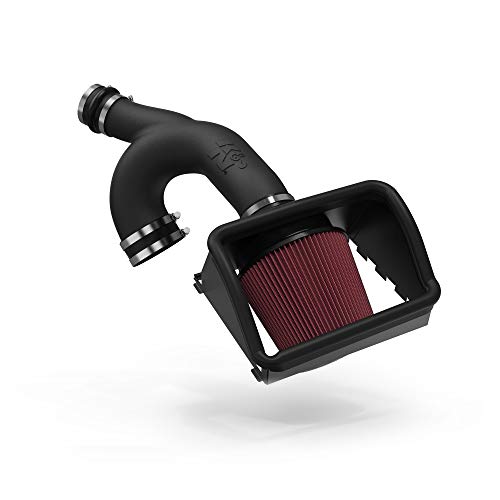
K&N 63-2593 Cold Air Intake
Swaps the stock airbox and tube for a freer-flowing system.

AEM DryFlow 28-20385
A reusable filter that keeps the factory intake in place.
Filter Element or Whole Intake Path: What You Are Buying
An engine air filter is a pleated element that sits inside the factory airbox and catches dust, sand, pollen and debris before they reach the throttle body and cylinders. It wears out by design. As the pleats load up with dirt, they restrict airflow, and the fix is simply a new filter, or a cleaning if the filter is the washable kind.
A cold air intake replaces more than the filter. A typical kit swaps the factory airbox, inlet duct and tube for a smoother, wider tube, a large cone filter and a heat shield or enclosed box that tries to draw air from outside the hot engine bay. The idea is that cooler, denser air with fewer bends lets the engine breathe more easily at high load.
So the two are not really rivals. Every intake kit still contains a filter, and every factory airbox still needs one. The real choice is between keeping the stock air path with a good filter in it and replacing that path with an aftermarket one.
| Question | Engine air filter | Cold air intake |
|---|---|---|
| What it replaces | Only the filter element in the factory box | Airbox, ducting, tube and filter |
| Typical install | A few clips or screws, minutes with no tools on many trucks | Hand tools, often under an hour per the maker |
| Upkeep | Replace (paper) or wash and re-oil (cotton) | Clean and re-oil the cone filter, check clamps |
| Main benefit | Restores factory airflow and protection | Less restriction and more induction sound |
Does a Cold Air Intake Add Power or Mileage on a Stock Engine?
Makers publish dyno results, and K&N includes a dyno report with each intake. Gains tend to be largest at wide-open throttle and high rpm, where the factory system is most restrictive, and smallest in the part-throttle driving most people do. Engines that have been tuned, supercharged or otherwise modified usually respond more than a stock engine with a factory calibration.
Fuel economy is a different story. According to the US Department of Energy and EPA site, replacing a clogged air filter on a modern fuel-injected engine improves acceleration but not miles per gallon, because the engine computer meters fuel to match the air coming in. The same logic applies to an intake: expect sound and throttle feel, not a dependable mpg gain.

The mass airflow sensor is the part to protect. It reads airflow with a heated element, and an aftermarket tube changes how air moves across it, so a poorly matched kit can trigger lean codes or an uneven idle. Over-oiled cotton filters are another known cause, since excess oil can migrate onto the sensor, and a dedicated MAF sensor cleaner is the only spray that belongs on it.
Buy a kit made for your exact year, engine and model rather than a universal tube. Vehicle-specific kits are designed around the factory sensor location and calibration, which lowers the odds of a warning light after the install.
Engine Air Filter vs Cold Air Intake: Three F-150 Parts Side by Side
Each listing below names the F-150, but engines and model years vary, so confirm your year, model and engine with the fit checker on Amazon before you order.
Bosch Workshop 5372WS: Cellulose Engine Air Filter with Polyurethane Seal for Ford and Lincoln
- Disposable cellulose filter for the factory airbox
- Bosch lists 98% filtration efficiency for small particles
- Polyurethane foam seal against water and heat
- Listed for 2009-23 F-150, 2007-23 Expedition and more
The Bosch Workshop 5372WS represents the engine air filter side of this comparison. It is a disposable panel element made from cured cellulose media, and it drops into the factory airbox in place of the old filter. Nothing about the air path changes: the stock housing, inlet duct and tubing stay exactly where the truck maker put them.
Bosch describes a high pleat count for holding dirt, a stated 98% efficiency at removing small particles, and a polyurethane foam seal meant to keep water and heat out of the intake. Because the factory system was calibrated around this style of filter, the mass airflow sensor sees the airflow the engine computer expects, and there is no oil to wash or reapply. On most trucks the swap takes minutes: open the airbox clips, lift out the old element, wipe out debris and seat the new one evenly.
It will not add power beyond what a clean stock filter provides, and it is not reusable, so you replace it at each interval. The listing names the 2009-23 F-150, 2007-23 Expedition, 2008-16 Super Duty trucks and the Navigator, and notes that trim and engine can affect fit, so run the Amazon fit checker first.
View Bosch Workshop 5372WS on Amazon

K&N 63-2593 Cold Air Intake: High-Flow Cotton Filter System for Select F-150 Trucks
- Replaces the factory airbox with a less restrictive intake path
- Washable four-layer cotton filter with K&N red filter oil
- Dyno report included with each kit
- Installs with hand tools, typically in under 60 minutes per K&N
The K&N 63-2593 is the cold air intake in this comparison, a complete system that takes the place of the factory airbox, duct and filter on select F-150 trucks from the 2015 model year on. The listing describes a less restrictive path that brings in more cool air, a washable filter made from four layers of pleated cotton treated with K&N red filter oil, and a dyno report packed with each kit.
K&N says the filter needs cleaning only about every 100,000 miles under normal highway conditions, though dusty roads shorten that, and it is cleaned with a kit such as the K&N 99-5050. The maker also lists a typical install time of under an hour with basic hand tools and step-by-step instructions. Expect a louder induction sound on acceleration, which many owners enjoy and some do not.
Gains on a stock engine are usually modest and show up mostly at full throttle. The listing covers select F-150 models only, and engines vary across those years, so check the exact fitment on Amazon before ordering. Use a light hand when re-oiling the filter later, because excess oil can reach the mass airflow sensor and set a code.
View K&N 63-2593 Cold Air Intake on Amazon
AEM DryFlow 28-20385: Washable Synthetic Drop-In Air Filter for Ford F-150 and Super Duty
- Drops into the factory airbox with no other changes
- Dry synthetic media, no filter oil to apply
- AEM lists capture of up to 99% of contaminants
- Cleanable and made in the USA
The AEM DryFlow 28-20385 is the related third pick, a middle path between a disposable filter and a full intake. It is a washable panel filter that fits inside the factory airbox, so the stock housing, ducting and tube all stay in place. The listing names the Ford F-150, F-250 and F-350 without model years, so checking fitment matters more than usual here.
What sets it apart is the dry synthetic media. There is no filter oil to apply after cleaning, which removes the main way a reusable filter can contaminate a mass airflow sensor. AEM says the media captures up to 99% of harmful contaminants, and the listing describes it as cleanable and guaranteed for the life of the vehicle. It is made in the USA.
Because it keeps the factory air path, it avoids the bigger changes of an intake kit, but it also brings only a small airflow difference on a stock engine. Cleaning still takes care: use a cleaner approved for dry synthetic media and let the filter dry fully before you reinstall it. Confirm your year, model and engine with the Amazon fit checker before you order, since the listing does not spell out every application.
View AEM DryFlow 28-20385 on Amazon

Which Option Fits the Way You Drive?
Start with what you want the truck to feel like after the work is done. If the goal is simply to make it run the way it did when it was new, the filter is the answer. If you enjoy hearing the engine and plan further changes, an intake becomes easier to justify.
| Your situation | Reach for | Why |
|---|---|---|
| Stock truck, commuting and errands | Disposable paper filter | Factory airflow and filtration, nothing to clean |
| Keep the stock airbox but stop buying filters | Washable drop-in filter | Reusable element, factory housing stays in place, dry types need no oil |
| Tuned engine or planned upgrades | Vehicle-specific cold air intake | Larger tube and filter suit higher airflow |
| Lots of gravel roads or dust | Paper filter, checked often | Easy to inspect and swap when it loads up |
Cost of ownership matters too. A paper filter is a recurring purchase, while an oiled cotton filter needs a cleaning kit such as the K&N 99-5050 every so often, and a dry synthetic one needs its own cleaner. An intake costs the most up front, and you are also taking on the job of checking its clamps and couplers as the rubber ages.

Slush, Salt Spray and Winter Air in Grand Rapids
West Michigan winters change the picture a little. Cold January air is already dense, so the benefit of pulling cooler air from outside the engine bay shrinks, while a factory airbox is designed to shrug off snow, slush and road spray. Some open cone filters sit lower or closer to the fender, where wet slush can reach them.
Water is the larger risk. An engine that ingests a slug of water can hydrolock, which can bend connecting rods. If you fit an intake, use the heat shield or enclosed box the kit includes, never drive through standing water deep enough to reach the filter, and look at the filter after a slushy week.

Salt and grime build up on any filter faster in winter, so check yours at every oil change from November to March. A filter that looks gray and packed with grit is due, no matter what the mileage says. And if the air in the cab smells musty or the defroster struggles, that is the cabin filter, a separate part covered in our cabin air filter guide.
Signs the Air Side Needs Attention, and When to Call Us
A clogged filter usually shows up as slow, lazy acceleration, especially when merging or towing. Hold the old filter up to a light: if very little light passes through the pleats, replace it. For more filter options beyond this F-150 example, our engine air filter buying guide covers other brands and media types.
A check engine light after any intake work points to a problem the filter cannot fix. Common causes include a loose clamp, a cracked coupler that lets in unmetered air, an unplugged sensor or an oil-coated MAF. A steady light on a truck that still drives normally deserves a scan, as we explain in what it means when the check engine light is on but the car runs fine.
If codes or a rough idle stick around, bring it in for our check engine light diagnostic in Grand Rapids. Hendrick Hoffman, who owns the shop and leads the work, holds ASE and State of Michigan certification in engine tune-up and electrical systems, so sensor and air metering faults sit squarely in his lane.
More Buying Guides
Frequently Asked Questions
Does a cold air intake replace the engine air filter?
Yes. The kit comes with its own filter, usually a large cone, which takes the place of the factory panel filter and airbox. You then maintain that filter instead, typically by washing and re-oiling it if it is a cotton design.
Will a cold air intake improve gas mileage?
Do not count on it. Modern fuel-injected engines adjust fuel to the air they measure, so changing the intake path rarely moves real-world mpg in a way you can measure. Driving habits, tire pressure and maintenance have a far larger effect.
Can a cold air intake cause a check engine light?
It can, usually through an air leak at a clamp or coupler, a sensor that was not reconnected, or oil from an over-treated filter coating the MAF sensor. A kit designed for your exact vehicle and a careful install lower the risk, and a scan tool shows which code set.
How often should an engine air filter be changed?
Follow the interval in your owner’s manual, and shorten it if you drive on gravel, dusty roads or through a salty winter. Inspect it at each oil change. Washable filters list their own cleaning intervals, which also depend on driving conditions.
Not sure whether your truck needs a filter, a fix for that new warning light, or nothing at all? Phone us at 616-279-3832 between 8am and 5pm, Monday through Friday, or send a request through our contact page to set up a visit.
Working the same hours we do? Our after-hours drop-off at 456 Carrier St NE means you can leave the truck when your shift ends and pick it up once the work is finished.